
Boost critical thinking Addition & Subtraction Worksheets for Ages 5-8
3 filtered results
Difficulty Level
Grade
Age
-
From - To
Subject
Activity
Standards
Enhance your child's critical thinking skills with our engaging Addition & Subtraction Worksheets designed for ages 5-8! These thoughtfully crafted resources provide fun challenges that encourage young learners to think independently while mastering essential math concepts. Each worksheet incorporates a variety of problems that promote problem-solving and logical reasoning, making the learning process enjoyable and impactful. Ideal for use at home or in the classroom, our worksheets help reinforce arithmetic foundations while developing critical life skills. Explore our collection today and watch your child gain confidence and proficiency in math, all while boosting their analytical thinking abilities!
Favorites
With answer key
Interactive
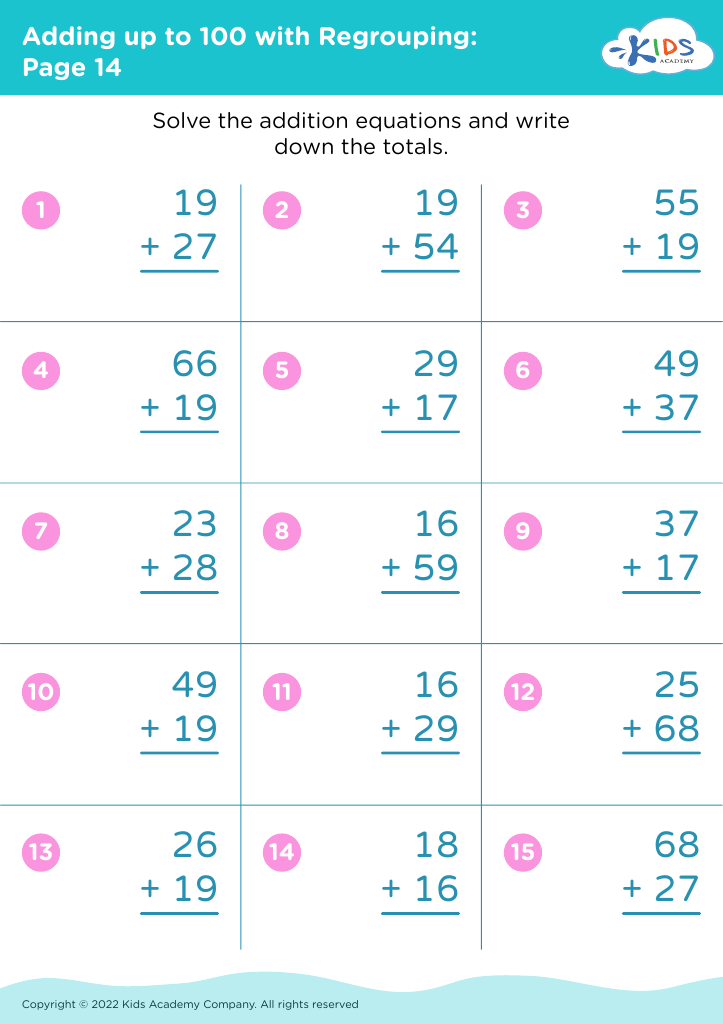
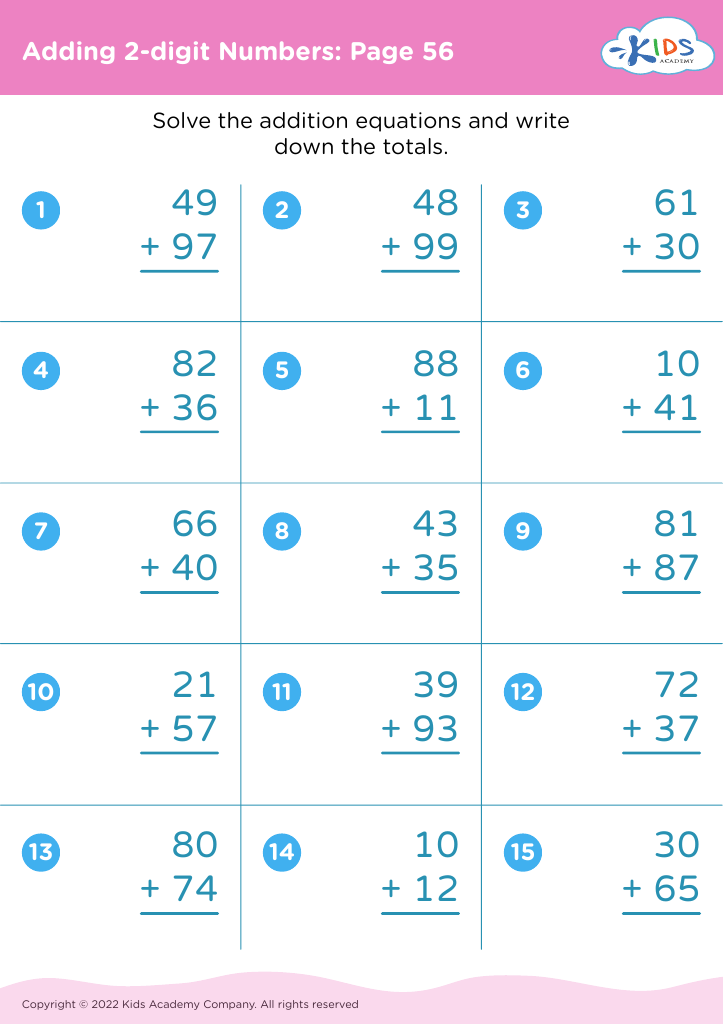
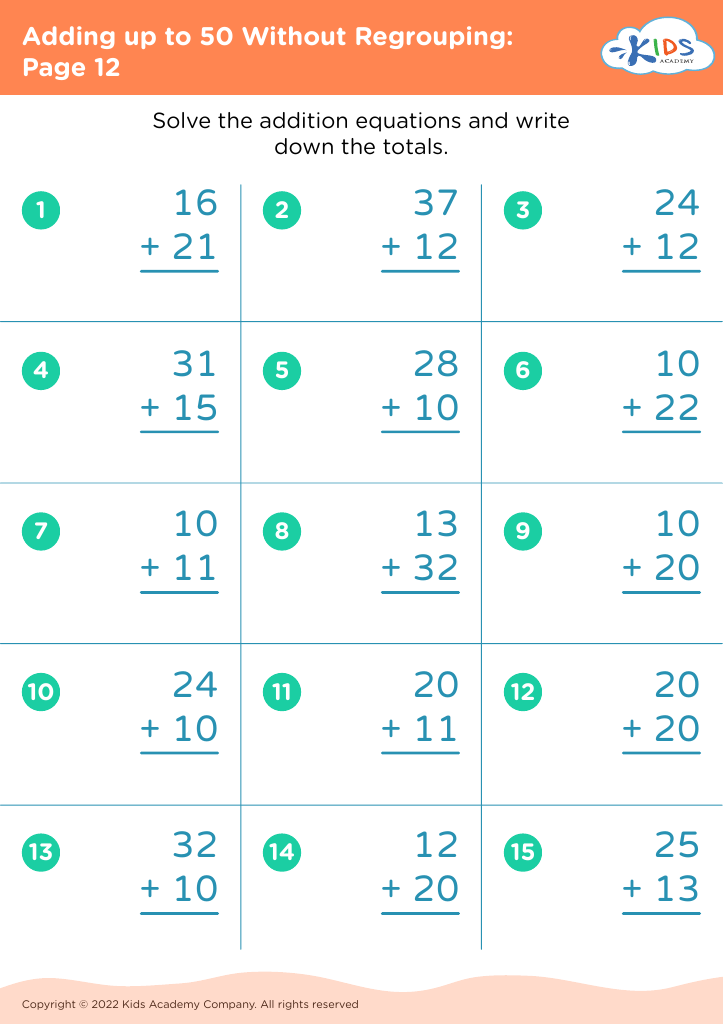
Join Kids Academy for Free
Who is primarily going to use this learning content?








Parents and teachers should prioritize boosting critical thinking in children ages 5-8, particularly in foundational skills like addition and subtraction, as it lays the groundwork for future math fluency and problem-solving abilities. This age group is crucial for cognitive development, and engaging them through critical thinking enhances not only their mathematical skills but also their overall analytical capabilities.
Encouraging children to explore various ways to solve addition and subtraction problems fosters creativity and perseverance. It shifts their mindset from just memorizing facts to understanding the 'why' and 'how,' allowing them to tackle more complex concepts in later grades with confidence. This approach nurtures a love for math, making it less intimidating and more enjoyable.
Moreover, in our increasingly complex world, the ability to think critically extends beyond mathematics. It equips children with crucial life skills, helping them make informed decisions and solve real-world problems. By integrating critical thinking into early math education, parents and teachers support the development of versatile thinkers capable of adapting to diverse challenges they will encounter throughout their educational journey and beyond.








