Data interpretation Addition & Subtraction Worksheets for Ages 5-8
4 filtered results
-
From - To
Discover our engaging Data Interpretation Addition and Subtraction Worksheets designed for kids aged 5-8! These worksheets provide a fun way for young learners to enhance their math skills by interpreting data through addition and subtraction exercises. Perfect for classroom or home use, each worksheet encourages critical thinking as students analyze charts, diagrams, and visual data. Our resources align with educational standards, making it easier for educators and parents to track progress. With colorful visuals and age-appropriate challenges, these worksheets foster a love for math while building the foundational skills necessary for future success. Start your child’s mathematical journey today!
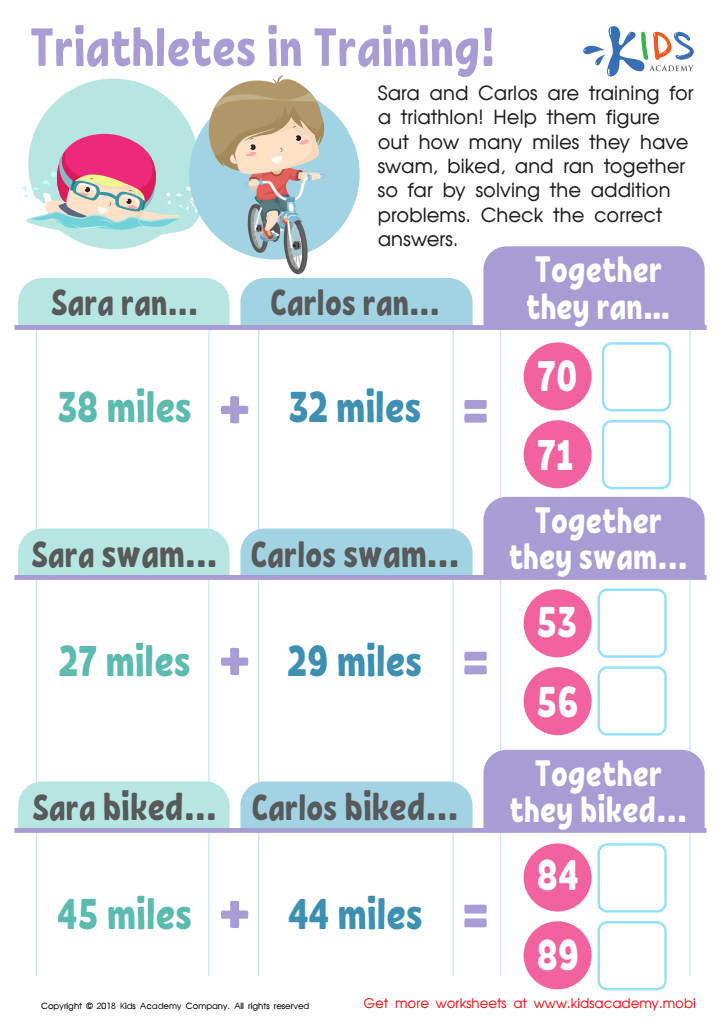
Triathletes in Training Worksheet
 Assign to My Students
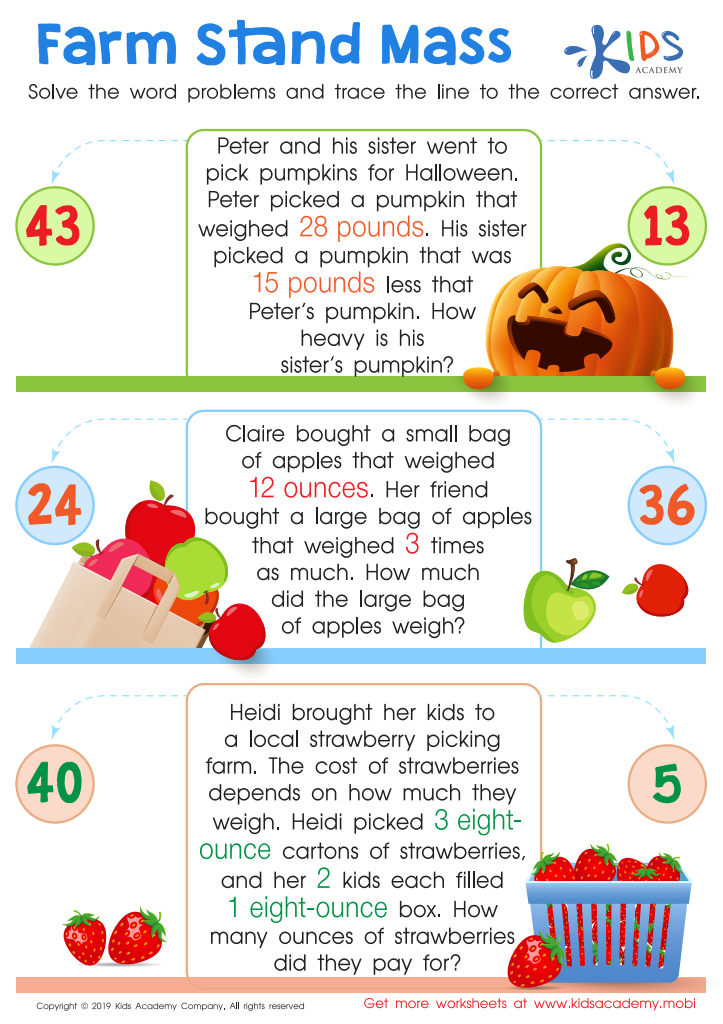
Farm Stand Mass Worksheet

Aircraft Carrier Picture Graphs Worksheet
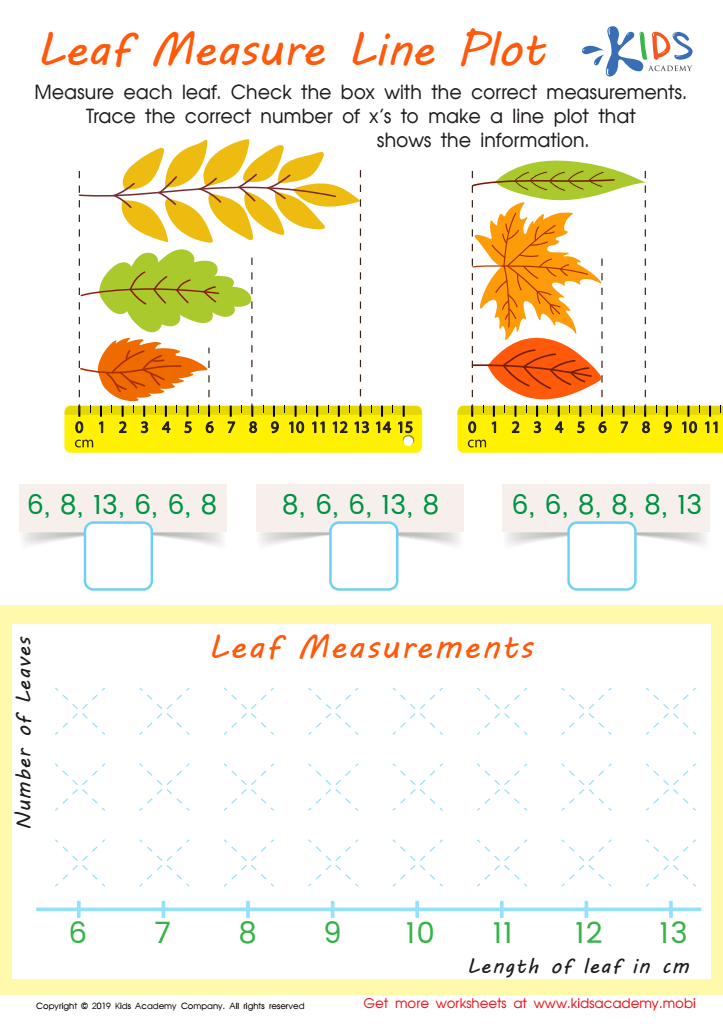
Leaf Measure Line Plot Worksheet








Data interpretation involving addition and subtraction is crucial for children ages 5-8 as it lays the foundation for mathematical literacy and critical thinking. At this stage, students begin to explore basic math concepts, and learning to interpret data equips them with essential skills for understanding information presented in various forms, such as graphs, charts, or everyday scenarios.
Teaching data interpretation helps children make sense of the world around them. For instance, analyzing a simple bar graph displaying favorite fruits can encourage discussions about comparison, quantity, and preference. These conversations foster analytical thinking and help children learn to draw conclusions from the data.
Furthermore, addition and subtraction are fundamental operations that form the backbone of more complex mathematics. By mastering these concepts within the context of data, children develop a deeper understanding of numeracy, promoting confidence and interest in math.
Parents and teachers should emphasize the importance of these skills to help create well-rounded learners. By engaging in activities that involve data interpretation, families can nurture curiosity, problem-solving skills, and persistence in their children—all vital attributes for success in academics and everyday life. Supporting young learners in these areas unfortunately reinforces mathematical foundations essential for their future educational journey.








