Develop analytical thinking Addition & Subtraction Worksheets for Ages 5-8
3 filtered results
-
From - To
Introducing our "Develop Analytical Thinking Addition & Subtraction Worksheets for Ages 5-8". Designed by expert educators, these engaging worksheets help children enhance their analytical skills while mastering basic math concepts. Each worksheet offers fun, age-appropriate challenges that encourage young learners to think critically and solve problems creatively. From simple sums to advanced subtraction techniques, our exercises foster a solid mathematical foundation. Ideal for classroom use or at-home practice, these worksheets cater to various learning styles, making math enjoyable and accessible. Empower your child’s learning journey with valuable tools that build confidence and pave the way for academic success.
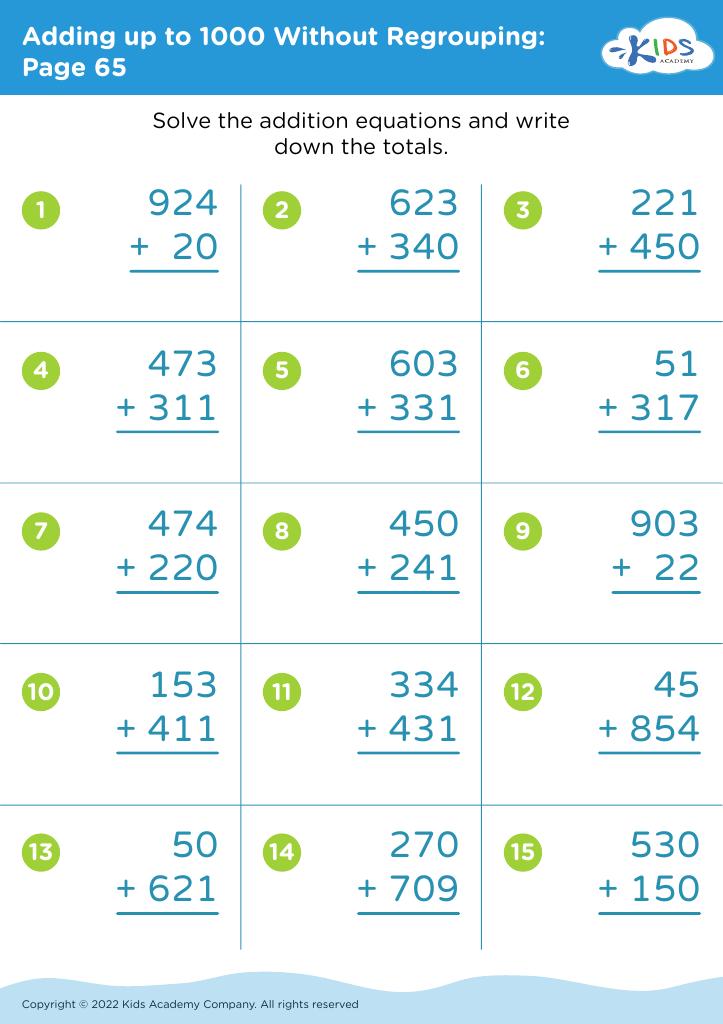
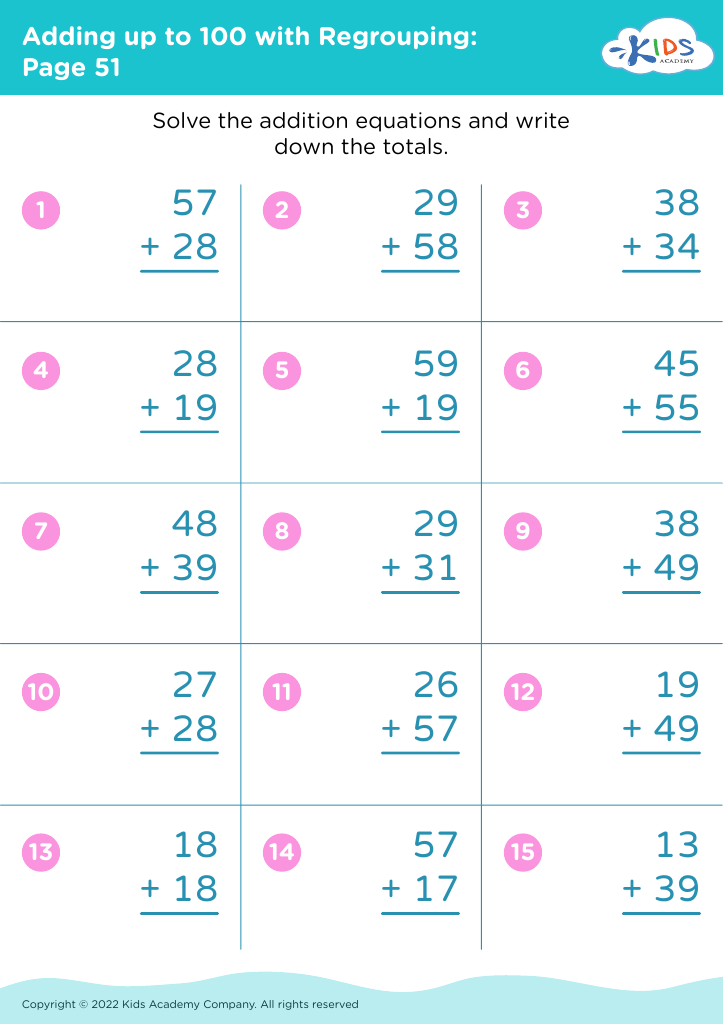
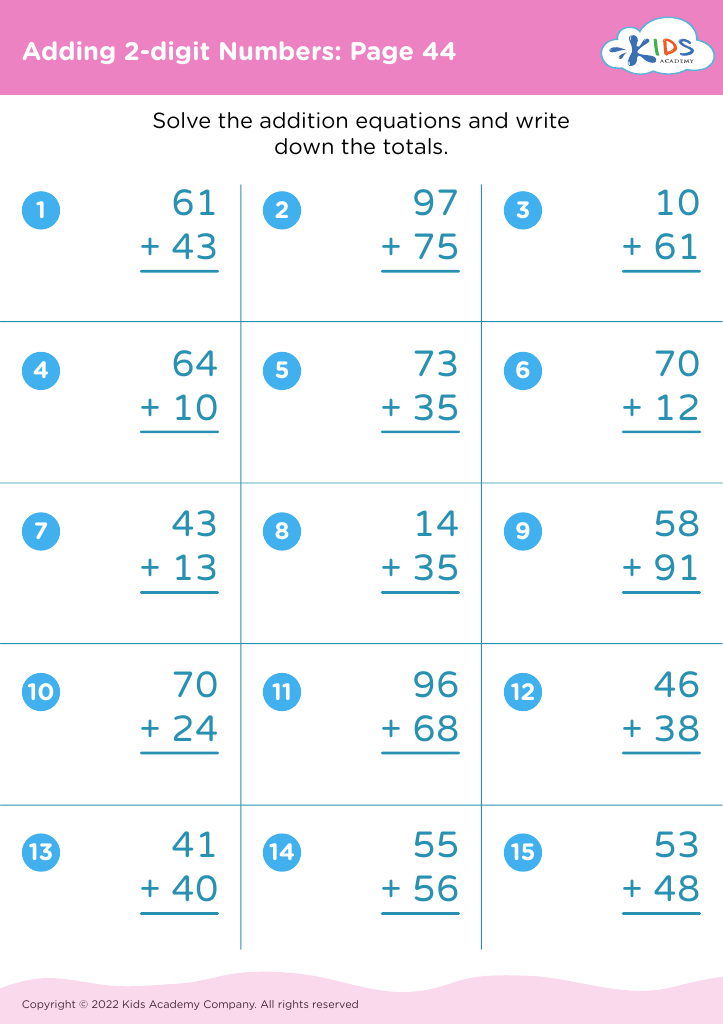








Developing analytical thinking skills in addition and subtraction for children aged 5-8 is crucial for several reasons. Firstly, it sets a strong foundation for future mathematical learning. Mastery of basic arithmetic is essential for grasping more complex concepts in later grades, including multiplication, division, and algebra.
Secondly, analytical thinking fosters problem-solving abilities. When children learn to analyze problems, identify patterns, and develop strategies for addition and subtraction, they build cognitive skills that are transferable to other areas of learning and everyday life. These skills support critical thinking, which is necessary for making informed decisions and solving real-world problems.
Furthermore, early competence in arithmetic helps children develop confidence in their abilities. This positive self-belief encourages a love for learning and a proactive attitude towards challenges, nurturing a growth mindset.
Parents and teachers play pivotal roles in this developmental stage by providing an engaging and supportive environment. Interactive activities, practical applications, and consistent positive reinforcement help sustain a child's interest and enjoyment in learning arithmetic. Developing these skills early on does not only fulfill academic requirements but also contributes to the holistic development of a child's intellectual and emotional capacities.
By nurturing analytical thinking in basic arithmetic, caregivers equip children with essential tools for success in academics and beyond.








