
Enhance logical thinking Addition & Subtraction Worksheets for Ages 5-8
3 filtered results
Difficulty Level
Grade
Age
-
From - To
Subject
Activity
Standards
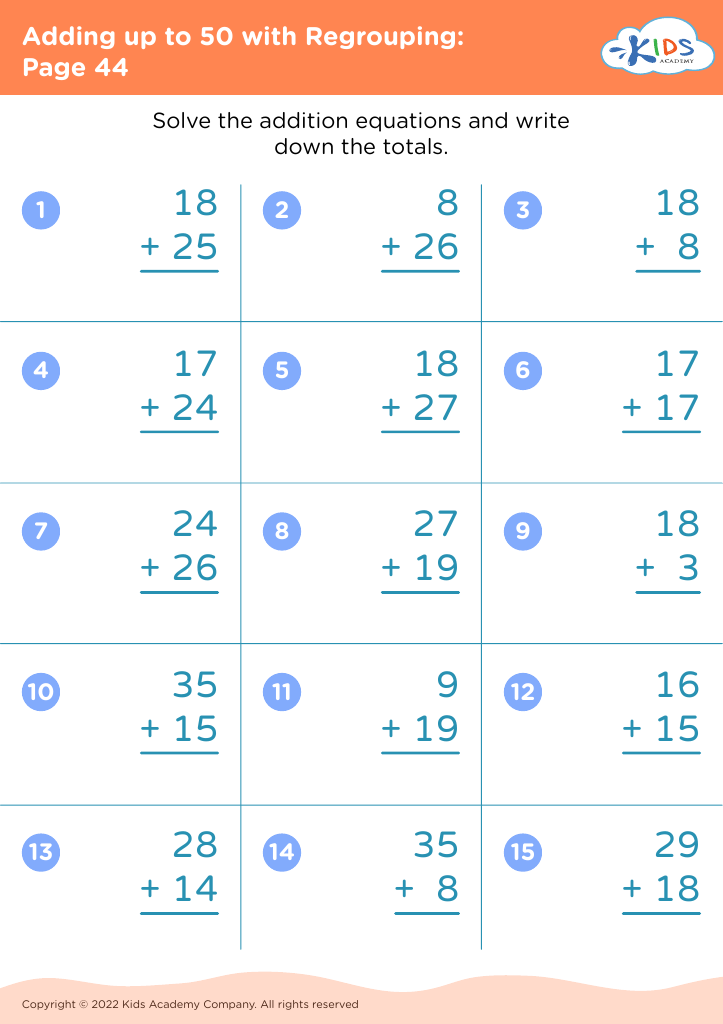
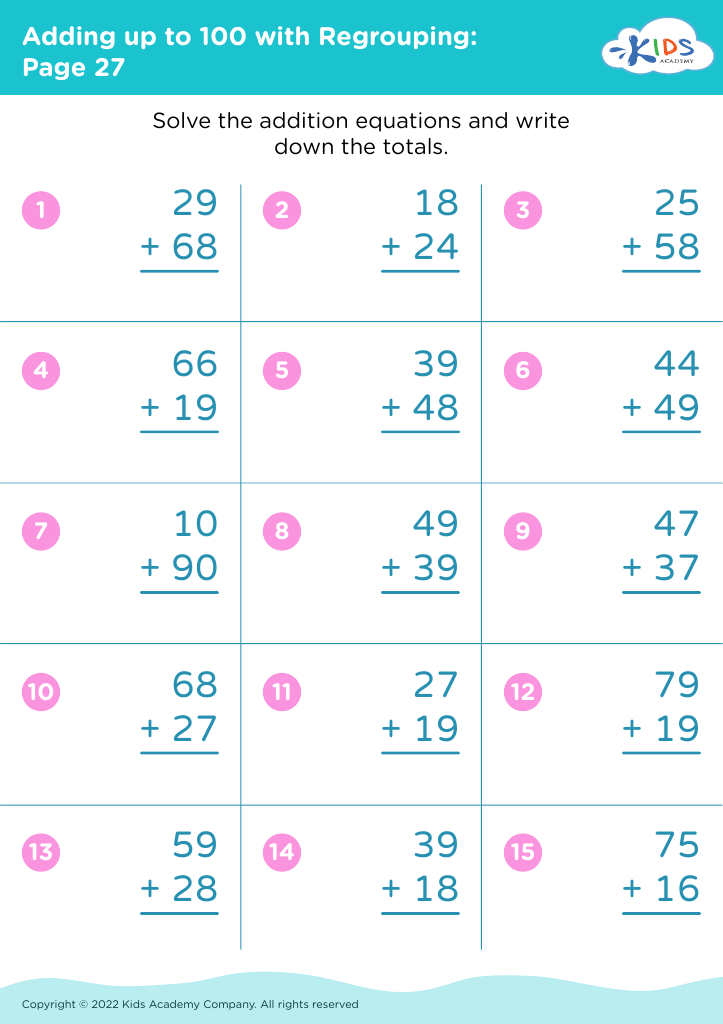
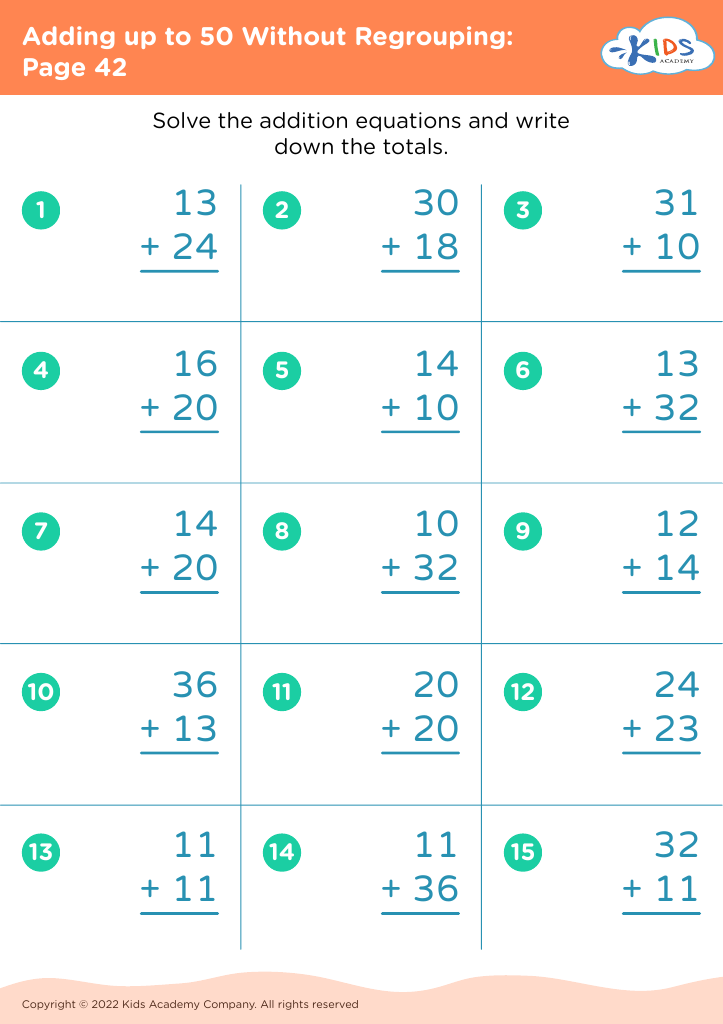
Boost your child's logical thinking skills with our engaging addition and subtraction worksheets designed specifically for ages 5-8. These worksheets promote critical thinking and problem-solving abilities while reinforcing essential math concepts. Each activity is thoughtfully crafted to challenge young minds, encouraging them to analyze, strategize, and develop their reasoning skills. Whether used in the classroom or at home, our fun and interactive worksheets provide a solid foundation in arithmetic, making learning enjoyable and effective. Start nurturing your child's math confidence today with our comprehensive resources that blend skill-building with fun! Perfect for early learners eager to excel in their studies.
Favorites
With answer key
Interactive
Join Kids Academy for Free
Who is primarily going to use this learning content?








Enhancing logical thinking in addition and subtraction for children aged 5-8 is crucial for several reasons. Firstly, it establishes a strong foundation for mathematical concepts that will be built upon in later grades. Children who grasp these fundamental skills develop a greater confidence in their ability to tackle more complex problems as they advance.
Moreover, logical thinking fosters critical problem-solving skills. By engaging in exercises that require them to strategize and think critically about mathematical operations, children learn to assess situations, make decisions, and reason through challenges systematically. This not only aids their mathematical capabilities but extends to other subjects and real-life situations.
Additionally, understanding addition and subtraction is integral to daily life. Teaching children to solve real-world problems, such as making change or managing time, equips them with essential life skills that promote independence and responsibility.
Lastly, collaborative learning fosters social skills. When parents and teachers encourage group activities aimed at logical reasoning, children learn to communicate, collaborate, and share ideas, which enhances their overall educational experience. Therefore, nurturing logical thinking in early math education is essential for cognitive development and lifelong learning.








