
Enhancing creativity Addition & Subtraction Worksheets for Ages 5-8
4 filtered results
Difficulty Level
Grade
Age
-
From - To
Subject
Activity
Standards
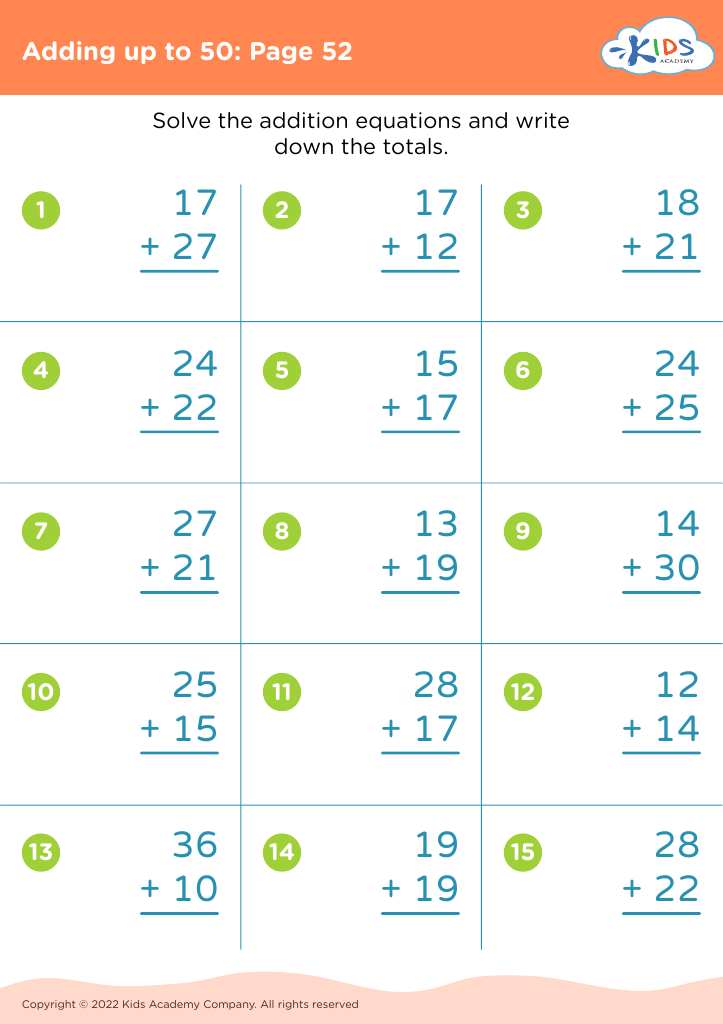
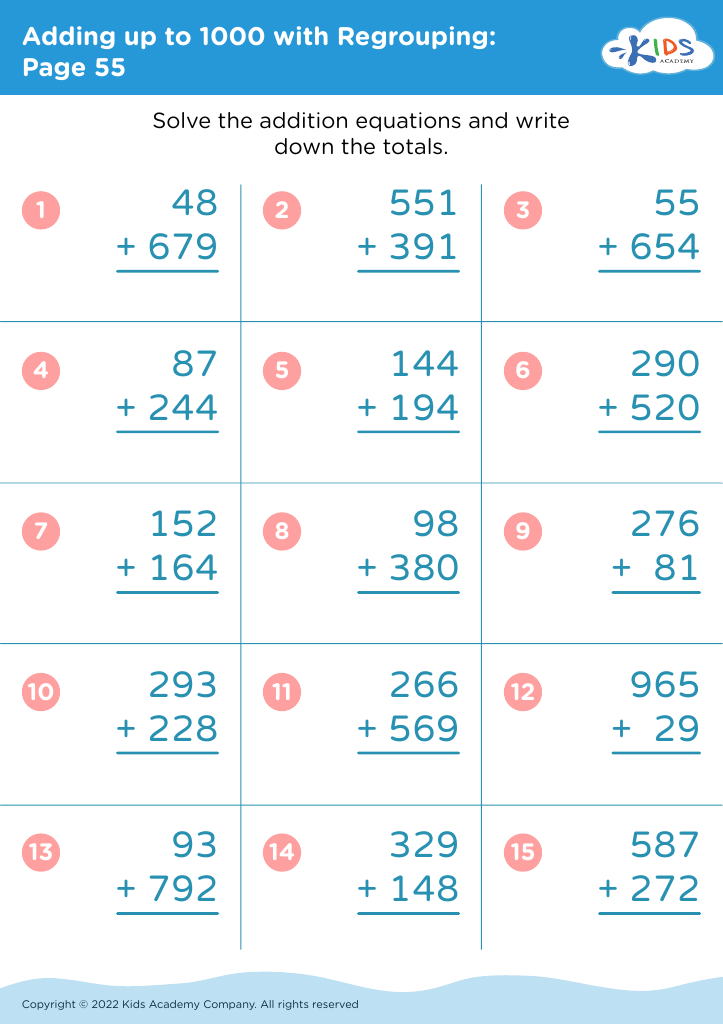
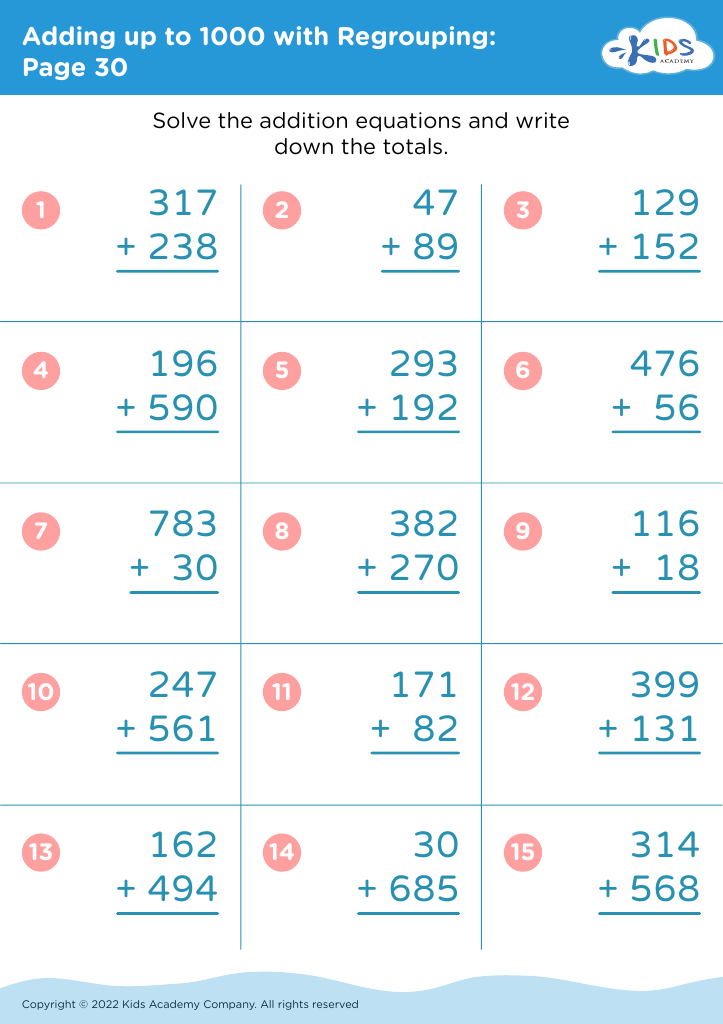
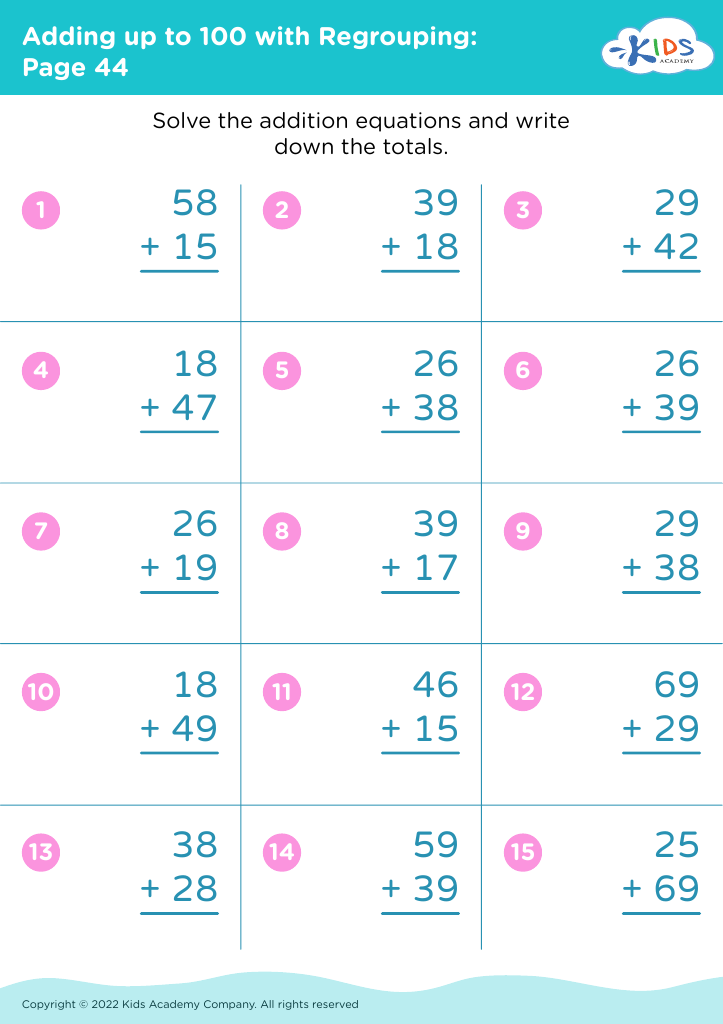
Discover our "Enhancing Creativity Addition & Subtraction Worksheets for Ages 5-8" designed to foster both math skills and creative thinking in young learners. These engaging worksheets combine fundamental addition and subtraction exercises with imaginative activities that inspire kids to think outside the box. By integrating fun themes and creative challenges, we ensure that children develop a strong foundation in math while nurturing their individuality and critical thinking skills. Perfect for home or classroom use, these worksheets make learning math enjoyable and interactive. Encourage your child's creativity and confidence in problem-solving with our cleverly crafted resources today!
Favorites
With answer key
Interactive
Join Kids Academy for Free
Who is primarily going to use this learning content?








Enhancing creativity in teaching addition and subtraction for children aged 5-8 is vital for several reasons. First, creativity fosters a deeper understanding of mathematical concepts. When children engage in creative activities—like using art, storytelling, or play—they can visualize problems and explore multiple solutions, making abstract concepts more tangible. This hands-on approach helps solidify foundational skills and boosts confidence.
Second, creative teaching strategies cater to diverse learning styles. Some children may thrive with visual aids, while others may benefit from auditory or kinesthetic activities. By incorporating various creative methods, parents and teachers can engage each child's unique learning preferences, ensuring that no child is left behind.
Additionally, fostering creativity encourages critical thinking and problem-solving skills. As children experiment with different strategies to solve addition and subtraction problems, they learn to think outside the box, preparing them for future challenges in and out of the classroom.
Finally, enhancing creativity in math can make learning enjoyable. When children find joy in solving problems, they develop a positive attitude towards mathematics, laying the groundwork for lifelong learning. Prioritizing creative approaches in math education ultimately nurtures skilled, confident, and enthusiastic learners.








