Improve fine motor skills Addition & Subtraction Worksheets for Ages 5-8
3 filtered results
-
From - To
Enhance early learning with our "Improve Fine Motor Skills Addition & Subtraction Worksheets" designed for ages 5-8. These carefully crafted worksheets combine essential math practice with activities that develop fine motor skills, such as cutting, tracing, and coloring. Perfect for young learners, these worksheets support the development of precise hand movements, boosting both their math abilities and handwriting skills. Engage your child in fun, educational exercises that make learning addition and subtraction more interactive and enjoyable. Make math mastery achievable and enjoyable while simultaneously improving your child's hand-eye coordination. Download now and watch them succeed with confidence!
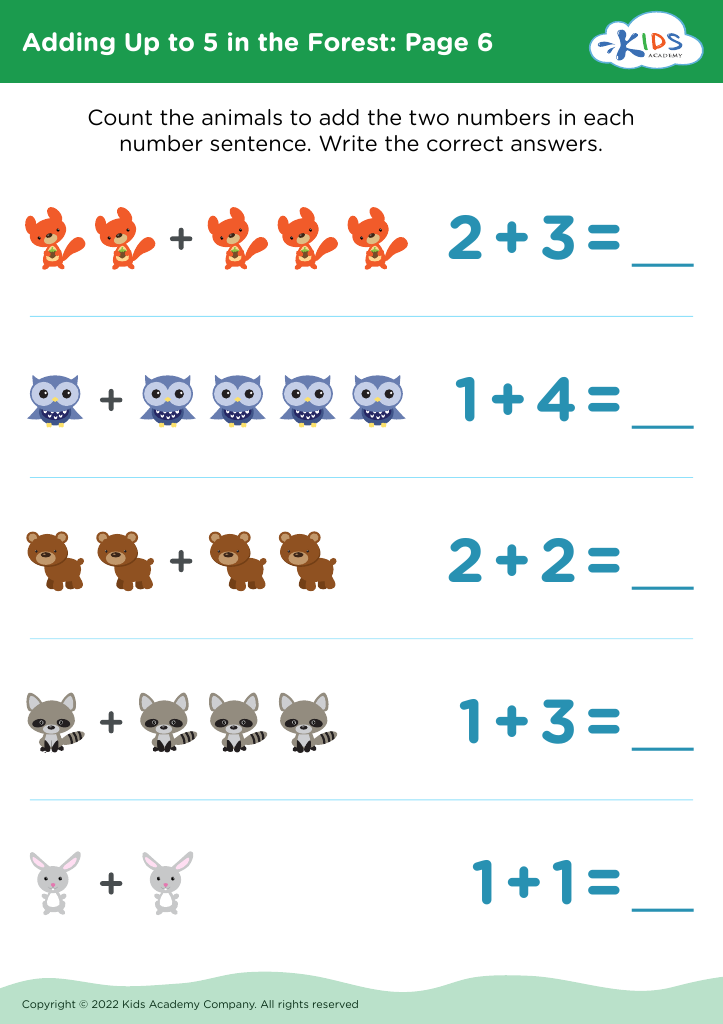
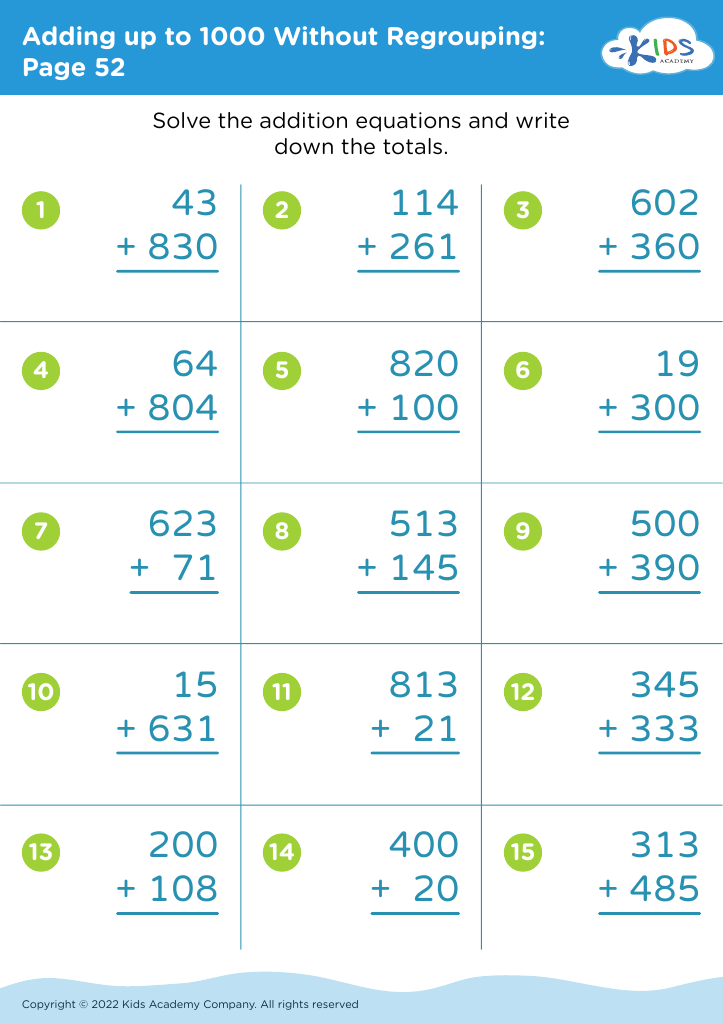
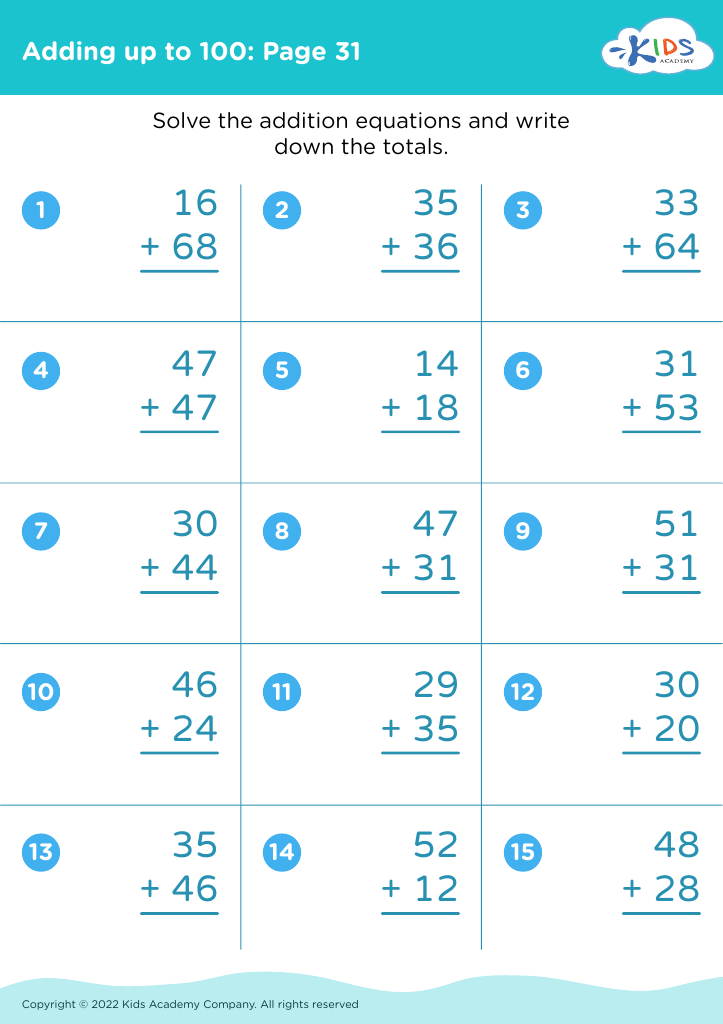








Parents and teachers should prioritize improving fine motor skills and mastering basic addition and subtraction for children ages 5-8 as these are foundational components for broader learning and development. Fine motor skills, which involve the coordination of small muscles in movements like writing, cutting with scissors, and buttoning clothing, are crucial for children’s independence and daily tasks. Enhancing these skills at a young age sets the stage for effective handwriting and other essential life skills, fostering a child’s confidence and self-reliance.
In parallel, basic addition and subtraction form the bedrock of mathematical understanding. Early proficiency in these concepts is essential as they serve as stepping-stones toward more complex mathematical operations and problem-solving abilities. By ensuring children gain a solid grasp of these fundamental math skills, parents, and teachers help cultivate critical thinking, logical reasoning, and numeracy, which are vital in both academic settings and everyday life.
Together, fine motor skills and basic arithmetic competence greatly contribute to a child’s cognitive development, academic performance, and overall self-esteem. By nurturing these areas, caregivers are not only supporting immediate educational goals but also laying down the groundwork for long-term intellectual growth and personal success.








