Improve problem-solving abilities Addition & Subtraction Worksheets for Ages 5-8
3 filtered results
-
From - To
Boost your child’s problem-solving skills with our Addition & Subtraction Worksheets for Ages 5-8. Designed to engage young learners, these worksheets use interactive exercises to instill foundational math concepts. Each worksheet combines fun and education, offering a variety of problems that enhance critical thinking and arithmetic abilities. Perfect for home or classroom use, our expertly crafted worksheets cater to different learning styles, ensuring that every child can succeed in mastering addition and subtraction. Empower your young mathematician with the tools they need to excel and build confidence in their problem-solving skills today!
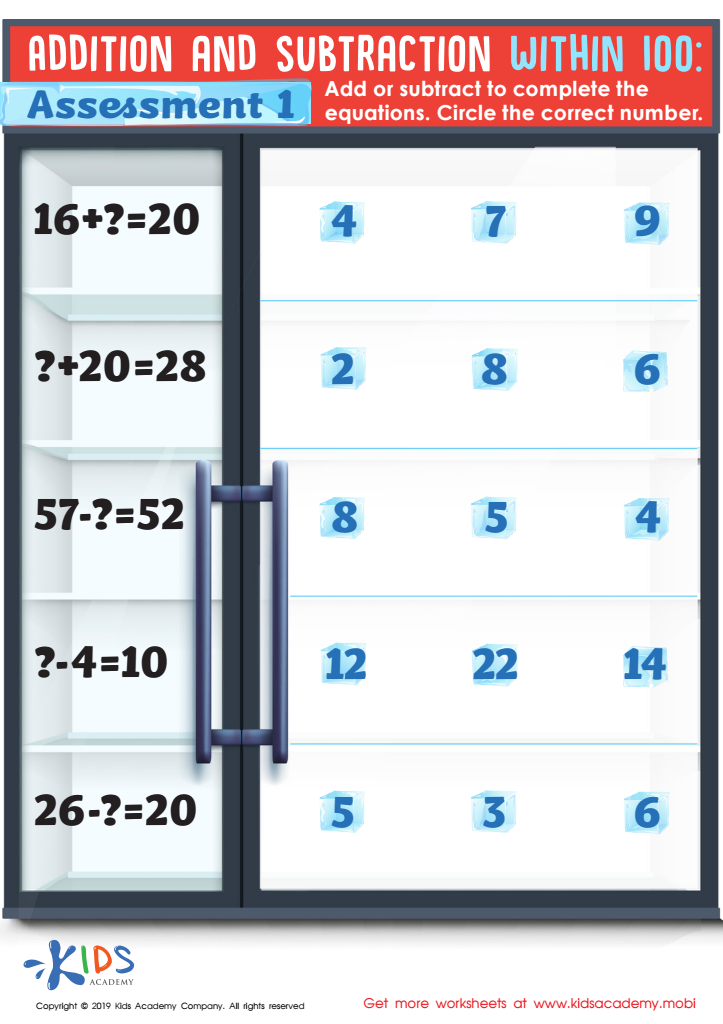
Addition and Subtraction within 100: Assessment 1 Worksheet
 Assign to My Students
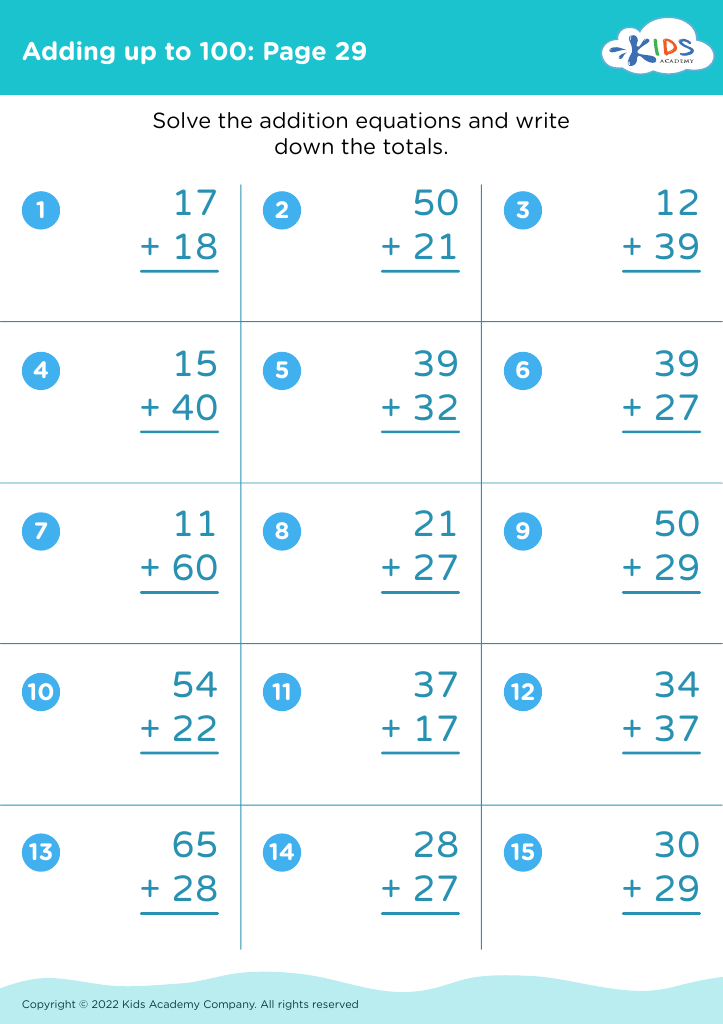
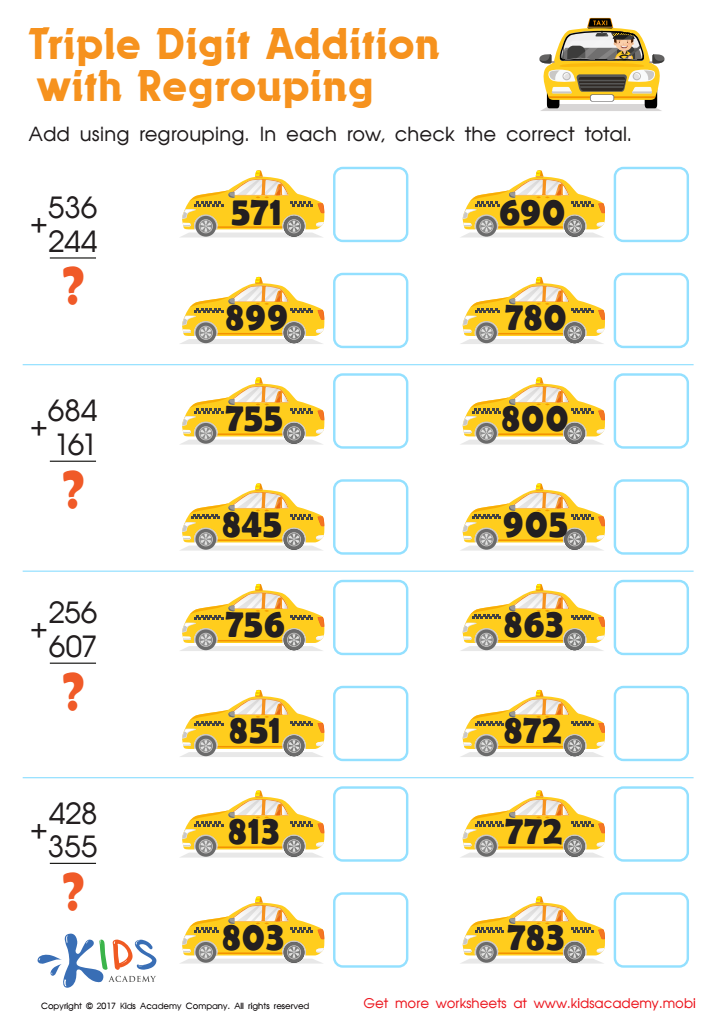
Triple Digit Addition with Regrouping Worksheet








Developing problem-solving abilities in addition and subtraction for children aged 5-8 is crucial for several reasons. Firstly, these foundational mathematical skills are part of everyday life, helping children understand and engage with the world around them. When young learners grasp addition and subtraction, they start to see relationships between numbers, boost their numerical confidence, and recognize patterns, which are essential cognitive skills.
Secondly, these early mathematical concepts foster logical thinking and reasoning. As children work through addition and subtraction problems, they must figure out steps and operations, which translates to enhanced critical-thinking abilities. These skills are beneficial not just in mathematics but across all subjects and real-life situations, promoting overall intellectual development.
Moreover, developing these problem-solving abilities encourages persistence and resilience. Problem-solving often involves trial and error, and learning addition and subtraction allows children to practice and refine these soft skills. Handling and overcoming mathematical challenges teaches them the value of effort and perseverance, which contributes to healthy emotional development.
In a supportive educational environment, focusing on these early math skills builds a strong foundation for more complex mathematical concepts in the future. Both teachers and parents play vital roles in nurturing these abilities, ensuring children's academic success and empowering them with skills that extend beyond the classroom.








