Improving observation skills Addition & Subtraction Worksheets for Ages 5-8
3 filtered results
-
From - To
Enhance your child's math journey with our "Improving Observation Skills: Addition & Subtraction Worksheets" designed specifically for ages 5-8! These engaging and interactive worksheets focus on building essential observation skills while reinforcing addition and subtraction concepts. By encouraging children to closely examine numbers, patterns, and problem-solving scenarios, they will develop a keen eye for detail and boost their confidence in math. Fun illustrations and varied activities make learning enjoyable, ensuring students remain motivated. Equip your young learners with the tools they need to succeed in math and life with these thoughtfully crafted worksheets that connect observation skills with foundational arithmetic practice.
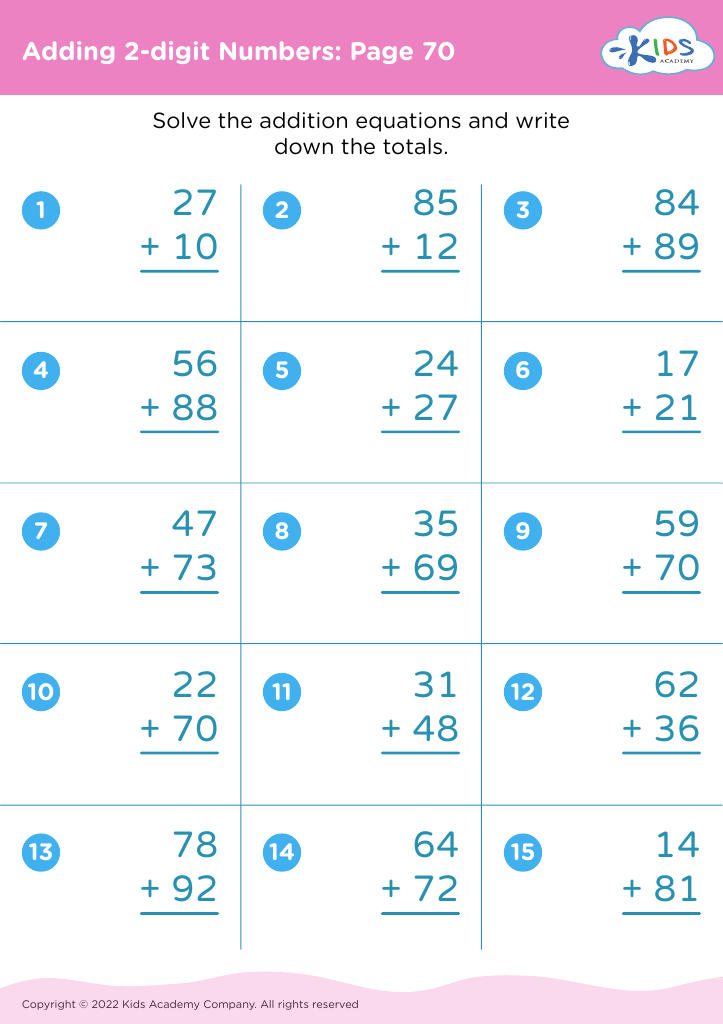
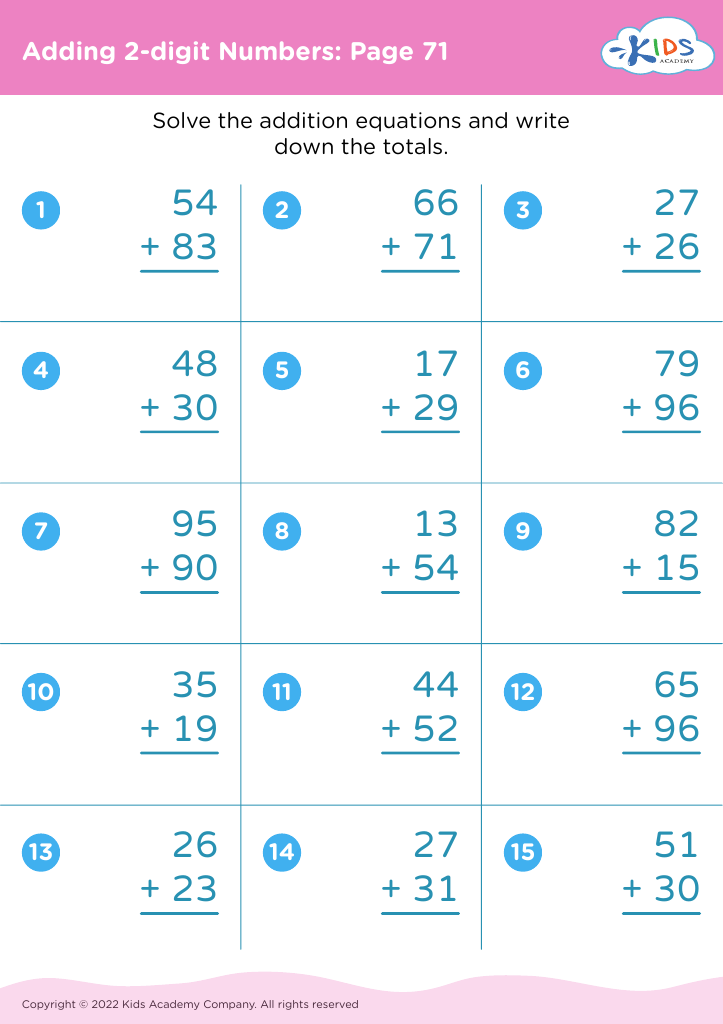
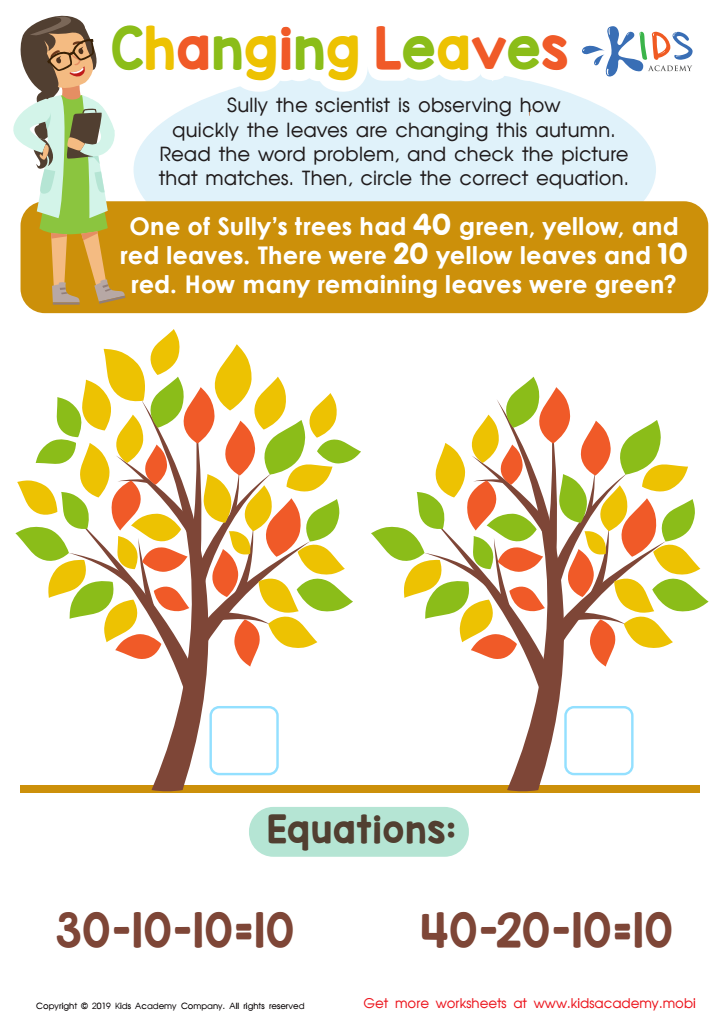
Changing Leaves Worksheet
 Assign to My Students








Improving observation skills in early childhood education, particularly in addition and subtraction for ages 5-8, is crucial for several reasons. First, developing strong observation skills helps children identify patterns, understand numerical relationships, and make meaningful connections between concepts. This foundational understanding significantly enhances their mathematical reasoning and problem-solving abilities.
Moreover, children who can observe and analyze how numbers work together develop greater confidence in their abilities to tackle math problems. Improved observation promotes a proactive learning environment where children learn to ask questions, hypothesize, and explore, leading to deeper comprehension.
For parents and teachers, nurturing these skills means fostering critical thinking and curiosity. Engaging in activities that encourage observation—not just of numbers, but of real-life scenarios—makes learning more relatable and fun. It removes the fear often associated with math, laying a more solid groundwork for future curriculum challenges.
Additionally, fostering these skills can enhance classroom engagement. Children are more likely to participate and stay focused if they see relevance in what they are learning. Ultimately, strengthening observation skills in addition and subtraction is an investment in a child's overall cognitive development, leading to success in mathematics and beyond.








