Improving problem-solving skills Addition & Subtraction Worksheets for Ages 5-8
3 filtered results
-
From - To
Unlock your child’s potential with our "Improving Problem-Solving Skills: Addition & Subtraction Worksheets" tailored for ages 5-8! These engaging and expertly designed worksheets aim to make math practice enjoyable while building essential problem-solving abilities. Perfect for young learners, our exercises focus on enhancing logic, boosting critical thinking, and developing strong mathematical foundations. With vibrant visuals and interactive tasks, each worksheet offers a fun and effective way to master addition and subtraction. Watch as your child gains confidence and excels in math through consistent practice. Start your educational journey today with our comprehensive resources!
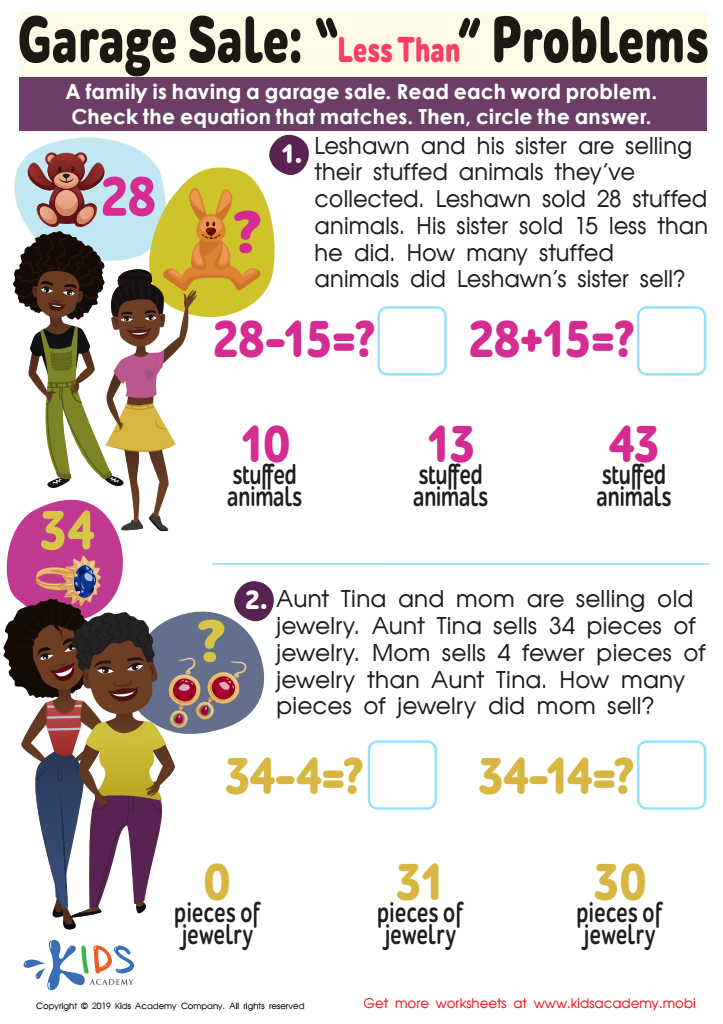
Garage Sale Less Than Worksheet
 Assign to My Students
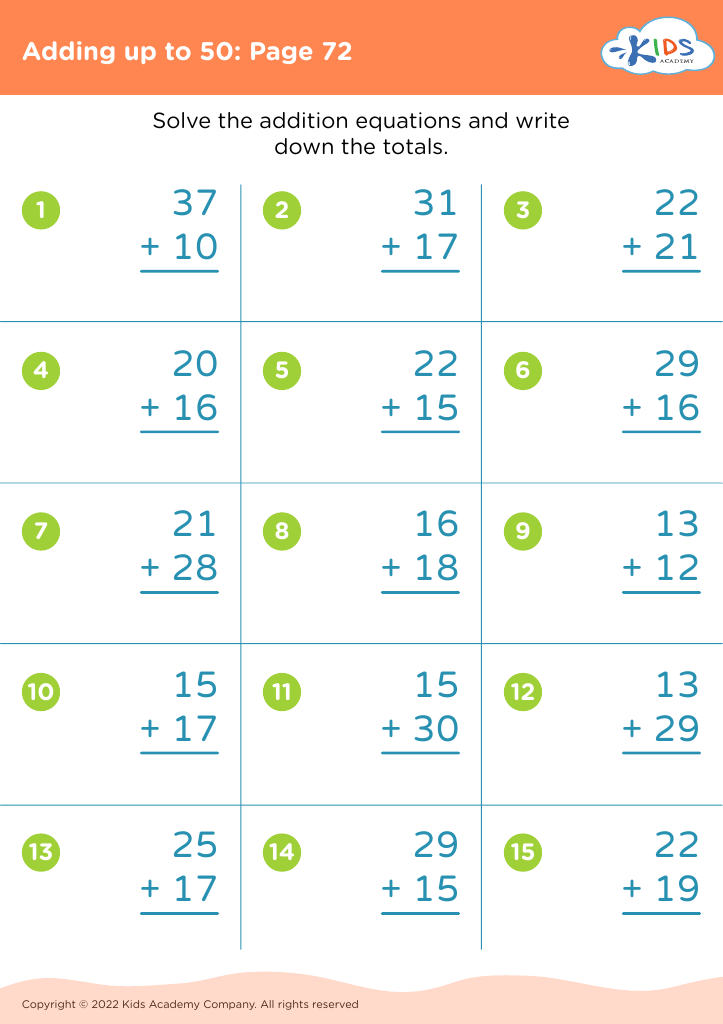
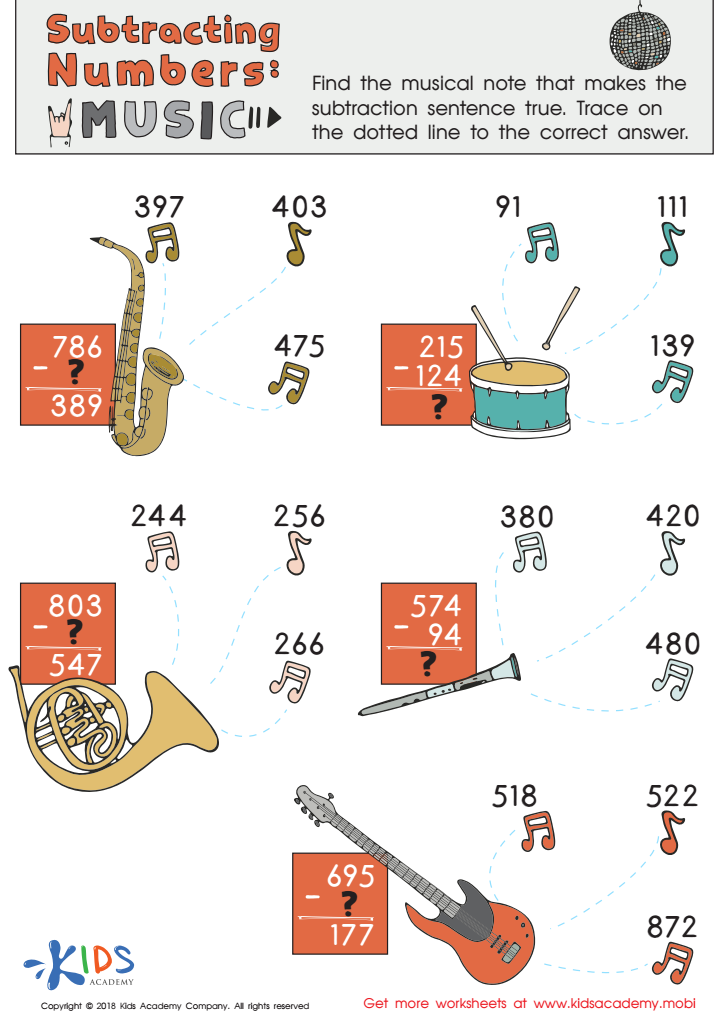
Subtracting Numbers: Music Worksheet








Improving problem-solving skills in addition and subtraction for ages 5-8 is fundamental to a child's mathematical foundation and cognitive development. At this early stage, children start to grasp basic arithmetic concepts that will serve as building blocks for more complex mathematical reasoning later in life. Developing these skills enhances their ability to think critically, solve problems efficiently, and approach tasks methodically.
For parents and teachers, nurturing these skills means setting children up for academic success not only in mathematics but also across all subjects. Early competency in addition and subtraction helps children build confidence, reduces math anxiety, and fosters a positive attitude towards learning. These problem-solving abilities are transferable, as children learn to break down complex tasks into manageable steps, think logically, and persist through challenges.
Moreover, early arithmetic skills are linked to improved performance in other cognitive domains, such as language and executive function. Activities that enhance addition and subtraction skills, such as puzzles and games, also engage children, making learning fun and interactive.
In a rapidly evolving world, strong problem-solving skills are invaluable. Providing children with a strong foundation in basic arithmetic at an early age equips them with tools for lifelong learning and success. Understanding and tackling quantitative problems effectively is a skill that, once nurtured, pays dividends throughout their academic and professional lives.








