Learning number patterns Addition & Subtraction Worksheets for Ages 5-8
3 filtered results
-
From - To
Discover our engaging Learning Number Patterns Addition & Subtraction Worksheets designed specifically for children aged 5-8! These worksheets help young learners develop essential math skills through fun and interactive activities. Featuring vibrant illustrations and easy-to-follow exercises, students will enjoy identifying and creating number patterns while practicing addition and subtraction. Our resources aim to boost children's confidence in math, enhance their problem-solving abilities, and foster a love for learning. Perfect for both classroom and home use, these worksheets seamlessly align with early educational standards, ensuring your child is well-prepared for future math challenges. Start building a strong math foundation today!
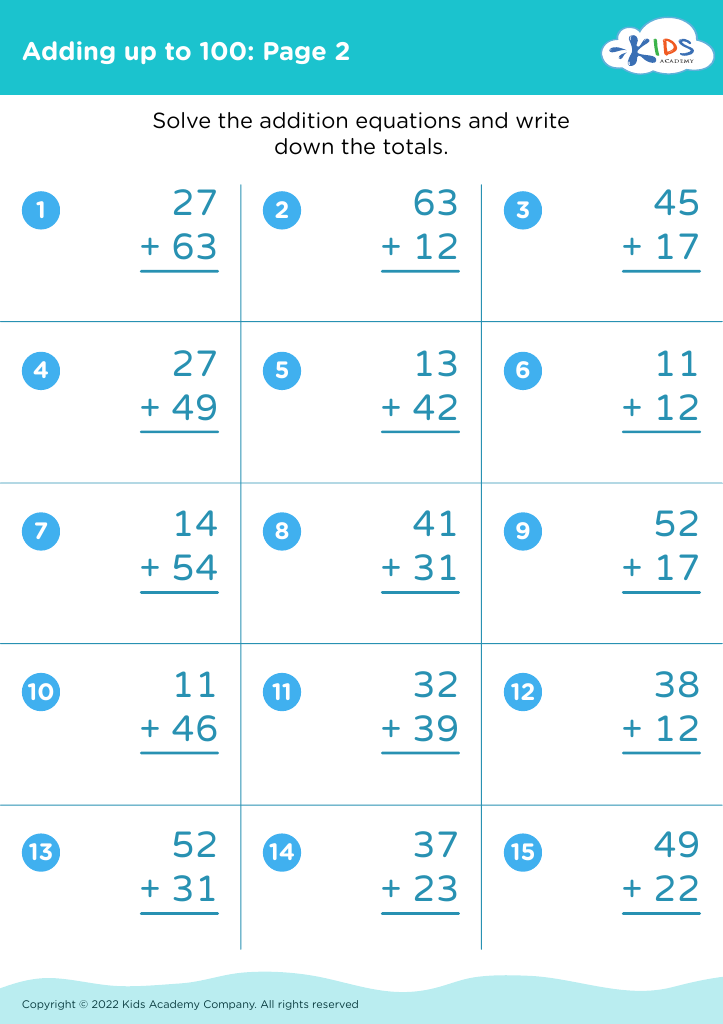
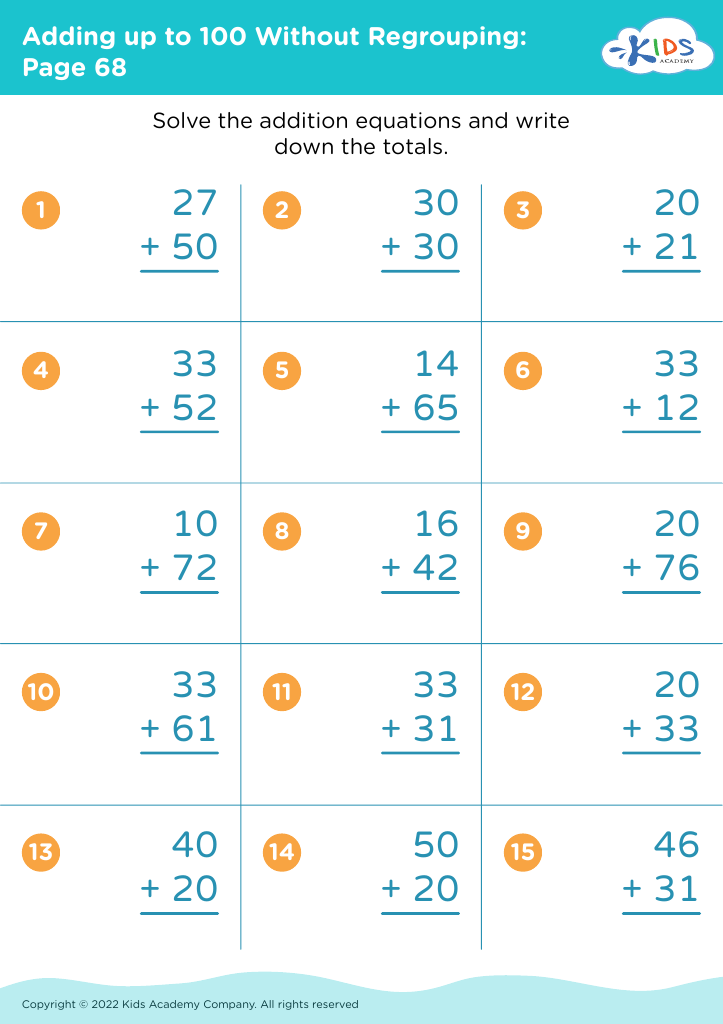
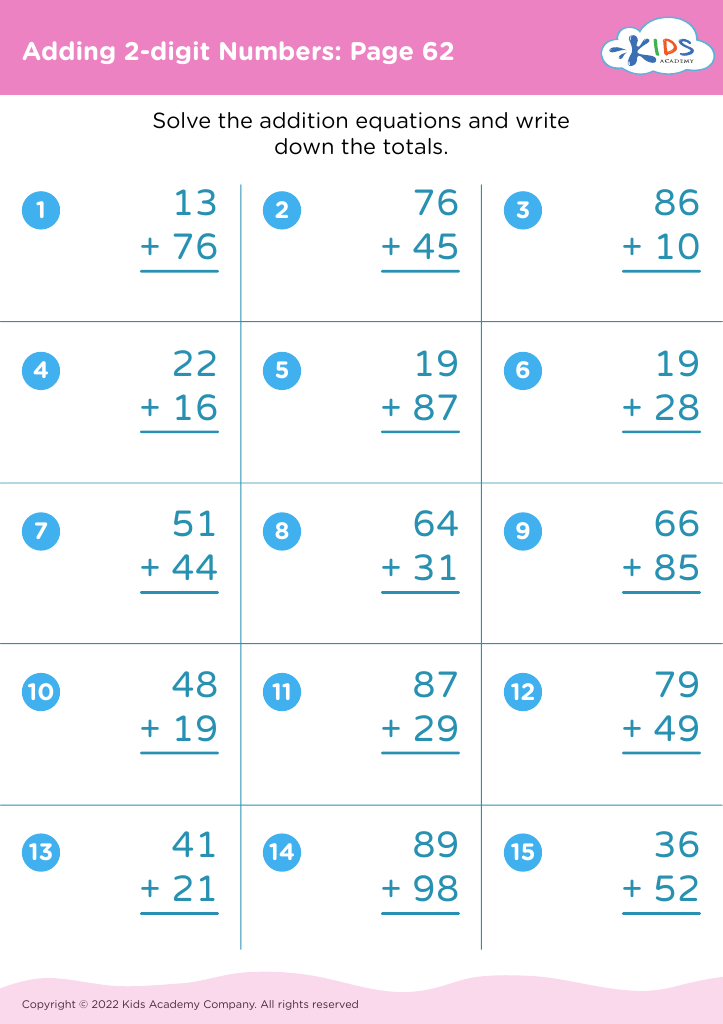








Learning number patterns in addition and subtraction is crucial for children aged 5-8 as it forms the foundation for their mathematical understanding and problem-solving skills. By mastering these patterns, children can develop a deeper comprehension of numbers and their relationships, which goes beyond mere memorization of facts.
Understanding number patterns fosters critical thinking skills. Teachers and parents can help children recognize sequences (like skip counting or simple addition and subtraction relationships), making it easier for them to predict outcomes and solve more complex problems. This also boosts their confidence, as children who grasp these concepts are often more willing to tackle challenging math tasks.
Moreover, recognizing patterns helps in developing fluency in mathematical operations. When children perceive the underlying structures within addition and subtraction, they become more adept at mental math, allowing for quicker calculations and more efficient learning. Furthermore, these skills are essential in everyday life and in more advanced math and science subjects as they grow older.
In conclusion, understanding number patterns in addition and subtraction not only enhances children's arithmetic skills but also nurtures their cognitive development, setting them up for future academic success. Parents and teachers play a pivotal role in guiding this crucial stage of learning.








