Filters

10 filtered results

Clear all filters
Favorites
With answer key
Interactive

10 filtered results

Difficulty Level

Grade


Cultivate your child's logical thinking skills with our targeted Addition & Subtraction Worksheets designed for ages 5-8. These engaging and educational worksheets provide fun exercises that help young learners master basic math concepts while enhancing their problem-solving abilities. Each worksheet is crafted to integrate logical thinking seamlessly with addition and subtraction problems, ensuring a balanced approach to learning. Perfect for parents and teachers seeking to bolster mathematical understanding and cognitive development in children, our printable worksheets make learning both enjoyable and effective. Equip your young mathematician with the tools they need for academic success today!

Check out this FREE Trial Lesson on Addition & Subtraction for age 5-8!

More Word Problems

Favorites
With answer key
Interactive
  • 5-8
  • Logical thinking development
  • Addition & Subtraction
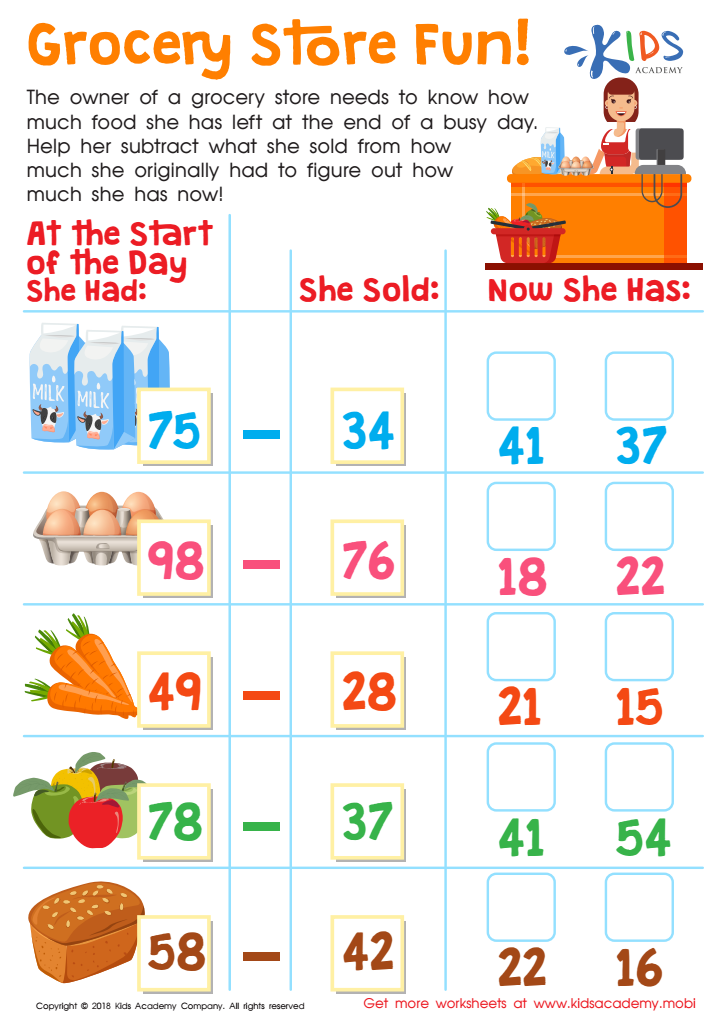
Grocery Store Fun! Worksheet

Grocery Store Fun! Worksheet

Let your kids have fun with this store worksheet. It requires them to help the owner by subtracting what she has sold from the original amount to figure out how much is left. Have them read and solve the equations in the printout to give the store owner the answer.
Grocery Store Fun! Worksheet
Worksheet
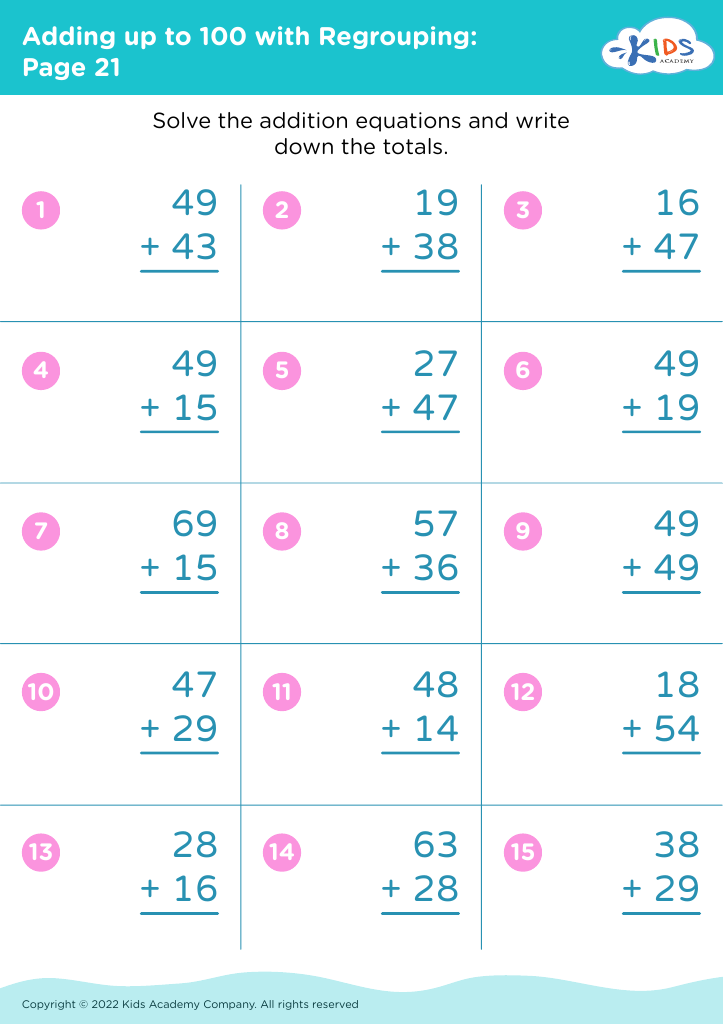
Adding up to 100 with Regrouping: Page 21
Worksheet
Voting Worksheet
Voting Worksheet

Voting Worksheet

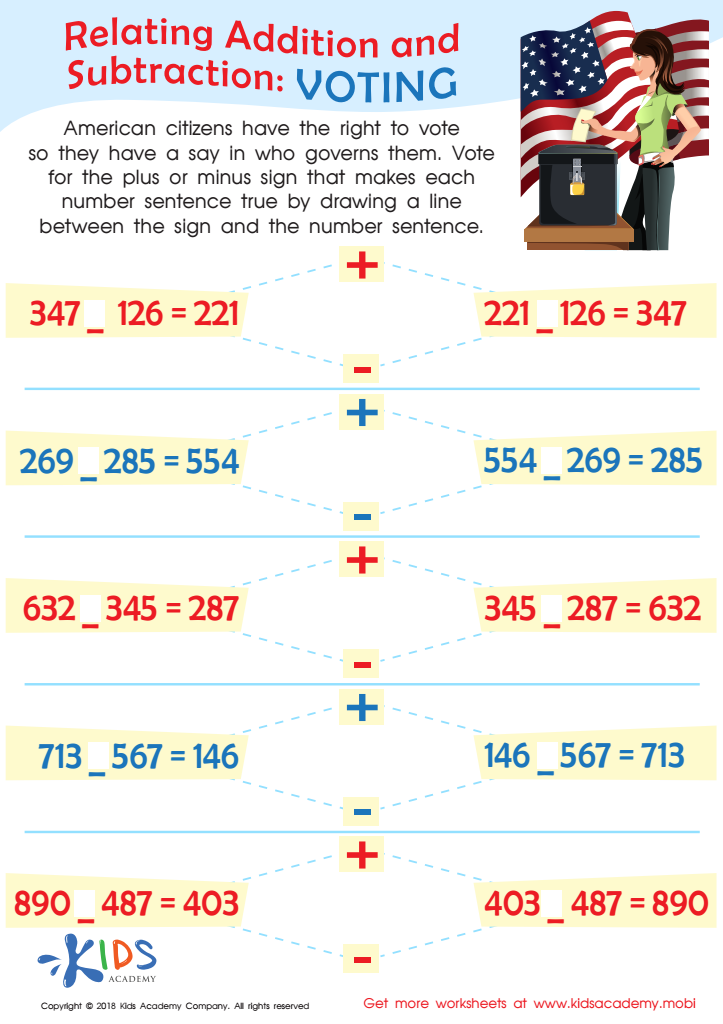
This worksheet combines Social Studies and Math, teaching kids the democratic concept of voting. Guide learners to observe the problem, and decide if it needs a plus or minus. They "vote" for the correct answer by drawing a line from the problem to the correct operation symbol. Tally up the votes to check the answers!
Voting Worksheet
Worksheet
Tricky Problems Worksheet: Part 2

Tricky Problems Worksheet: Part 2

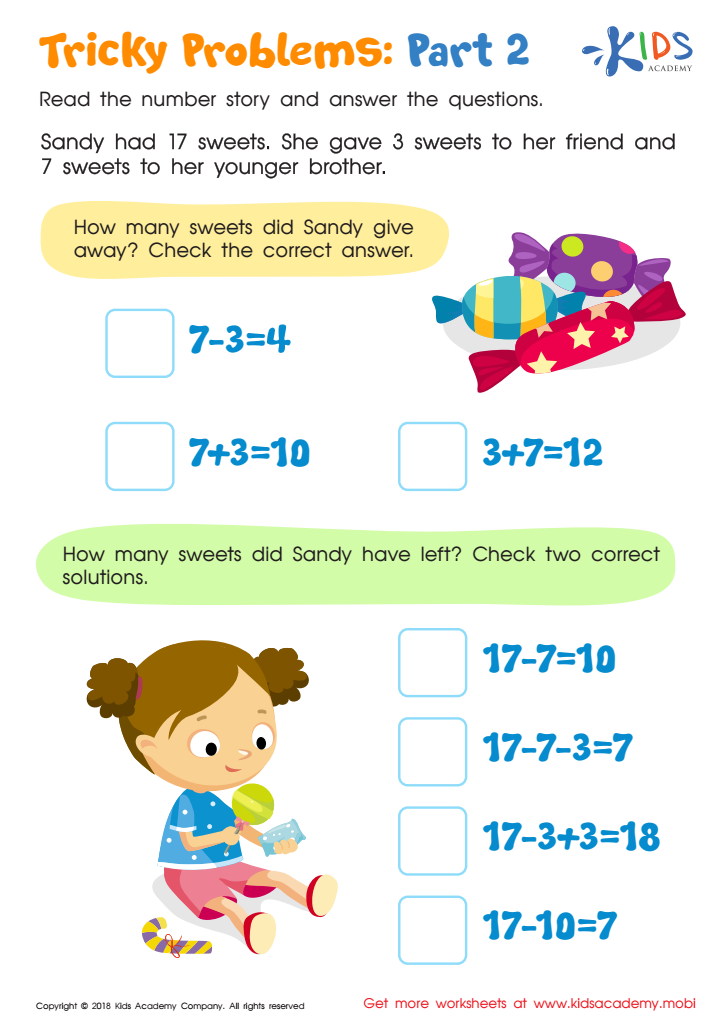
Help your little math learner visualize number stories with this engaging worksheet. They'll connect pictures to the story and use math facts to find the sums. After that, they'll be able to identify the correct number sentences to match. Let them practice and get better at problem solving!
Tricky Problems Worksheet: Part 2
Worksheet
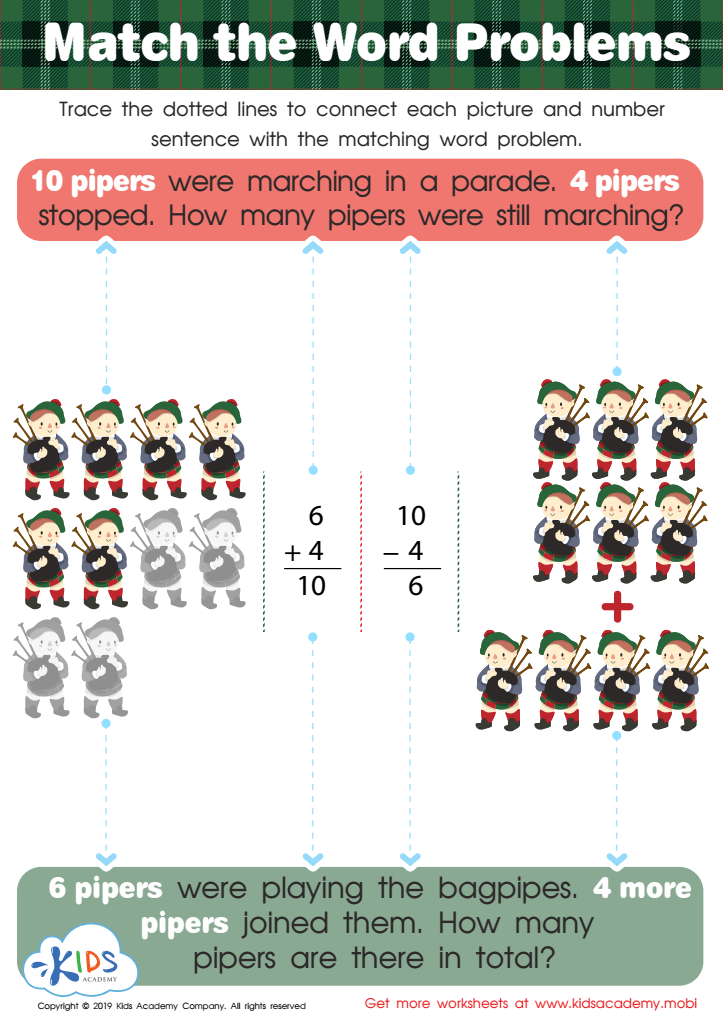
Match the Word Problems Worksheet

Match the Word Problems Worksheet

Read this word problem to your kids: Help them understand how it can be translated into a number problem. Trace the dotted lines to see how each picture and number sentence match the problem. With this worksheet, you can show your kids how easy it is to transform a word problem into a number problem.
Match the Word Problems Worksheet
Worksheet
Subtraction Robot Sorter Worksheet
Subtraction Robot Sorter Worksheet
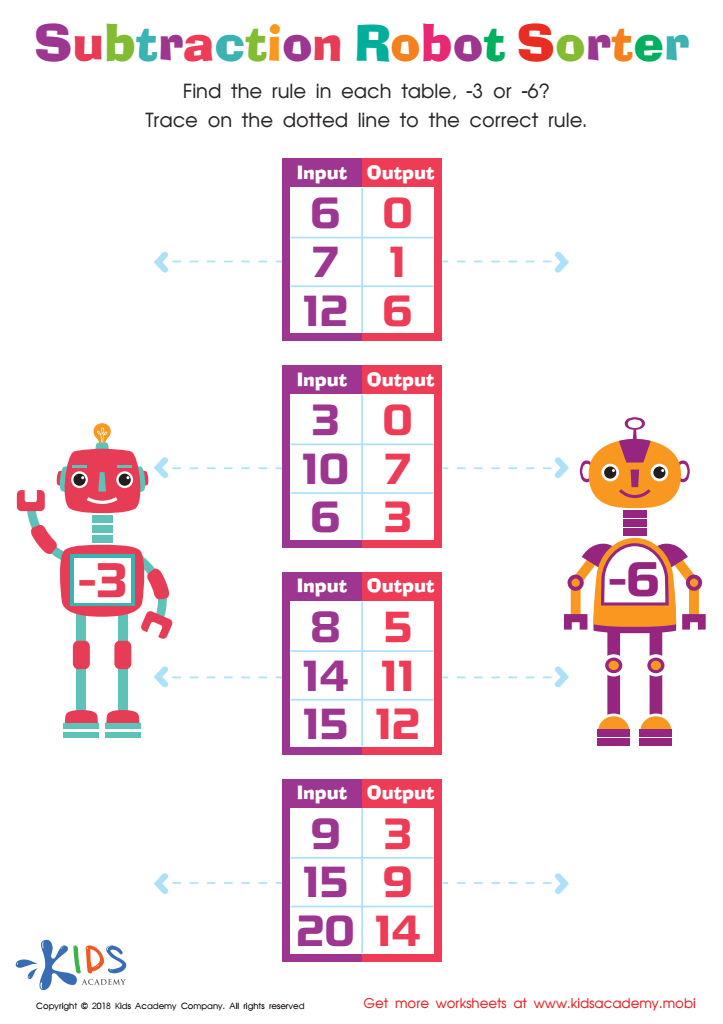
Help your child learn essential math skills with robot friends! Look at function machines and find if the rule is minus 3 or minus 6. Trace the dotted line to the robot with the correct rule when the pattern is found. Simple and delightful!
Subtraction Robot Sorter Worksheet
Worksheet
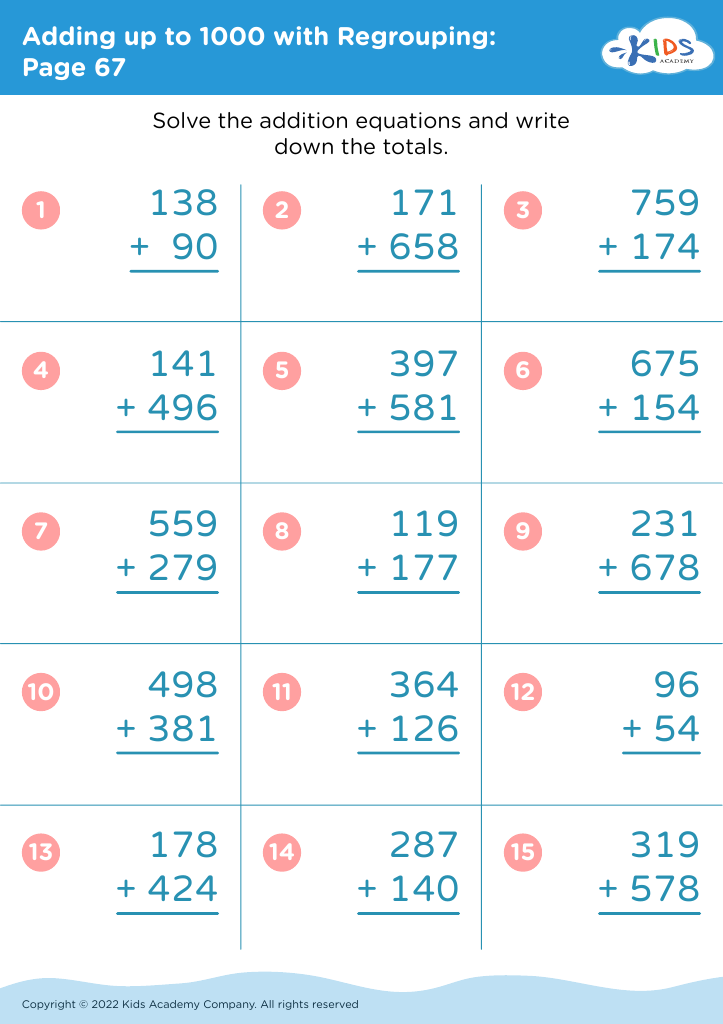
Adding up to 1000 with Regrouping: Page 67
Worksheet
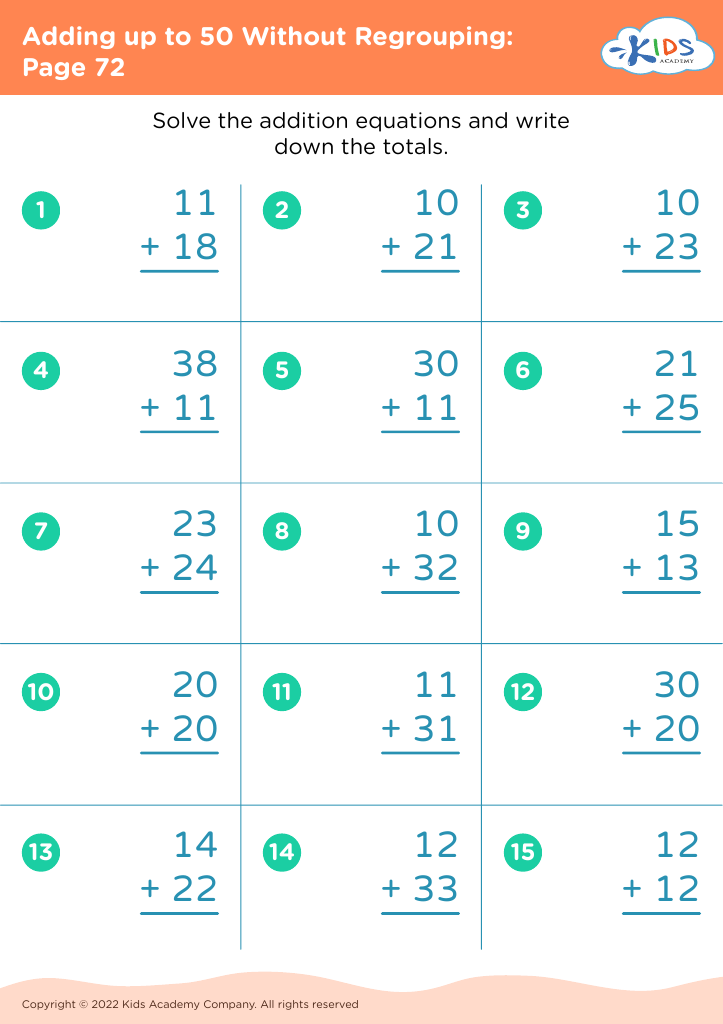
Adding up to 50 Without Regrouping: Page 72
Worksheet
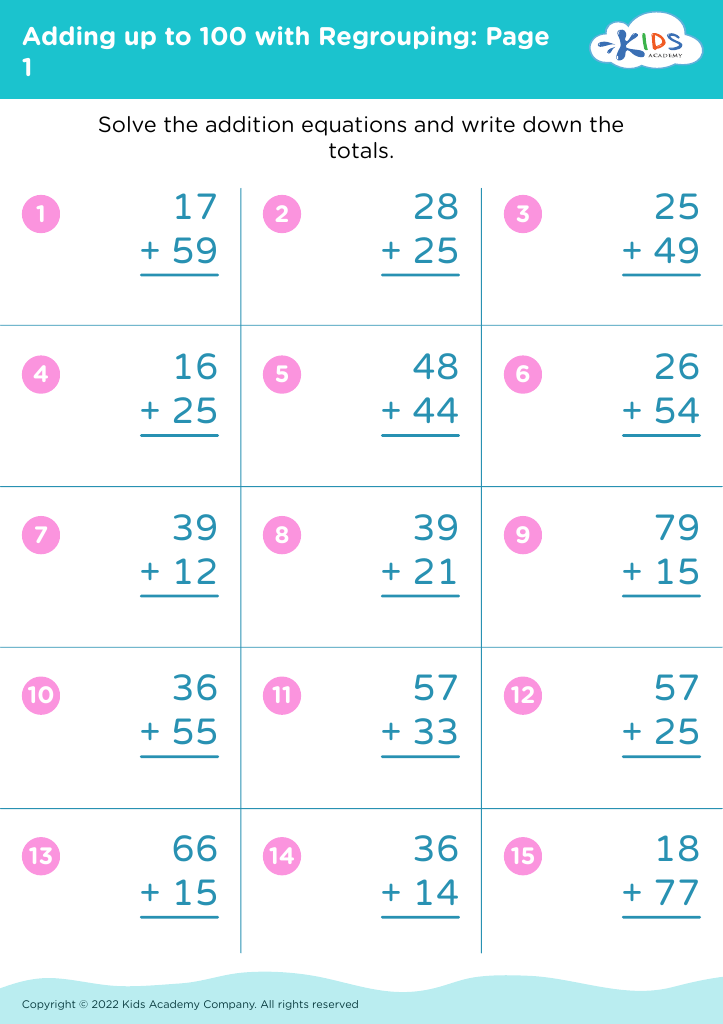
Adding up to 100 with Regrouping: Page 1
Worksheet
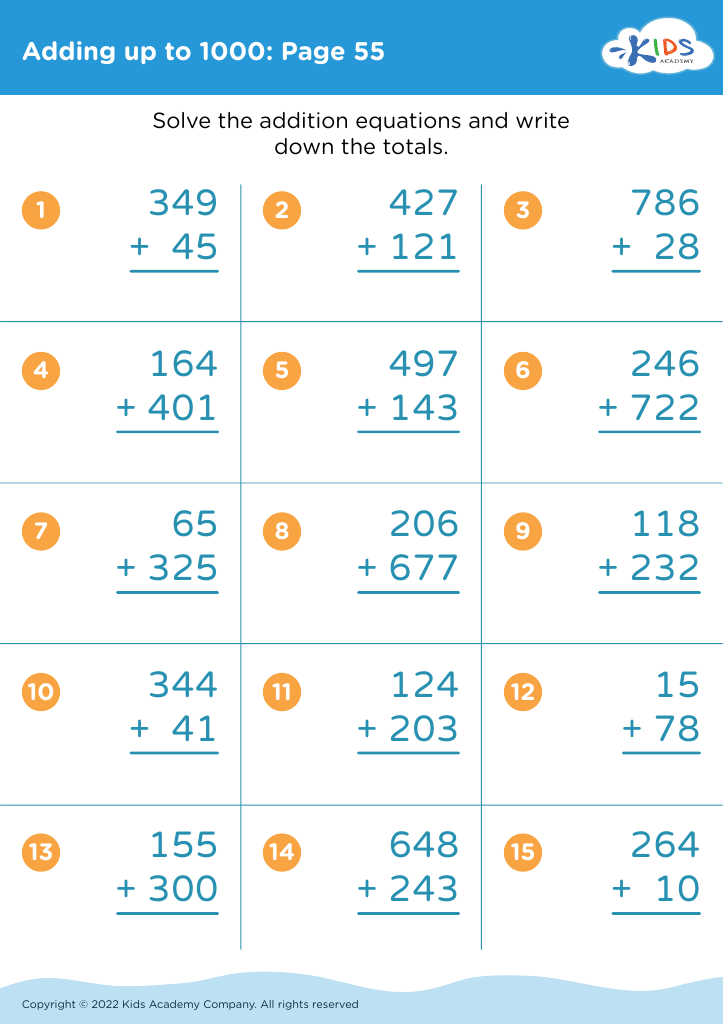
Adding up to 1000: Page 55

Adding up to 1000: Page 55

Adding up to 1000: Page 55
Worksheet


Logical thinking development along with addition and subtraction are foundational skills for children aged 5-8 that are crucial for their future academic and personal success. First and foremost, these skills lay the groundwork for more complex mathematical concepts. Mastery in addition and subtraction build confidence and proficiency in tackling higher-level arithmetic, which is essential for advanced studies and everyday problem-solving.

Moreover, logical thinking fosters critical thinking abilities. Learning to solve math problems, such as simple additions and subtractions, teaches children how to approach tasks methodically, reason through challenges, and arrive at sound conclusions. These processes contribute to improved cognitive functions and enhance decision-making skills.

Furthermore, proficiency in these areas translates to academic readiness and success. Children who are adept at beginner mathematics usually find it easier to grasp and excel in a variety of school subjects, including science and reading comprehension. This enhances their overall academic performance and prepares them for future educational challenges.

On a social-emotional level, acquiring these skills boosts self-esteem and provides children with a sense of accomplishment. Successfully solving math problems reinforces resilience and perseverance, traits that are valuable beyond academics and critical to personal development. Thus, investing time and effort in nurturing these skills benefits children now and in their future pursuits.