
Mental math development Addition & Subtraction Worksheets for Ages 5-8
3 filtered results
Difficulty Level
Grade
Age
-
From - To
Subject
Activity
Standards
Boost your child's mathematical skills with our engaging Mental Math Development Addition & Subtraction Worksheets designed for ages 5-8! These worksheets focus on enhancing mental math abilities, helping young learners develop speed and accuracy in basic arithmetic. With a variety of fun and interactive activities, your child will practice addition and subtraction in a stress-free environment, cultivating confidence and problem-solving skills. Our resources cater to different learning styles, ensuring every child can thrive. Perfect for at-home practice or in the classroom, our worksheets provide a strong foundation for academic success in math. Start your child's math journey today!
Favorites
With answer key
Interactive
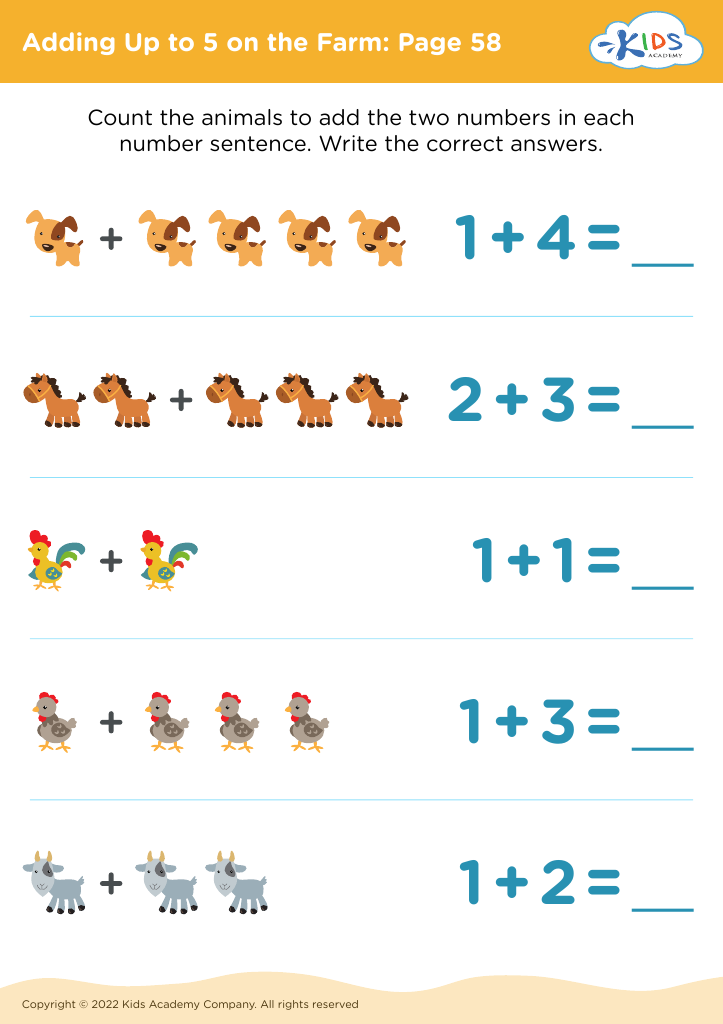
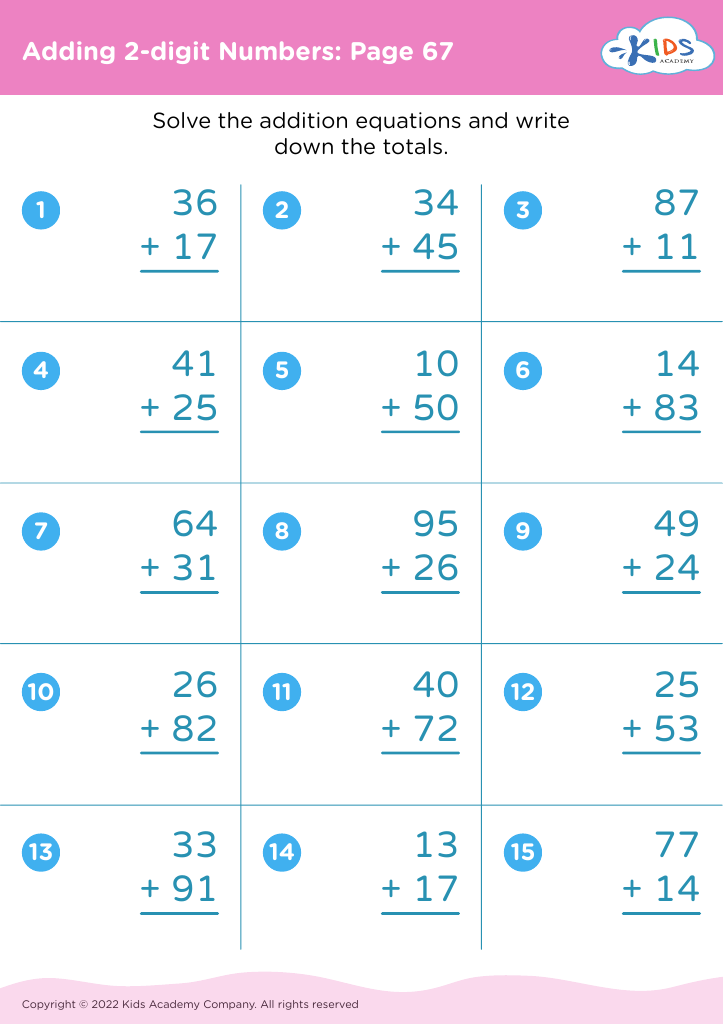
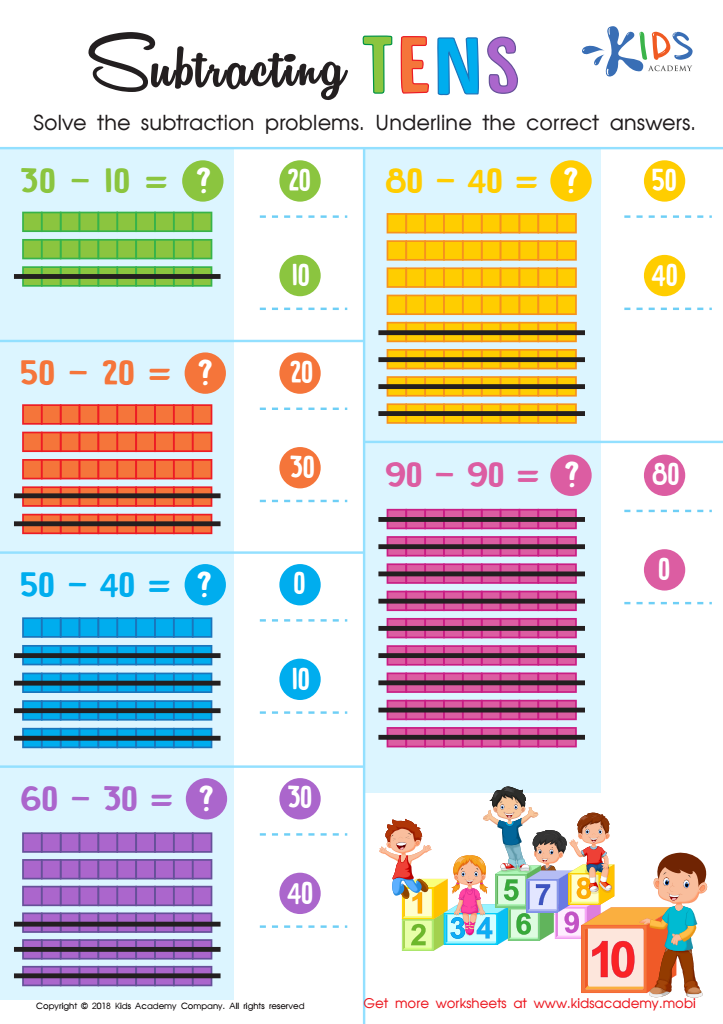
Subtracting Tens Worksheet
Base ten blocks enable kids to make practical math connections and develop number sense. This free worksheet, using bright-colored tens blocks, helps children learn to skip count and subtract. It lays a strong foundation for upcoming higher level math problems.
 Assign to My Students
Subtracting Tens Worksheet
Worksheet
Join Kids Academy for Free
Who is primarily going to use this learning content?








Mental math development, particularly in addition and subtraction, is crucial for children ages 5-8 as it lays the foundation for their mathematical thinking and problem-solving skills. During these formative years, children are exceptionally receptive to learning, and nurturing their mental math abilities fosters confidence and a positive attitude toward mathematics.
When children learn to perform addition and subtraction mentally, they develop number sense, which enhances their understanding of mathematical concepts and relationships. This skill helps them solve problems more efficiently and approaches complex topics with ease, leading to better performance in higher-level math as they progress in their education.
Additionally, mastering mental math promotes cognitive development. It encourages children to think critically and develop reasoning skills, reinforcing their ability to make connections between numbers and concepts. It also prepares them for real-life situations, as mental calculations are frequently required in daily activities, like budgeting or estimating expenses.
For parents and teachers, prioritizing mental math development means equipping children with essential skills that foster independence and resilience. Encouraging regular practice and providing a supportive learning environment boosts children’s motivation and joy in math, cultivating lifelong learners who view challenges as opportunities for growth.








