Motor skills development Addition & Subtraction Worksheets for Ages 5-8
5 filtered results
-
From - To
Explore our engaging Motor Skills Development Addition & Subtraction Worksheets designed specifically for children ages 5-8! These worksheets combine essential math skills with fun motor activities, making learning both enjoyable and effective. Aimed at enhancing hand-eye coordination and fine motor skills, each worksheet encourages kids to practice addition and subtraction through interactive exercises that involve cutting, coloring, and writing. Perfect for at-home learning or classroom use, our resources empower young learners to build confidence in their mathematical abilities while developing crucial motor skills. Discover a fun and multifaceted approach to learning that keeps kids motivated and excited about math!
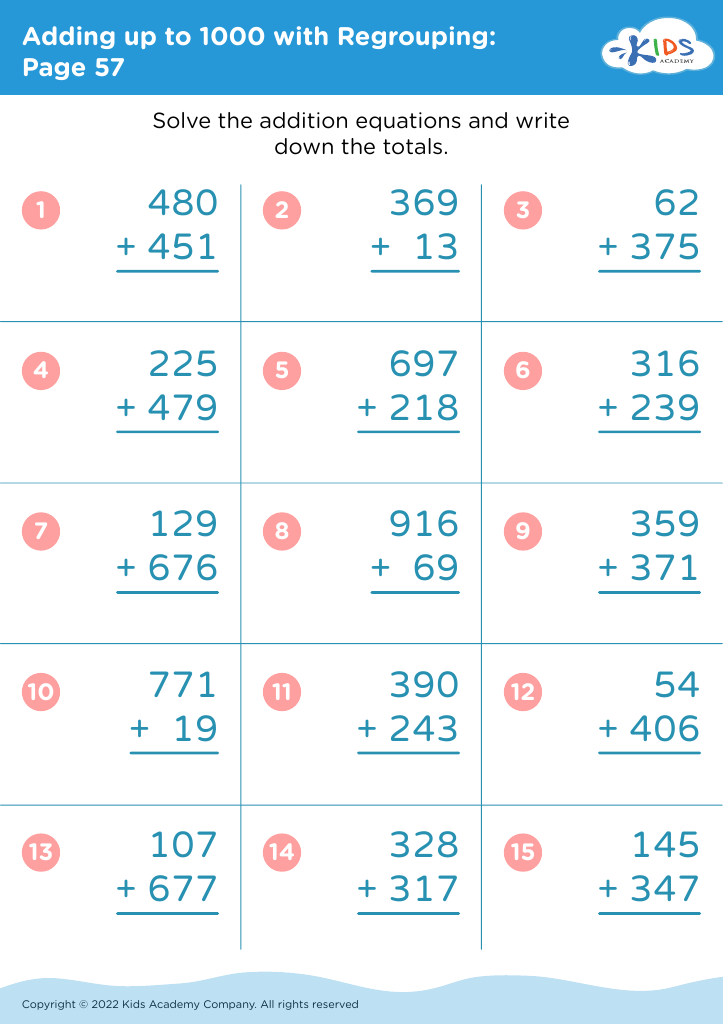
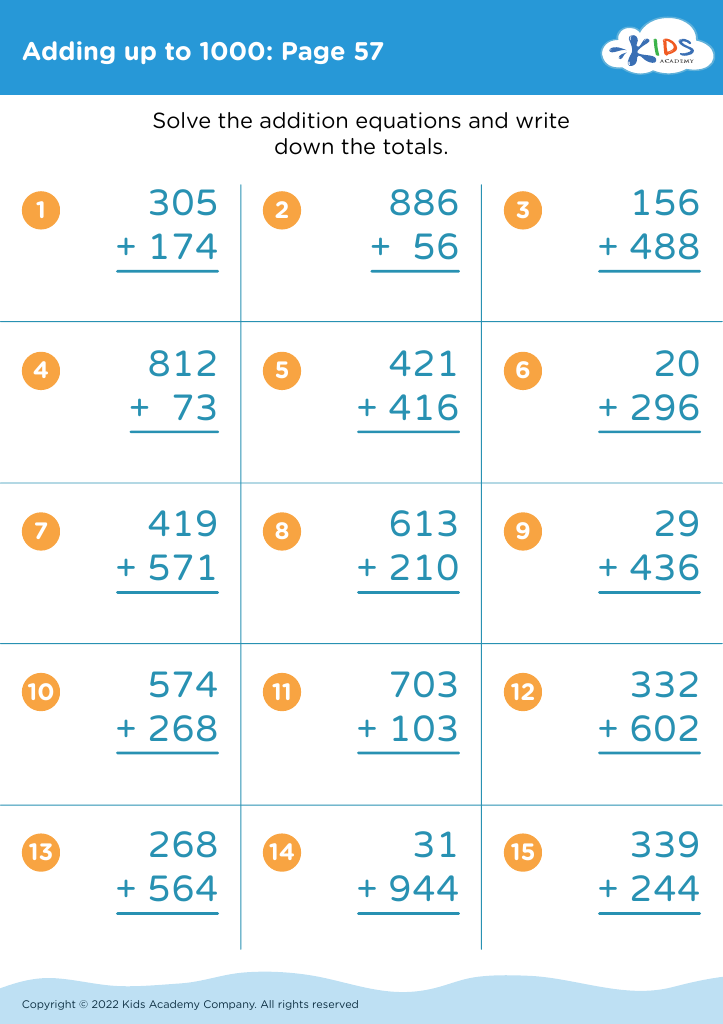
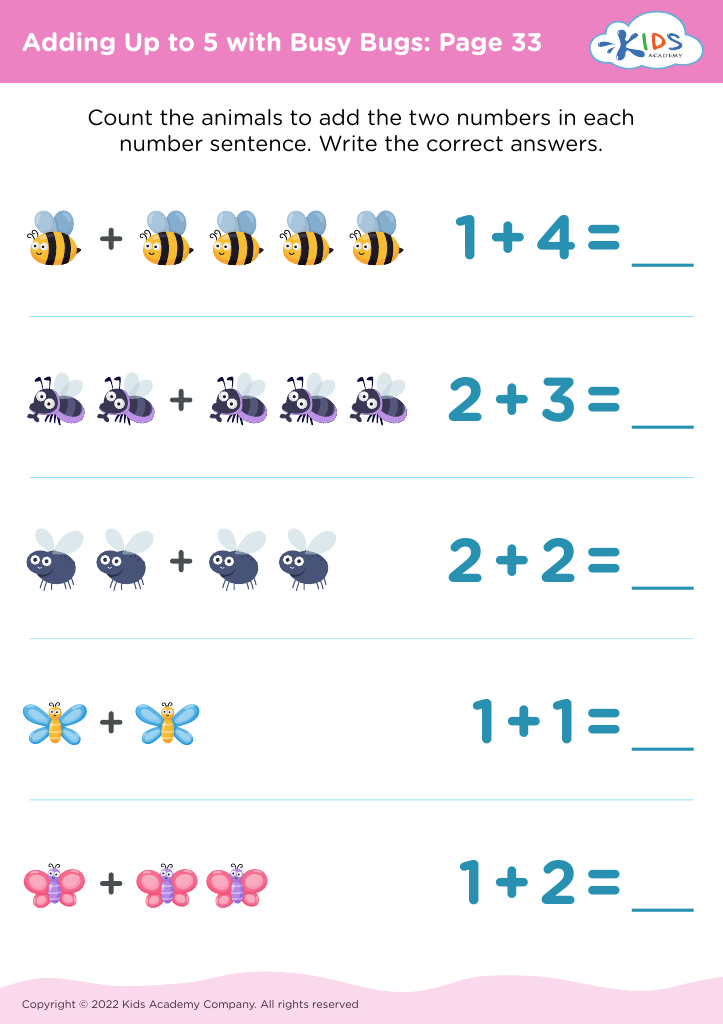
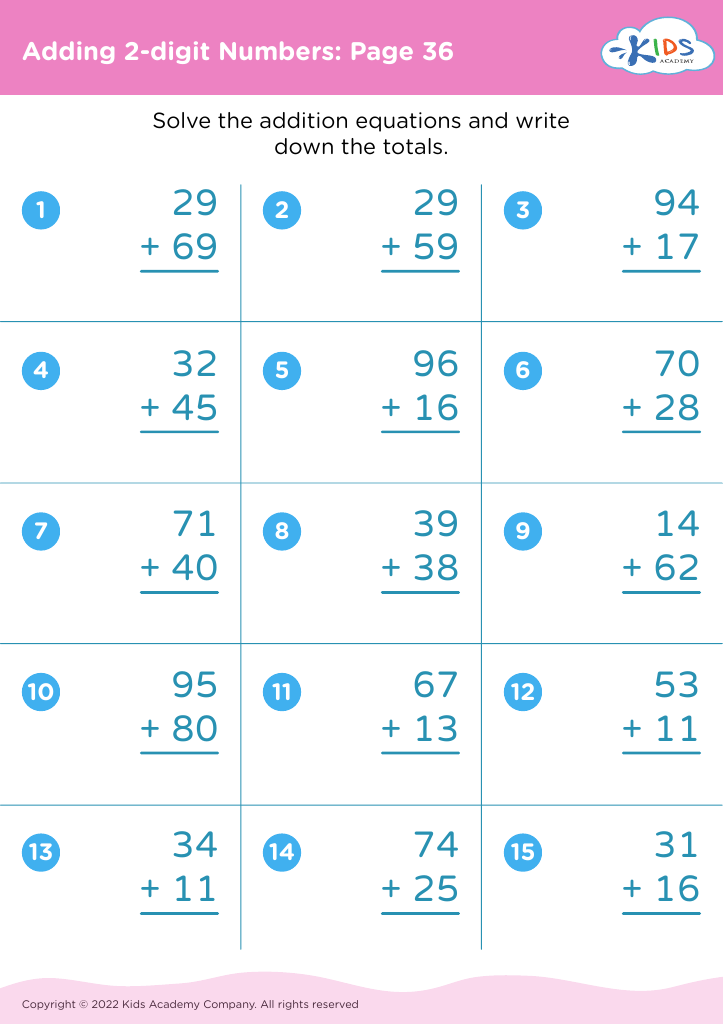
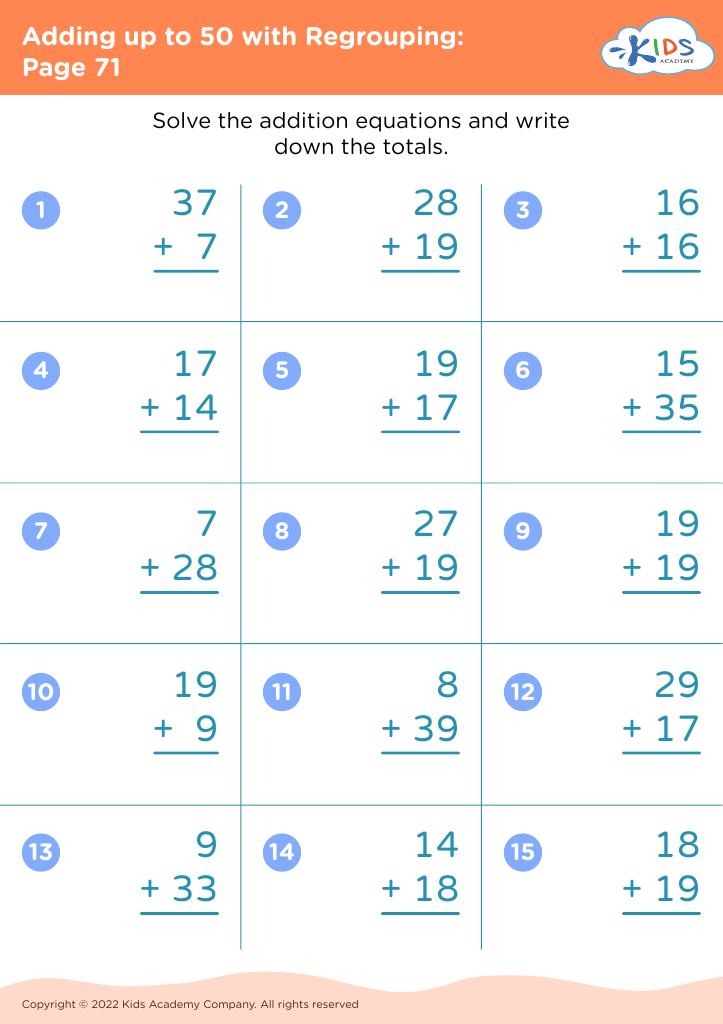








Motor skills development and foundational math concepts like addition and subtraction are crucial for children ages 5-8. During this stage, children's fine and gross motor skills are rapidly advancing, playing a significant role in their overall development. When children engage in activities that promote motor skills, such as cutting, drawing, and handling small objects, they enhance their hand-eye coordination, dexterity, and spatial awareness. These skills are essential not only in daily tasks but also in learning activities that require physical manipulation of tools, like pencils and counting blocks.
Simultaneously, addition and subtraction are the building blocks of arithmetic, forming the basis for more complex mathematical concepts. Early mastery of these skills fosters a sense of confidence and enthusiasm toward learning mathematics and problem-solving.
Parents and teachers should prioritize these areas because they are interconnected; strong motor skills can aid in better engagement with mathematical tasks, while a solid understanding of basic operations lays the groundwork for future academic success. Furthermore, fostering motor skills and math proficiency during these formative years can promote a lifelong love for learning, ensuring students become confident, capable learners as they progress in their education.








