Number comparison Addition & Subtraction Worksheets for Ages 5-8
3 filtered results
-
From - To
Explore our engaging Number Comparison Addition & Subtraction Worksheets, designed specifically for children ages 5-8. These worksheets focus on enhancing young learners' understanding of number relationships through fun and interactive exercises. Students will develop their skills in comparing numbers, differentiating between greater and lesser values, and applying this knowledge through addition and subtraction problems. Perfect for classroom use or at-home learning, our resources foster critical thinking and problem-solving skills while making math enjoyable. Help your child build a strong foundation in numeracy with our thoughtfully crafted worksheets that align with educational standards and encourage independent learning. Start their math journey today!
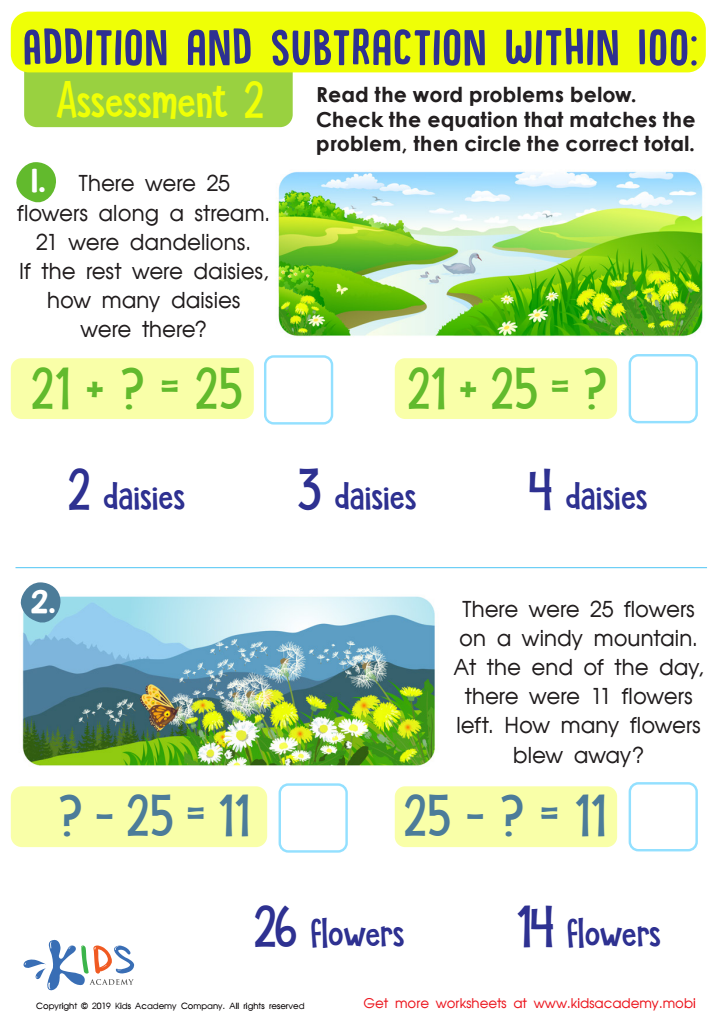
Assessment 2 Math Worksheet
 Assign to My Students
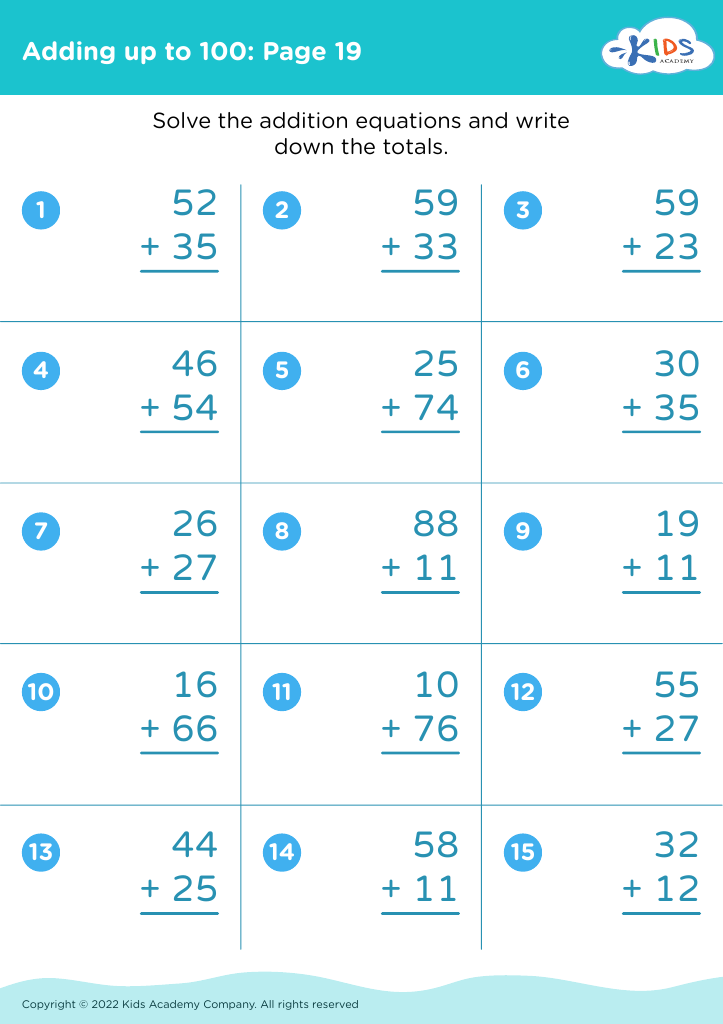
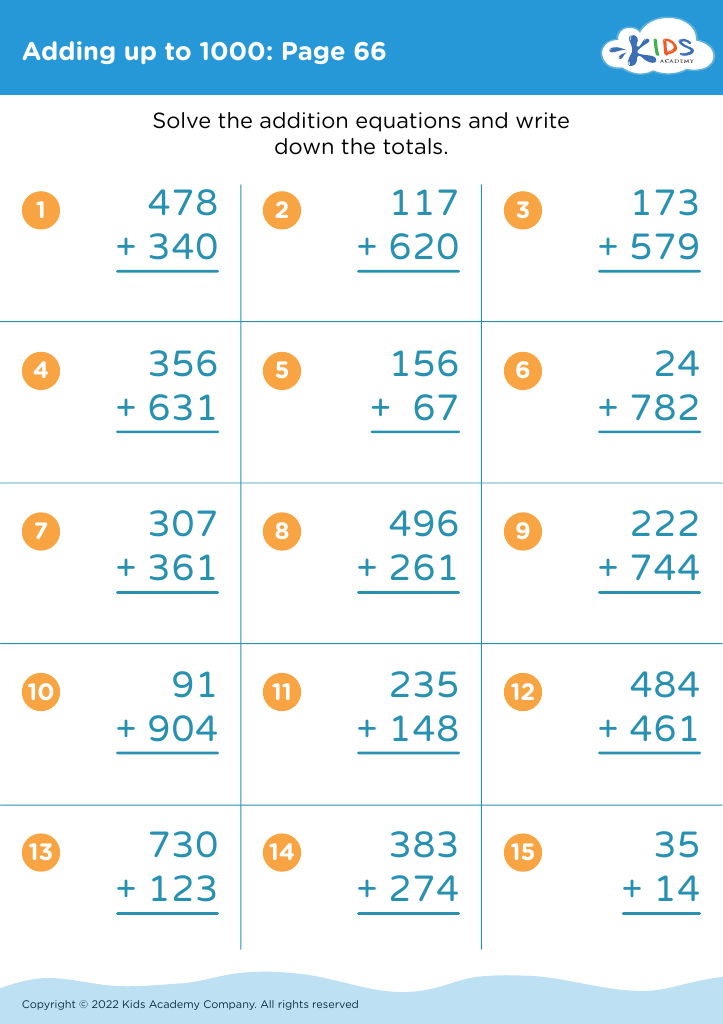








Number comparison, addition, and subtraction are fundamental arithmetic skills that form the cornerstone of early math education for children aged 5-8. Parents and teachers should be invested in these areas because they cultivate critical thinking, problem-solving abilities, and numerical literacy. Understanding how to compare numbers helps children develop a sense of quantity and scale, which is essential for grasping more complex math concepts in later grades.
Additionally, mastering addition and subtraction builds a strong foundation for all future math. Early experiences with these operations enhance logical reasoning and facilitate the understanding of more advanced concepts like multiplication and division. When children become proficient in these skills, they gain confidence in their mathematical abilities, fostering a positive attitude towards learning.
Moreover, coherent numeral understanding is vital for real-life applications, such as budgeting, telling time, and measuring distances. Parents and teachers play a crucial role in engaging children with hands-on activities and games that illustrate these concepts in fun ways, making learning enjoyable and impactful.
Investing time in strengthening these skills at a young age ensures that children are well-prepared for academic success and harness a lifelong appreciation for mathematics.








