Filters

570 filtered results

Clear all filters
Favorites
With answer key
Interactive

570 filtered results

Difficulty Level

Grade


Check out this FREE Trial Lesson on Addition & Subtraction for age 5-8!

H

Favorites
With answer key
Interactive
  • 5-8
  • Number Recognition
  • Addition & Subtraction
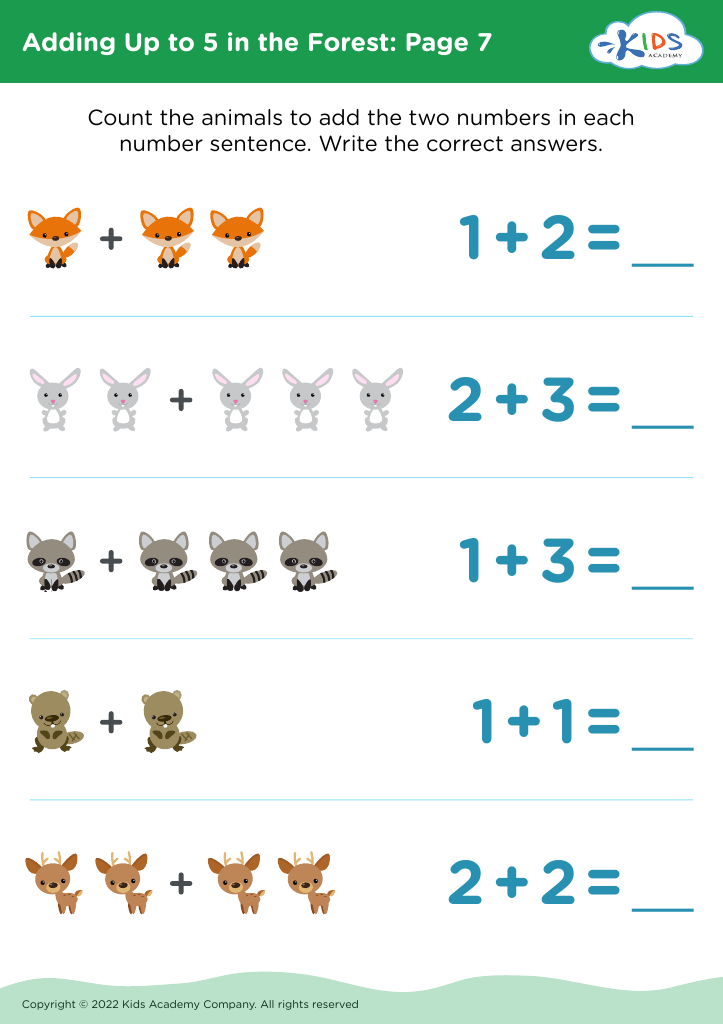
Adding Up to 5 in the Forest: Page 7
Worksheet
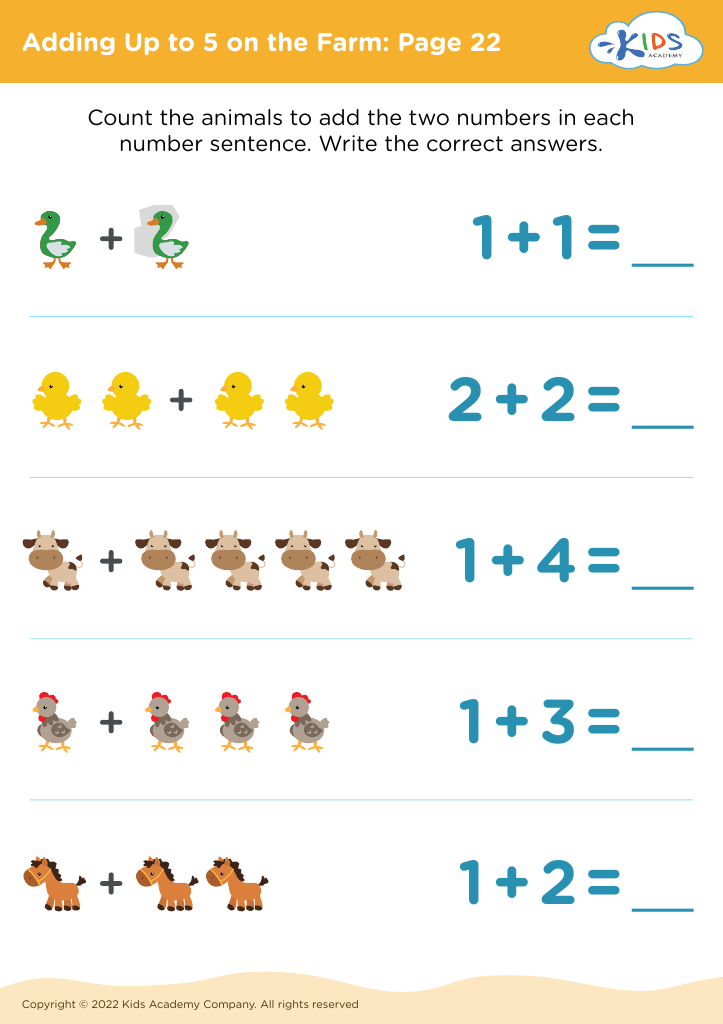
Adding Up to 5 on the Farm: Page 22
Worksheet
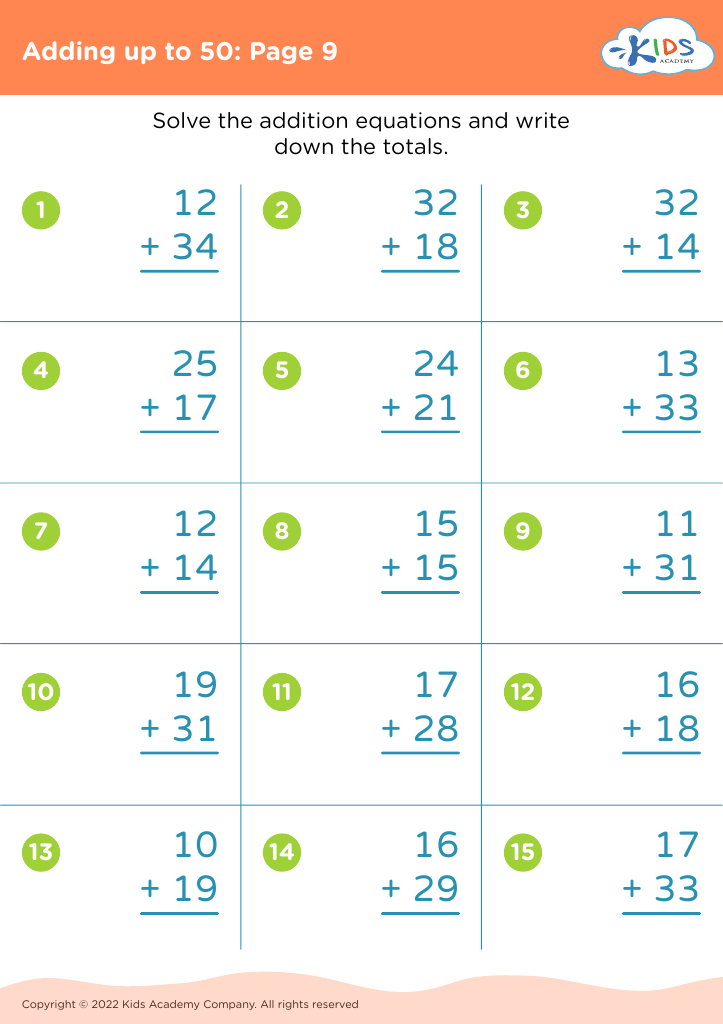
Adding up to 50: Page 9

Adding up to 50: Page 9

Adding up to 50: Page 9
Worksheet
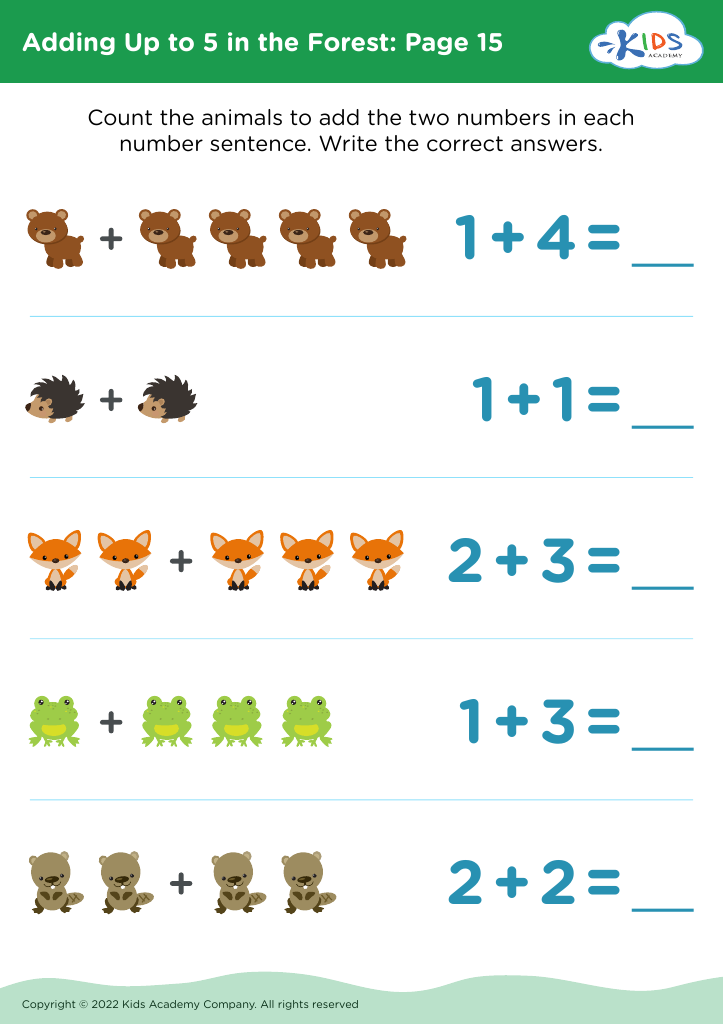
Adding Up to 5 in the Forest: Page 15
Worksheet
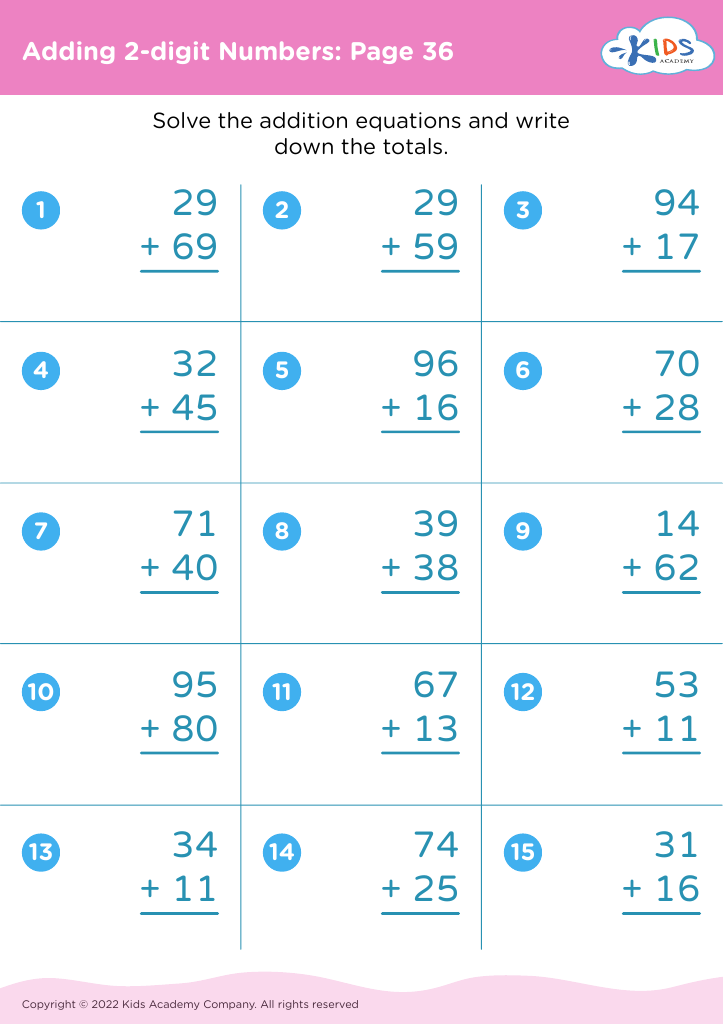
Adding 2-digit Numbers: Page 36

Adding 2-digit Numbers: Page 36

Adding 2-digit Numbers: Page 36
Worksheet
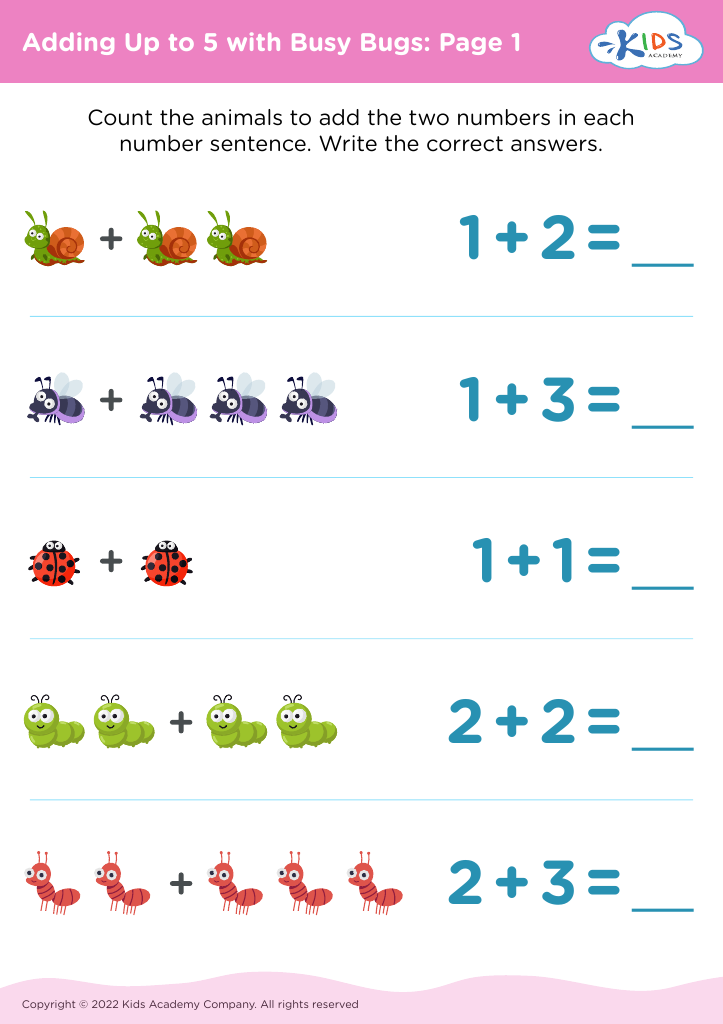
Adding Up to 5 with Busy Bugs: Page 1
Worksheet
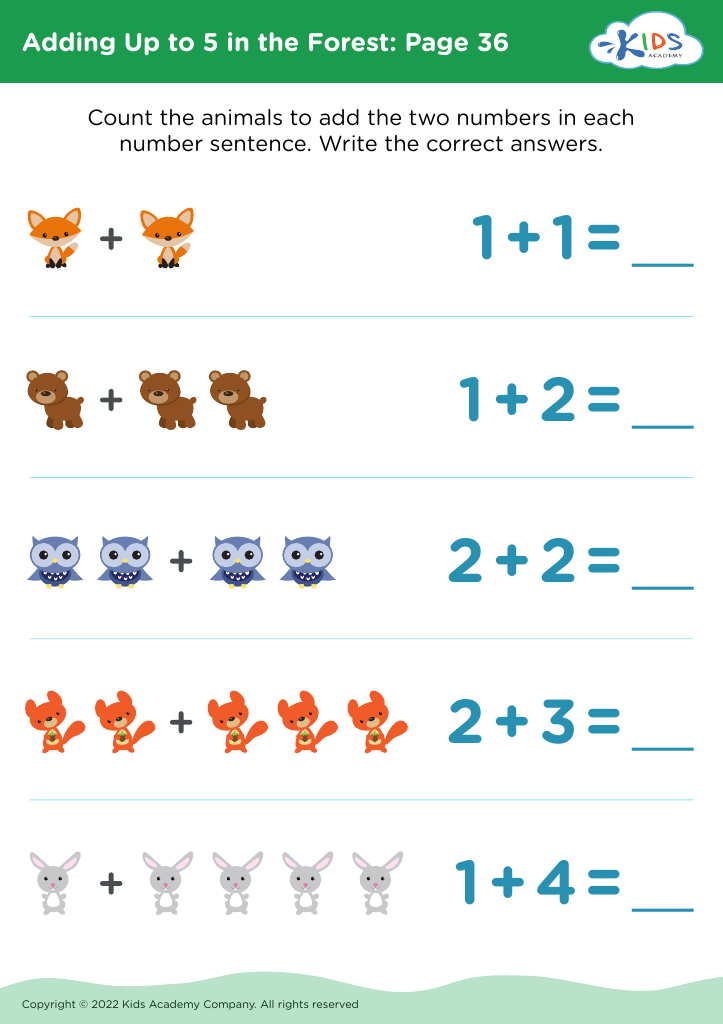
Adding Up to 5 in the Forest: Page 36
Worksheet
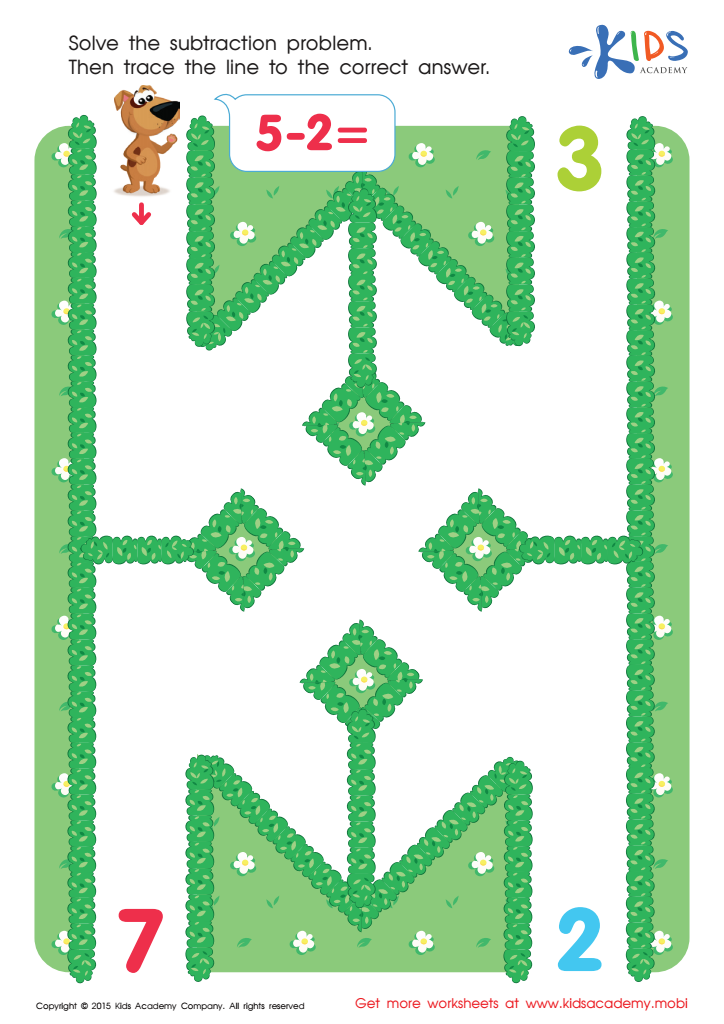
Math: Five Minus Two PDF Worksheet

Five Minus Two Worksheet

Help the dog find its way by practising subtraction - trace the path and make sure to have fun!
Five Minus Two Worksheet
Worksheet
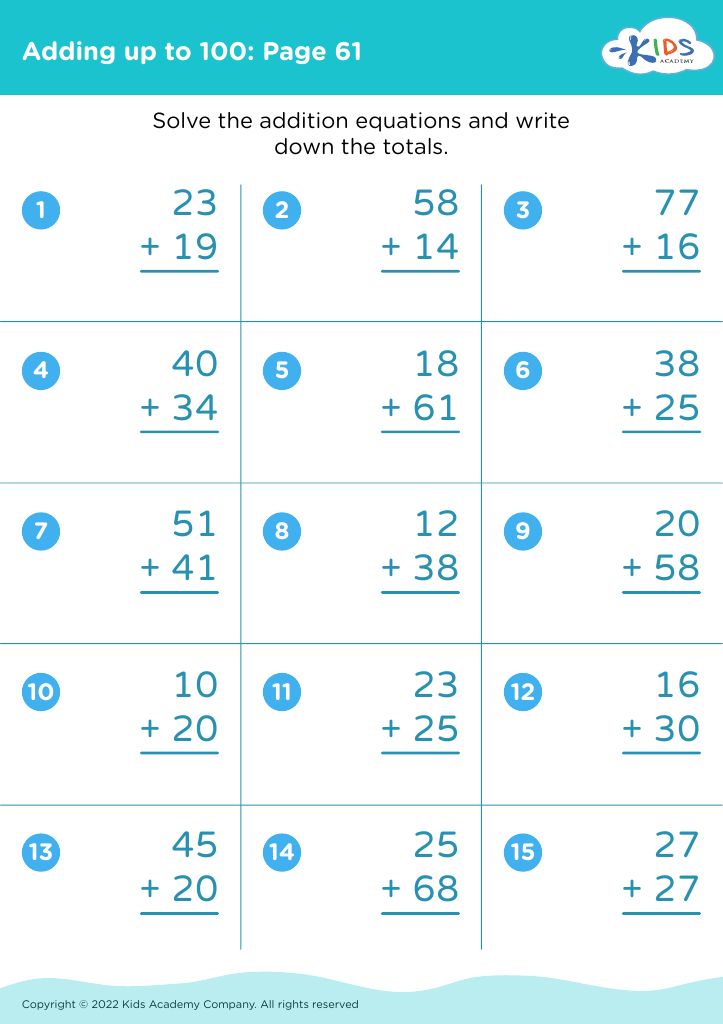
Adding up to 100: Page 61

Adding up to 100: Page 61

Adding up to 100: Page 61
Worksheet
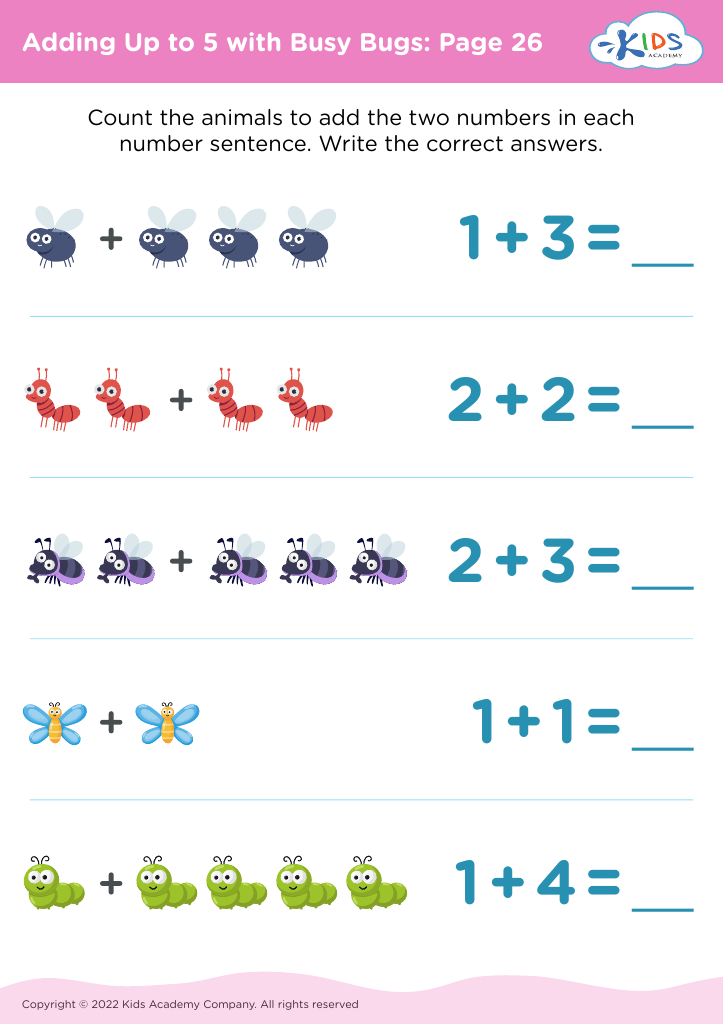
Adding Up to 5 with Busy Bugs: Page 26
Worksheet
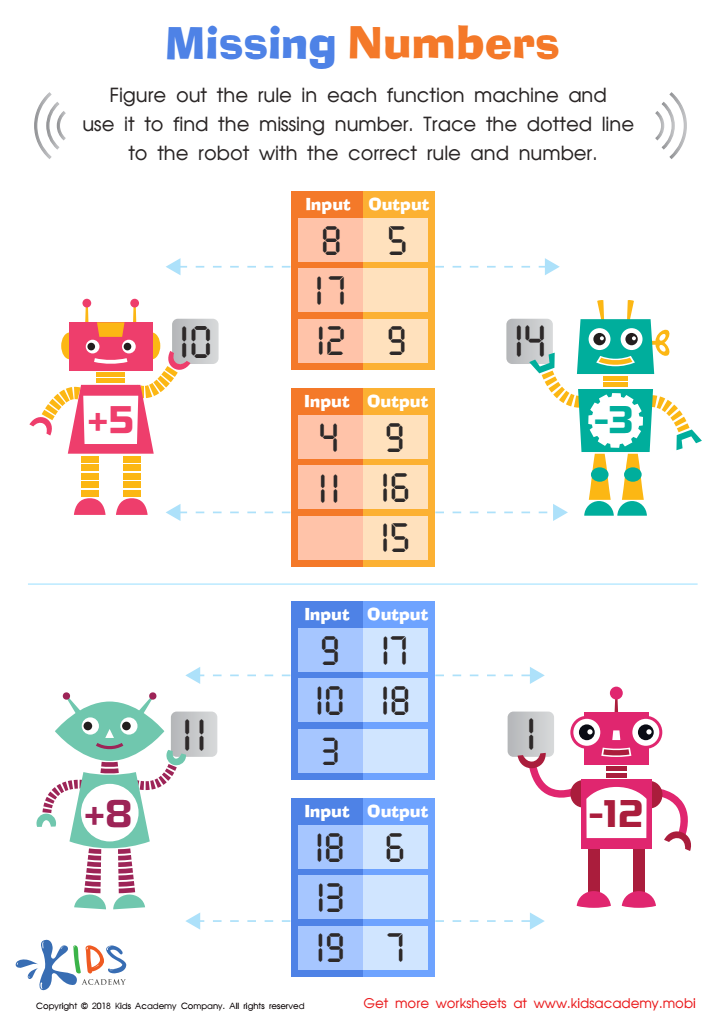
Missing Numbers Worksheet

Missing Numbers Worksheet

Elementary students can learn the important pre-algebra skill of solving for missing numbers! Our robots guide them along with number-filled bellies and missing answers in their hands. Kids can examine the other numbers in each graph, use the rule to solve the missing number, and check their work with the missing number to ensure correctness.
Missing Numbers Worksheet
Worksheet
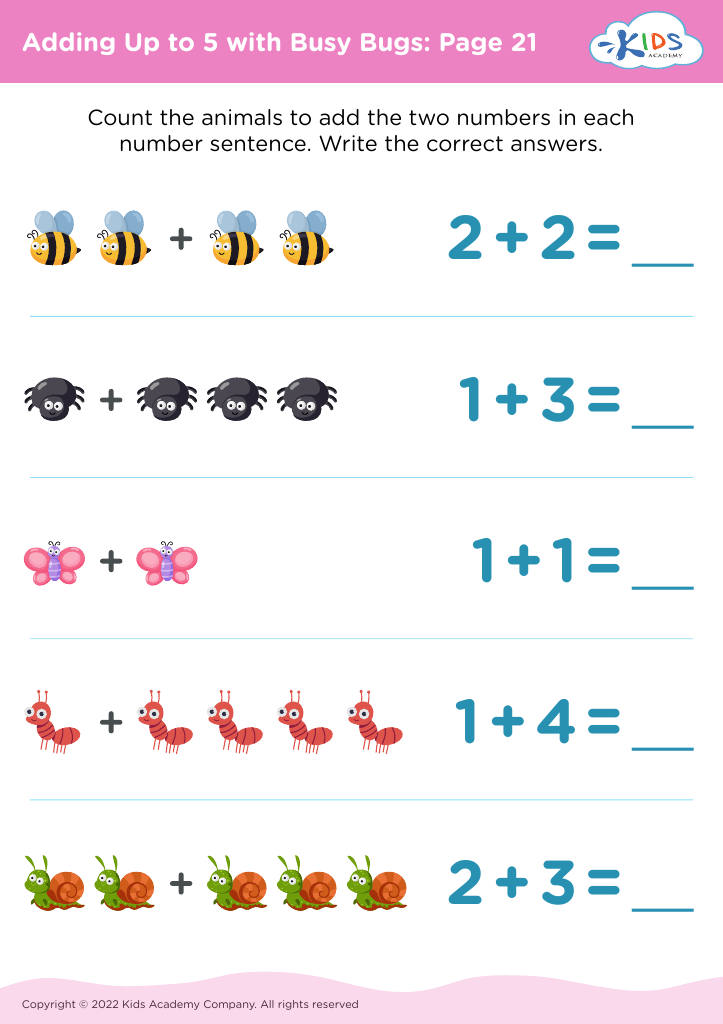
Adding Up to 5 with Busy Bugs: Page 21
Worksheet
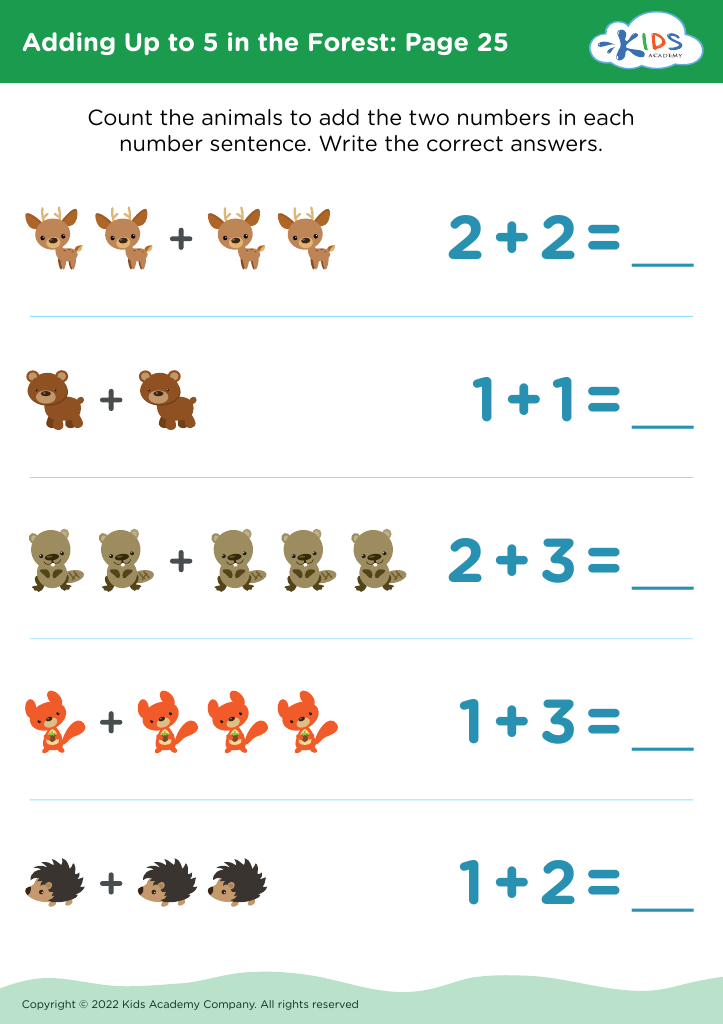
Adding Up to 5 in the Forest: Page 25
Worksheet
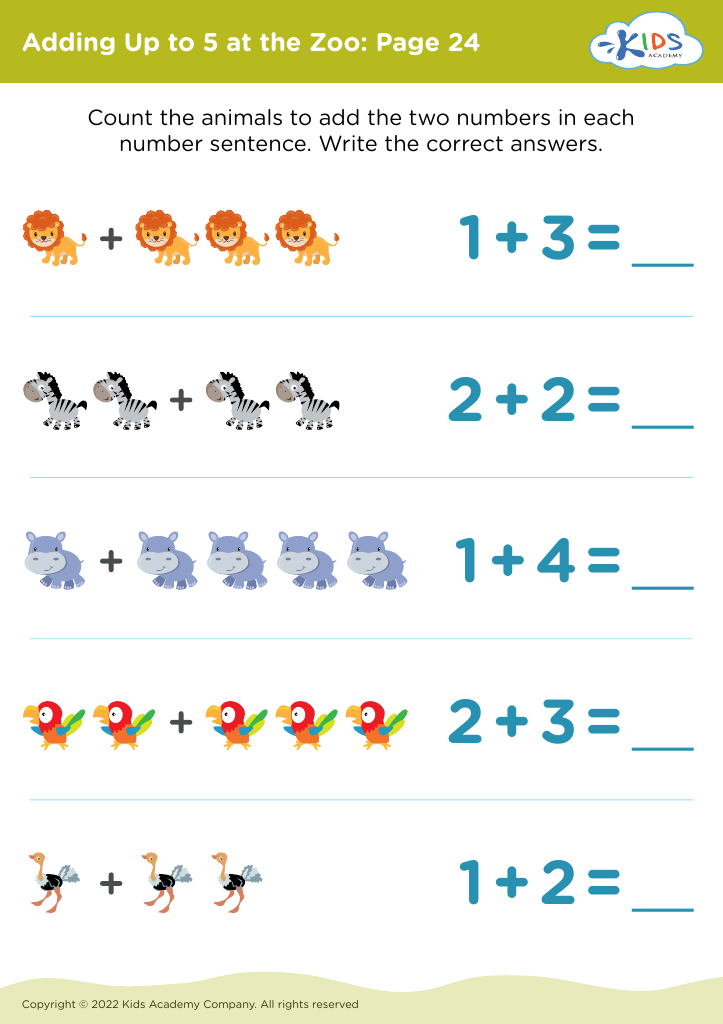
Adding Up to 5 at the Zoo: Page 24
Worksheet
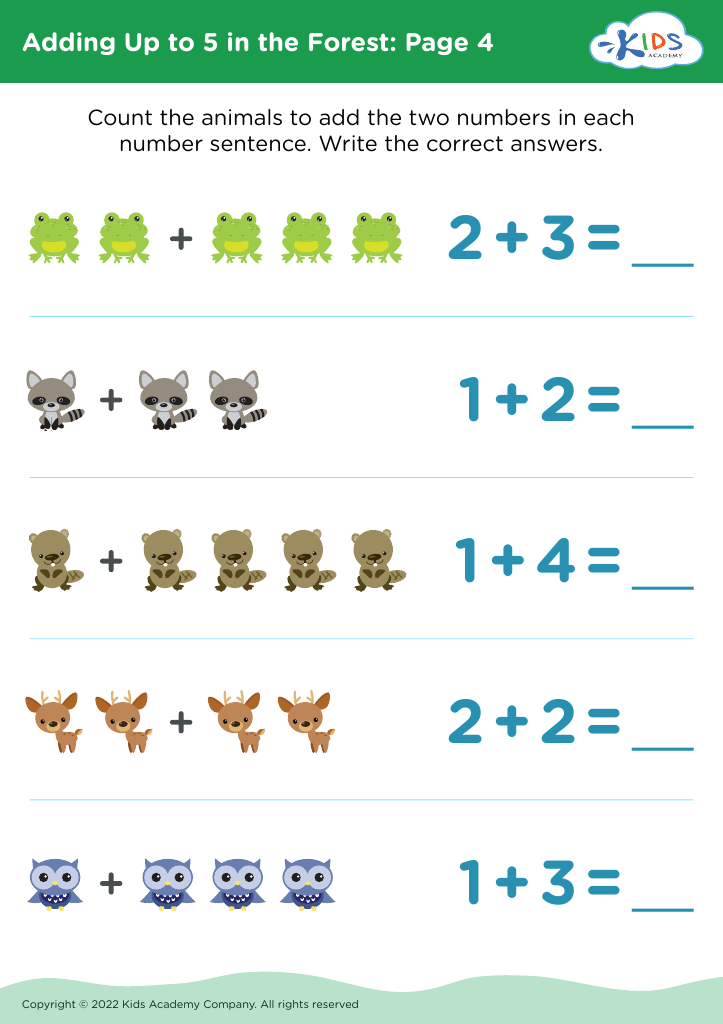
Adding Up to 5 in the Forest: Page 4
Worksheet
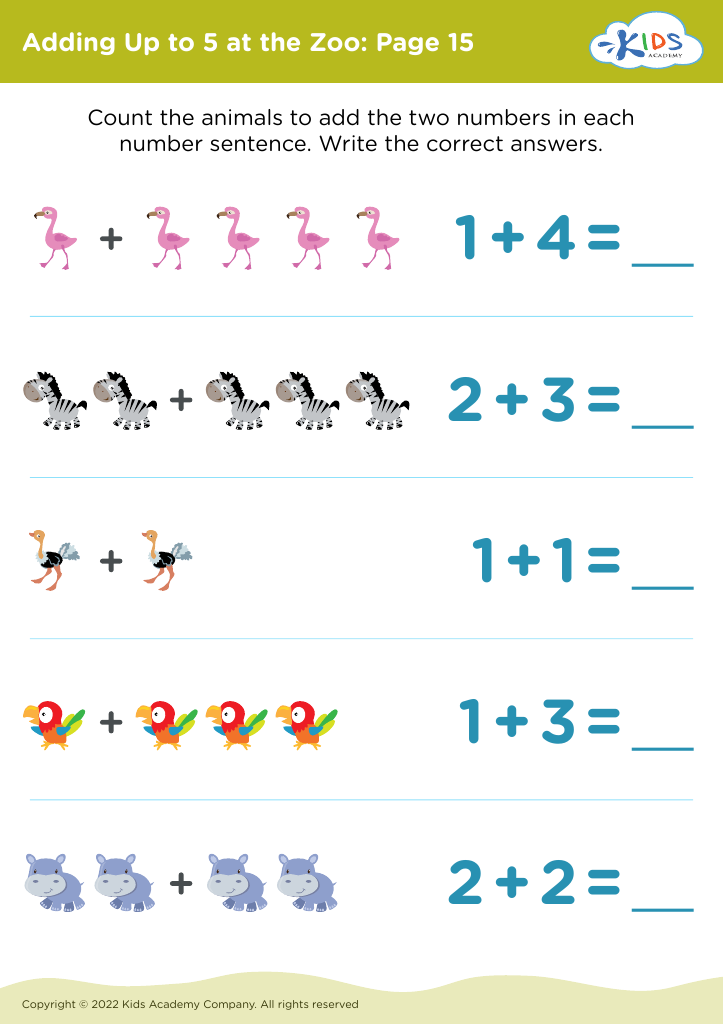
Adding Up to 5 at the Zoo: Page 15
Worksheet
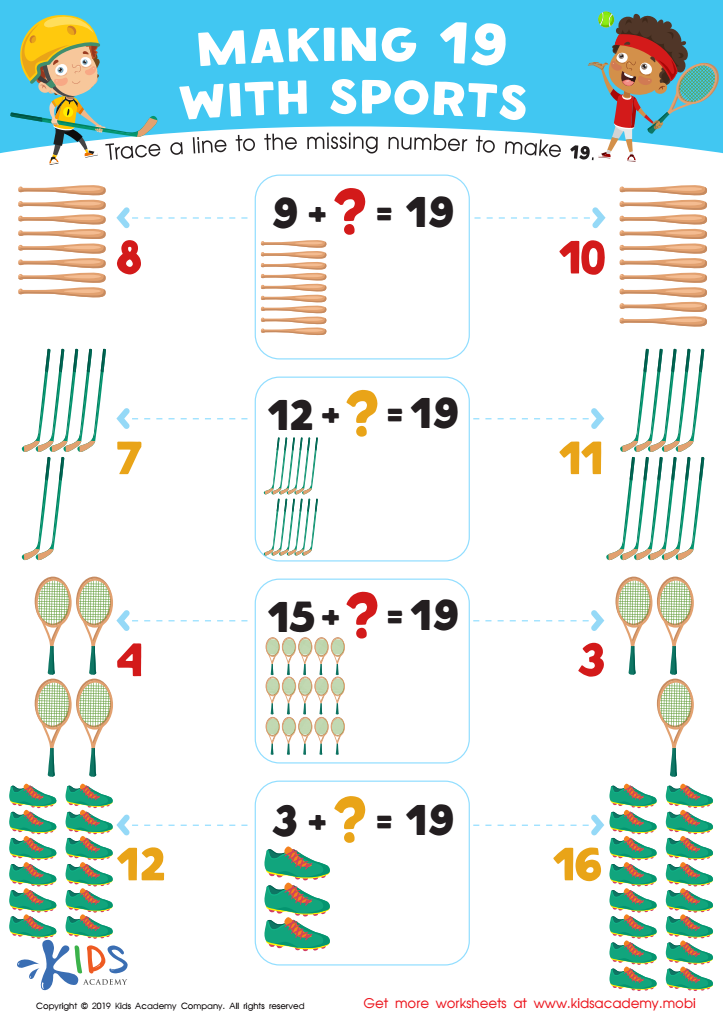
Making 19 with Sports Worksheet
Making 19 with Sports Worksheet
As kids grow, so does their learning. Help them master simple addition with four equations in the worksheet. By finding the missing numbers to make 19, and tracing a line to the answer, your kids will improve their math skills.
Making 19 with Sports Worksheet
Worksheet
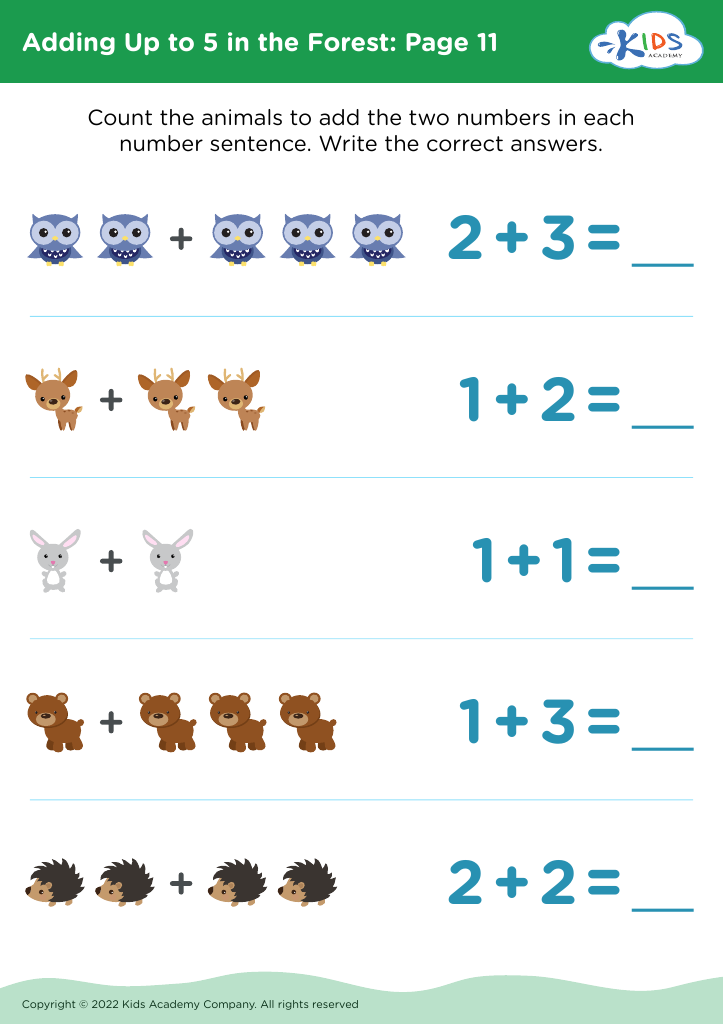
Adding Up to 5 in the Forest: Page 11
Worksheet
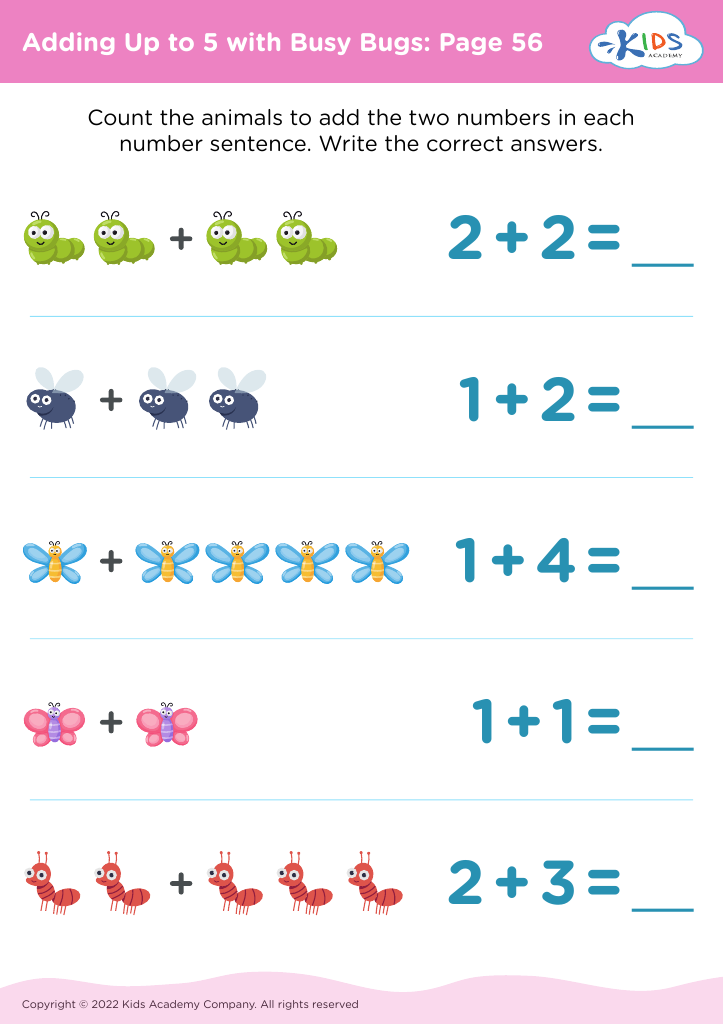
Adding Up to 5 with Busy Bugs: Page 56
Worksheet
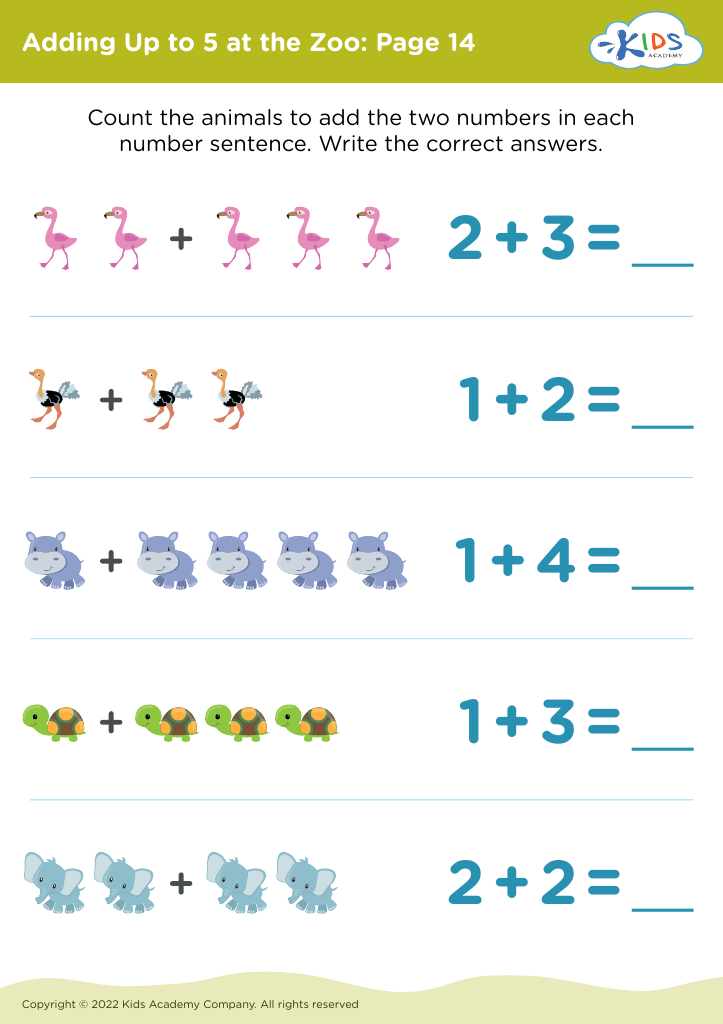
Adding Up to 5 at the Zoo: Page 14
Worksheet
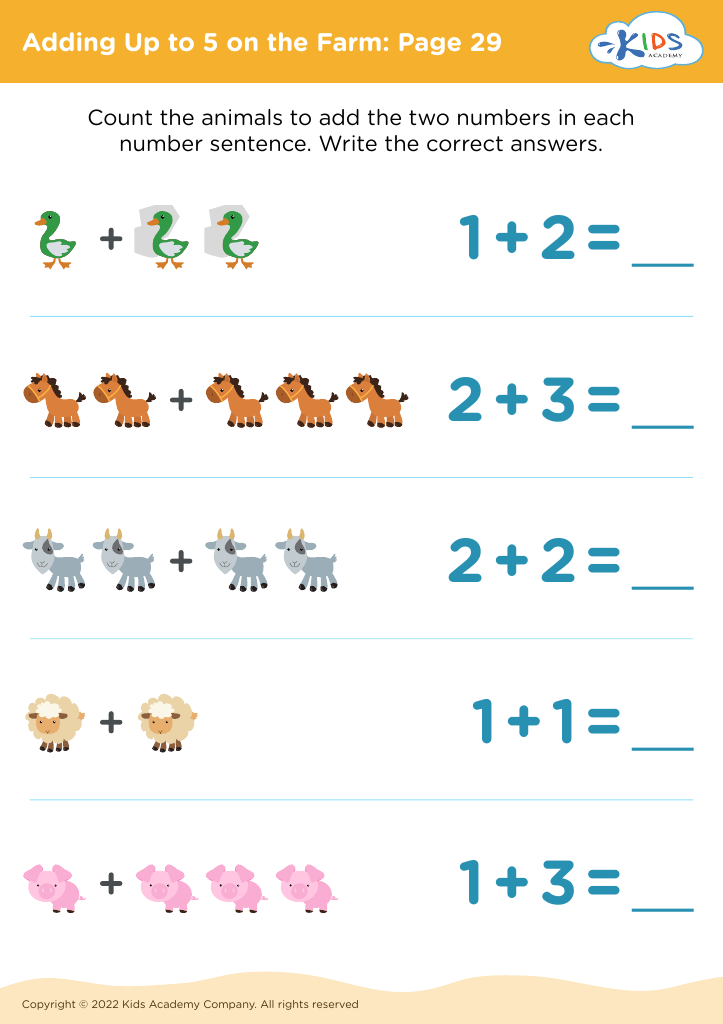
Adding Up to 5 on the Farm: Page 29
Worksheet
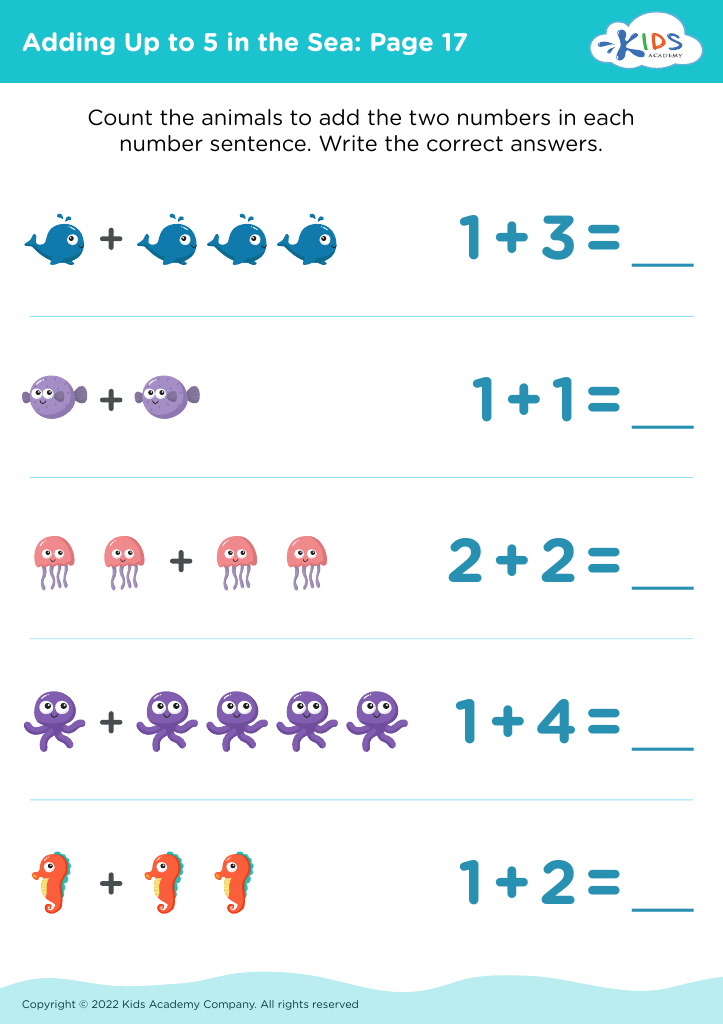
Adding Up to 5 in the Sea: Page 17
Worksheet
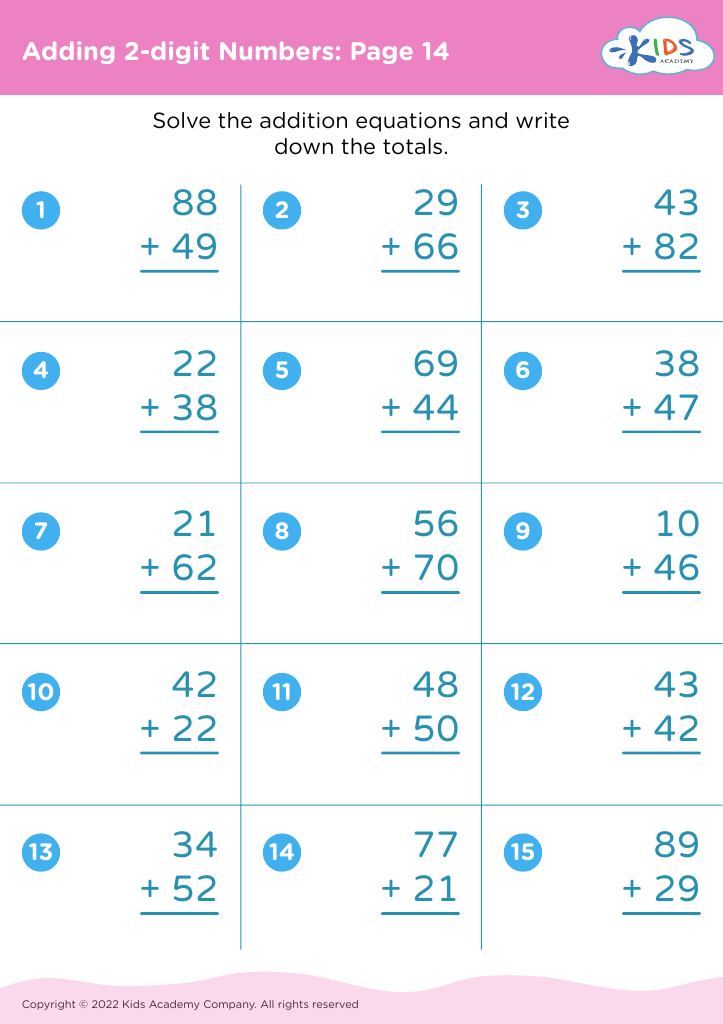
Adding 2-digit Numbers: Page 14

Adding 2-digit Numbers: Page 14

Adding 2-digit Numbers: Page 14
Worksheet
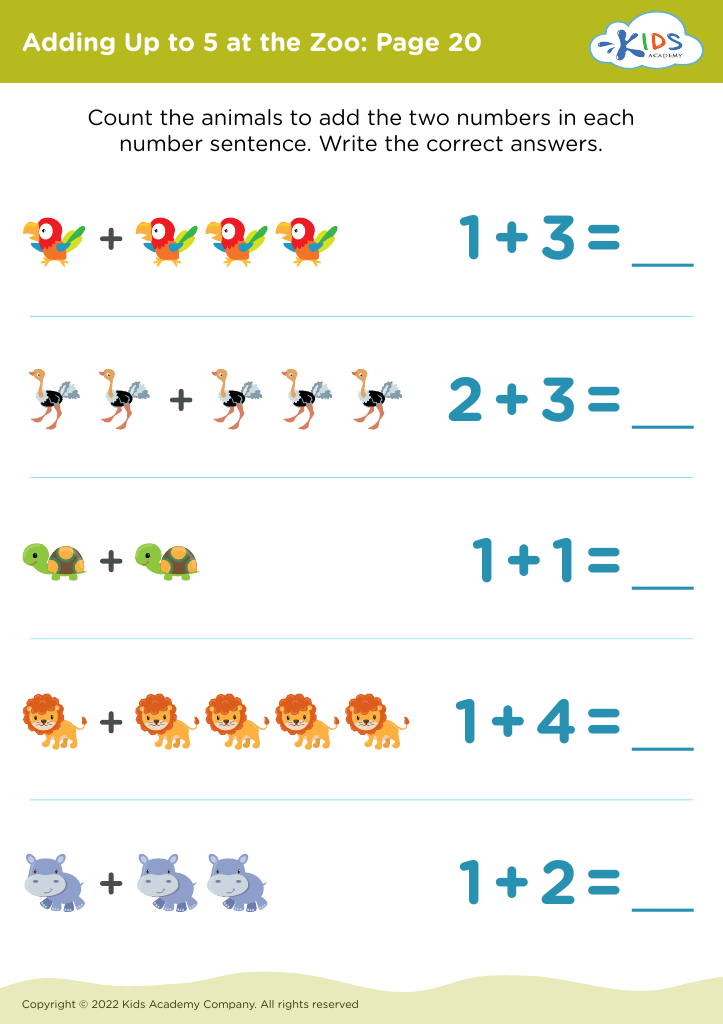
Adding Up to 5 at the Zoo: Page 20
Worksheet


Understanding number recognition, addition, and subtraction by ages 5-8 is crucial for early childhood development, which sets the foundation for later success in mathematics and everyday problem-solving. This period is often referred to as a critical window for cognitive development, where children’s brains are highly receptive to learning basic concepts that will be continuously built upon.

Number recognition helps children make sense of the world around them by allowing them to identify and understand the meaning of numbers, which is a fundamental proficiency for more advanced mathematical operations. When children start recognizing numbers, they can begin counting, sequencing, and comprehending the relationship between numbers, which is the bedrock of their arithmetic skills.

Addition and subtraction, or basic arithmetic operations, introduce young children to the concept of combining and separating, which are critical life skills. These early math experiences improve their logical thinking and problem-solving abilities. When these competencies are developed at an early age, children are more likely to find mathematics engaging and rewarding, rather than intimidating.

Parents and teachers play a vital role by providing positive and supportive learning environments, engaging activities, and manipulative tools such as blocks or counters to make abstract concepts tangible. Prioritizing these early math skills fosters confidence, keen interest, and long-term achievement in mathematics and other related disciplines.