Practice division Addition & Subtraction Worksheets for Ages 5-8
3 filtered results
-
From - To
Help your child master essential math skills with our "Practice Division, Addition & Subtraction Worksheets for Ages 5-8". Designed specifically for young learners, these engaging worksheets support effortless learning through fun exercises and colorful illustrations. Each sheet focuses on fundamental arithmetic operations, enabling children to strengthen their understanding and confidence in math. By working on addition, subtraction, and introductory division, your child will build a solid foundation for future math success. Perfect for both classroom and home use, these worksheets make learning enjoyable and effective. Download now from Kids Academy and watch your child's math skills flourish!
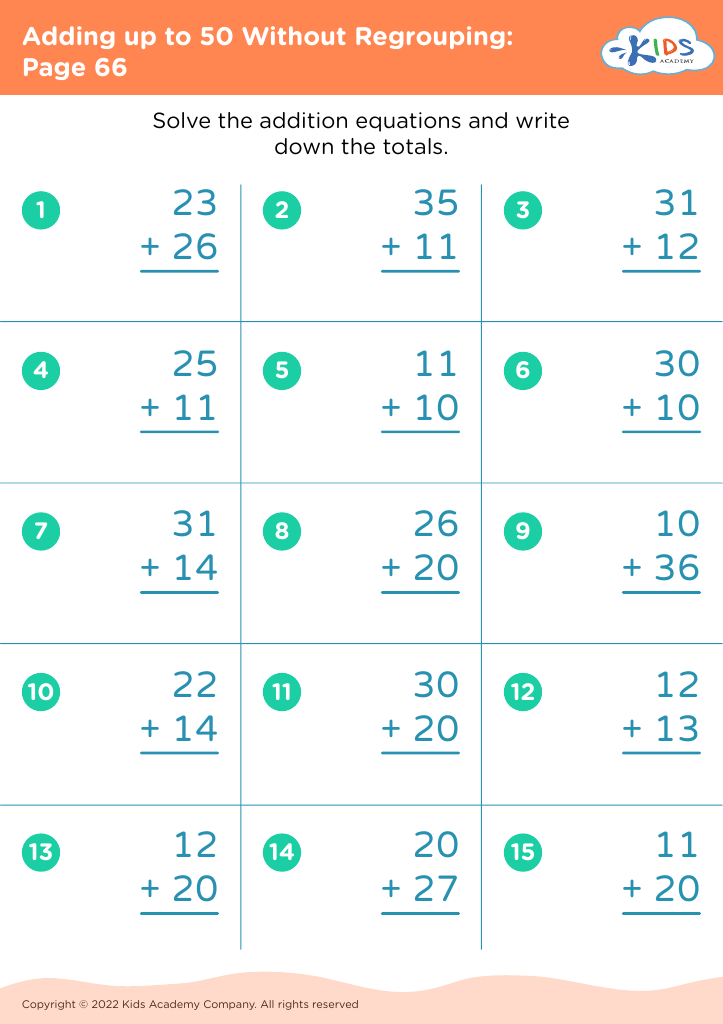
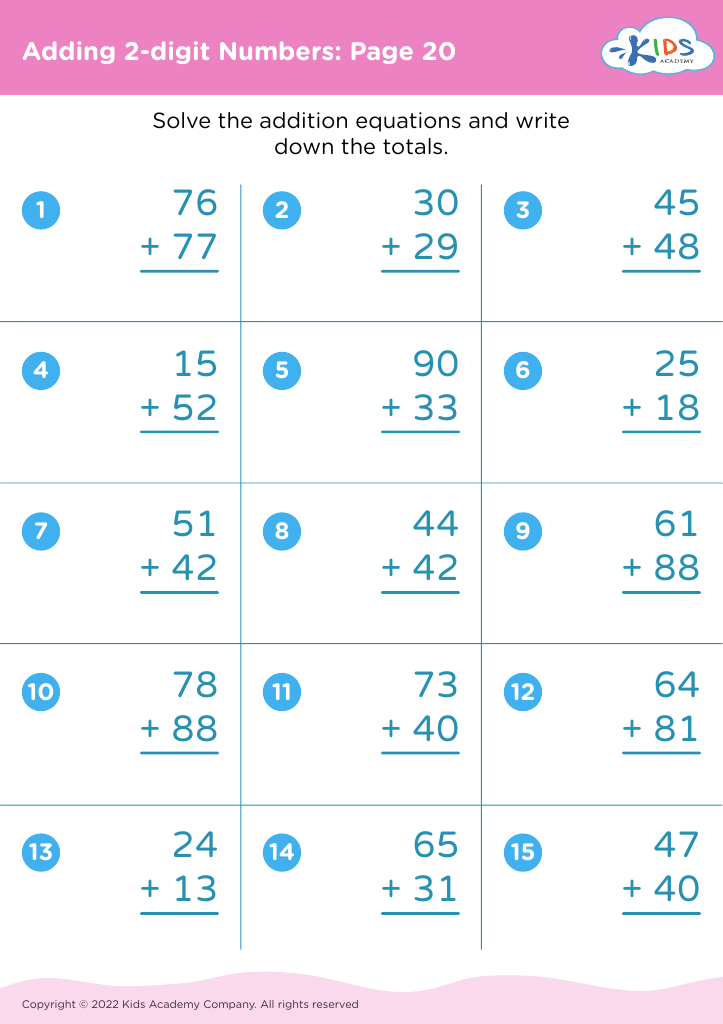
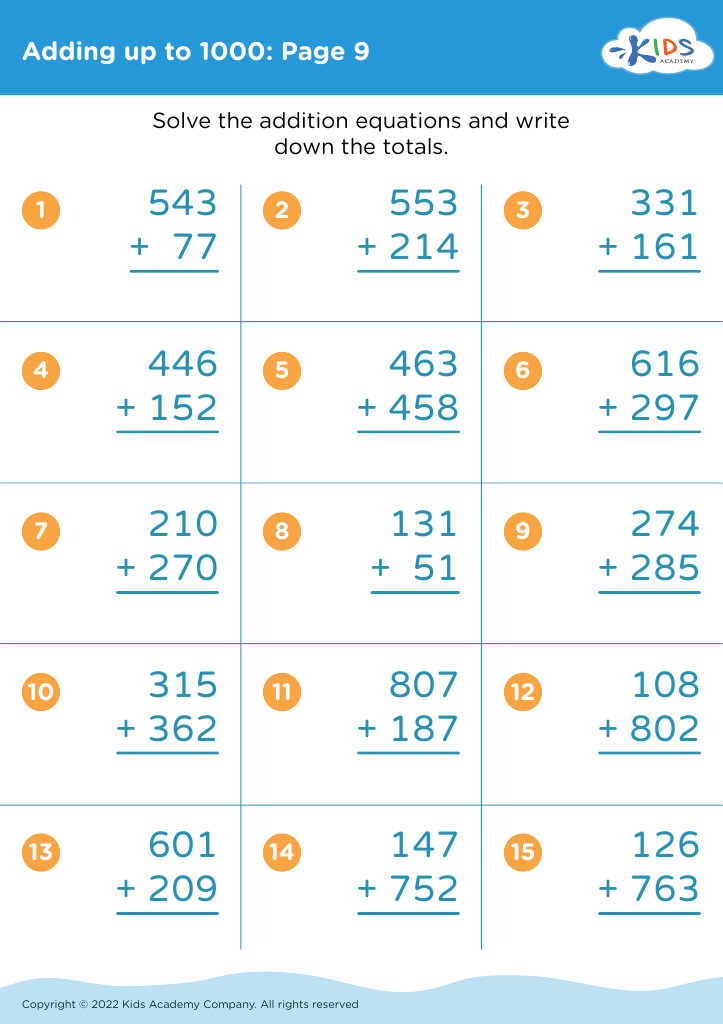








Parents and teachers should care about practicing division, addition, and subtraction with children ages 5-8 because these fundamental math skills lay the groundwork for future academic success. At this critical stage of development, young minds are remarkably adaptable and capable of grasping basic arithmetic concepts, which are essential building blocks for more advanced math.
Firstly, mastering addition and subtraction boosts a child's confidence in handling numbers and enhances their problem-solving abilities. These skills are crucial for everyday tasks such as counting money, telling time, and measuring ingredients while cooking. Division introduces the idea of equal sharing and fair distribution, which helps in understanding fractions and more complex operations later.
Moreover, early proficiency in math fosters a positive attitude toward the subject, reducing math anxiety as they progress in school. Engaging activities and consistent practice make the process enjoyable, transforming challenging concepts into achievable goals.
In addition, these early math skills encourage critical thinking and logical reasoning. Establishing a solid math foundation in the early years benefits cognitive development, leading to improved performance in other subjects as well. Investing time in practice allows children to experience success, setting them on a path toward academic achievement and everyday competence.








