Problem Solving Addition & Subtraction Worksheets for Ages 5-8 - Page 2
29 filtered results
-
From - To
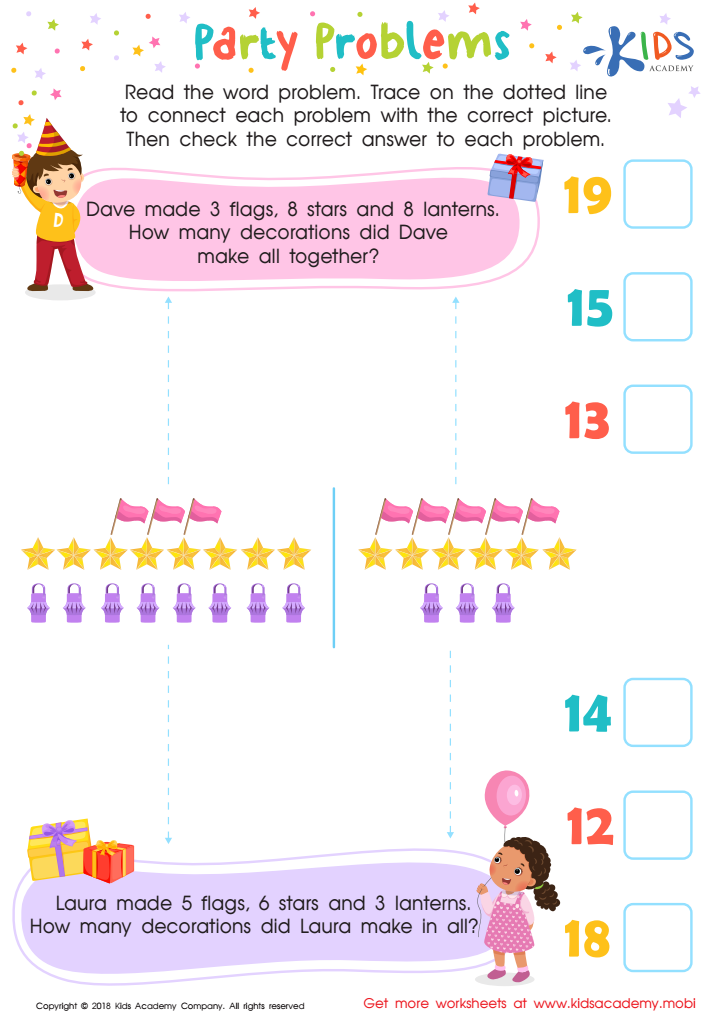
Party Problems Worksheet
 Assign to My Students
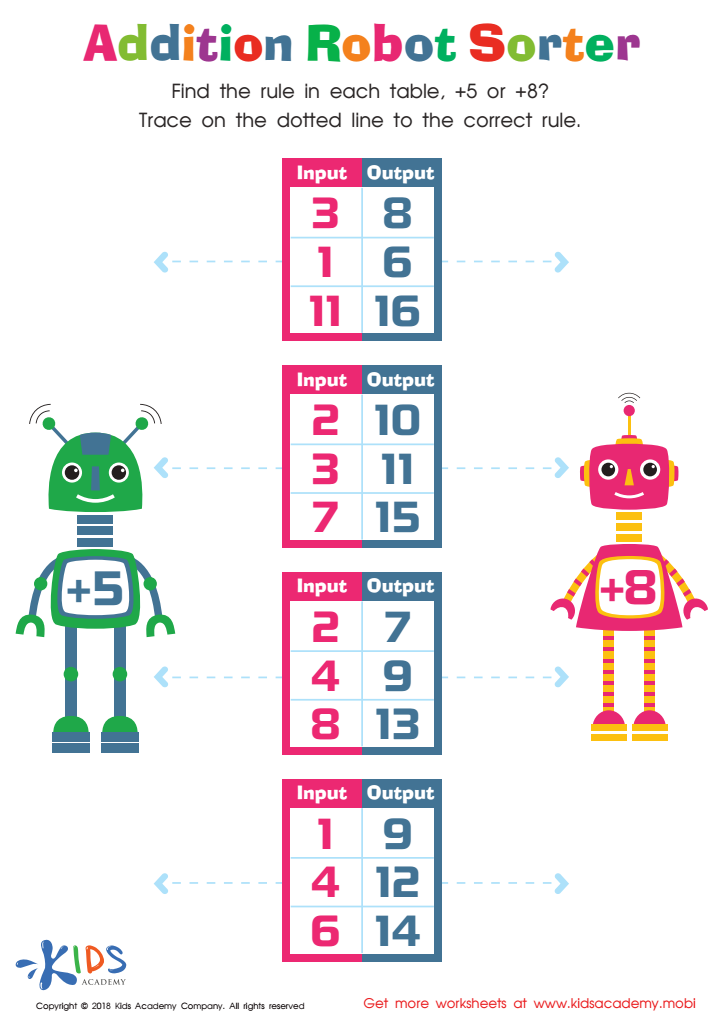
Addition Robot Sorter Worksheet
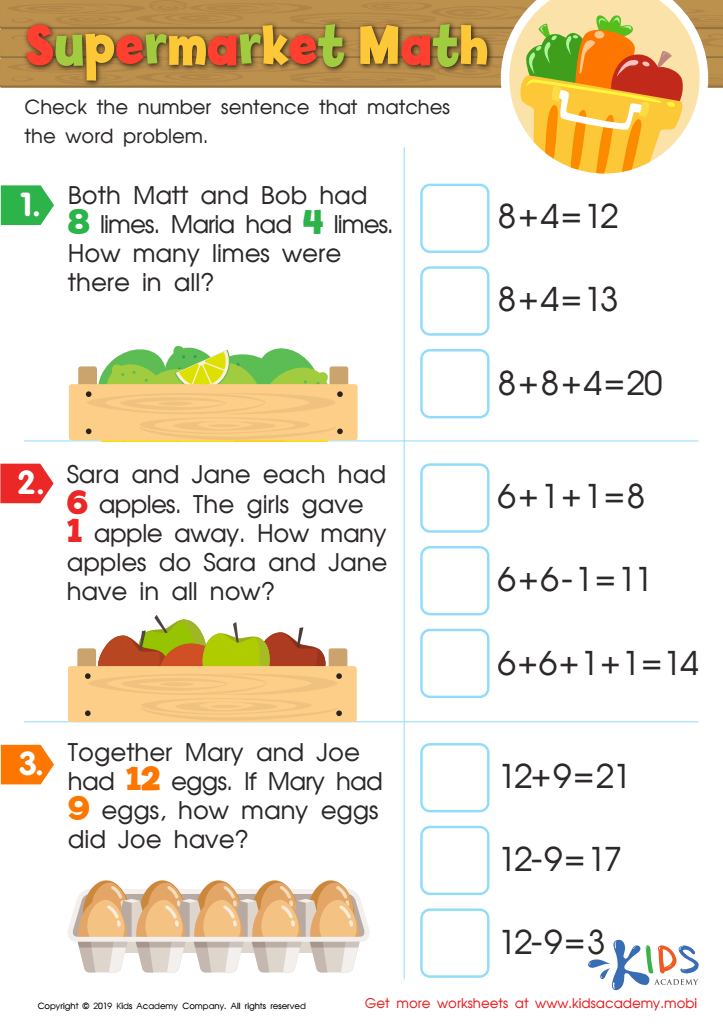
Supermarket Math Worksheet
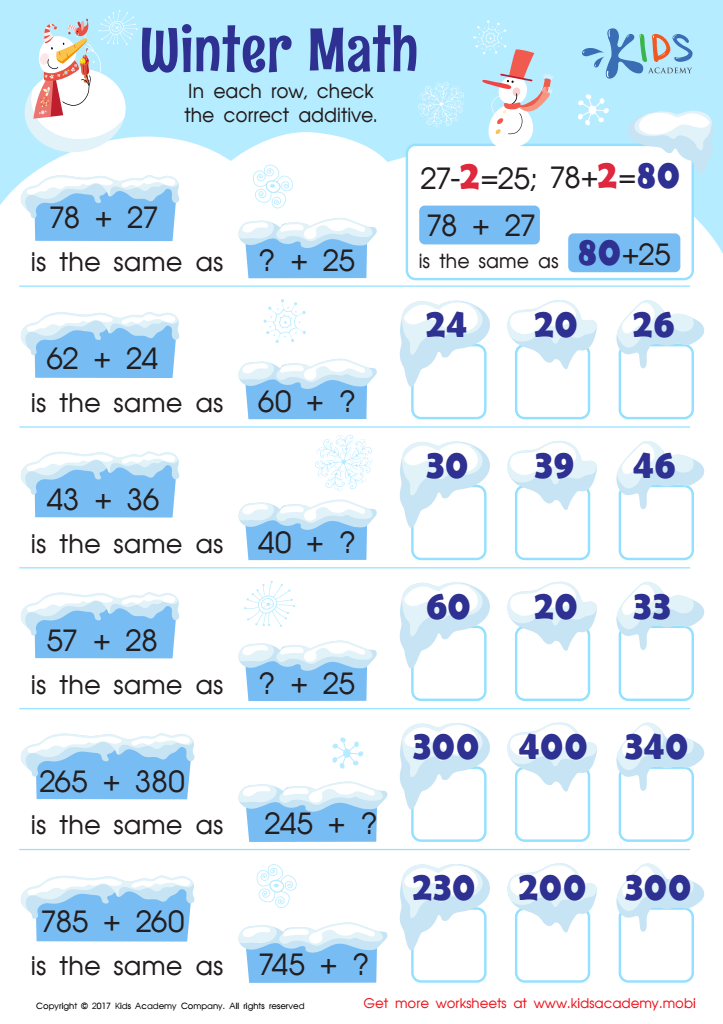
Free Addition Worksheet








Problem-solving in addition and subtraction is a foundational skill that extends beyond basic arithmetic for children ages 5-8. At this early stage, children are not just learning to perform calculations; they are developing critical thinking, reasoning, and analytical skills that are essential for their overall cognitive growth. Engaging in problem-solving activities allows them to understand how math applies to real-world situations, fostering a more profound appreciation for the subject.
Parents and teachers play a crucial role by providing guidance and encouragement as children navigate various problems. Problem-solving helps children learn to analyze a situation, devise a strategy, and execute a plan, reinforcing resilience and perseverance in the face of challenges. Additionally, these skills equipped during these formative years serve as a solid mathematical foundation.
By encouraging problem-solving in addition and subtraction, adults contribute to the child's confidence in mathematics, paving the way for success in future mathematical concepts. Moreover, integrating storytelling and interactive games into problem-solving practices makes learning engaging, helping foster a lifelong love for learning. Ultimately, by emphasizing problem-solving, we empower children to think critically, creatively, and independently, traits that are invaluable in both academic and everyday life.








