Recognizing equivalent fractions Addition & Subtraction Worksheets for Ages 5-8
5 filtered results
-
From - To
Discover our engaging "Recognizing Equivalent Fractions Addition & Subtraction Worksheets" designed specifically for children aged 5-8. These worksheets provide young learners with the foundational skills they need to understand equivalent fractions, enhancing their mathematical journey. Through fun exercises, children will learn to identify and work with numerically equal fractions, while practicing addition and subtraction tasks. Each worksheet is crafted to stimulate critical thinking and develop confidence in their math abilities. With colorful illustrations and relatable contexts, your child will enjoy learning and mastering this essential math skill. Explore our collection today for an exciting educational experience!
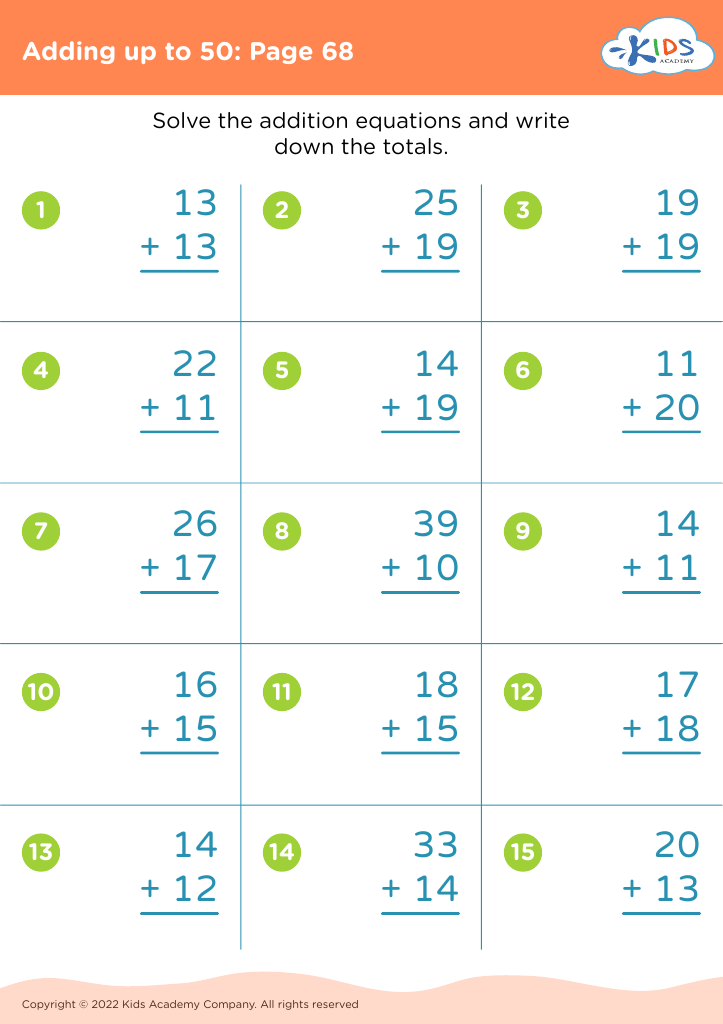
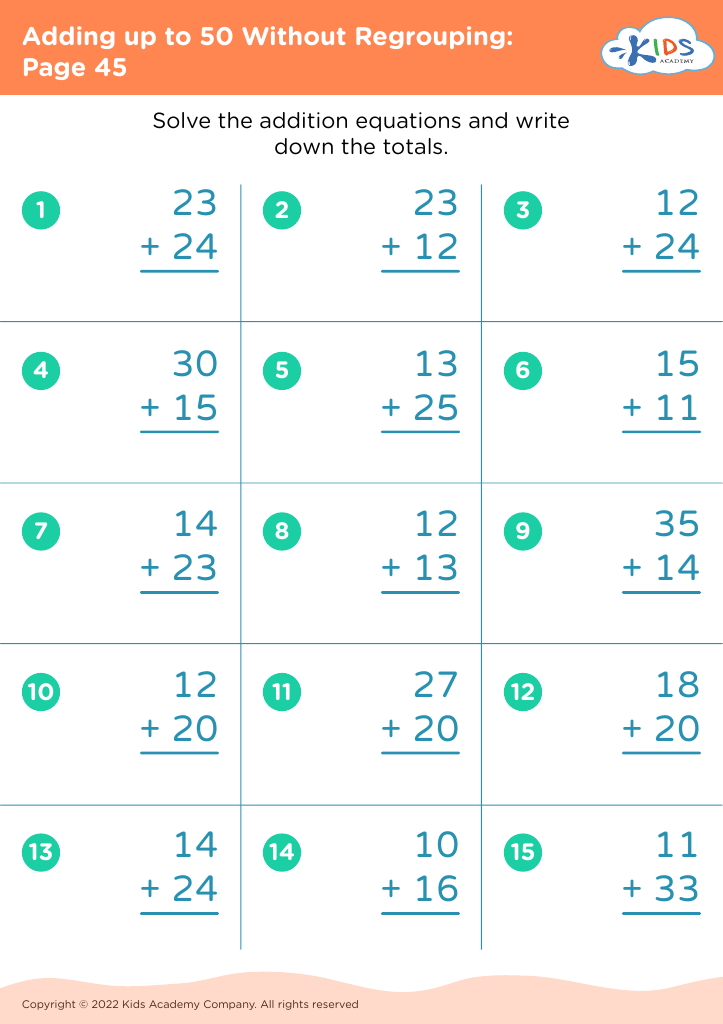
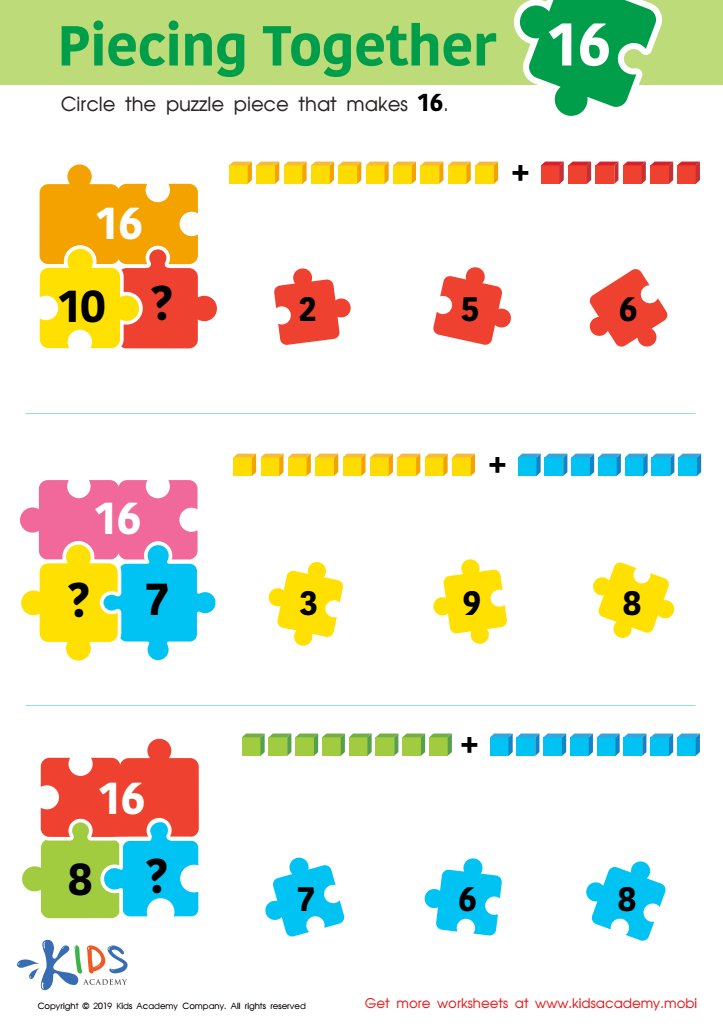
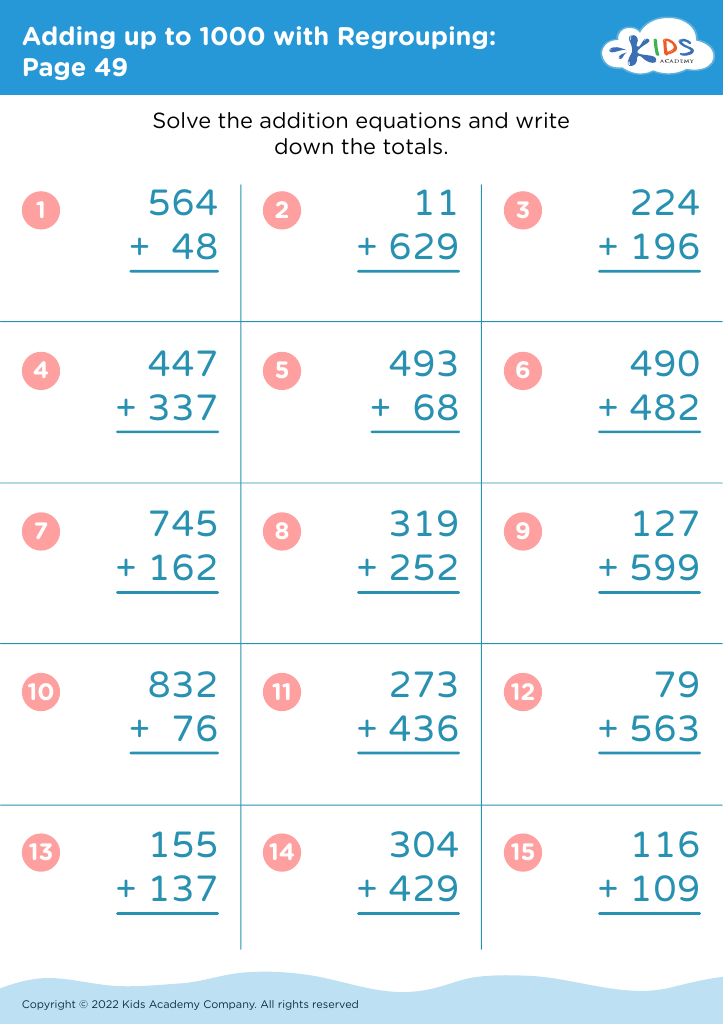
Piecing Together 16 Worksheet
 Assign to My Students








Recognizing equivalent fractions is fundamental for children aged 5-8, as it lays the groundwork for understanding more complex mathematical concepts like addition and subtraction of fractions. When teachers and parents emphasize this skill, they open doors for children to grasp the concept of parts of a whole, connecting it to more relatable experiences such as sharing pizzas or dividing chocolate bars. This foundational knowledge promotes mathematical fluency and confidence.
Understanding equivalent fractions enables students to simplify problems, allowing them to conduct addition and subtraction easily. By recognizing that 1/2 is equivalent to 2/4, students learn to manipulate fractions more skillfully. This crucial understanding also sets the stage for future math skills—like combining fractions with different denominators, which is essential in later grades.
Moreover, recognizing equivalent fractions enhances critical thinking, as children learn to compare and visualize different fractions. Engaging with these concepts using real-world situations makes math relatable, thereby encouraging a positive attitude towards the subject. Ultimately, supporting children in mastering equivalent fractions creates a strong mathematical foundation, preparing them for future academic success and lifelong numeracy skills. Effective collaboration between parents and teachers ensures that children receive consistent reinforcement of these essential concepts.








