Sea creatures identification Addition & Subtraction Worksheets for Ages 5-8
3 filtered results
-
From - To
Dive into math fun with our "Sea Creatures Identification Addition & Subtraction Worksheets for Ages 5-8"! These engaging worksheets blend math practice with marine biology, helping young learners master addition and subtraction while identifying fascinating sea creatures. Ideal for kids aged 5-8, these printables feature colorful illustrations that keep students excited and focused. Perfect for classroom activities or at-home practice, our worksheets turn math practice into an underwater adventure. Boost your child's math skills and ocean knowledge simultaneously! Visit our site to explore and download these fun and educational resources today!
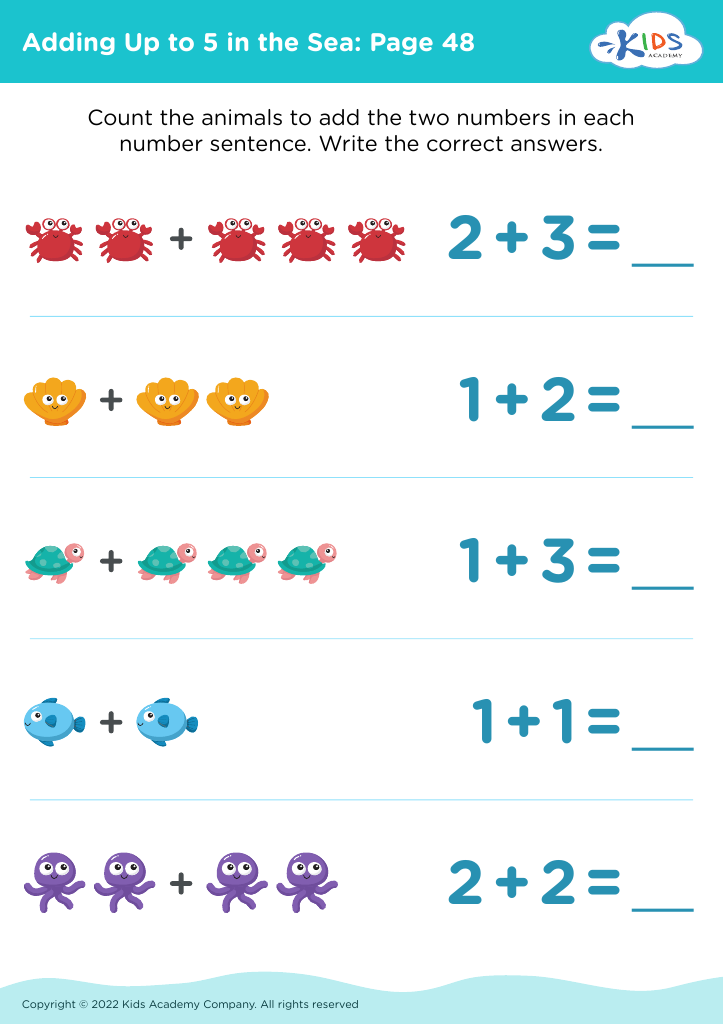
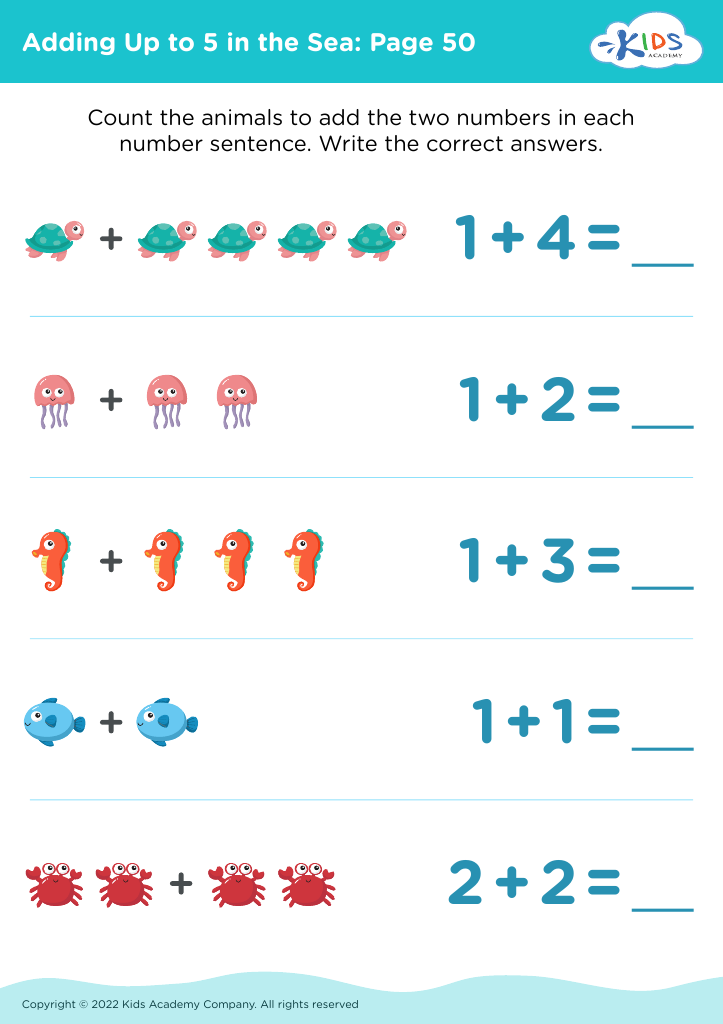
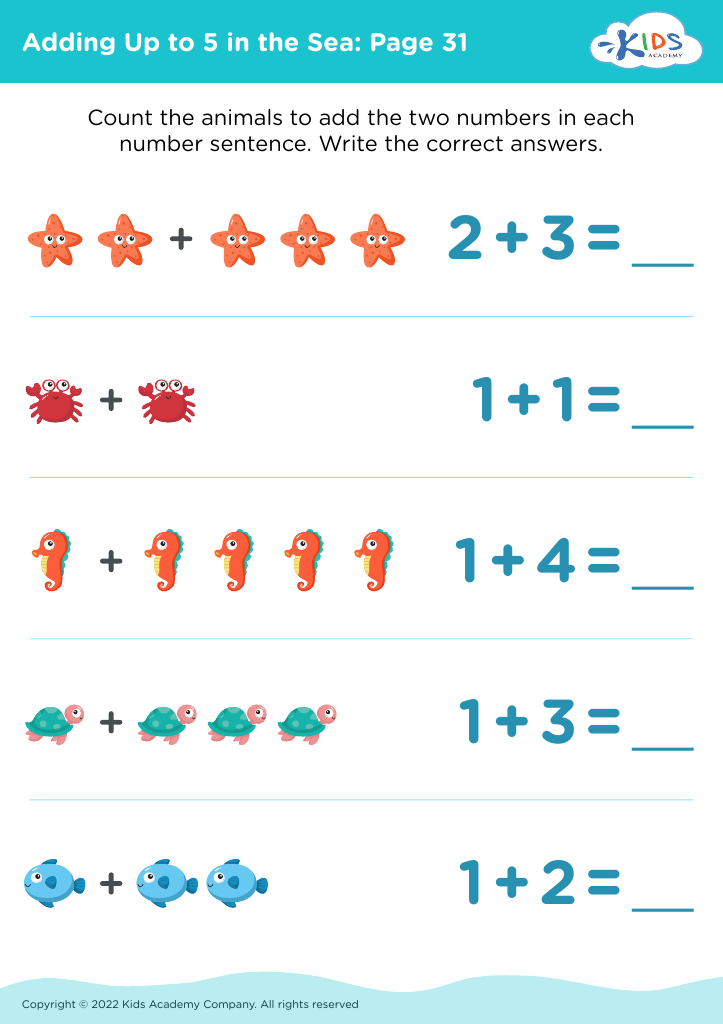








Parents and teachers should care about sea creatures identification and basic addition and subtraction for children ages 5-8 because these activities provide tangible benefits that enhance intellectual and emotional growth. Firstly, learning to identify sea creatures captivates young minds, cultivating a sense of curiosity and fostering a love for nature and science. This interest can lead to a lifelong appreciation of marine biology and environmental conservation.
Combining this knowledge with simple addition and subtraction honors the interconnectedness of multidisciplinary learning. For instance, asking children to count fins, shells, or comparing the numbers of different animals taps into their natural propensity for wonder, making mathematics exciting and relevant. Activities like these develop foundational math skills critical for later academic success, embedding core concepts through immersive, hands-on experiences.
Moreover, these engaging activities promote cognitive development by enhancing memory, attention to detail, and analytical thinking. They also build fine motor skills and hand-eye coordination during craft and counting exercises. In terms of socio-emotional growth, working in groups to solve puzzles and identify creatures bolsters teamwork, communication, and confidence.
In essence, integrating sea creatures' identification with basic math lays a multidimensional foundation for young learners, meeting educational standards while fostering a bigger worldview. This holistic approach brings more value to children's early educational experiences.








