Understand patterns Addition & Subtraction Worksheets for Ages 5-8
6 filtered results
-
From - To
Discover our engaging "Understand Patterns in Addition & Subtraction Worksheets" designed specifically for children aged 5-8. These fun and educational worksheets help young learners recognize and understand mathematical patterns through interactive exercises. By exploring different sequences and logical structures, kids enhance their problem-solving skills and deepen their comprehension of elementary math concepts. Ideal for both classroom and home use, these worksheets provide a solid foundation in mathematics, ensuring children build confidence as they master addition and subtraction. Encourage a love for math in your child with our carefully crafted resources, fostering both learning and enjoyment.
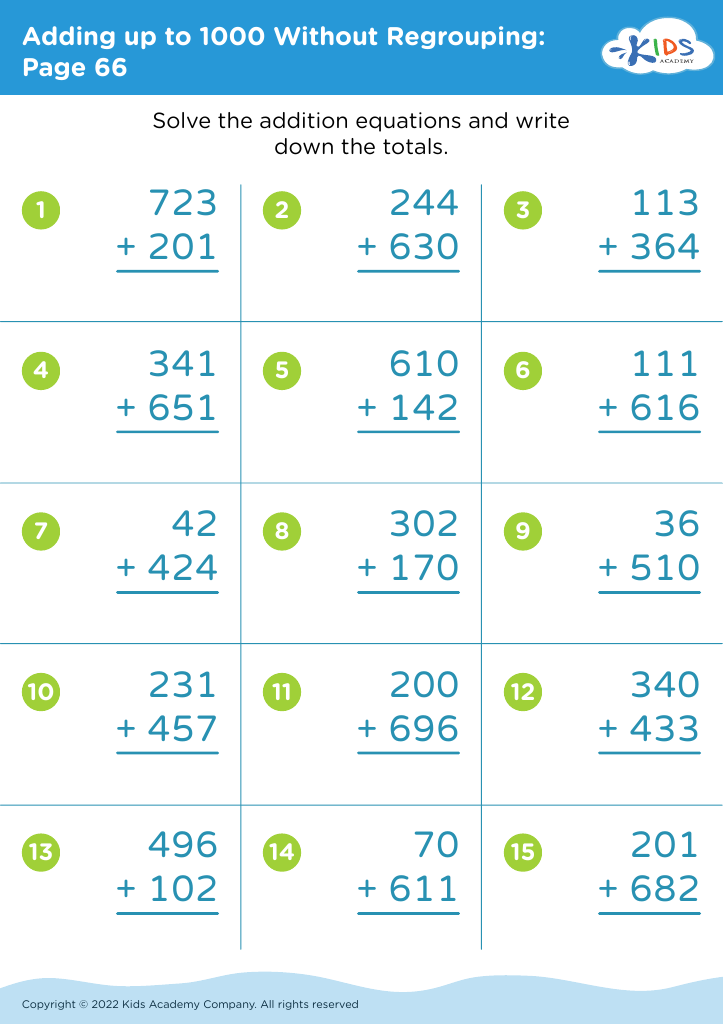
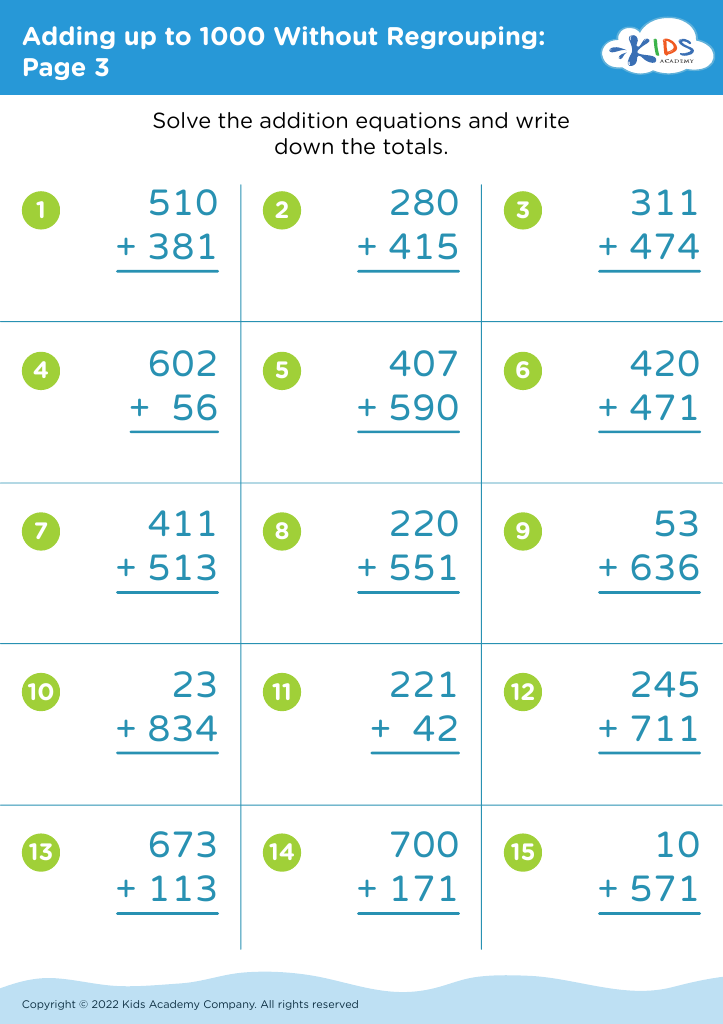
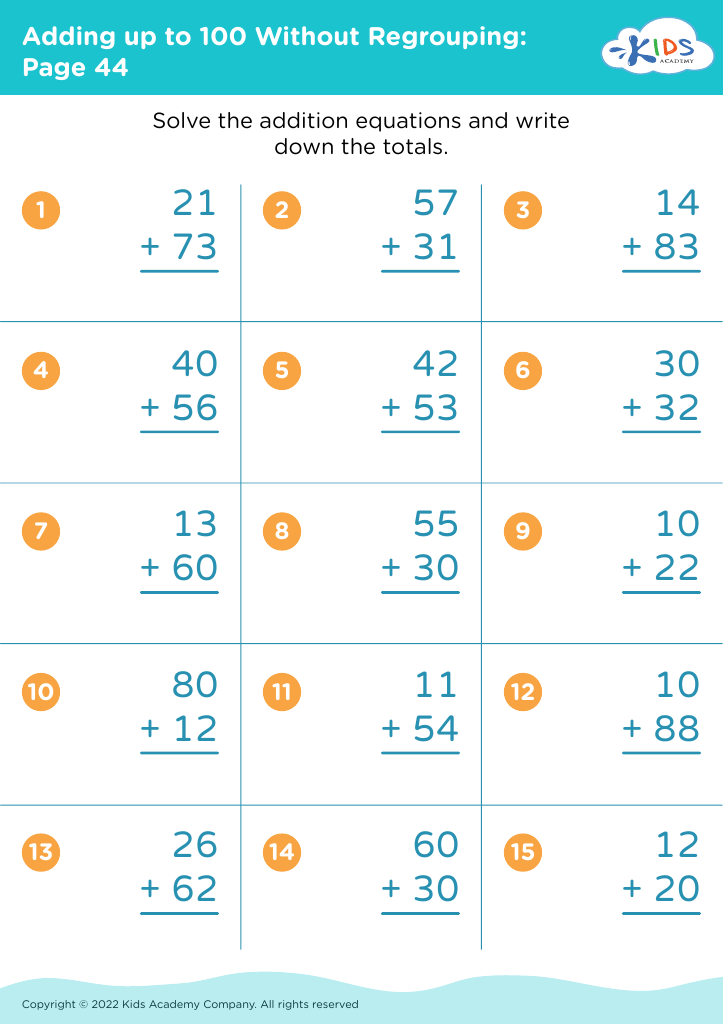
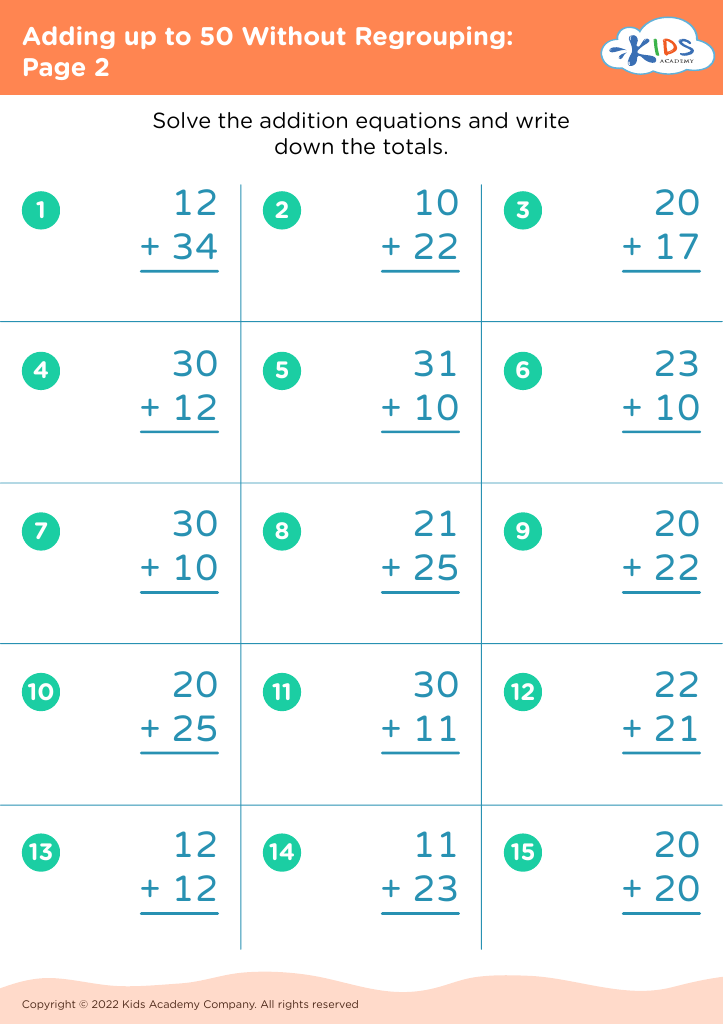








Understanding patterns in addition and subtraction is crucial for children aged 5-8 as it lays the foundation for their cognitive development and mathematical proficiency. At this formative age, young minds are highly receptive, and recognizing patterns enhances their problem-solving skills and logical reasoning. By identifying repeated sequences or relationships in numbers, children develop a sense of order and predictability, which boosts their confidence in tackling more complex mathematical concepts later on.
Moreover, grasping addition and subtraction early is fundamental for academic success beyond mathematics. These skills are integrated into everyday activities like counting money, measuring ingredients, and telling time, promoting independence and practical life skills. For instance, recognizing that 3 + 2 = 5 and therefore, 5 - 2 = 3 helps children understand inverse relationships, which is a critical thinking skill applicable across various subjects.
Parents and teachers who emphasize these foundational concepts foster a love for learning and demystify math, transforming it from a source of anxiety to an enjoyable challenge. Engaging in fun pattern-related activities like games, puzzles, and practical exercises encourages active participation and curiosity. Investing time in understanding these principles not only ensures a smoother educational journey but also equips children with tools to approach problems creatively and confidently.








