Understanding division Addition & Subtraction Worksheets for Ages 5-8
5 filtered results
-
From - To
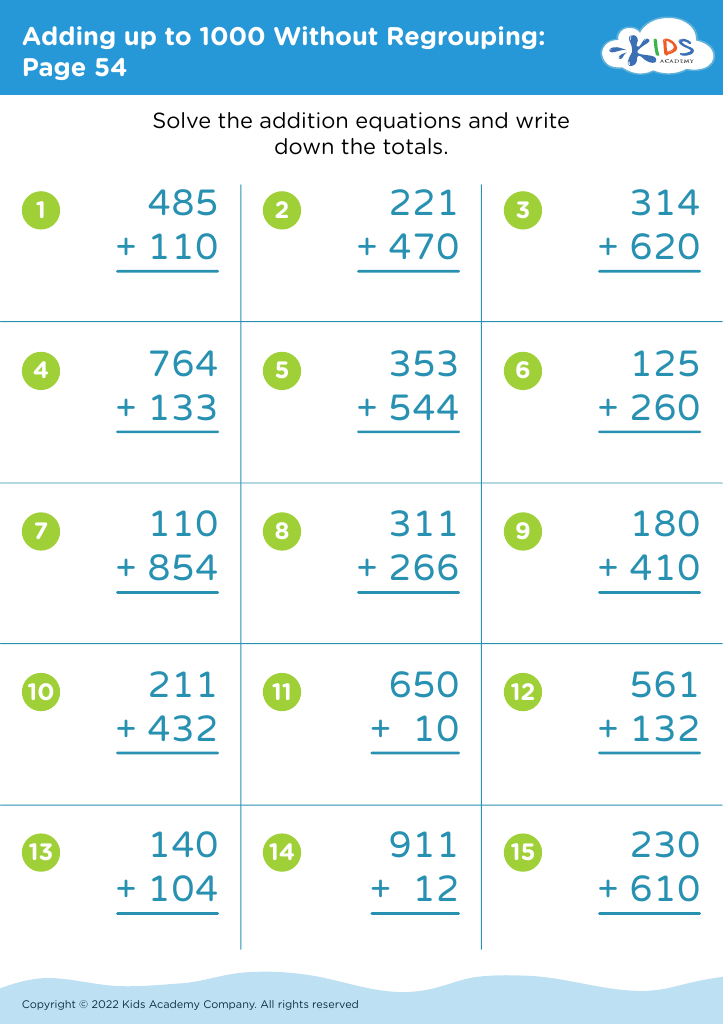
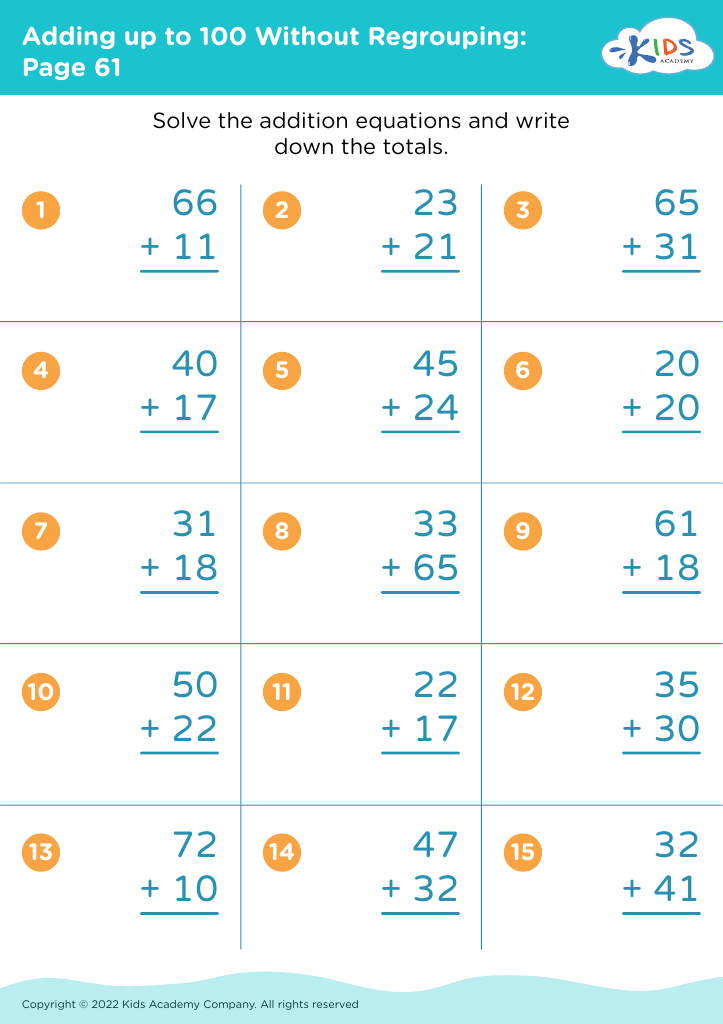
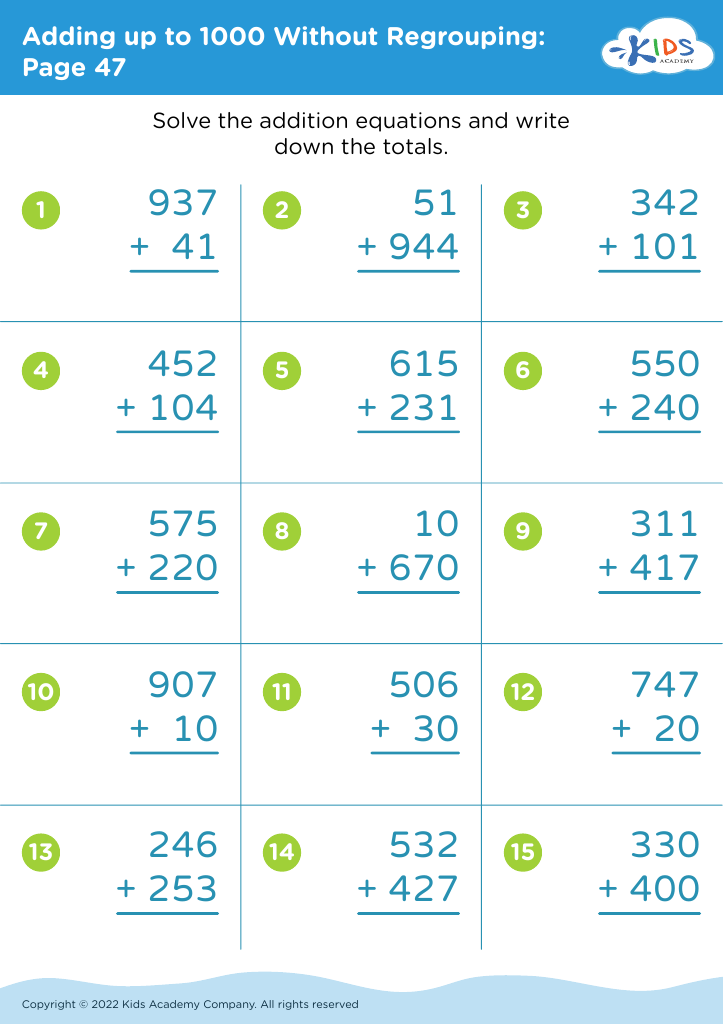
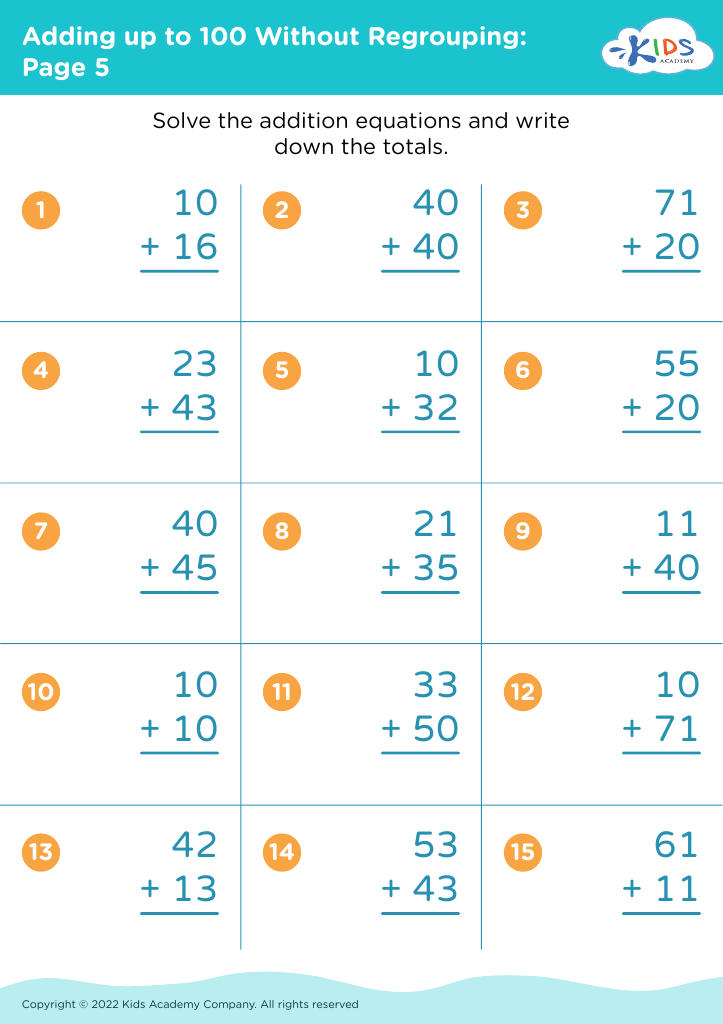
Welcome to our "Understanding Division Addition & Subtraction Worksheets" designed specifically for children ages 5-8! These engaging worksheets simplify the vital concepts of division, addition, and subtraction, helping young learners to grasp these essential math skills with ease and confidence. With vibrant illustrations and relatable scenarios, our resources promote critical thinking and problem-solving. Each worksheet is tailored to align with developmental stages, ensuring a fun and educational experience that fosters mastery of basic math principles. Encourage your child's love for learning and watch as they excel in mathematics through our thoughtfully crafted activities! Explore our collection today!
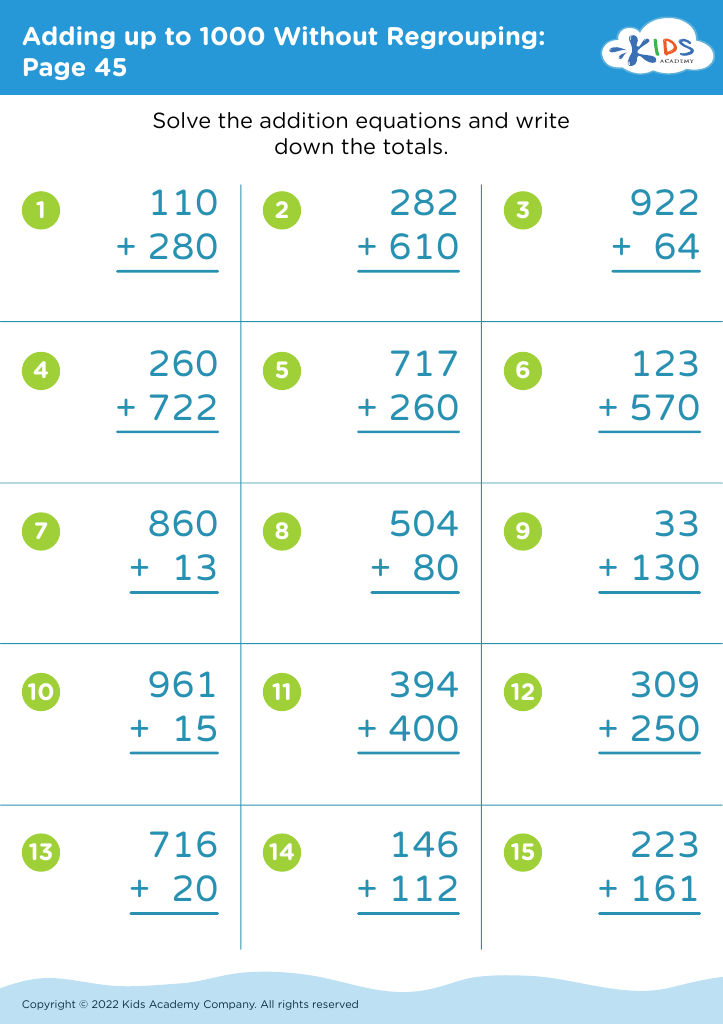








Understanding division, addition, and subtraction is crucial for children aged 5-8, serving as foundational skills that anchor their mathematical development. These early arithmetic concepts are not only essential for future learning but also for everyday problem-solving and logical reasoning. When parents and teachers emphasize these skills, they promote numeracy, which is vital for academic success in all subjects.
At this stage, children are developing critical thinking abilities. By grasping these operations, they learn how to manipulate numbers, which enhances their confidence in tackling numerical problems. Engaging with addition and subtraction helps children understand whole-part relationships, fostering insights into more complex operations like multiplication and division, with each building on the other.
Moreover, these skills lay the groundwork for understanding real-world concepts, from budgeting their allowances to sharing effectively among peers. When parents and educators prioritize this foundational knowledge, they not only foster a love for learning but also equip kids with the tools needed for future challenges. Most importantly, proficiency in these operations contributes to greater self-esteem, as children learn that they can navigate and comprehend the world of numbers surrounding them. In short, care and support for mastering these basics ensure children build strong mathematical pathways for their future endeavors.








