Understanding equations Addition & Subtraction Worksheets for Ages 5-8
7 filtered results
-
From - To
Unlock the world of math for your child with our "Understanding Equations: Addition & Subtraction Worksheets" designed specifically for ages 5-8. These engaging worksheets help young learners grasp the foundational concepts of equations through fun and interactive activities. Kids will explore addition and subtraction in a supportive environment, using visual aids and step-by-step exercises to enhance their comprehension. Tailored to match their developmental stage, our worksheets foster critical thinking and problem-solving skills while building confidence in mathematics. Perfect for at-home learning or classroom enhancement, these resources make mastering equations exciting and accessible. Start your child's math journey today!
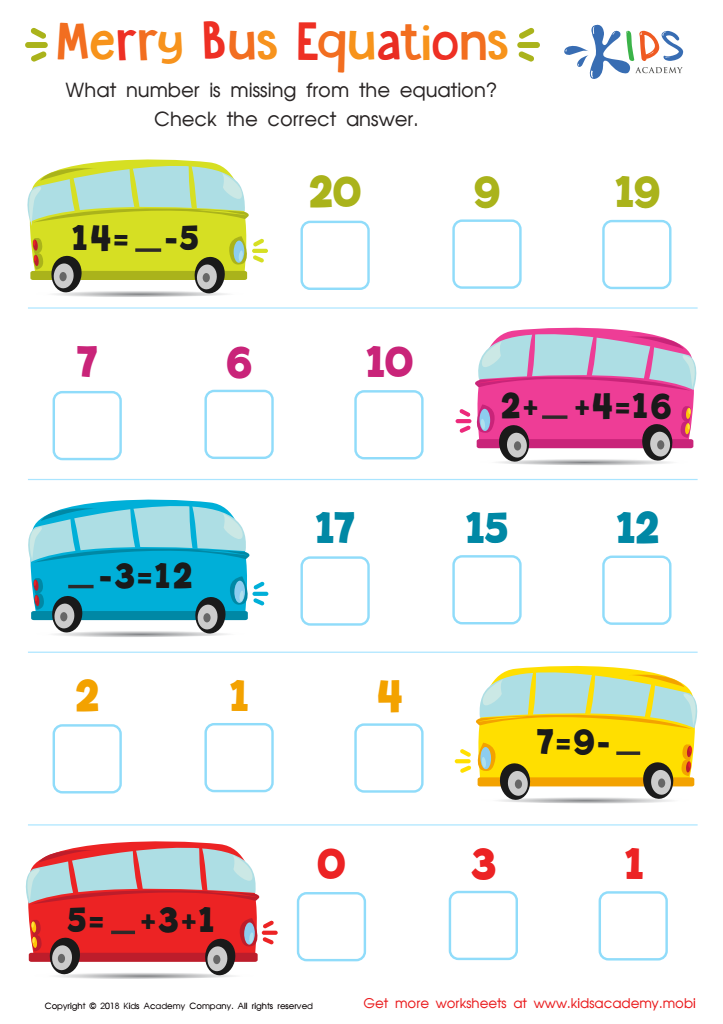
Merry Bus Equations Worksheet
 Assign to My Students
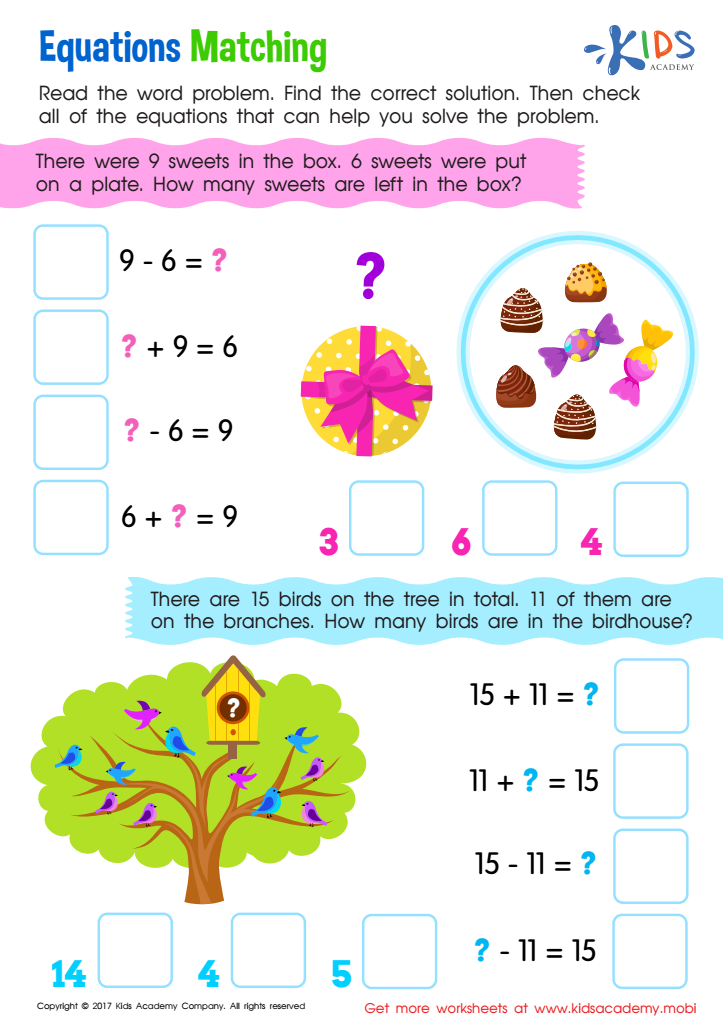
Equations Matching Word Problems Worksheet
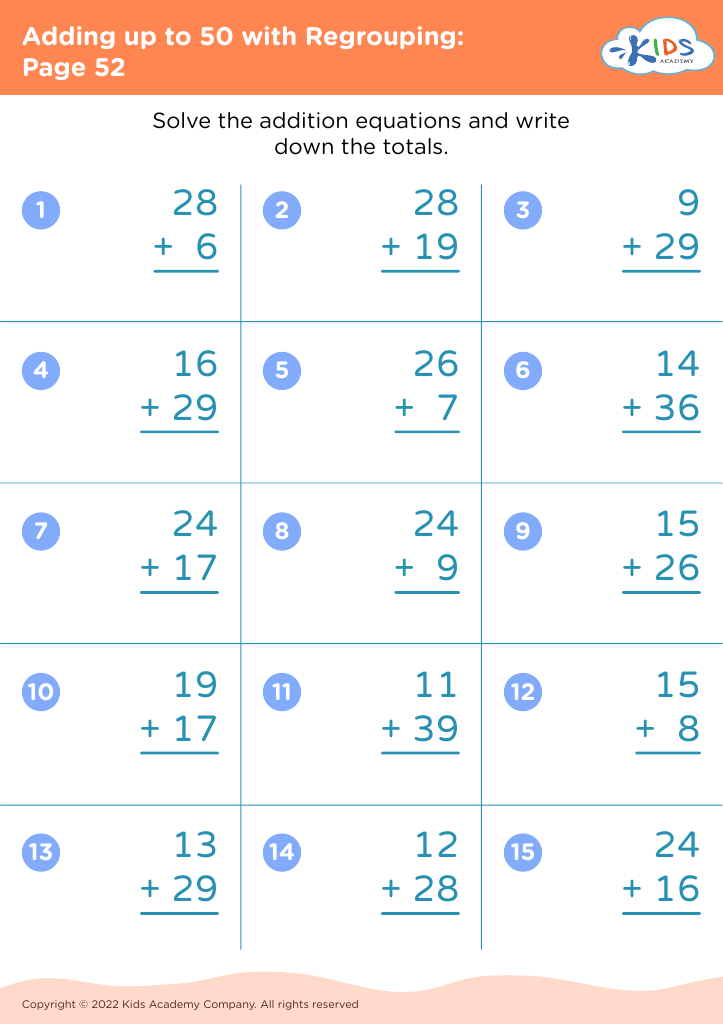
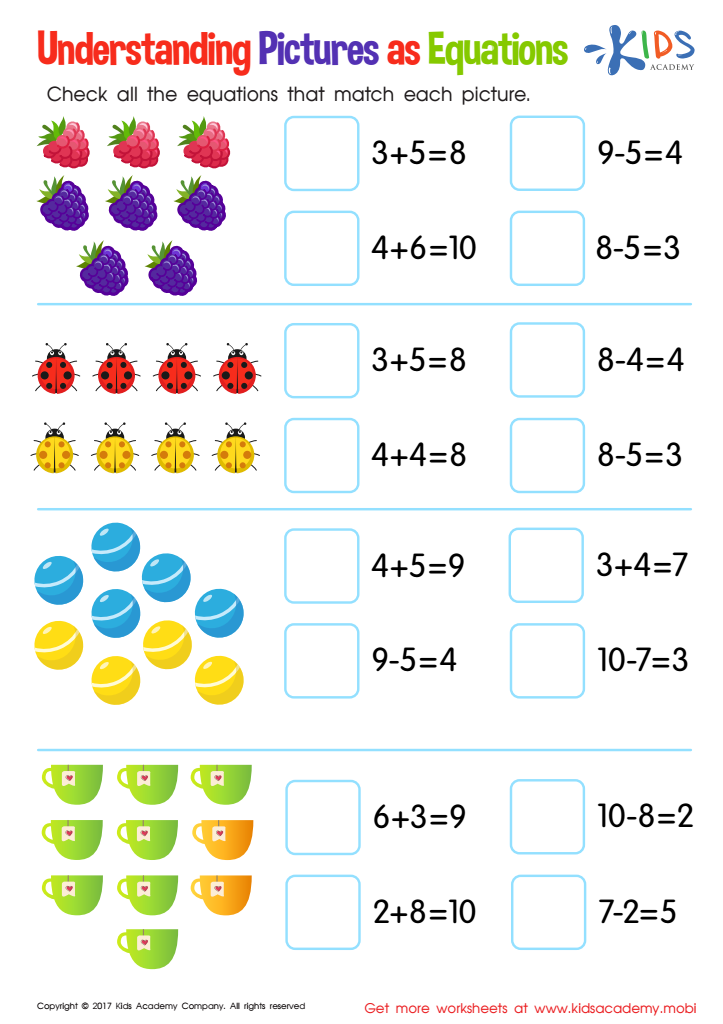
Understanding Pictures as Equations Worksheet
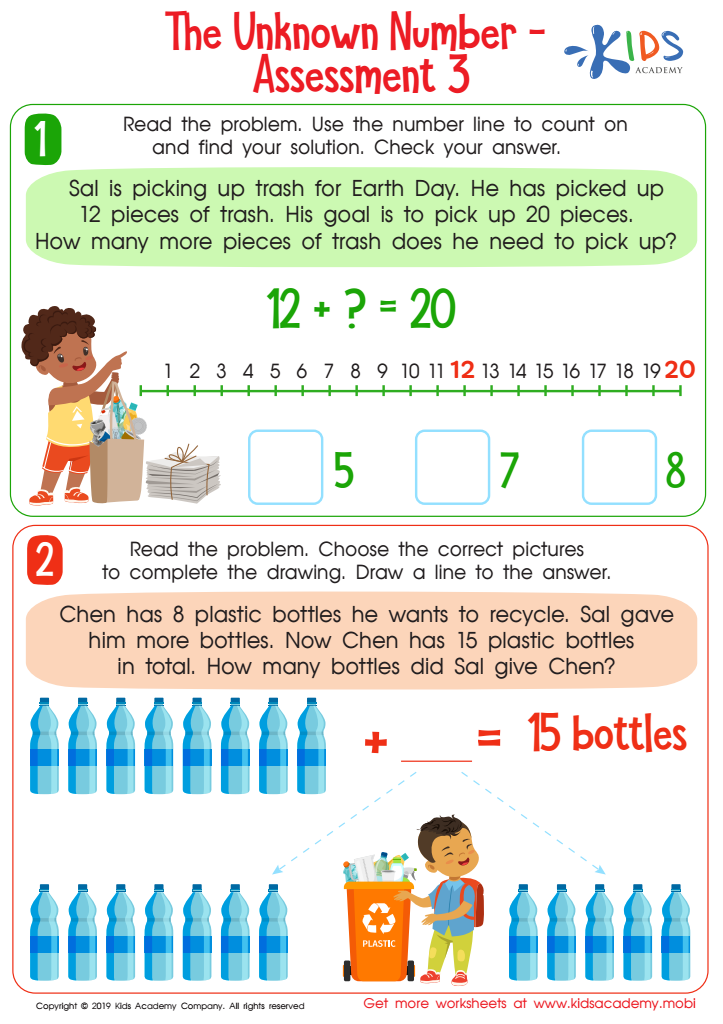
The Unknown Number - Assessment 3 Worksheet
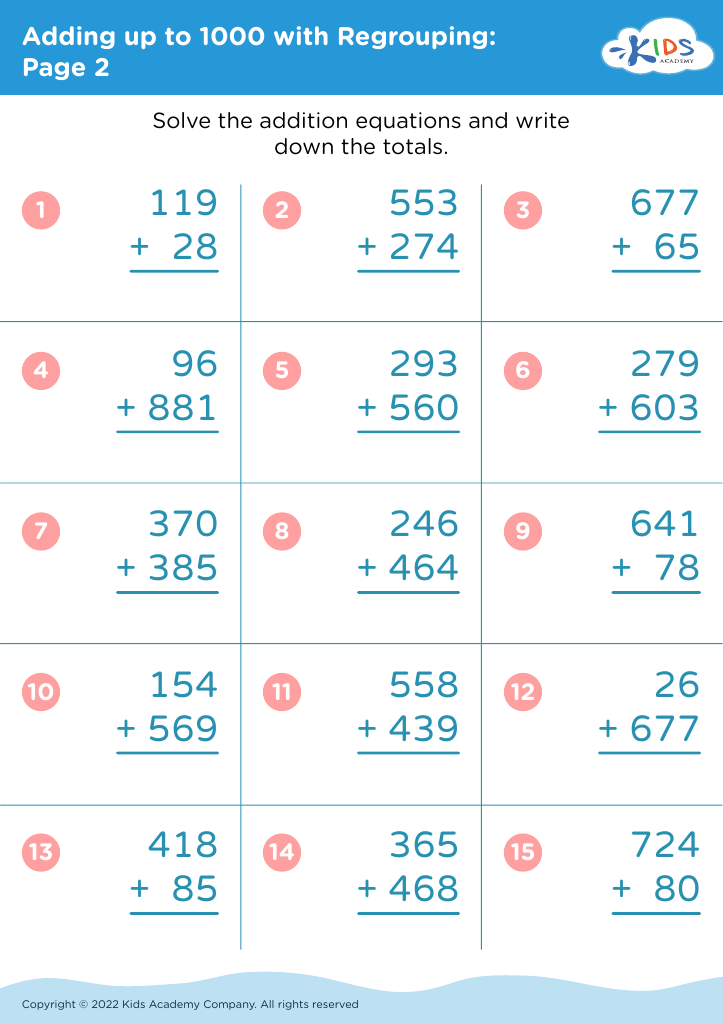
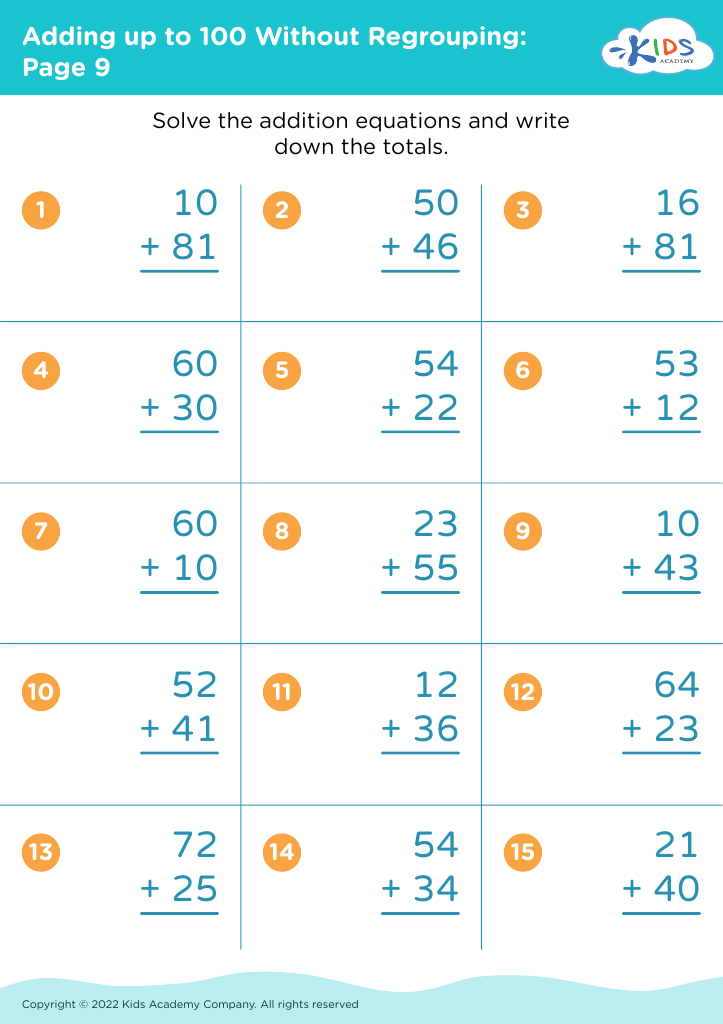








Understanding equations involving addition and subtraction is crucial for children aged 5-8, as this foundational knowledge supports their overall mathematical development. At this early stage, students are not just learning how to perform calculations; they are also developing critical thinking and problem-solving skills. Teaching children about equations helps them recognize the relationship between numbers and operations, fostering a deeper understanding of mathematics as a whole.
When parents and teachers focus on equations, they promote number sense, which is essential for logical reasoning in everyday situations. Such understanding aids students in tackling more complex mathematical concepts in the future. For instance, grasping how different numbers combine or what happens when numbers are subtracted helps with comprehension in higher-order math equations down the line.
Moreover, engaging with equations in a fun and relatable way allows children to see math as an enjoyable challenge rather than a chore. This positive attitude fosters a lifelong love for learning. Ultimately, encouraging children to understand addition and subtraction equations sets them up for academic success, paving the way for future studies in science, technology, engineering, and mathematics (STEM) fields. By valuing this knowledge, parents and teachers can empower young learners with the tools they need for a successful future.








