Understanding ordinal numbers Addition & Subtraction Worksheets for Ages 5-8
3 filtered results
-
From - To
Explore our comprehensive "Understanding Ordinal Numbers Addition & Subtraction Worksheets" designed specifically for children ages 5-8! These engaging worksheets aim to enhance young learners' grasp of ordinal numbers while strengthening their addition and subtraction skills. With colorful illustrations and age-appropriate challenges, children will enjoy working through various activities that promote counting in order, identifying sequences, and performing basic arithmetic operations. Perfect for classroom use or at-home learning, these worksheets enable kids to develop a foundational understanding of ordinal numbers in a fun and interactive way. Help your child build confidence in math with our thoughtfully crafted resources today!
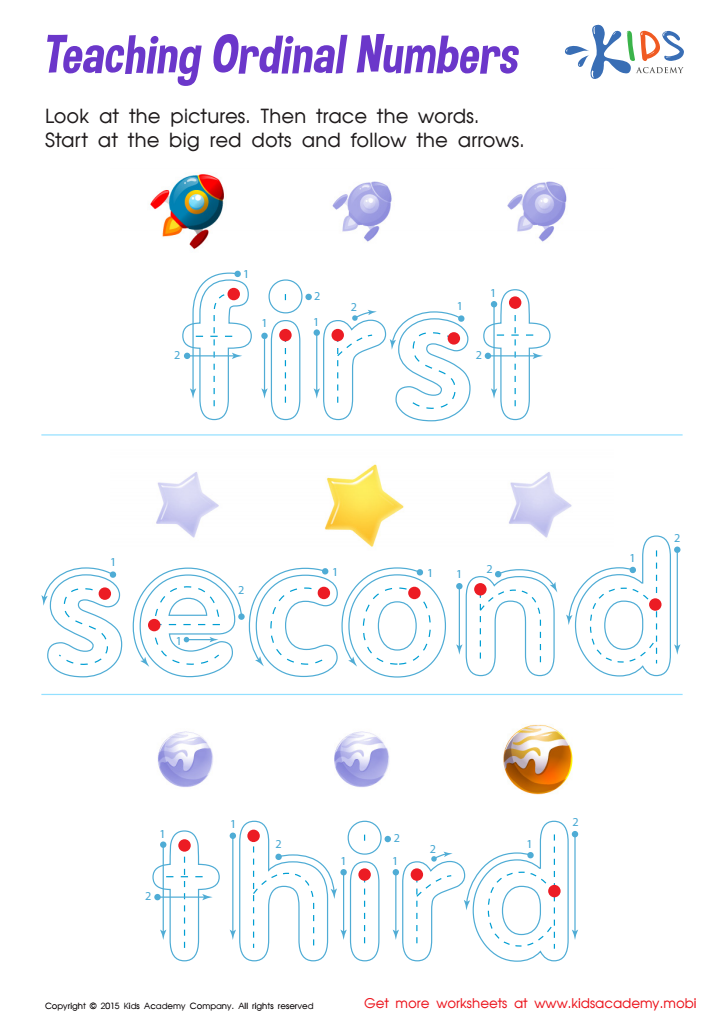
Ordinal Numbers: Teaching Ordinal Numbers Printable
 Assign to My Students
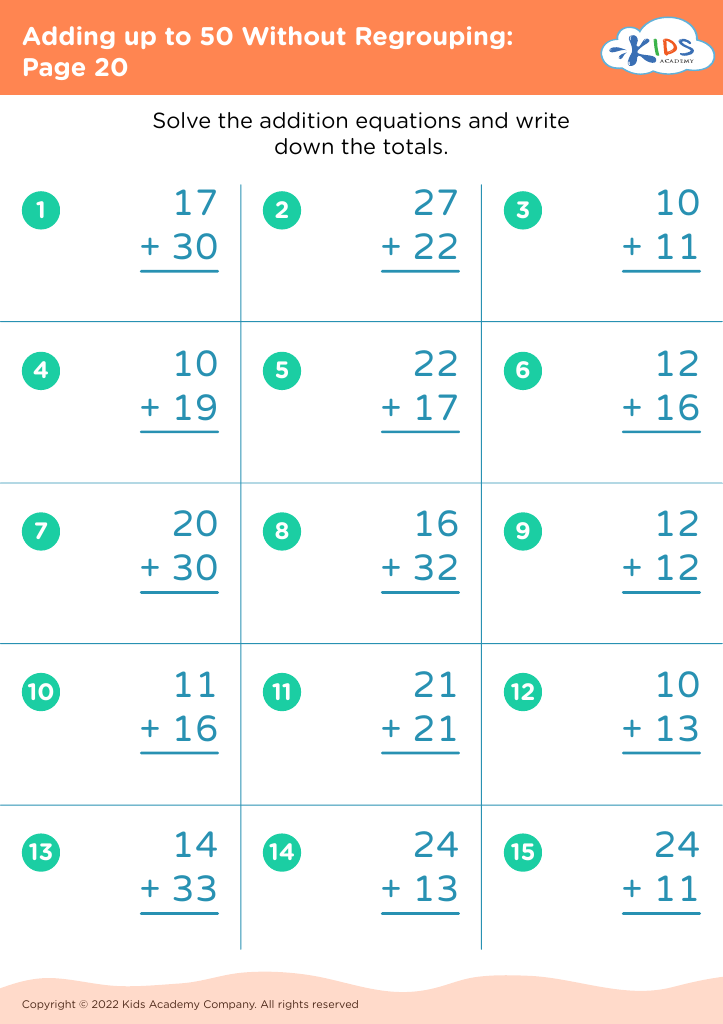
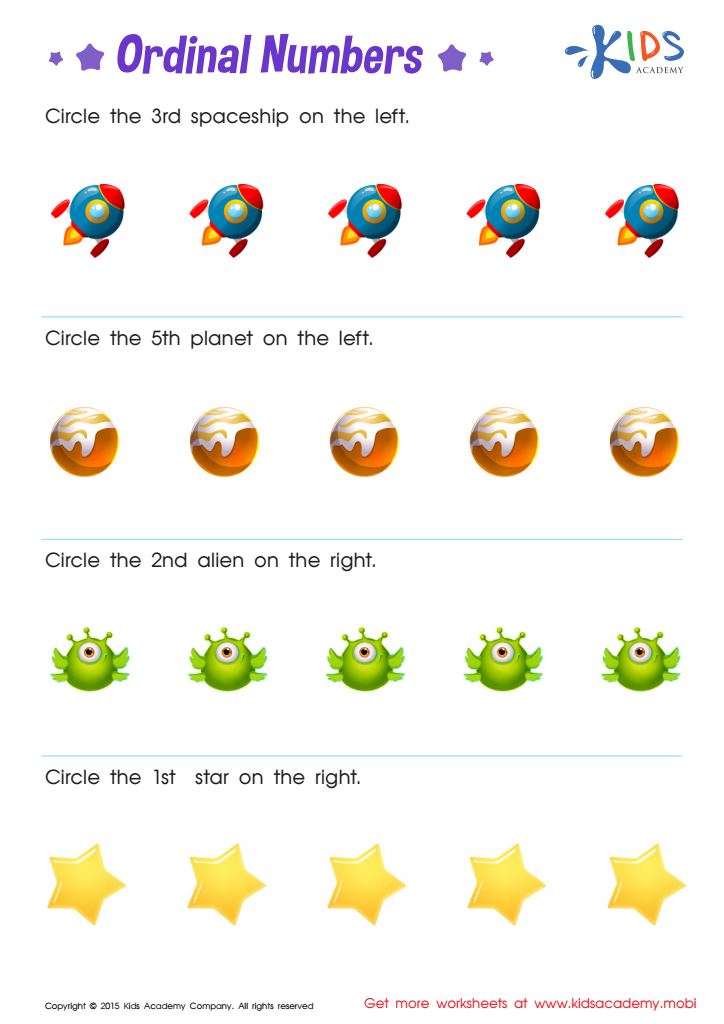
Ordinal Numbers: Space Ordinals Worksheet








Understanding ordinal numbers, addition, and subtraction is crucial for children aged 5-8 as these foundational concepts lay the groundwork for their mathematical development. Ordinal numbers, which indicate position (first, second, third, etc.), help children develop important skills related to sequencing and understanding order in both math and everyday life. Recognizing positions assists in activities ranging from organizing classroom supplies to navigating social interactions, thereby enhancing cognitive and social skills.
Mastering addition and subtraction during these formative years promotes number sense, allowing children to grasp more complex mathematical ideas as they advance. Understanding these operations fosters critical thinking and problem-solving skills, vital for your child's academic success. Engaging with real-life scenarios, such as sharing toys or counting treats, enables children to see the relevance of math in daily experiences, making learning more meaningful.
Moreover, parents and teachers play essential roles in creating enriching environments where these concepts can be explored through interactive games, books, and conversations. Such engagement embodies the building blocks for their future learning in mathematics and problem-solving, cultivating confident, capable learners ready to tackle more advanced concepts in the years ahead. Thus, prioritizing these foundational skills is crucial for holistic educational development.








