Addition up to 5 Addition Worksheets for Ages 5-8
4 filtered results
-
From - To
Discover a collection of engaging "Addition up to 5" worksheets designed specifically for children ages 5-8! These colorful and interactive worksheets make learning addition fun and easy for young learners. Featuring diverse activities that challenge kids to add simple numbers, these resources help build a solid foundation in math. Our worksheets promote not only basic addition skills but also the development of critical thinking and problem-solving abilities. Perfect for use at home or in the classroom, these worksheets cater to various learning styles, ensuring every child enjoys learning this essential math skill. Start your child’s math journey today!
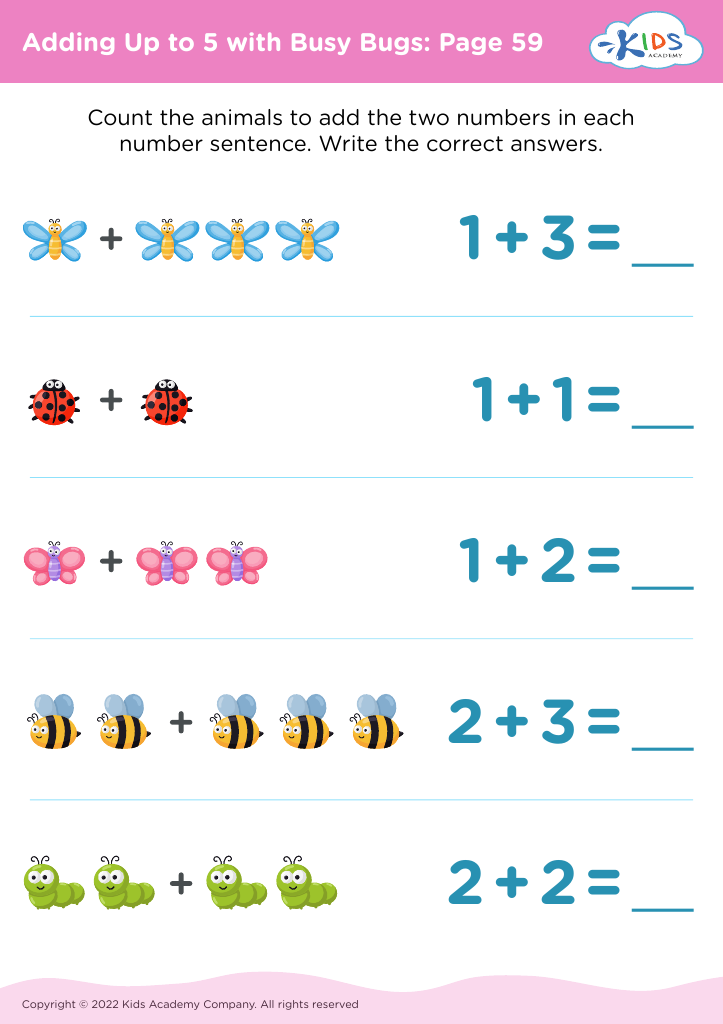
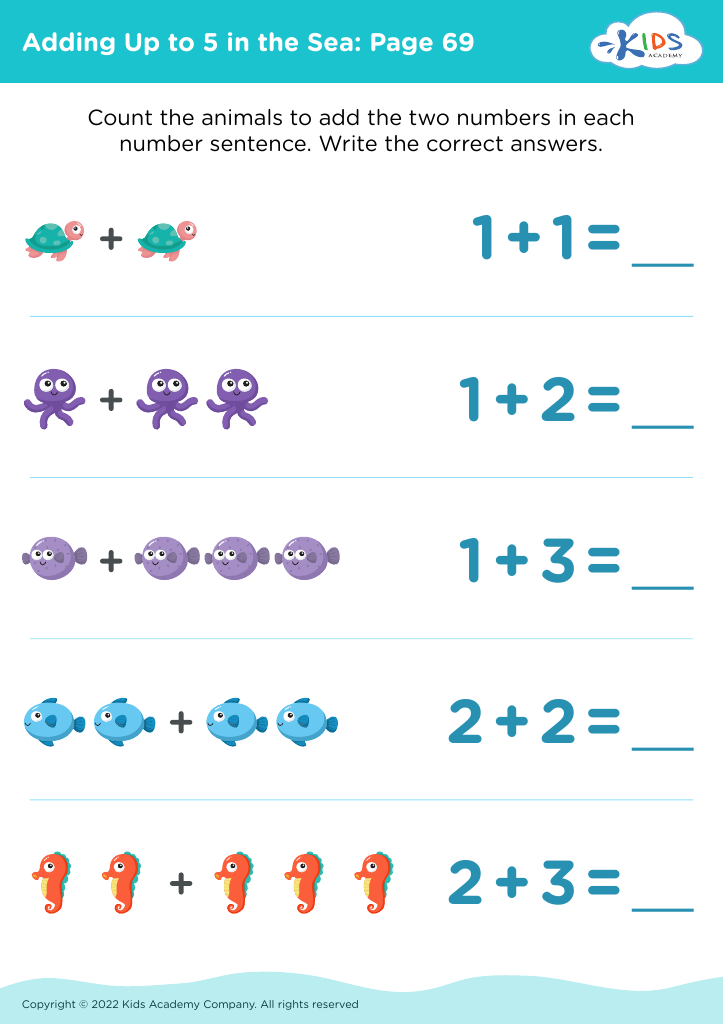
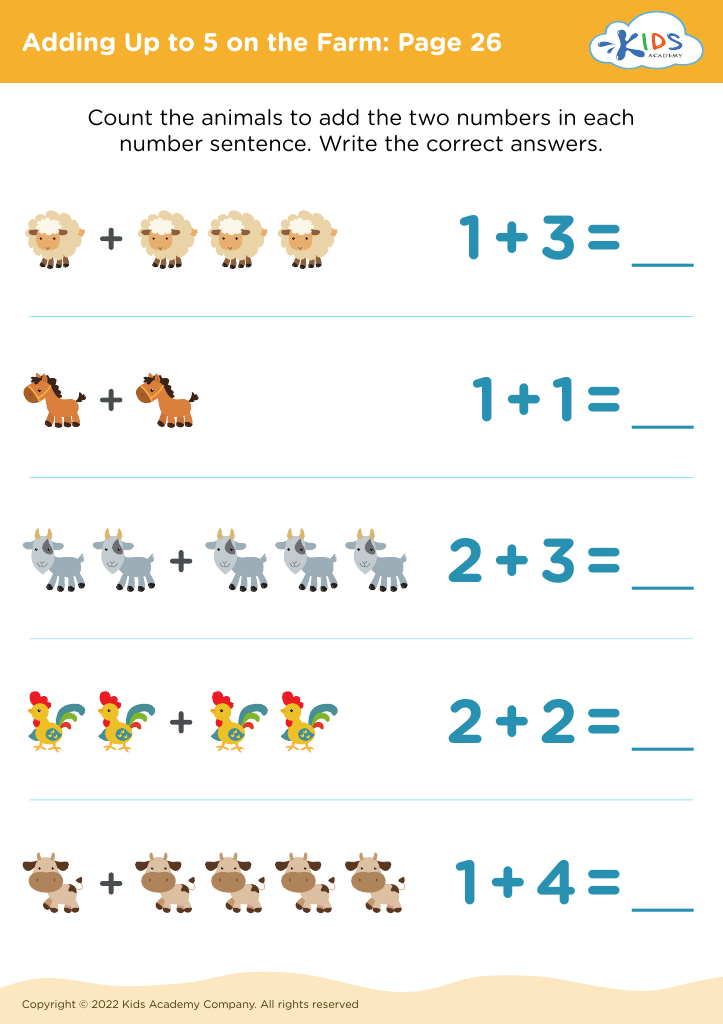
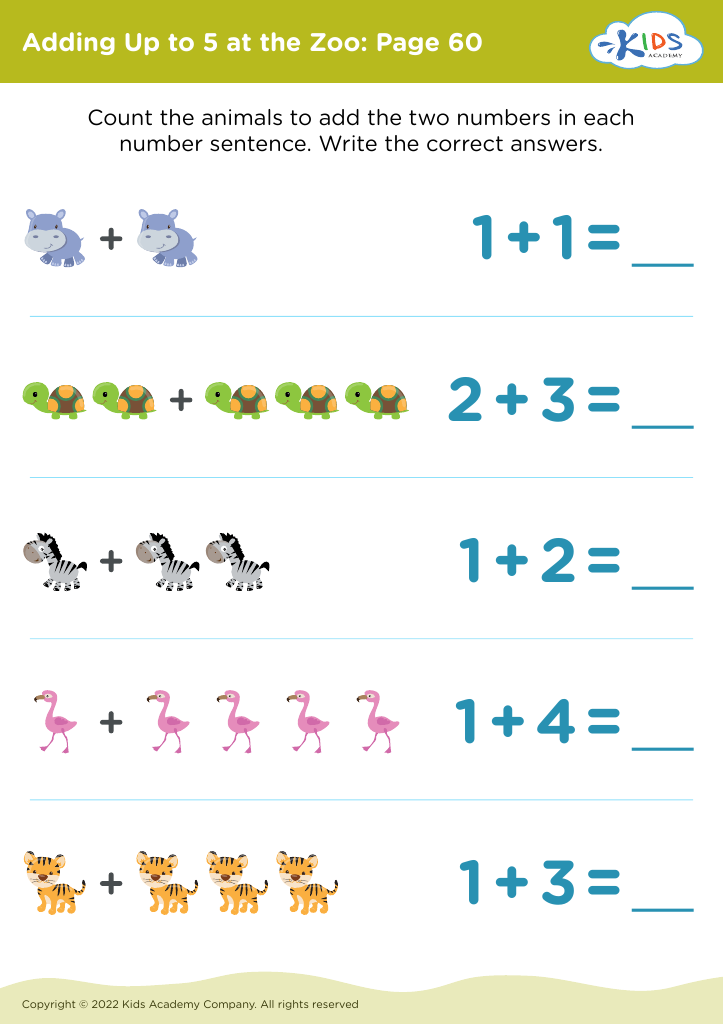







Parents and teachers should prioritize teaching addition up to 5 for children aged 5-8 because it lays the foundation for all future mathematics. At this age, children are developing critical cognitive skills like number recognition, counting, and basic problem-solving abilities. Understanding addition within this small number range is manageable and allows children to build confidence in their mathematical skills.
Learning to add small numbers promotes comprehension of more complex concepts they will encounter later, such as subtraction and larger number operations. It also fosters number sense, helping children understand how numbers relate to each other, which is essential for everyday activities like shopping or sharing.
Furthermore, developing these skills encourages logical thinking and enhances their ability to tackle new challenges. Parental and teacher involvement is crucial; engaging activities, games, and interactive lessons can turn learning into a fun experience. This not only solidifies their understanding but also reinforces positive attitudes towards math.
Ultimately, mastering addition up to 5 is a significant stepping stone in a child’s educational journey, shaping their confidence and excitement for learning, helping cultivate a lifelong appreciation for mathematics. Parents and teachers should work collaboratively to create a nurturing environment that encourages exploration in math and promotes steady progress.








