Categorization skills Addition Worksheets for Ages 5-8
3 filtered results
-
From - To
Boost your child's mathematical foundation with our "Categorization Skills Addition Worksheets" designed specifically for ages 5-8. These engaging worksheets neatly combine fun and learning, helping young learners develop their addition skills while categorizing numbers and objects. Each activity encourages critical thinking as children classify items by attributes such as size, shape, or quantity, facilitating better understanding of relationships in math. Ideal for home, school, or tutoring, these printable resources seamlessly integrate playful visuals with educational content, making learning enjoyable. Help your little ones master addition and enhance their categorization abilities today! Visit our website to explore the complete range of worksheets.
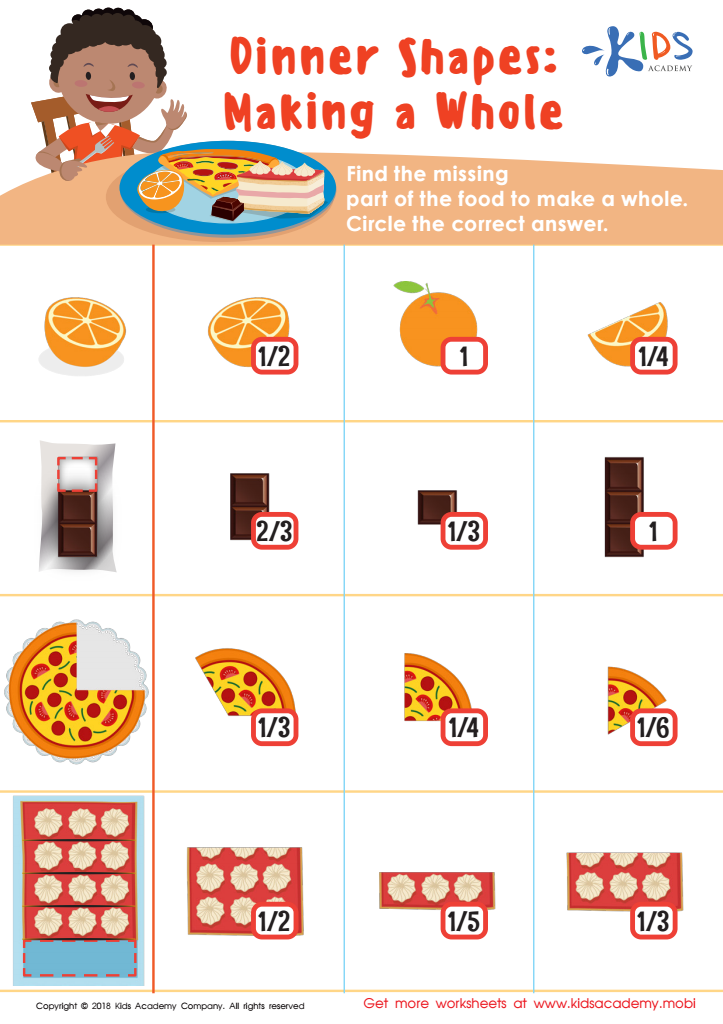
Dinner Shapes: Making a Whole Worksheet
 Assign to My Students
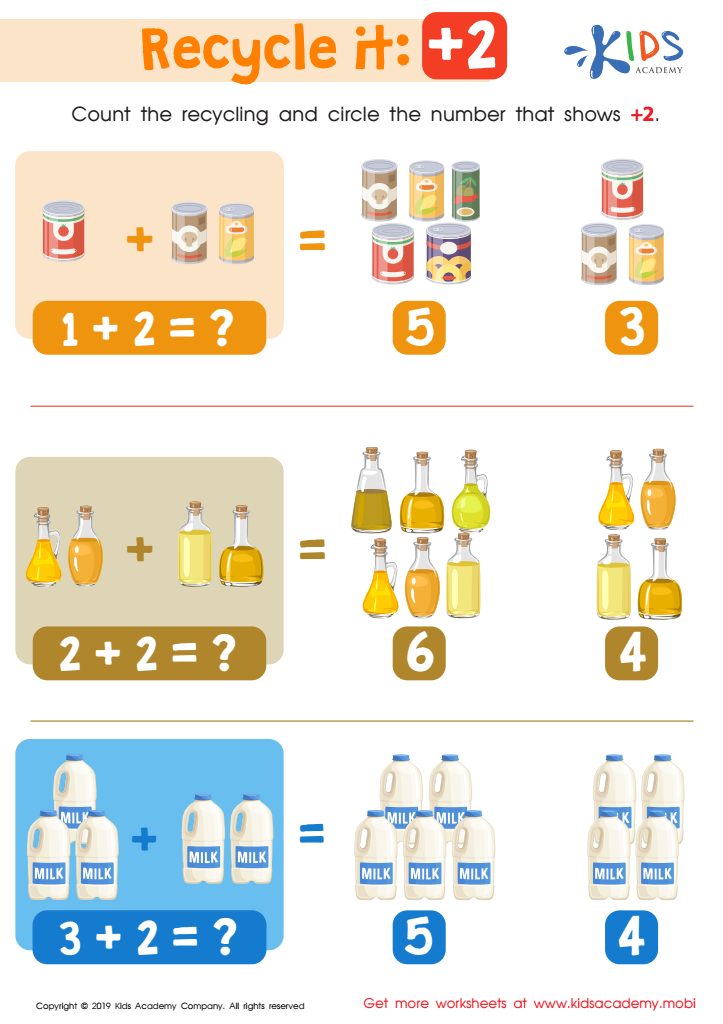
Recycle It: +2 Worksheet








Categorization skills, particularly in the context of addition for children aged 5-8, are crucial for several reasons. First, these skills help young learners organize information, fostering logical thinking. When children categorize numbers or objects, they begin understanding relationships, which is foundational for grasping addition concepts. For instance, recognizing that 2 apples and 3 apples can be grouped together to make 5 encourages a sense of grouping and sets the stage for more complex mathematical operations.
Moreover, categorization enhances memory and retrieval skills. When children learn to group and label numbers, it becomes easier for them to recall information during addition tasks. This mental organization reduces cognitive load, allowing for smoother problem-solving processes.
Additionally, these skills promote critical thinking and encourage children to explore patterns and similarities. For example, grouping numbers based on their properties (even/odd, greater than/less than) can strengthen their overall mathematical reasoning.
By prioritizing categorization skills in early education, parents and teachers can create a more engaging and effective learning environment. As children develop these competencies, they grow more confident in their abilities, paving the way for a strong mathematical foundation that will support future learning. Investing in these skills now ensures long-lasting academic success.








