
Critical thinking development Addition Worksheets for Ages 5-8
3 filtered results
Difficulty Level
Grade
Age
-
From - To
Subject
Activity
Standards
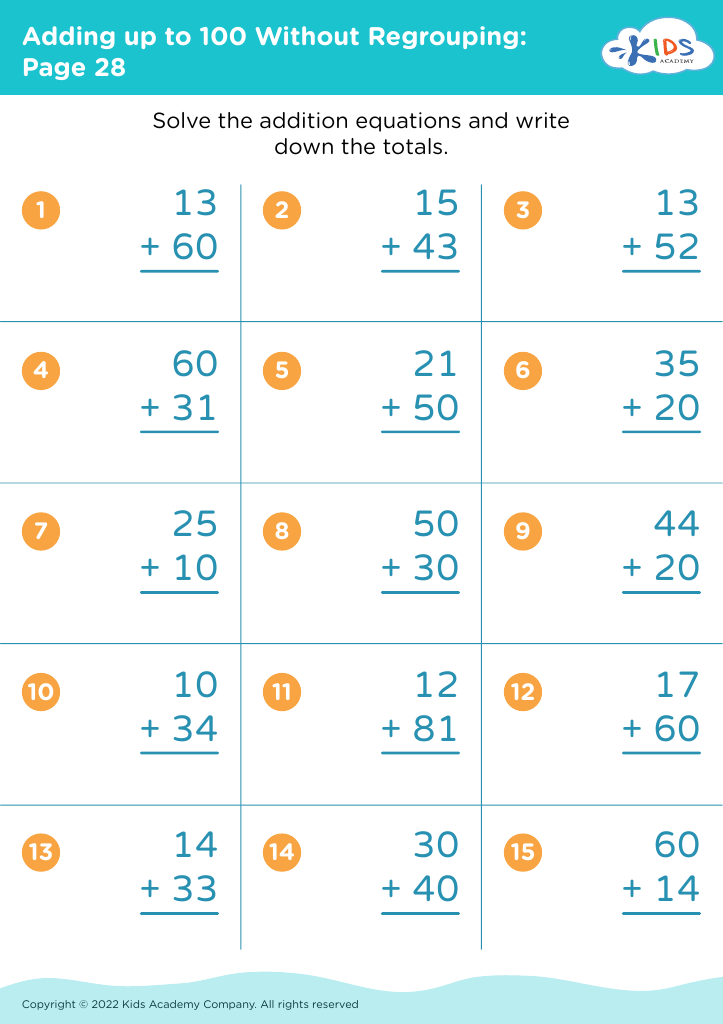
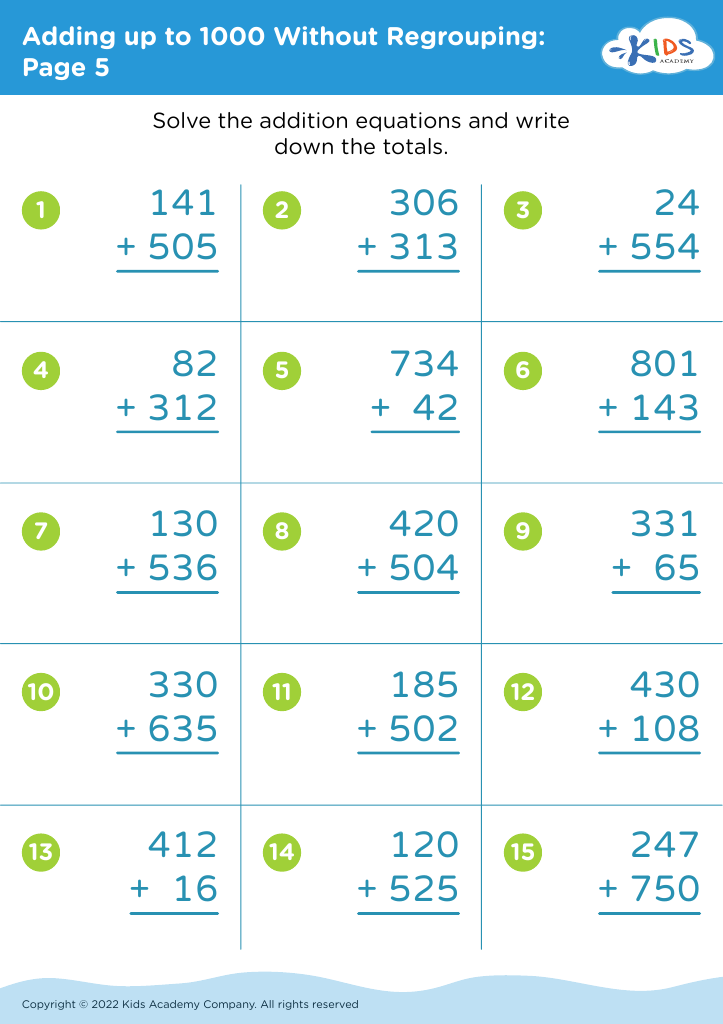
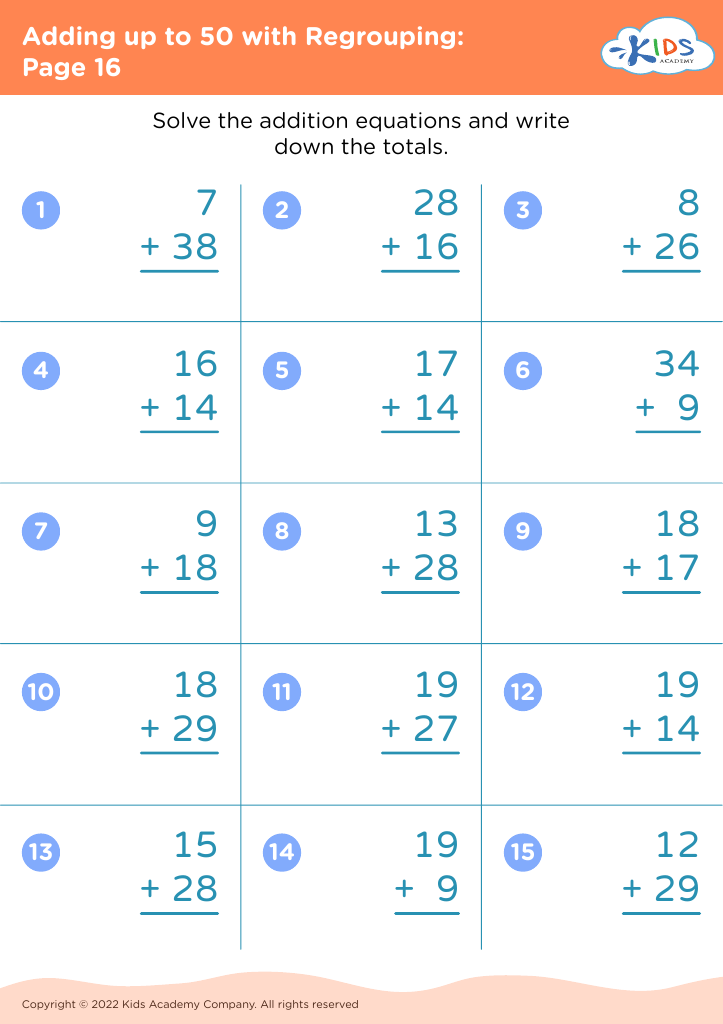
Enhance your child's math skills with our engaging Critical Thinking Development Addition Worksheets, designed specifically for ages 5-8. These thoughtfully crafted worksheets not only focus on addition but also encourage young learners to think critically and solve problems creatively. Each page combines fun and educational activities that promote analytical thinking, fostering deeper understanding and mastery of essential math concepts. These worksheets provide a perfect balance of challenge and support, making learning enjoyable for children. With vibrant visuals and interactive exercises, kids will develop confidence in their abilities while strengthening their critical thinking skills. Explore our resources and watch your child thrive!
Favorites
With answer key
Interactive
Join Kids Academy for Free
Who is primarily going to use this learning content?








Critical thinking development is essential for children aged 5-8, as it equips them with foundational skills needed for lifelong learning and problem-solving. During these formative years, children are naturally curious, and fostering critical thinking nurtures this innate curiosity. It encourages them to ask questions, analyze information, and make informed decisions, rather than simply accepting information at face value.
Parents and teachers play a crucial role in this development by creating an environment that promotes exploration and creativity. Engaging students in discussions about their thoughts and the reasoning behind their conclusions helps them articulate and refine their ideas. Introducing age-appropriate games and activities that challenge their logic, reasoning, and decision-making skills can significantly enhance their critical thinking abilities.
Moreover, developing critical thinking also supports children in navigating social situations and understanding diverse perspectives, essential for their emotional and social growth. As they learn to evaluate different viewpoints and make choices based on evidence, they become more empathic and collaborative individuals.
Ultimately, prioritizing critical thinking development in young learners not only prepares them for academic success but also fosters independence, resilience, and a passion for lifelong learning, ensuring they become informed and responsible global citizens.








