Develop analytical thinking Addition Worksheets for Ages 5-8
3 filtered results
-
From - To
Enhance your child's analytical thinking skills with our engaging addition worksheets designed specifically for ages 5-8. These worksheets provide a fun and interactive way for young learners to practice addition while developing critical thinking abilities. Through a variety of exercises, including puzzles, problem-solving tasks, and visual aids, kids will not only strengthen their math skills but also learn to analyze information and identify patterns. Ideal for home or classroom use, our addition worksheets help boost confidence in math while promoting a deeper understanding of mathematical concepts. Start fostering your child's analytical skills today with our thoughtfully crafted addition resources!
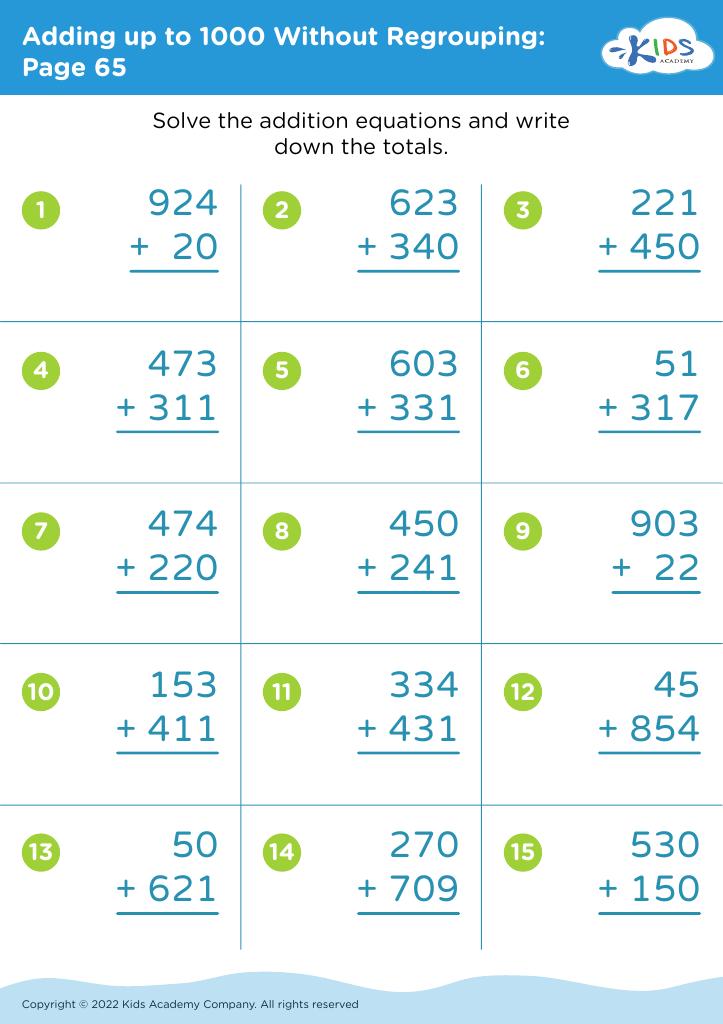
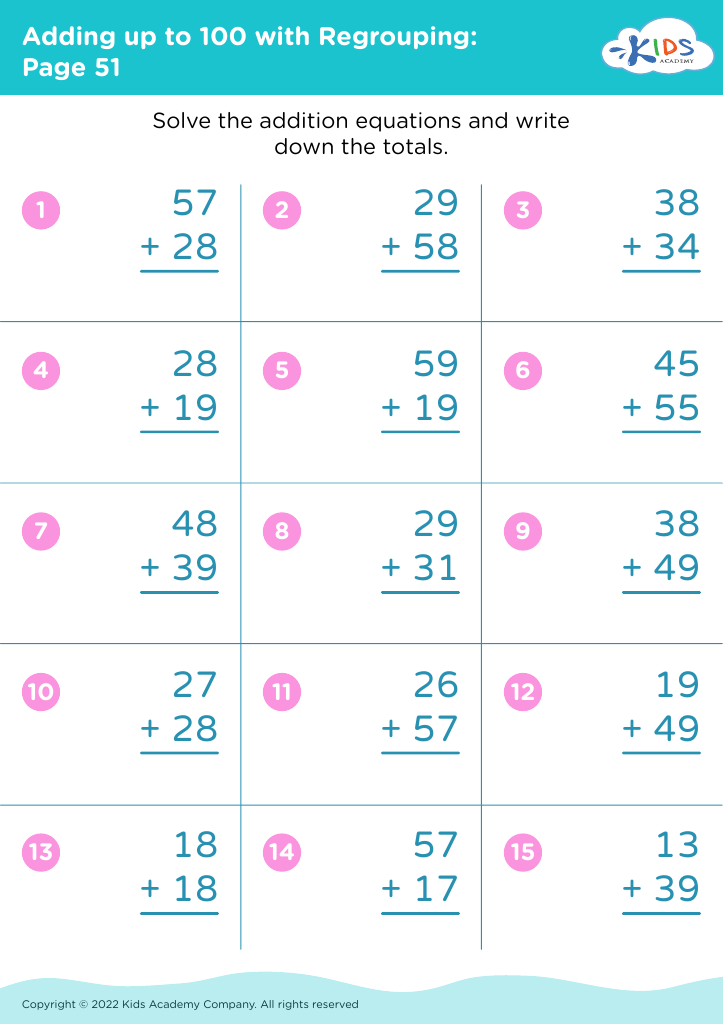
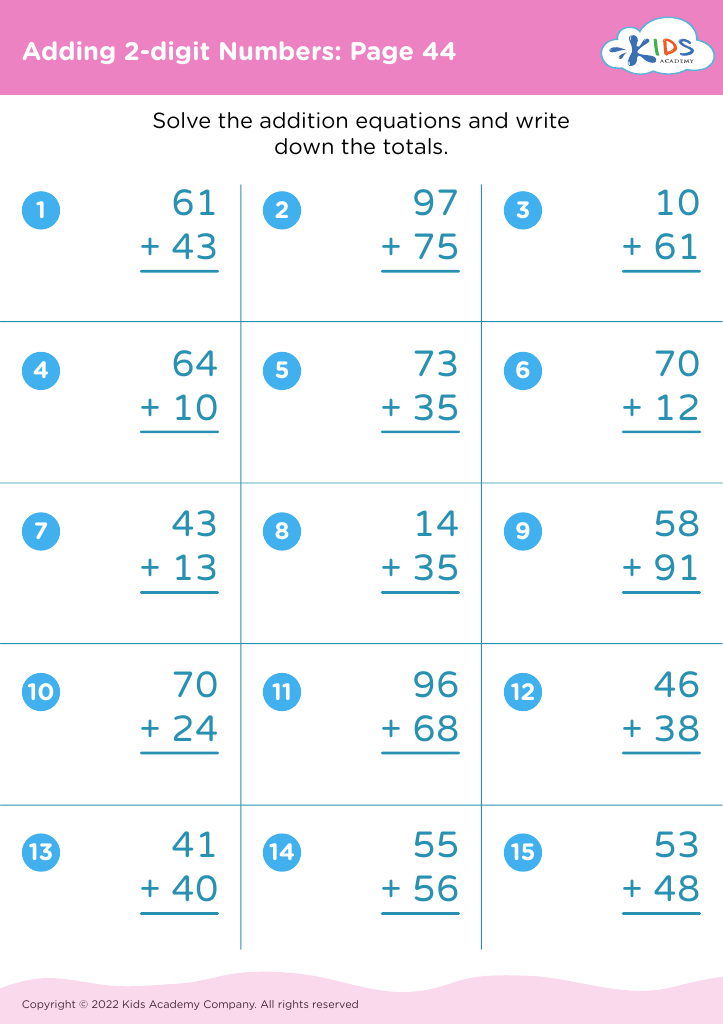








Developing analytical thinking skills, particularly in addition, is crucial for children aged 5-8, as it lays the foundation for their overall cognitive development. At this stage, children are beginning to understand concepts of number sense and quantities, making it essential for parents and teachers to foster analytical thinking through addition exercises.
Analytical thinking encourages children to approach problems logically, evaluate information critically, and develop a systematic way of thinking. When children engage with addition beyond rote memorization—by using manipulatives, exploring patterns, or solving word problems—they learn to think critically and make connections between numbers and real-life scenarios.
Moreover, these skills not only enhance their mathematical competence but also build resilience and confidence in problem-solving. As they navigate more complex math in later grades, a strong foundation in analytical thinking will help them grasp abstract concepts and apply their knowledge effectively.
By cultivating these skills at an early age, parents and teachers invest in the child's future educational success, preparing them for challenges beyond mathematics. Engaging children in interactive and analytical addition activities can spark a lifelong interest in learning and instill a positive attitude towards problem-solving.








