Enhance concentration Addition Worksheets for Ages 5-8
5 filtered results
-
From - To
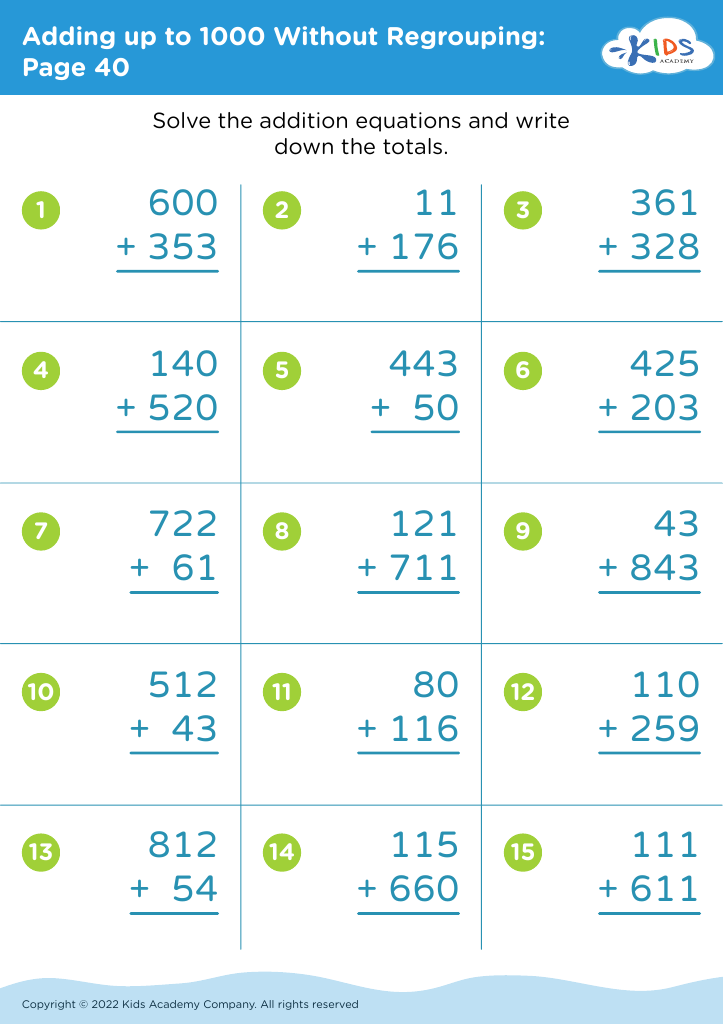
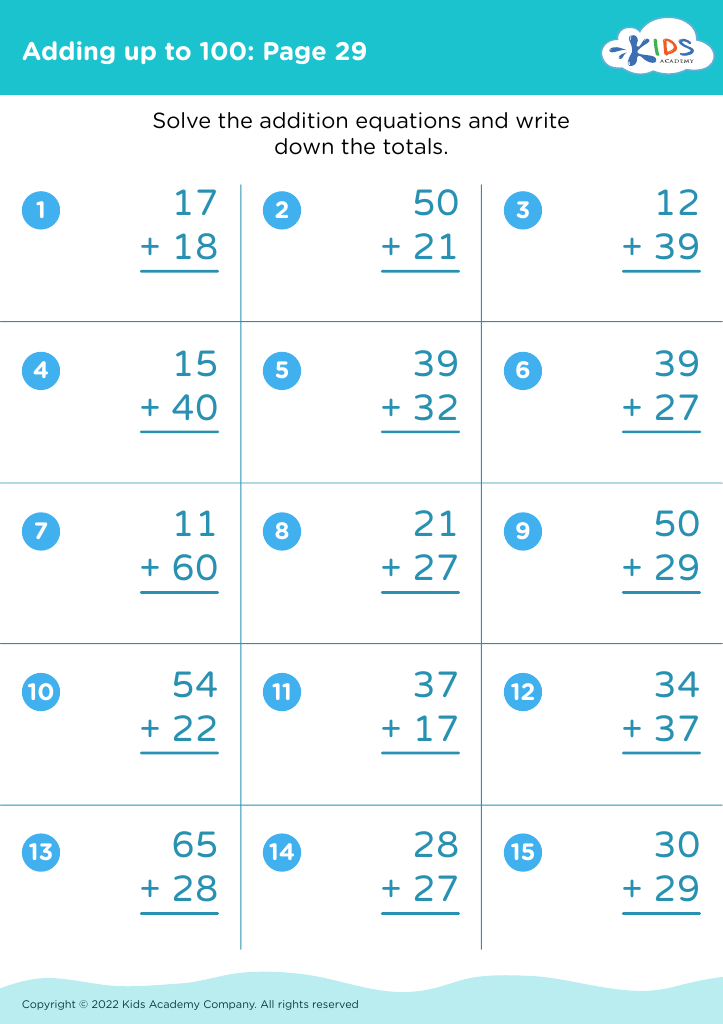
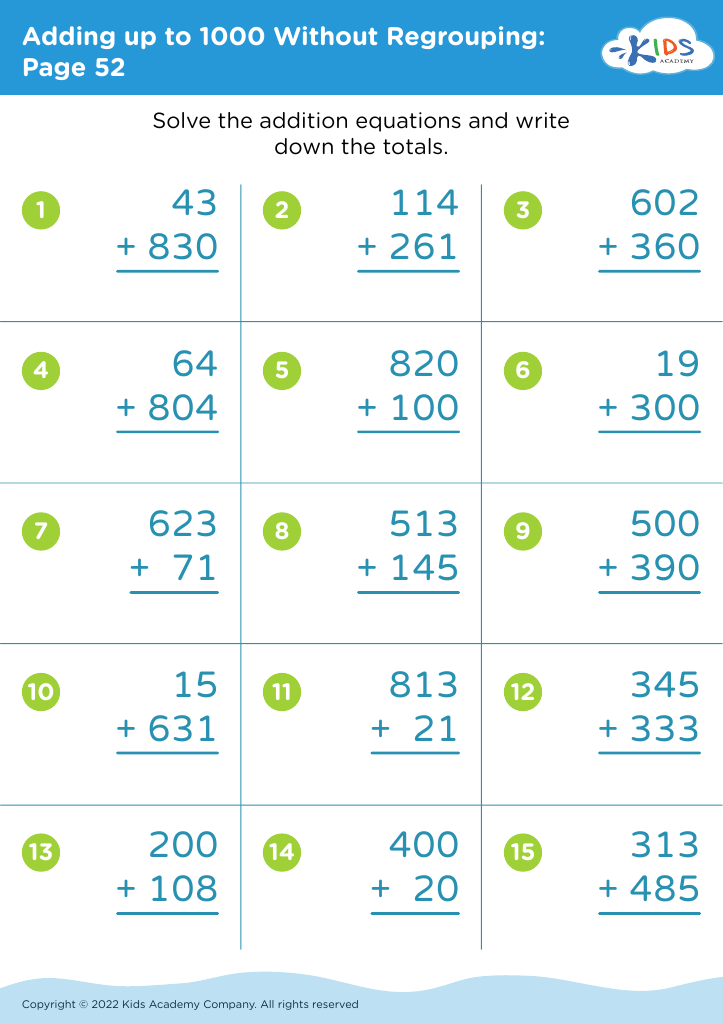
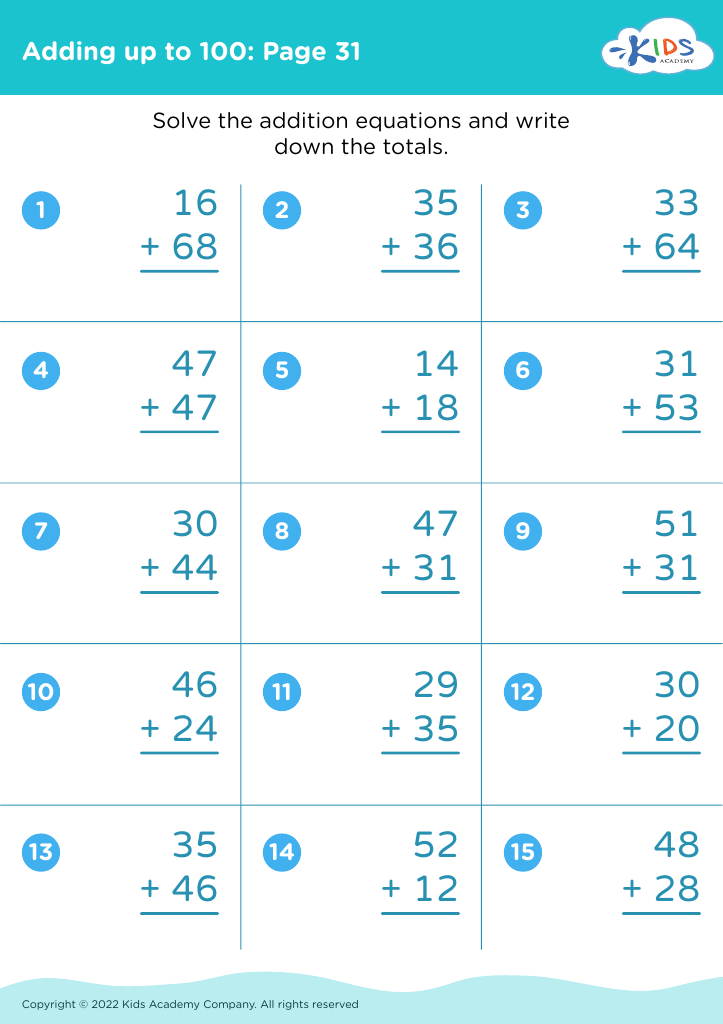
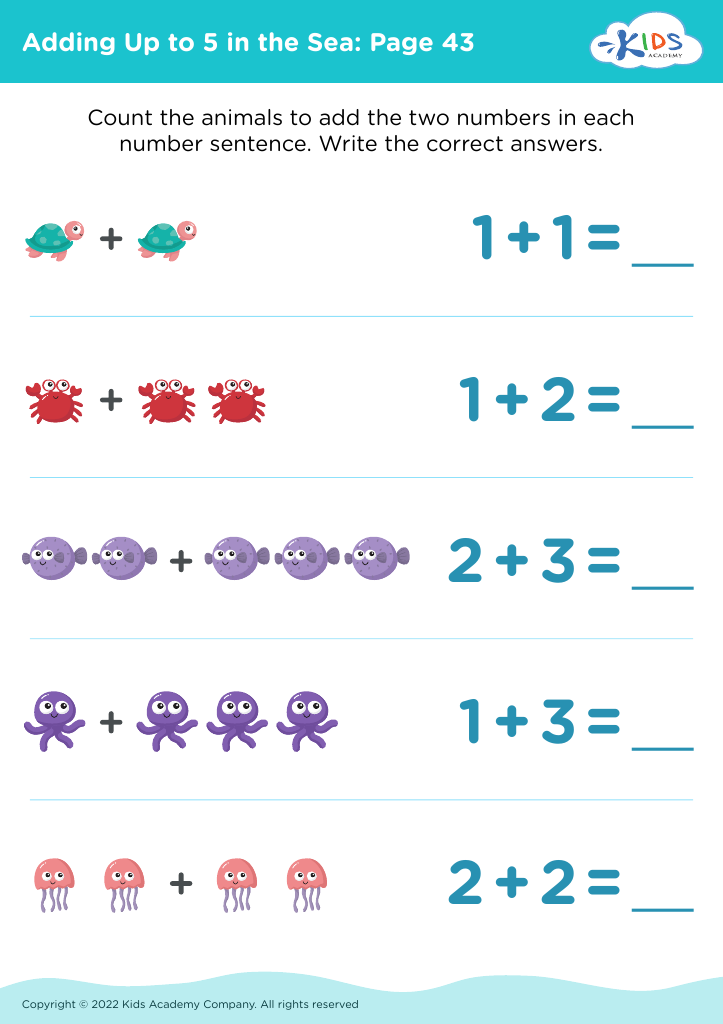
Unlock your child's mathematical potential with our "Enhance Concentration Addition Worksheets for Ages 5-8". Specially designed to improve focus and problem-solving skills, these engaging worksheets offer a fun way for young learners to master addition. Each worksheet combines colorful visuals and intriguing challenges, keeping children motivated and attentive. Perfect for both classroom settings and at-home practice, our expertly crafted exercises cater to various learning styles, ensuring every child can succeed. Experience the benefits of enhanced concentration and boosted confidence in math with our comprehensive collection. Give your child the head start they deserve today!







Enhancing concentration is crucial for children aged 5-8 as it lays the foundation for their future learning and development. During these formative years, children's brains are highly adaptable and capable of learning rapidly. Improving concentration helps them absorb and process information more efficiently, leading to better academic performance. It supports activities such as reading, writing, and arithmetic, which are fundamental skills that will be built upon throughout their educational journey.
A strong concentration ability also fosters effective listening, social interactions, and following instructions, which are critical in a classroom setting. Cultivating these skills early helps children become more independent learners and reduces the need for constant supervision and repeated instructions. It also minimizes the likelihood of becoming easily distracted, which can lead to missed learning opportunities and decreased confidence.
Moreover, concentration contributes to emotional self-regulation, enabling children to manage frustrations and persist with challenging tasks. This resilience is essential for overcoming obstacles and achieving long-term goals. Parents and teachers play a pivotal role in creating environments that support concentration by providing engaging, age-appropriate activities and ensuring a structured yet flexible routine. Ultimately, strengthening concentration in young children equips them with the necessary tools for lifelong learning and personal growth.








