Enhancing Counting Skills Addition Worksheets for Ages 5-8
9 filtered results
-
From - To
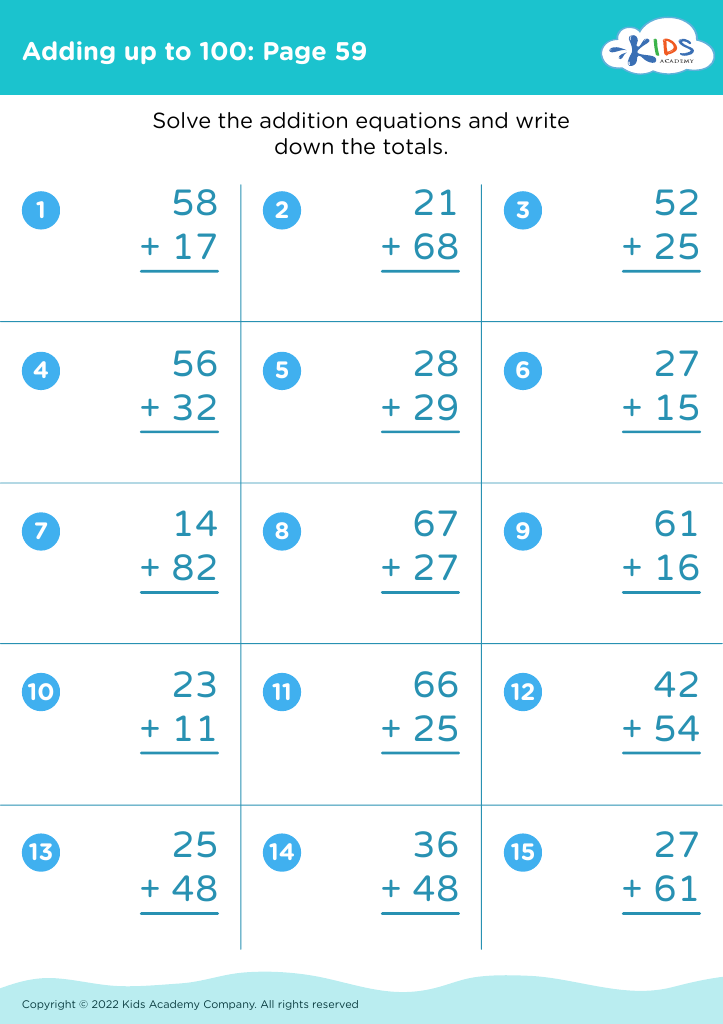
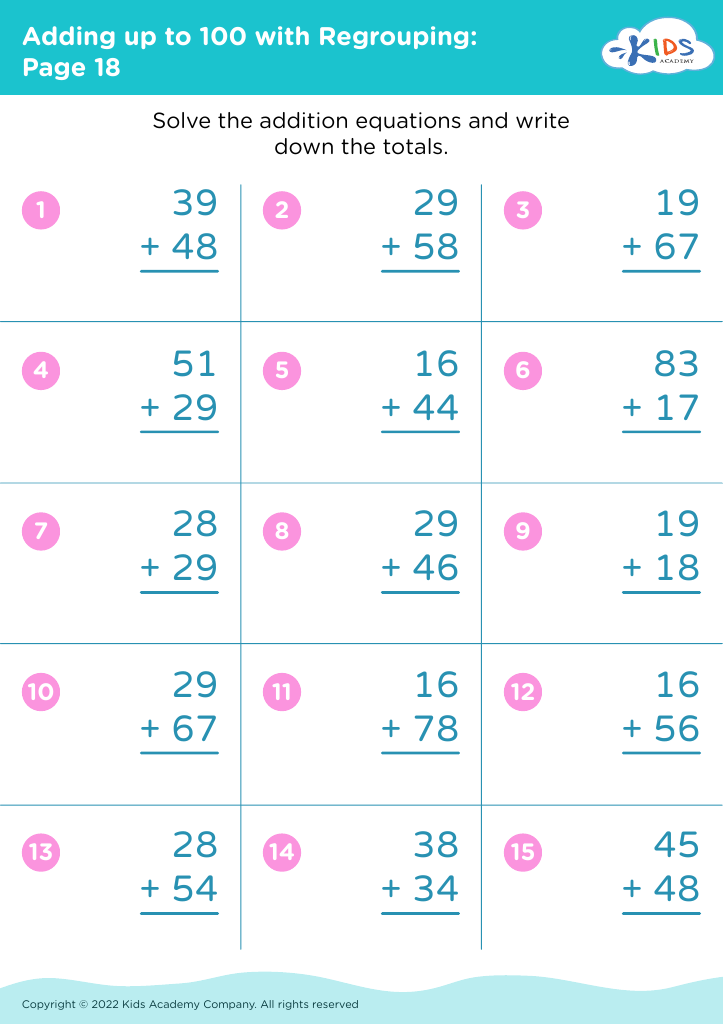
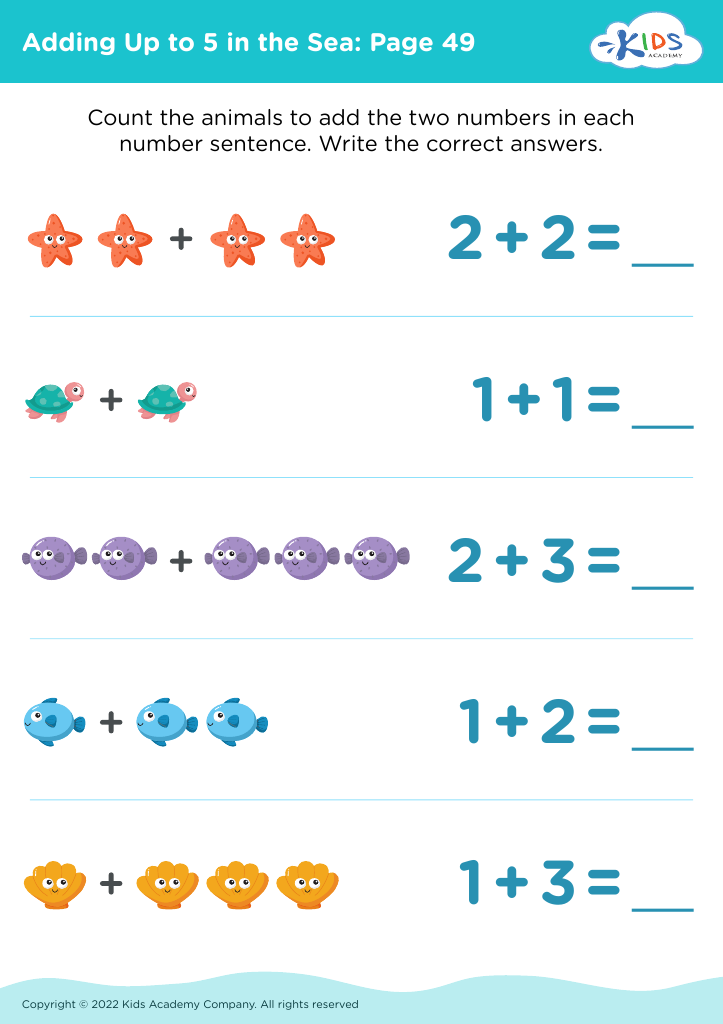
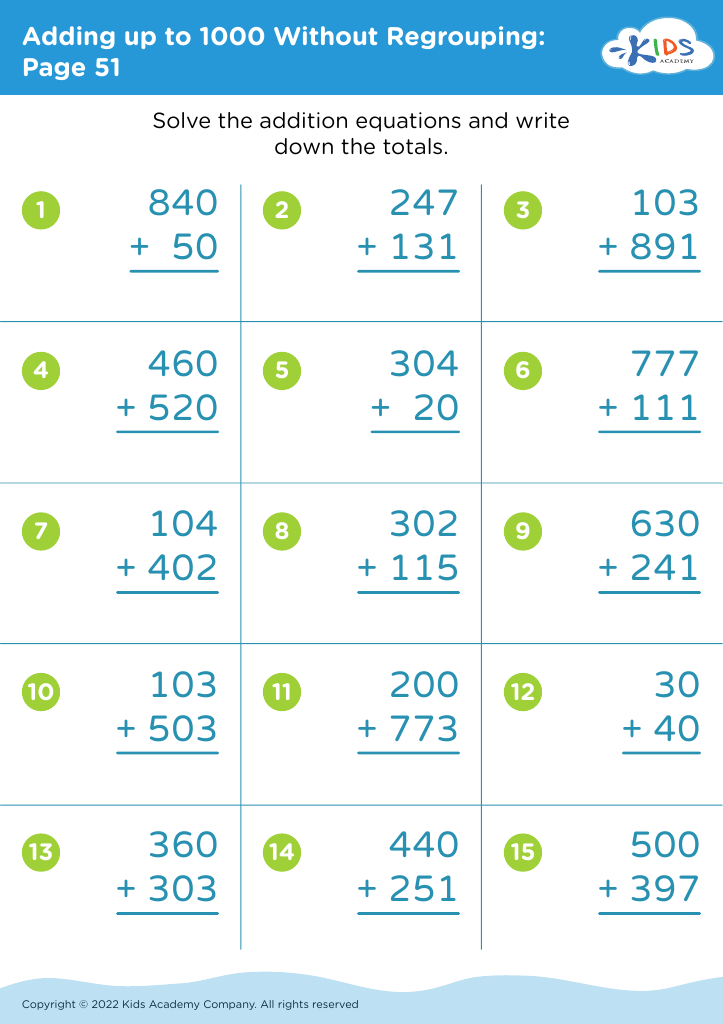
Enhance your child's counting and addition skills with our engaging worksheets designed specifically for ages 5-8! Our "Enhancing Counting Skills Addition Worksheets" offer fun, interactive activities that help young learners master essential math concepts. These worksheets focus on counting, number recognition, and basic addition, allowing children to build a strong foundation in mathematics. With vibrant visuals and age-appropriate exercises, kids will stay motivated while developing critical thinking and problem-solving abilities. Ideal for both classroom and home use, these resources provide a great way to make learning math enjoyable. Start your child's math journey today with our accessible and effective worksheets!
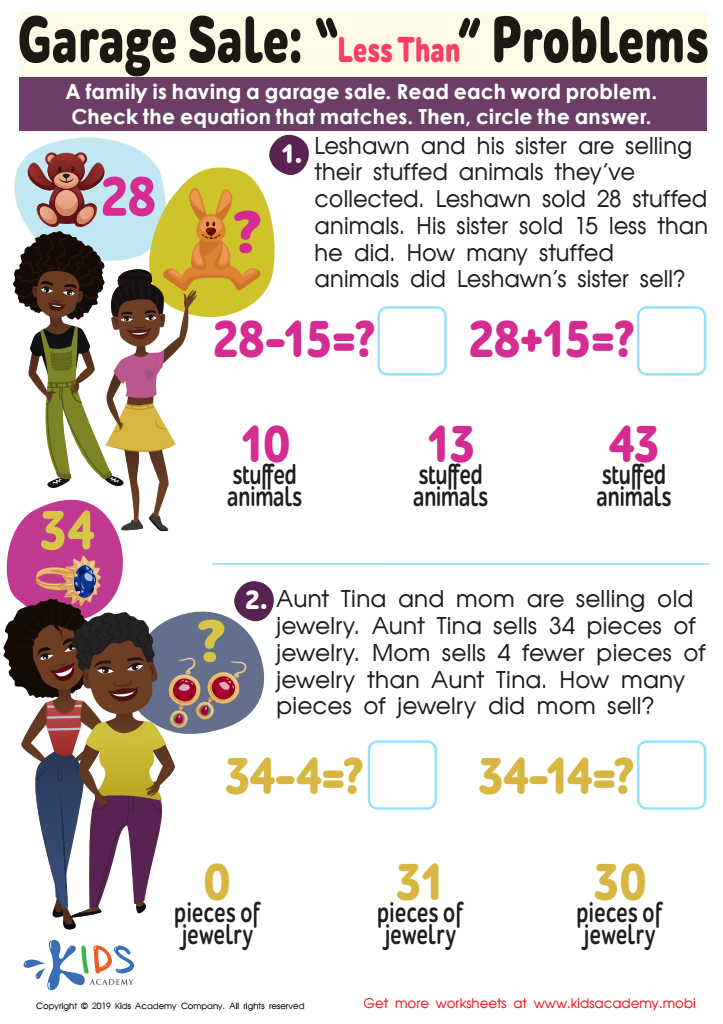
Garage Sale Less Than Worksheet
 Assign to My Students
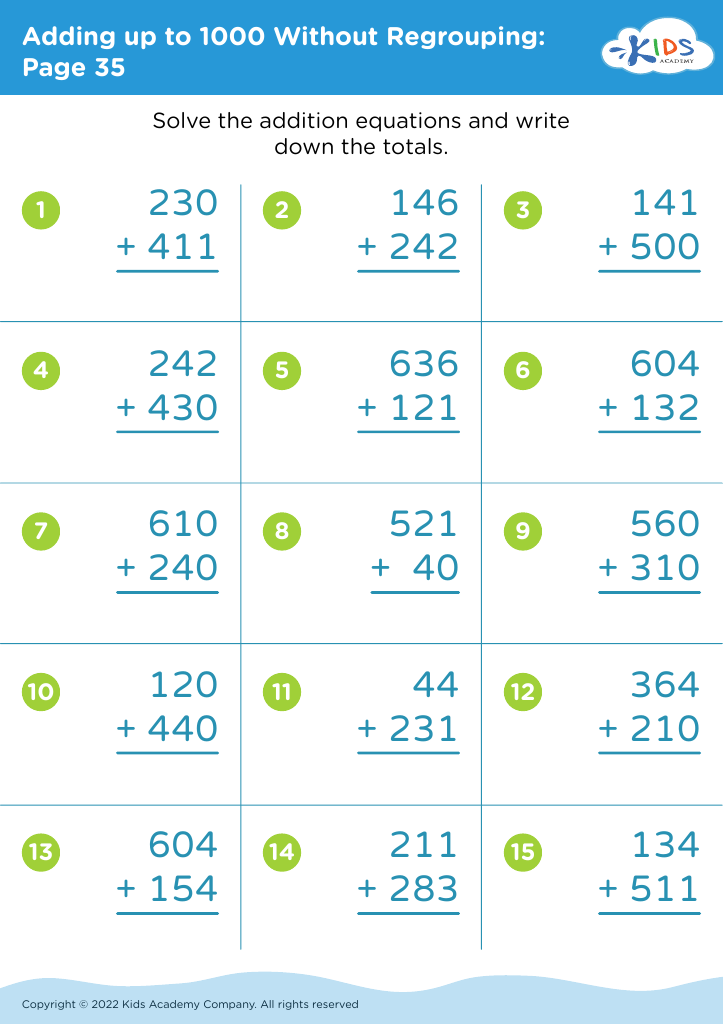








Enhancing counting skills and addition for children aged 5-8 is critical for their overall mathematical development and academic success. Early numeracy forms the foundation for more complex concepts in mathematics, making it essential for parents and teachers to prioritize these skills. At this age, children are not only learning to count but are also beginning to understand quantities, relationships, and the concept of combining numbers through addition.
By fostering strong counting and addition skills, caregivers can help children develop problem-solving abilities, logical reasoning, and critical thinking skills. These foundational math skills also contribute to confidence in their abilities, reinforcing a positive attitude towards learning and math in particular. Furthermore, strong numeracy skills are linked to success in later academic endeavors, making them a crucial investment in a child's future.
Effective teaching strategies and engaging activities can make the learning process enjoyable and relatable. For instance, using everyday scenarios, games, and hands-on materials can help solidify these concepts. When parents and teachers actively promote counting and addition, they nurture a child’s mathematical understanding, laying the groundwork for lifelong learning and empowering them to succeed in a number-driven world. Ultimately, prioritizing early math skills benefits not just individual learners but society as a whole.








