
Enhancing observation skills Addition Worksheets for Ages 5-8
3 filtered results
Difficulty Level
Grade
Age
-
From - To
Subject
Activity
Standards
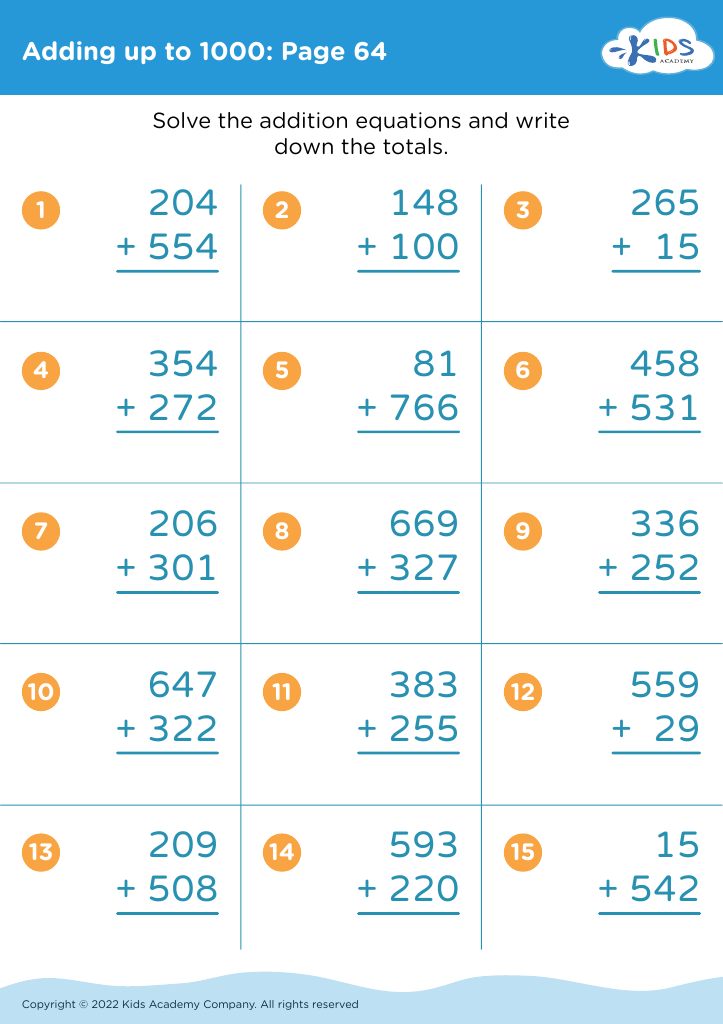
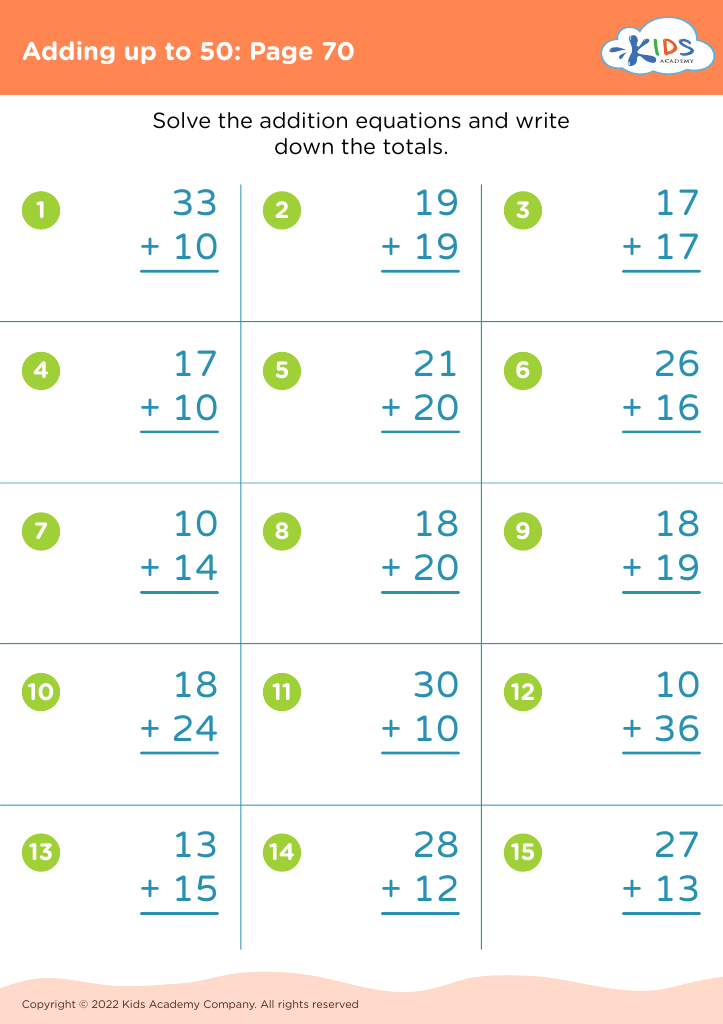
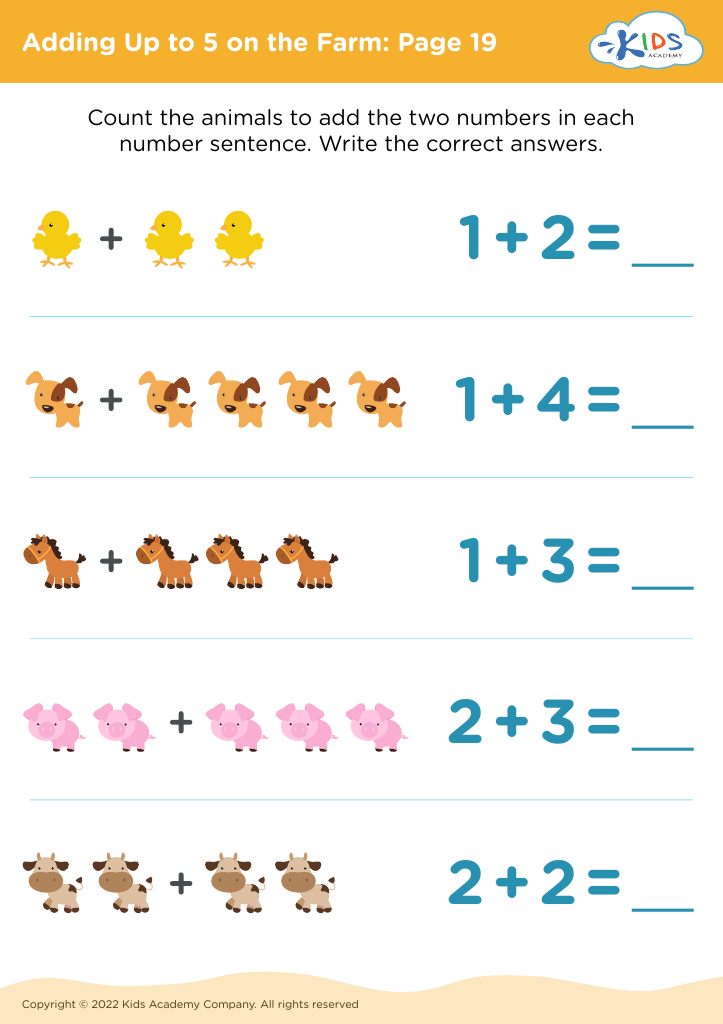
Discover our "Enhancing Observation Skills Addition Worksheets for Ages 5-8," designed to make learning fun and effective. These interactive worksheets help young learners develop keen observation skills while mastering addition concepts. Each exercise mixes colorful illustrations with engaging problems, encouraging children to focus on details and improve their mathematical abilities. Our carefully crafted activities are perfect for both classroom use and home practice, supporting educators and parents alike. Boost your child's confidence and foundational math skills with these stimulating and enjoyable resources. Visit Kids Academy today to explore our collection and turn addition practice into an exciting adventure!
Favorites
With answer key
Interactive
Join Kids Academy for Free
Who is primarily going to use this learning content?






.jpg)

Enhancing observation skills in children aged 5-8 lays a critical foundation for lifelong learning and development. At this formative stage, young children develop cognitive abilities at a rapid pace, and improving their observational skills can profoundly impact their educational journey. These skills enable children to notice details, process information, and understand their surroundings more deeply, facilitating more effective learning in subjects like science, mathematics, and literacy.
For parents and teachers, fostering strong observational skills supports early academic success and critical thinking. Children who can effectively observe are better equipped to identify patterns, make connections, and synthesize new information, which are essential elements of problem-solving. For example, in reading, observing details about pictures and words can aid in comprehension and vocabulary building. In science and math, keen observation can help children grasp fundamental concepts and perform experiments or solve problems accurately.
Moreover, enhanced observation skills promote emotional and social development. Children learn to read facial expressions, body language, and social cues, which are crucial for building empathy and navigating social interactions. Ultimately, by nurturing these skills, parents and teachers help children become more attentive, curious, and self-aware, empowering them for future educational challenges and everyday situations. Therefore, prioritizing the enhancement of observation skills ensures a well-rounded, capable, and emotionally intelligent child.








