Enhancing problem-solving abilities Addition Worksheets for Ages 5-8
10 filtered results
-
From - To
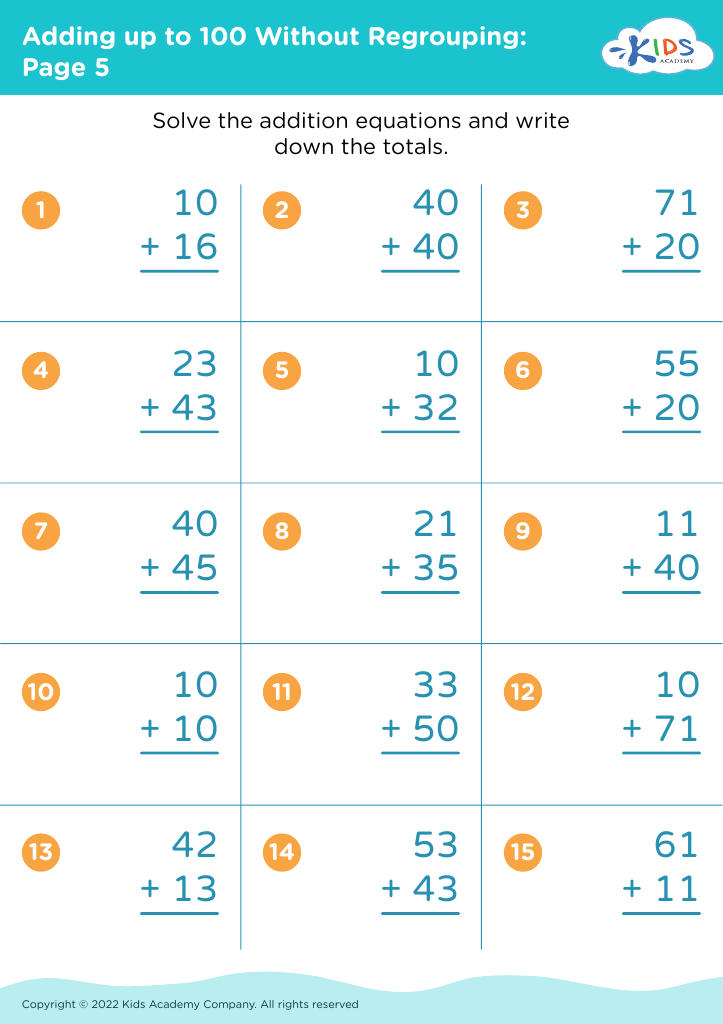
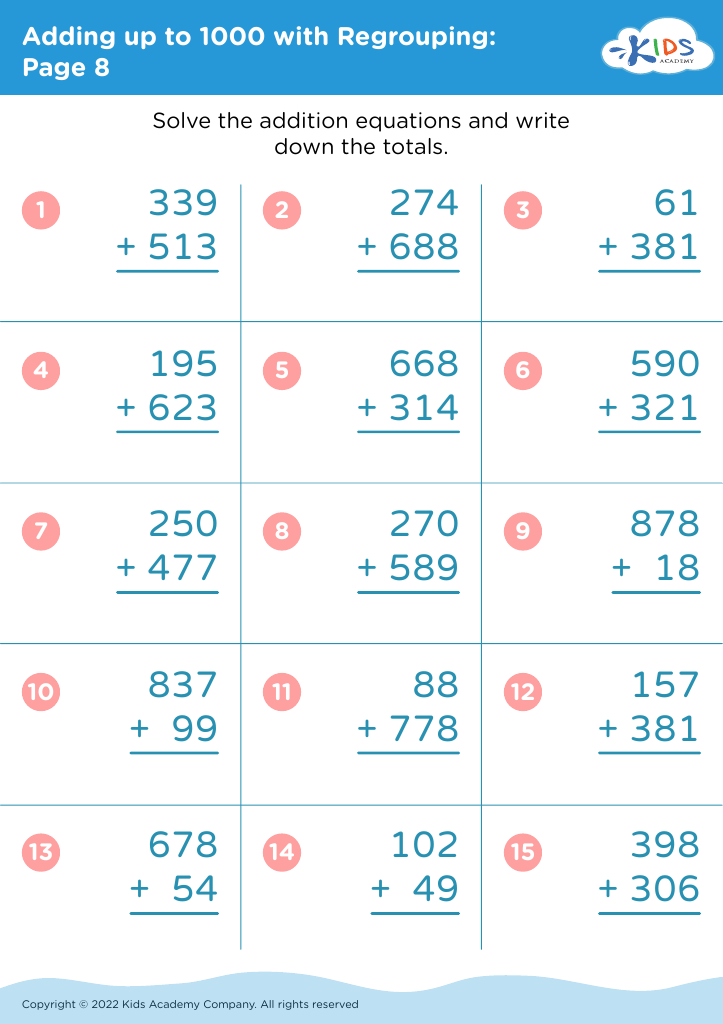
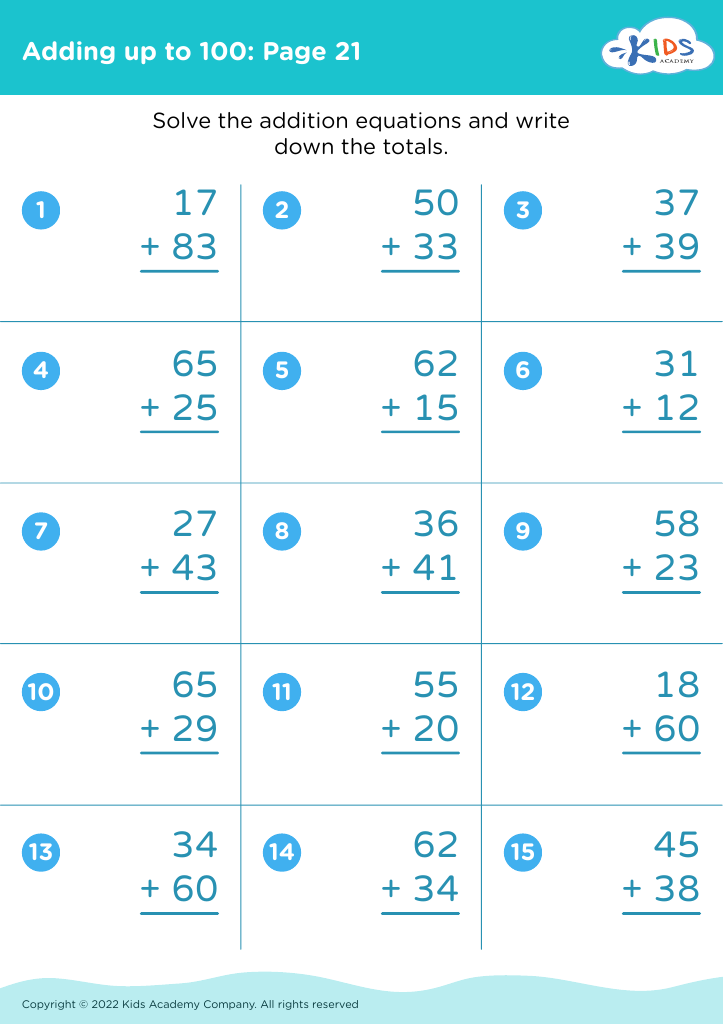
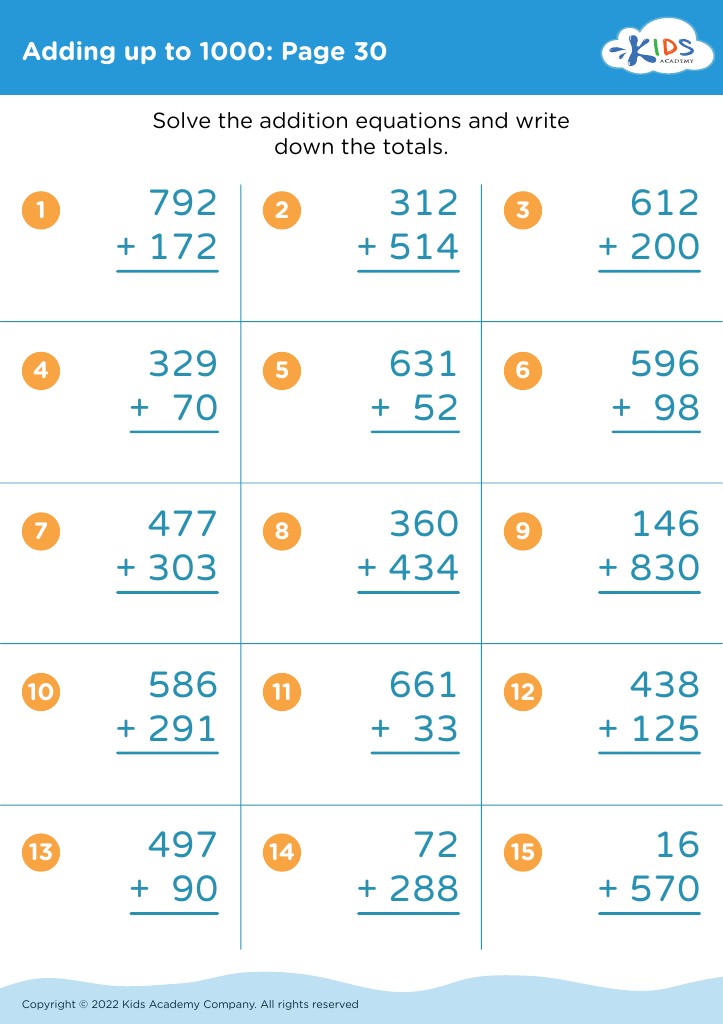
Welcome to our "Enhancing Problem-Solving Abilities Addition Worksheets" designed specifically for children aged 5-8. These engaging worksheets aim to bolster young learners' addition skills through fun and interactive exercises. Each worksheet incorporates problem-solving challenges that encourage critical thinking and reasoning, helping kids develop a deeper understanding of mathematical concepts. With vibrant illustrations and a variety of problem formats, children will remain motivated and excited as they practice addition. Perfect for home or classroom use, our worksheets support early math education by fostering cognitive skills essential for academic success. Empower your child’s mathematical journey today with our innovative resources!
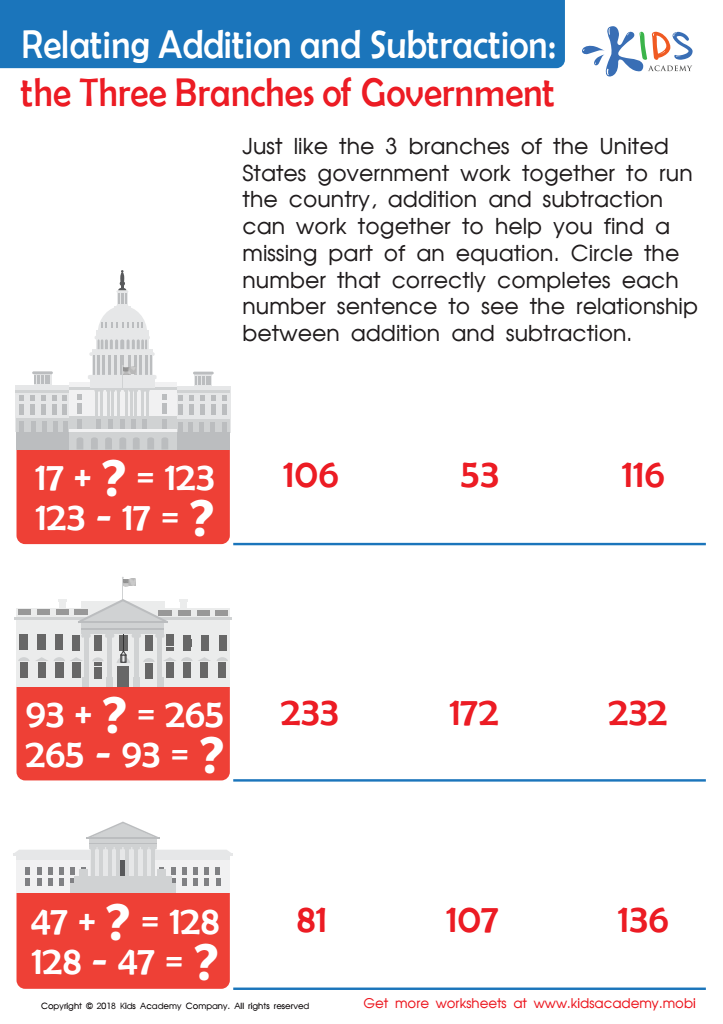
The Three Branches of Government Worksheet
 Assign to My Students
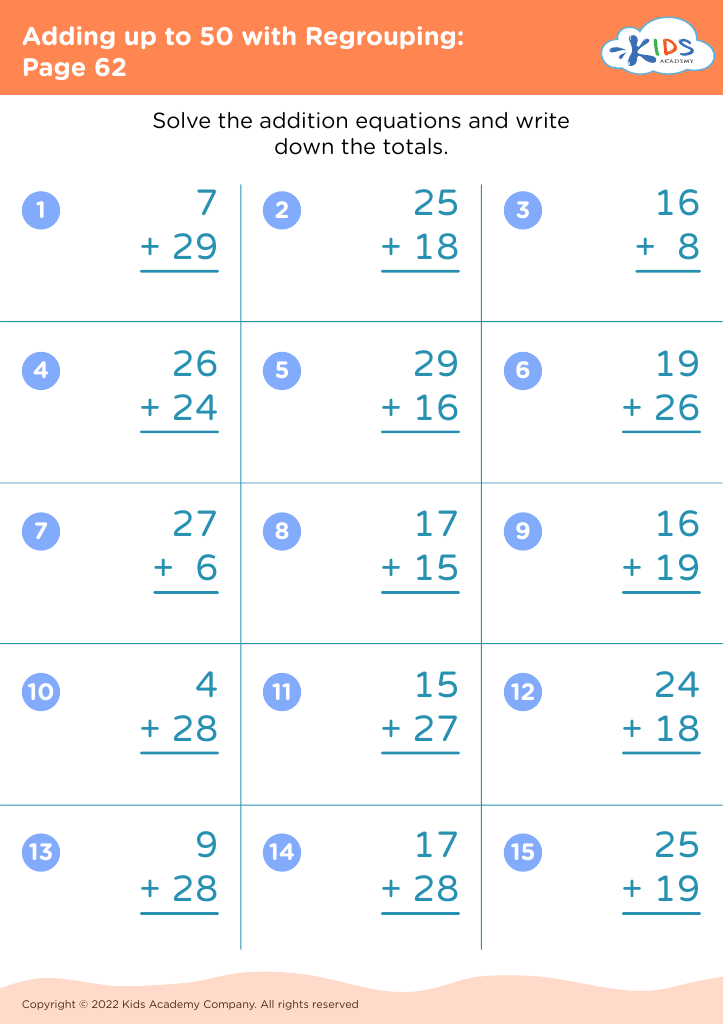
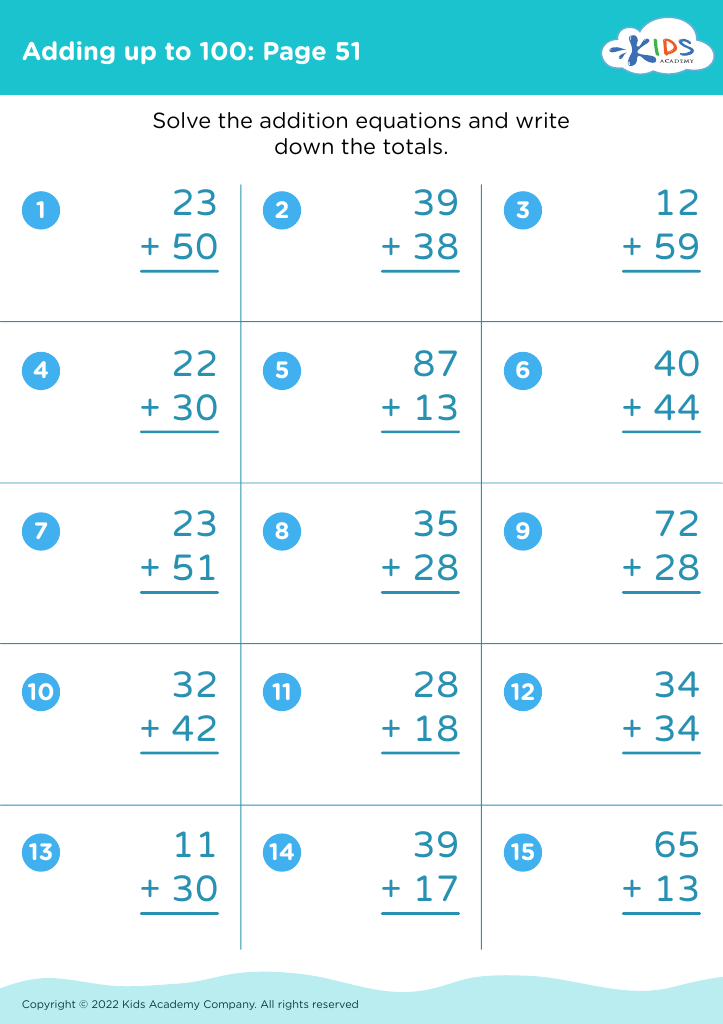
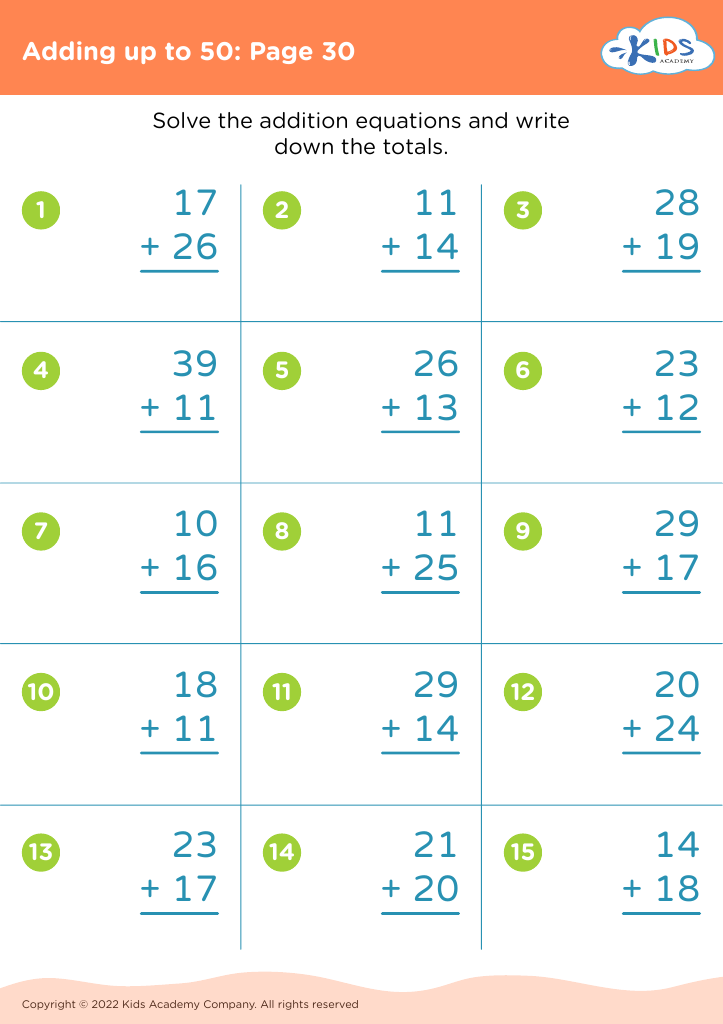
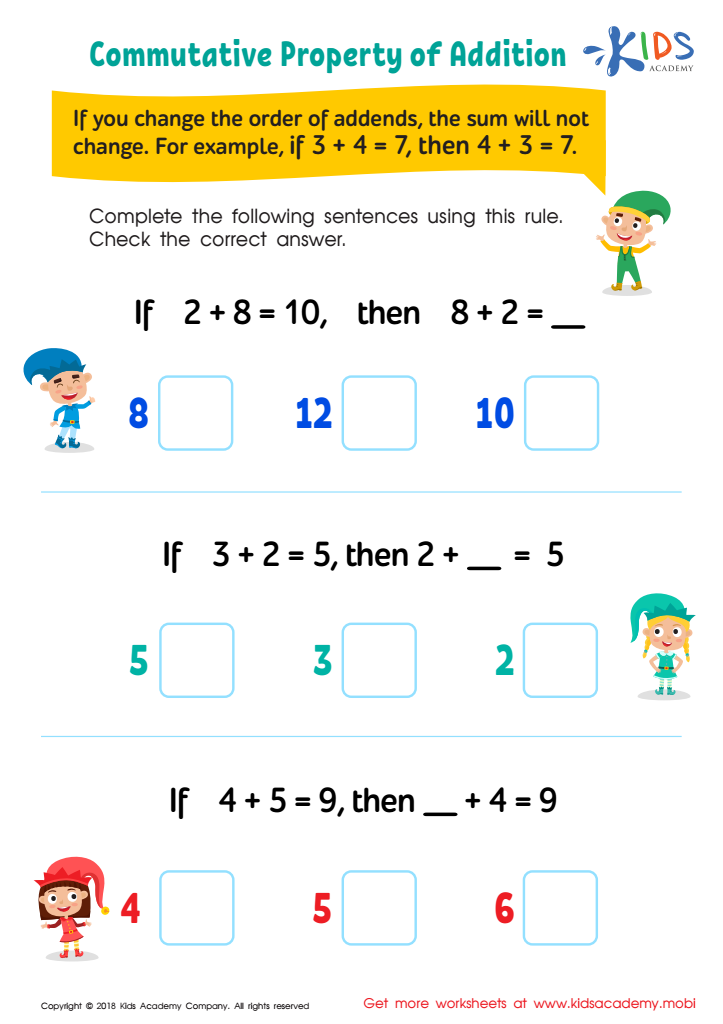
Commutative Property of Addition Worksheet
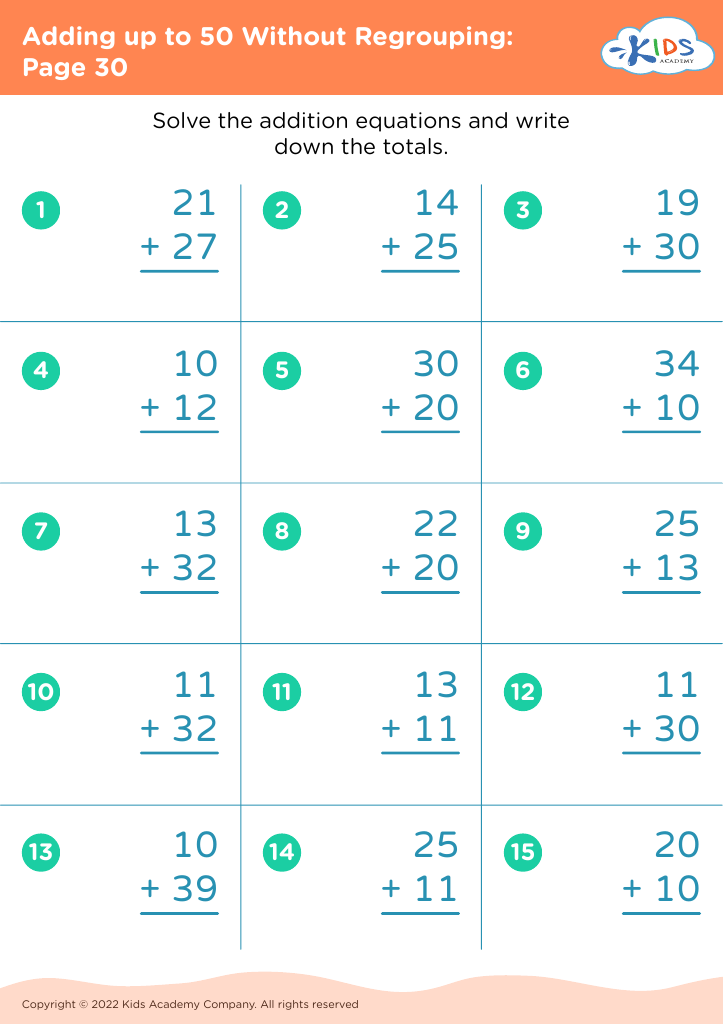







Enhancing problem-solving abilities in children aged 5-8, particularly in addition, is crucial for their cognitive development and long-term academic success. At this stage, children are forming foundational math skills that serve as the building blocks for more complex concepts. Problem-solving encourages critical thinking, creativity, and perseverance. When children tackle addition problems, they learn to analyze information, strategize, and evaluate their approaches to finding solutions.
Moreover, developing these skills enhances children's confidence and motivation. When they experience success in solving problems, they are likely to feel a sense of accomplishment, fostering a positive attitude toward learning. This eagerness to engage can transfer to other subjects and real-life situations, promoting a love for exploration and inquiry.
Additionally, strong problem-solving abilities in addition lay the groundwork for future math proficiency. As students progress, they will encounter more challenging problems that require these initial skills. Supporting parents and teachers in nurturing these abilities helps children become more adaptable learners who can face challenges with resilience and a problem-solving mindset.
Ultimately, investing time in enhancing these early problem-solving skills benefits not just individual children but also strengthens the educational community as a whole, contributing to well-rounded, capable individuals.








