Hand-eye Coordination Addition Worksheets for Ages 5-8 - Page 2
25 filtered results
-
From - To



.jpg)




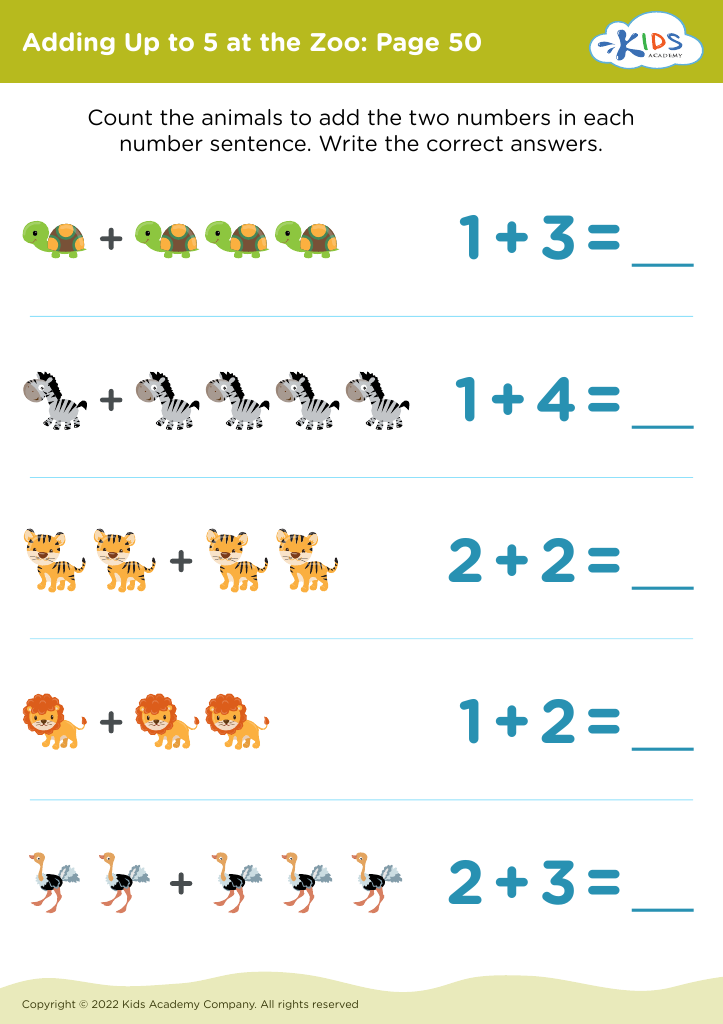
Hand-eye coordination is a critical developmental skill for children aged 5-8, as it plays a fundamental role in their physical, cognitive, and academic growth. When kids practice activities that enhance hand-eye coordination, they are not only sharpening their motor skills but also laying the foundation for more complex tasks. For example, in early literacy, writing neatly and efficiently requires the ability to coordinate the movements of the hand with visual input. Similarly, in mathematics, solving addition problems often means visually tracking numbers and matching them with correct answers using manipulatives or writing tools.
Further, strong hand-eye coordination can improve a child’s performance in sports and other physical activities, which are indispensable for a healthy and active lifestyle. Through games and exercises that involve coordinated effort, children increase their focusing abilities, thereby boosting concentration and attention in classroom settings. This skill is also critical for everyday tasks such as tying shoe laces, using scissors, or even managing buttoning and zipping clothing.
By integrating hand-eye coordination into activities, both parents and teachers ensure that children are well-rounded in their development. This not only enhances learning capabilities but also boosts confidence, reduces frustration, and fosters a lifelong love for learning and exploring. Therefore, prioritizing hand-eye coordination in early childhood education is essential for developmental success.








