Identifying Animals Addition Worksheets for Ages 5-8
5 filtered results
-
From - To
Explore our "Identifying Animals Addition Worksheets" designed specifically for children aged 5-8. These engaging worksheets not only reinforce essential addition skills but also help kids recognize and learn about various animals. Fun images and interactive activities make math exciting, encouraging young learners to practice addition in a playful context. Each worksheet is carefully crafted to promote critical thinking and enhance problem-solving skills, fostering a love for learning. Perfect for use at home or in the classroom, these worksheets provide an effective way to merge math with animal recognition, ensuring a well-rounded educational experience for early learners. Download and start today!
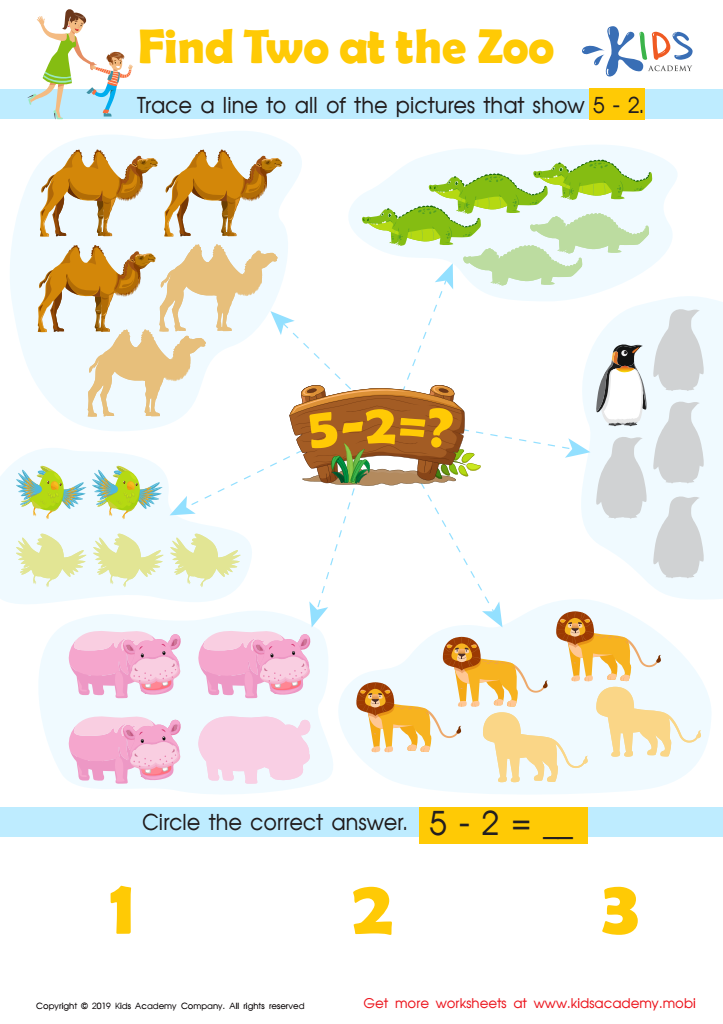
Find Two at the Zoo Worksheet
 Assign to My Students
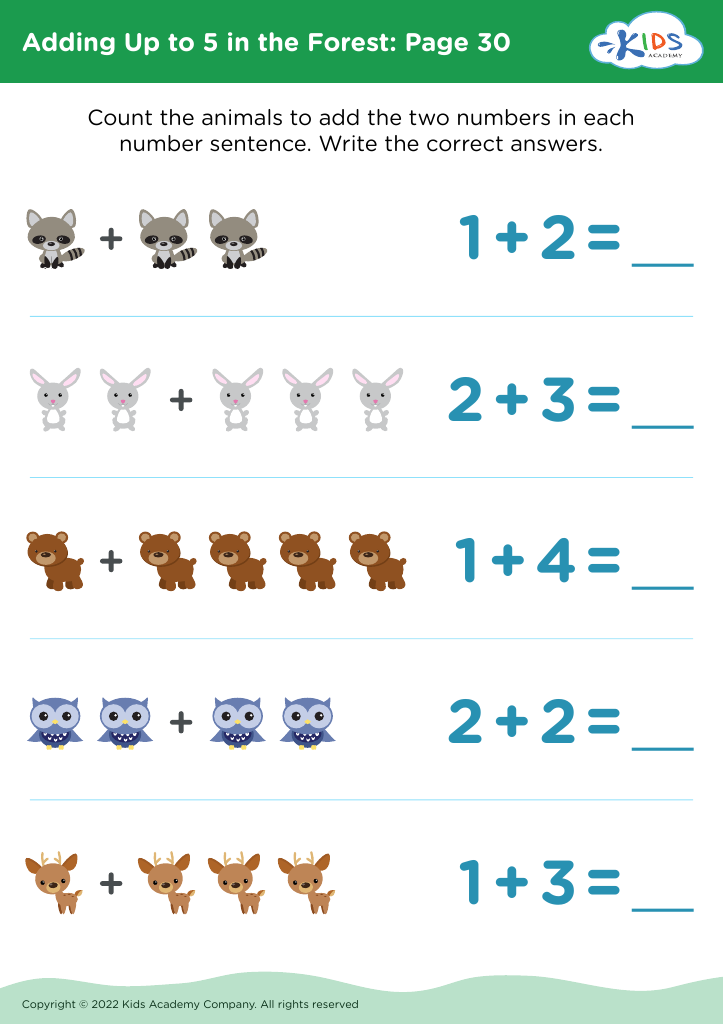








Identifying Animals Addition for ages 5-8 is a vital skill that merges literacy and numeracy, providing a playful yet educational approach to teaching young children. This interactive activity not only introduces basic addition concepts but also enhances children’s understanding of the animal kingdom, fostering curiosity about nature.
For parents, engaging their children in such activities can strengthen family bonds, as learning becomes a shared experience. It promotes critical thinking as children learn to classify animals while calculating total counts, reinforcing cognitive development.
Teachers benefit from this activity as it fits seamlessly into diverse curricula, providing an innovative way to assess both math competencies and knowledge retention about wildlife. Incorporating fun elements like games or storytelling further maintains students' interest, making learning enjoyable.
Additionally, Identifying Animals Addition nurtures a sense of responsibility and empathy towards living creatures, emphasizing the importance of conservation. By integrating educational fun with real-world contexts, both parents and teachers play a crucial role in building a foundational understanding for holistic development, paving the way for future learning experiences. Investing time in these activities fosters well-rounded, engaged learners ready to explore the world around them.








