
Improve counting Addition Worksheets for Ages 5-8
3 filtered results
Difficulty Level
Grade
Age
-
From - To
Subject
Activity
Standards
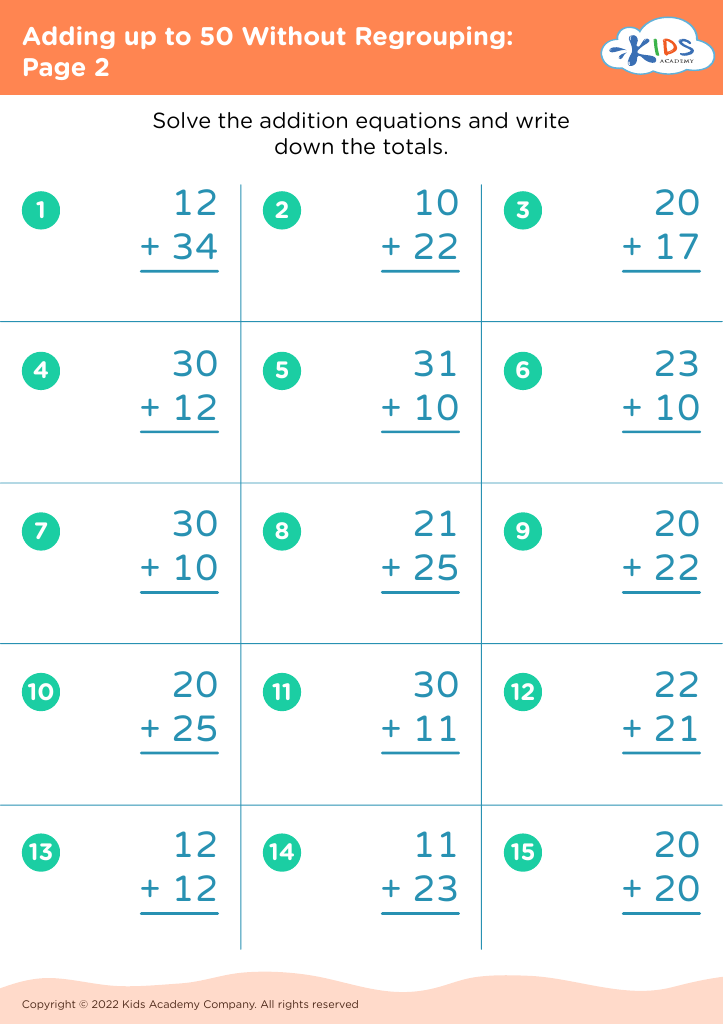
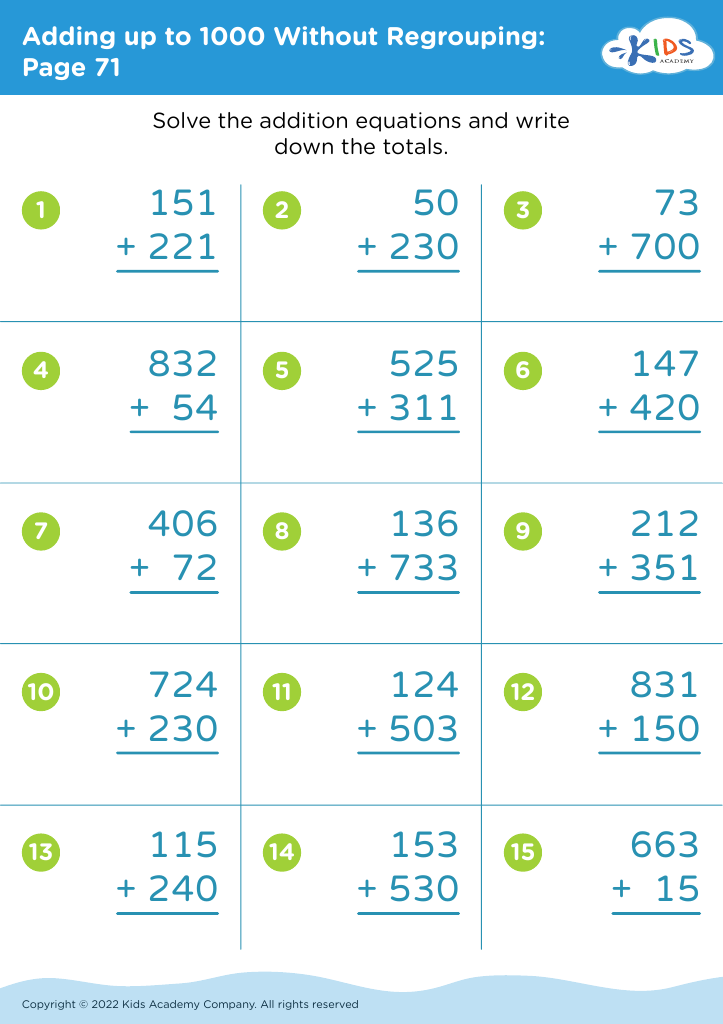
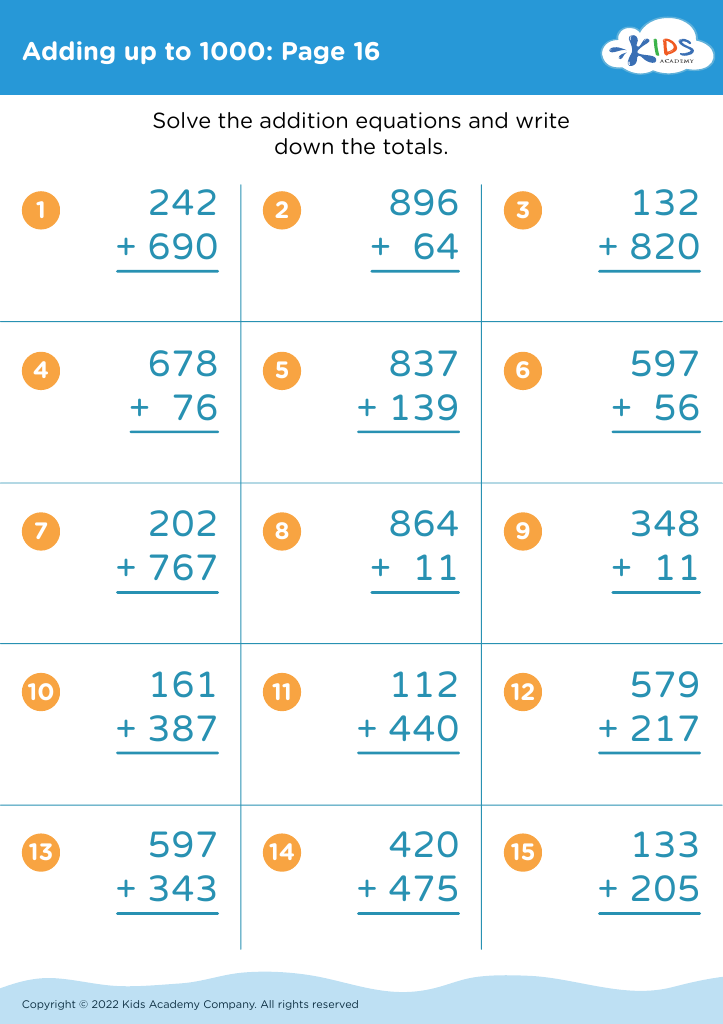
Boost your child's math skills with our "Improve Counting Addition Worksheets" specifically designed for ages 5-8. These engaging and educational worksheets are tailored to reinforce counting and addition fundamentals in young learners. With a variety of fun activities and colorful illustrations, children will enjoy practicing essential math skills while building confidence. Ideal for both classroom and at-home practice, our worksheets support a strong foundation in mathematics, ensuring your child is well-prepared for future math challenges. Help your child excel and foster a love for learning with our expertly crafted counting addition worksheets.
Favorites
With answer key
Interactive
Join Kids Academy for Free
Who is primarily going to use this learning content?








Parents and teachers should prioritize improving counting and addition skills in children ages 5-8 because these foundational math skills are crucial for cognitive development and future academic success. Mastering counting and basic addition provides children with the essential building blocks needed to tackle more complex mathematical concepts as they progress through their education.
Counting and addition help develop a child's number sense, allowing them to understand and manipulate numbers effectively. This is important not just for math, but also for problem-solving and logical thinking skills that are applicable across various subjects and everyday situations. Additionally, early proficiency in these skills can boost confidence and foster a positive attitude towards math, reducing the anxiety that many children experience as they encounter more difficult math tasks later.
Moreover, real-world applications of counting and addition, such as making change, measuring ingredients, or keeping track of scores in games, become easier for children who have a solid grasp of these basics. This practical understanding enhances their ability to navigate daily activities independently. Therefore, by ensuring that children get a strong start with counting and addition, parents and teachers set the stage for lifelong learning and success in both academic and personal spheres.








