Improving reading skills Addition Worksheets for Ages 5-8
4 filtered results
-
From - To
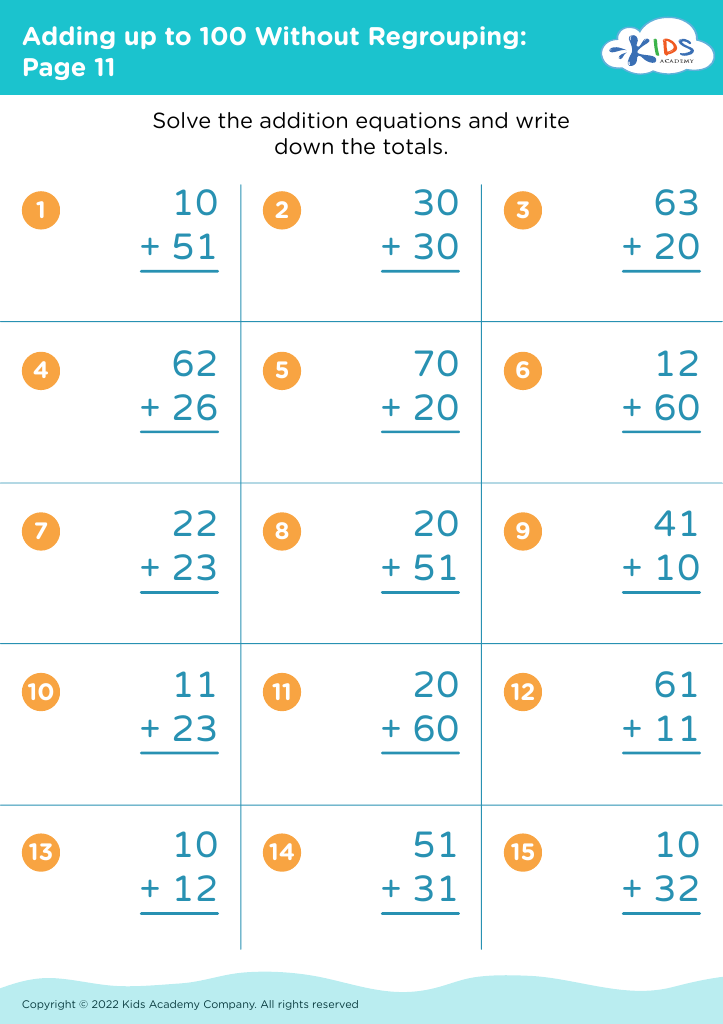
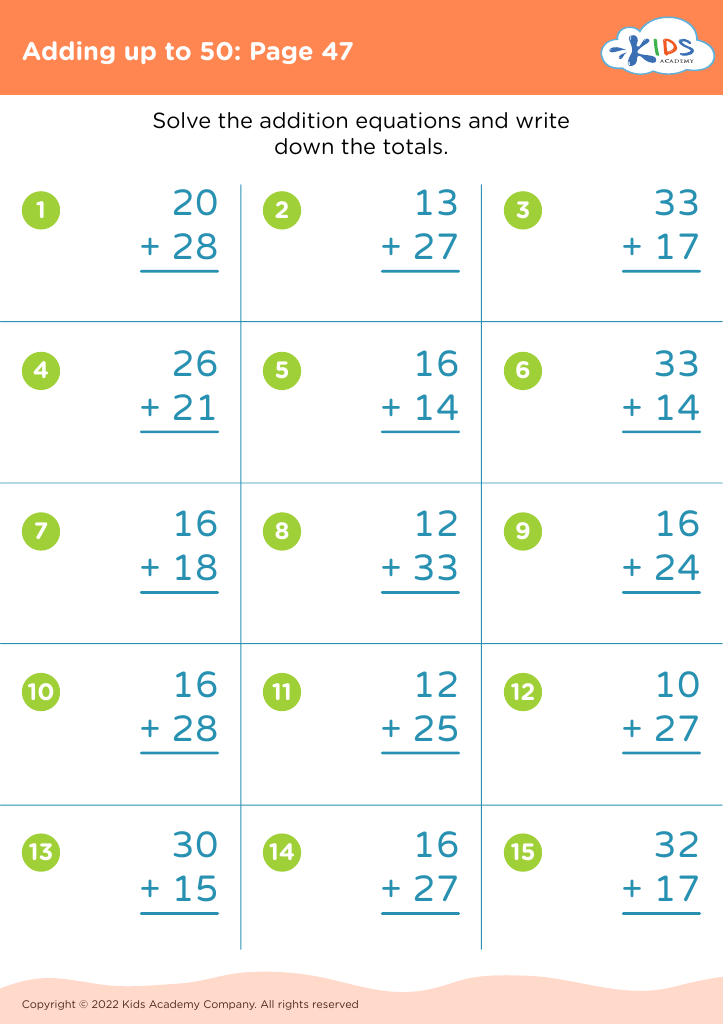
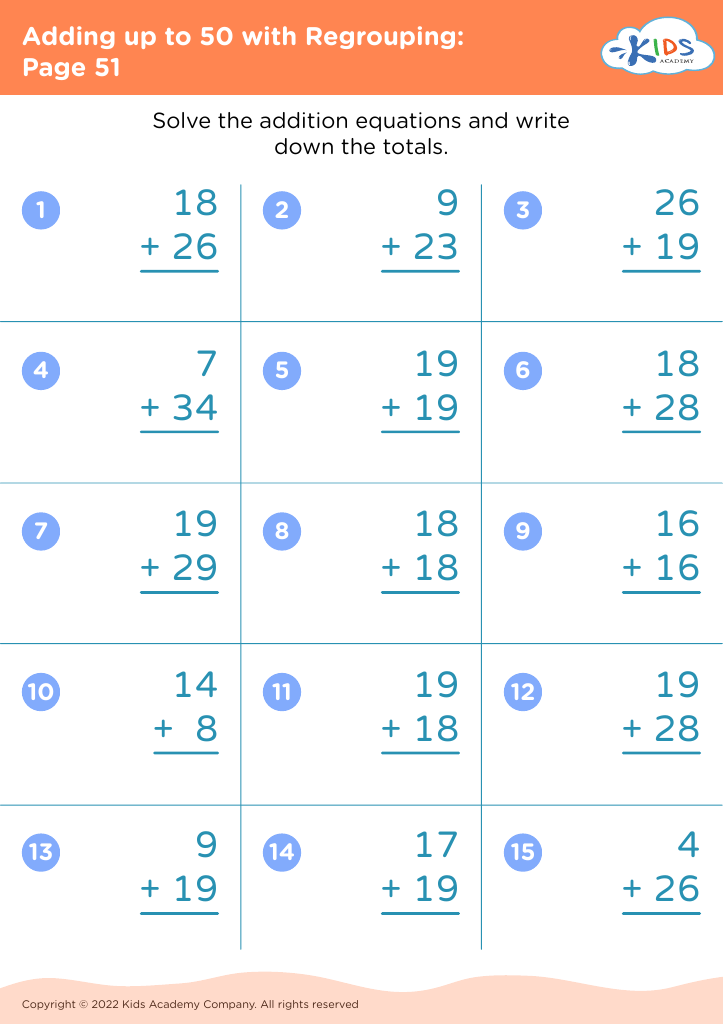
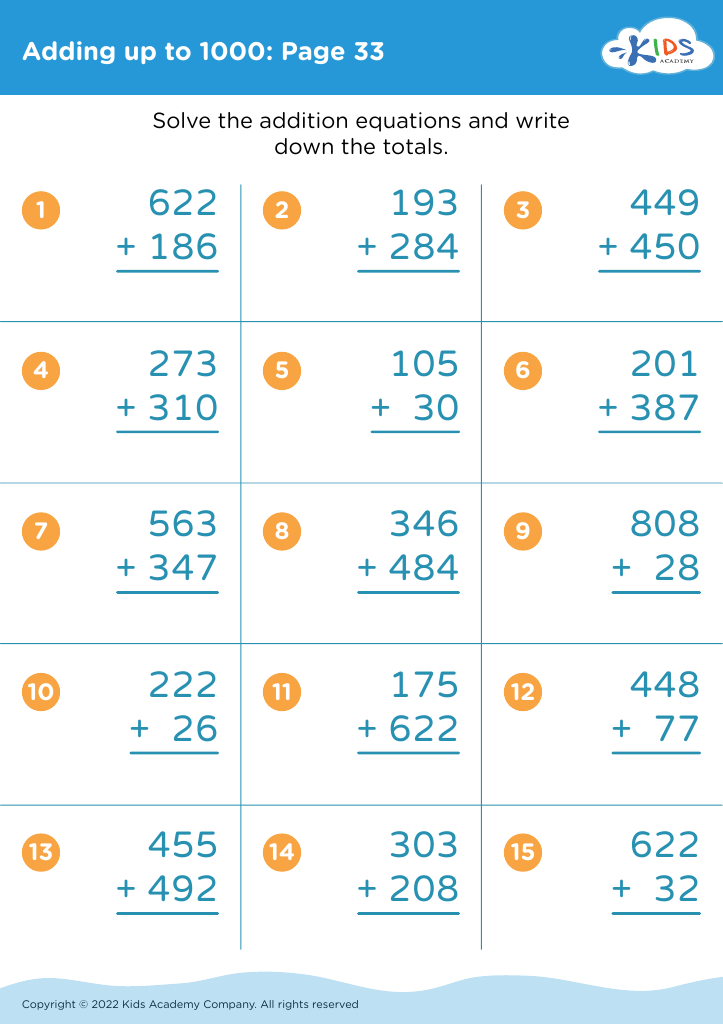
Boost your child's reading and math prowess with our "Improving Reading Skills Addition Worksheets for Ages 5-8". These thoughtfully crafted worksheets effectively blend reading practice with engaging addition exercises, fostering both literacy and numerical skills. Tailored for young learners, each sheet presents captivating stories and simple word problems designed to improve comprehension and mathematical understanding simultaneously. With vibrant illustrations and relatable scenarios, our worksheets make learning enjoyable and effective. Perfect for classroom use or at-home practice, they offer a balanced approach to help children grasp fundamental concepts and enhance their academic development in a fun, interactive way.



.jpg)




Improving reading skills in children aged 5-8 lays the foundation for their future academic success and overall development. At this critical early stage, children are developing the building blocks for literacy, which are necessary for all future learning. When children improve their reading skills, they enhance their ability to comprehend and absorb new information across various subjects, from science to social studies. Strong readers are generally better thinkers, capable of understanding complex ideas and solving problems more effectively.
Additionally, early literacy plays a crucial role in emotional and social development. Reading allows children to learn about different cultures, feelings, and perspectives, which builds empathy and social skills. Good readers are often more confident and have higher self-esteem, fostering a positive relationship with learning and school environments.
For teachers, focusing on reading skills ensures that they are meeting their educational objectives and preparing students for higher academic demands. Parents benefit by establishing a nurturing environment that promotes lifelong learning and curiosity.
Both teachers and parents need to prioritize reading improvement for 5-8-year-olds, as this age range is a window of opportunity where the brain is highly receptive to learning new skills, ensuring a smoother educational journey for years to come.








