Logical thinking development Addition Worksheets for Ages 5-8
8 filtered results
-
From - To
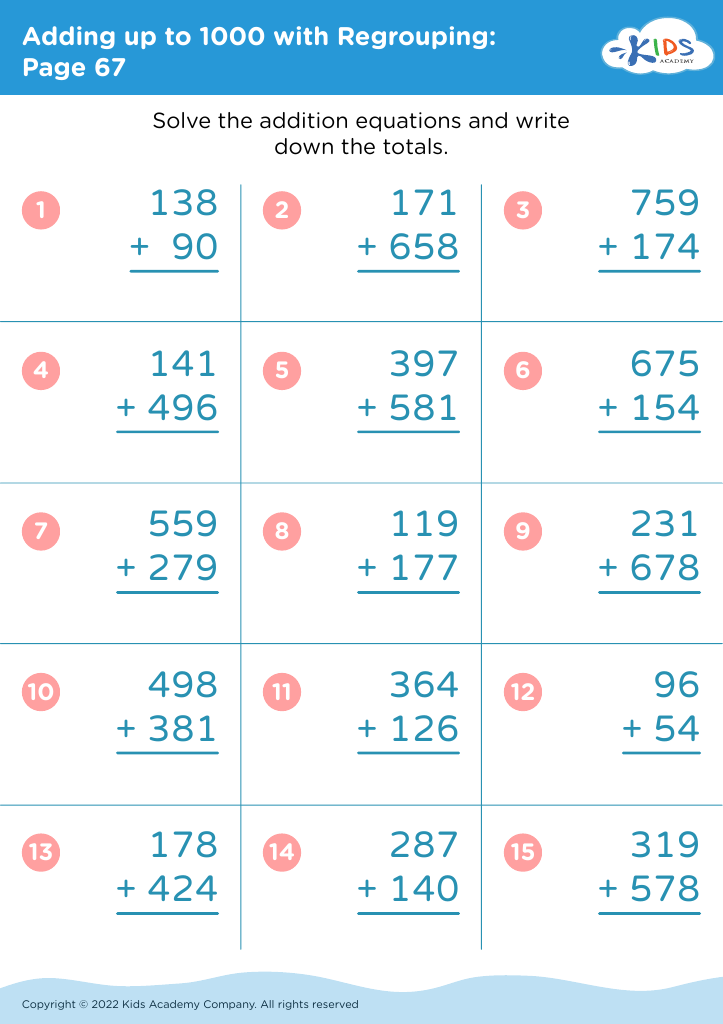
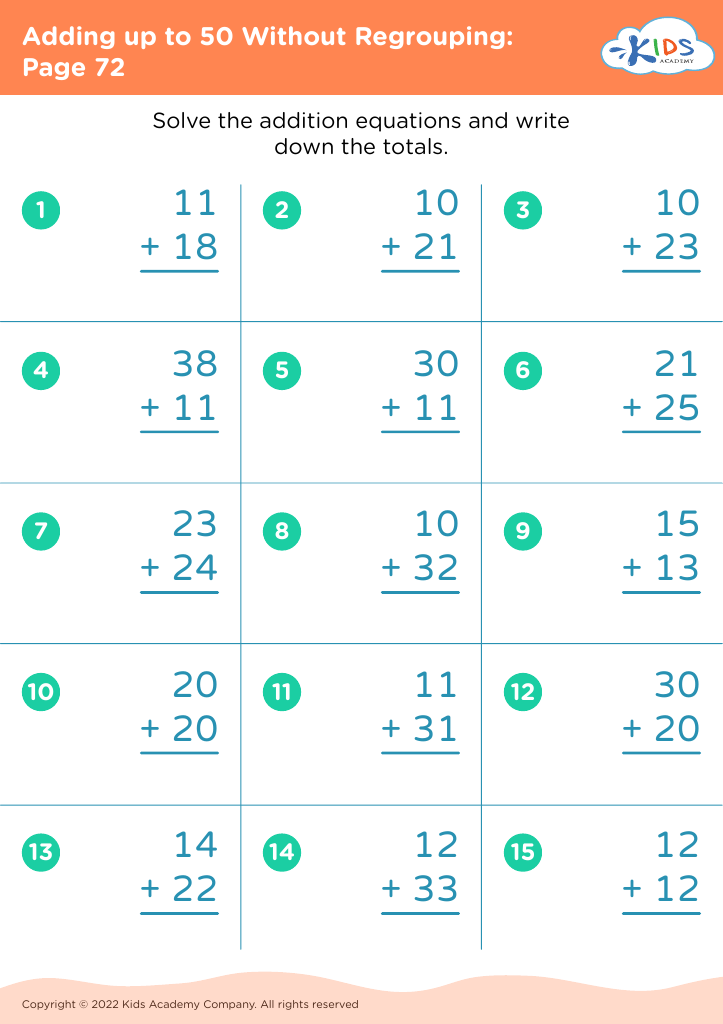
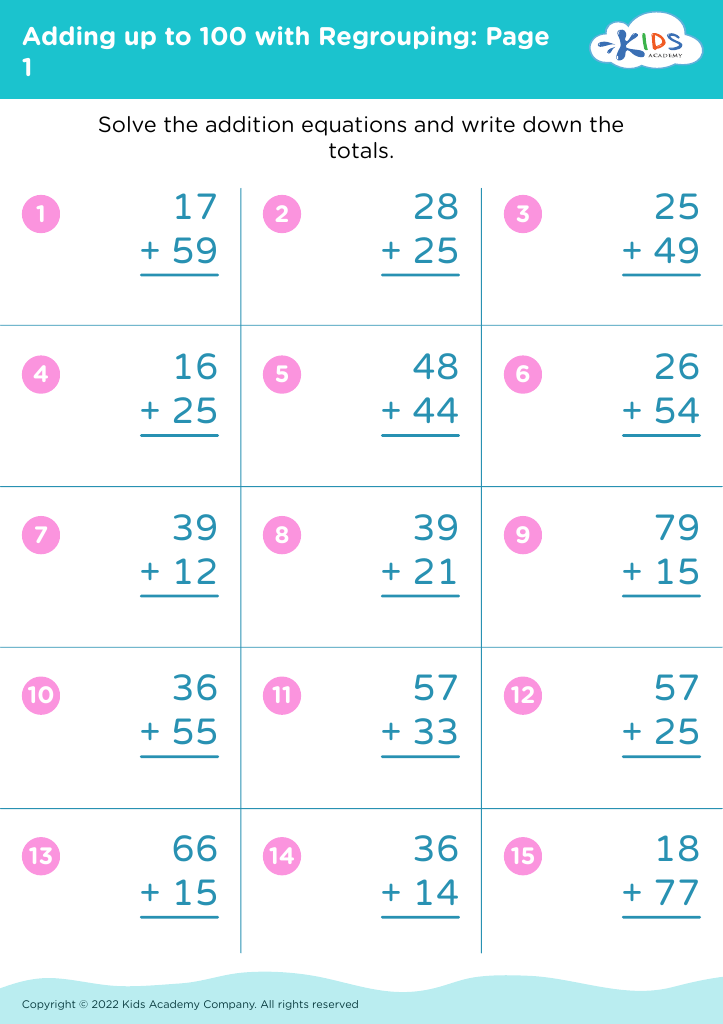
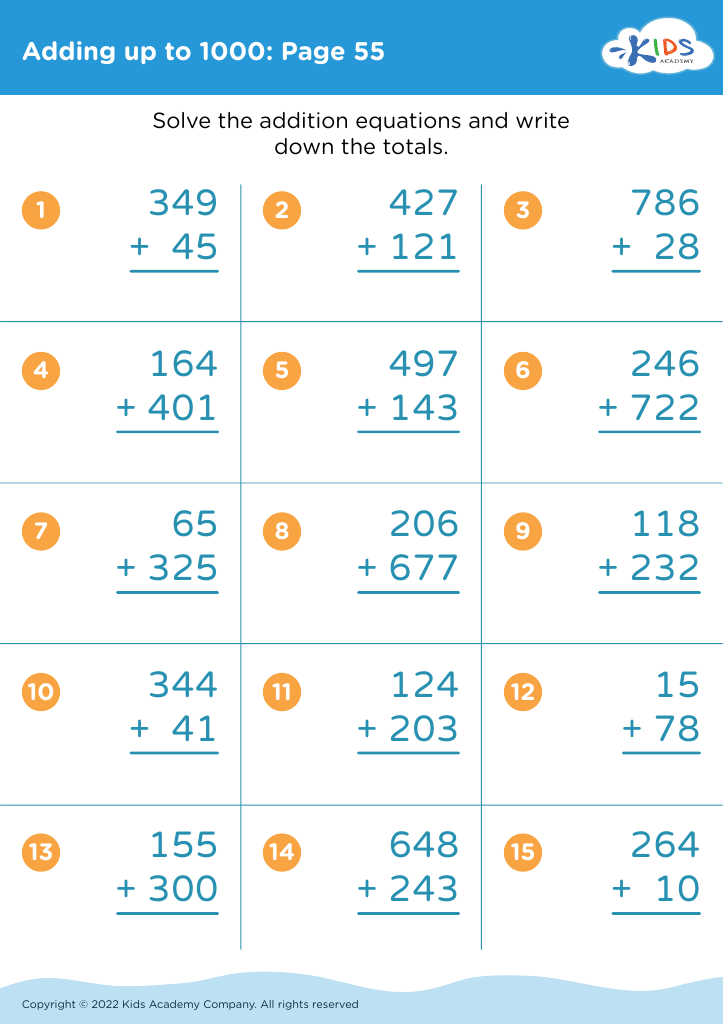
Enhance your child's logical thinking skills with our Addition Worksheets for Ages 5-8! These specially designed worksheets combine fun mathematical challenges with activities that sharpen reasoning and problem-solving abilities. Perfect for young learners, our worksheets help kids master basic addition while stimulating cognitive development. Bright, engaging visuals and varied exercises keep children motivated and excited to learn. Ideal for classroom use or at-home practice, these worksheets are a fantastic resource for building a strong foundation in math and fostering essential logical thinking. Discover a world of learning and logical growth with Kids Academy's expertly-crafted addition worksheets!
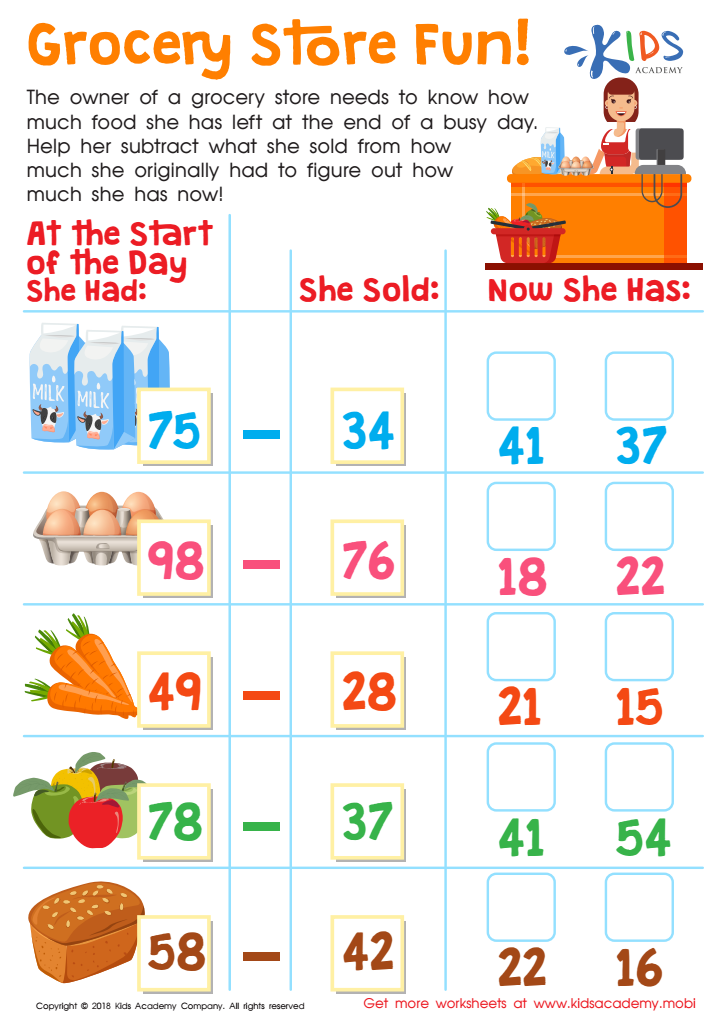
Grocery Store Fun! Worksheet
 Assign to My Students
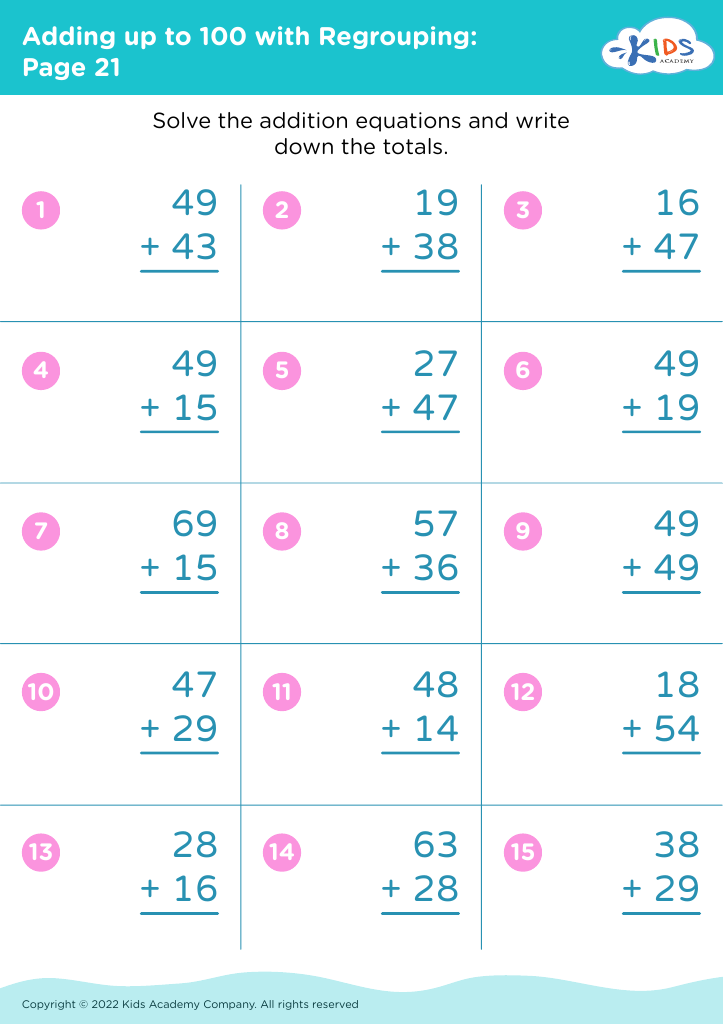
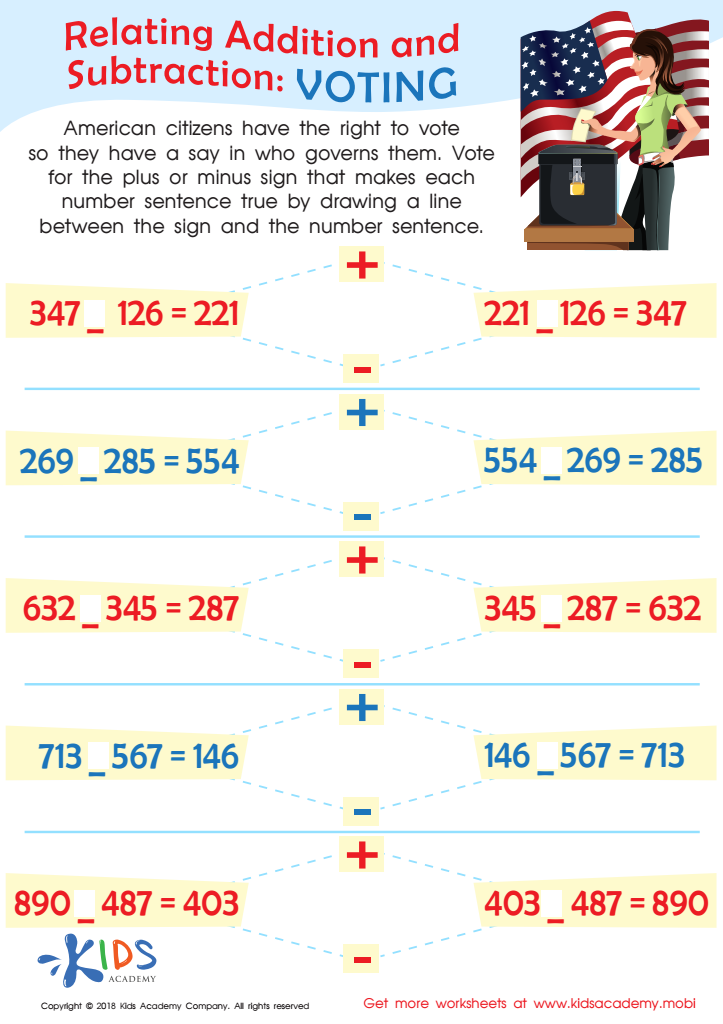
Voting Worksheet
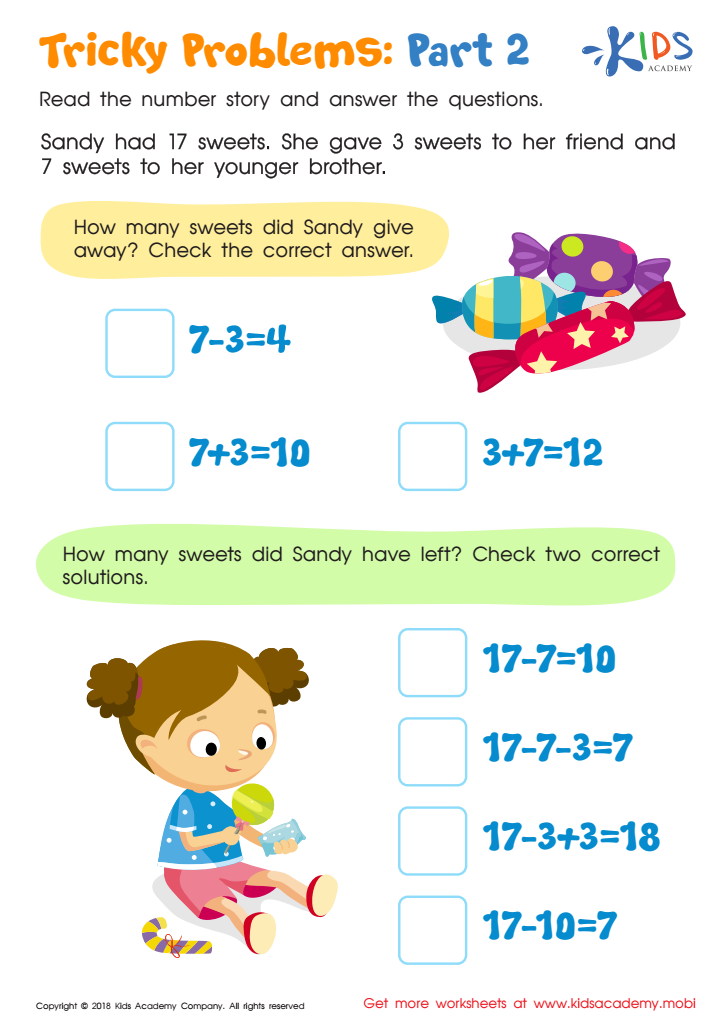
Tricky Problems Worksheet: Part 2








Logical thinking development in addition for children aged 5-8 is crucial for several pivotal reasons. Firstly, it creates a strong foundation for future mathematical concepts. Early grasp of addition lays the groundwork for mastering more complex operations like subtraction, multiplication, and division. This fosters confidence and reduces math fear, crucial for future academic success.
Secondly, enhancing logical thinking enhances problem-solving skills. When children understand addition, they can approach problems systematically, developing reasoning abilities useful in everyday decisions and future learning areas, be it science, language arts, or social studies.
Moreover, early introduction to logical thinking in addition builds persistence and patience. Children learn that challenges can be solved with thought, effort, and time, fostering a growth mindset invaluable throughout life.
Furthermore, engaging children in addition exercises often includes collaborative learning, enhancing social skills like communication and teamwork. These social skills, coupled with cognitive development, position children to succeed in a wide array of settings.
Parents and teachers thus help children evolve into well-rounded, critical thinkers by emphasizing logical thinking in addition during these early years—equipping them not only for academic pursuits but lifelong intelligent decision-making. Promoting this in early education sets a cornerstone for robust intellectual and personal development.








