Pattern recognition Addition Worksheets for Ages 5-8
6 filtered results
-
From - To
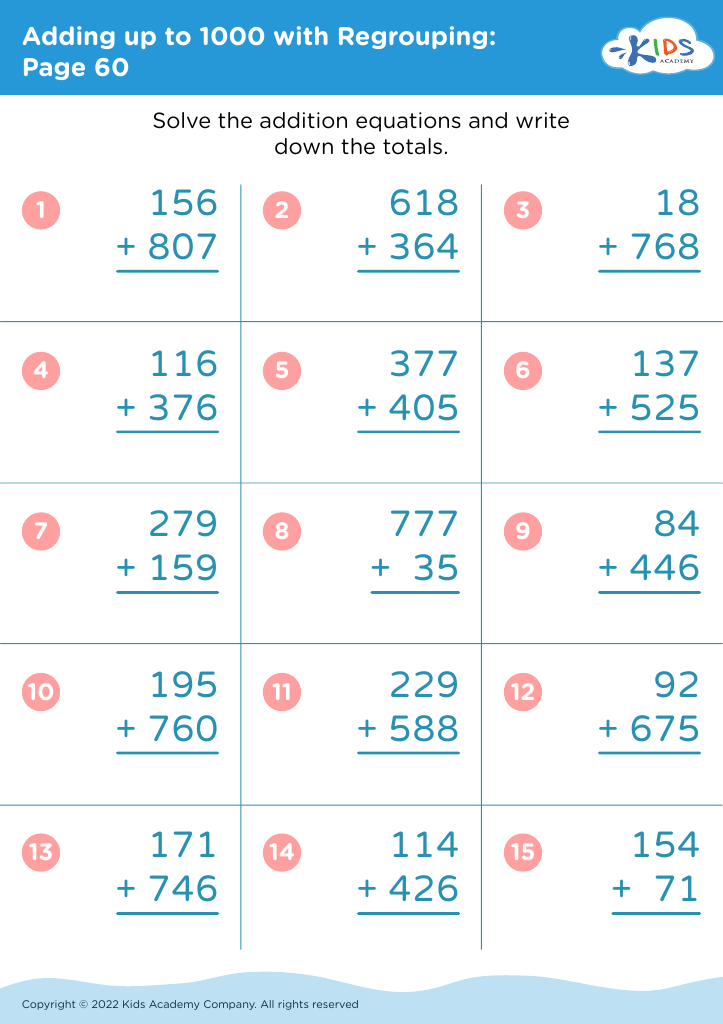
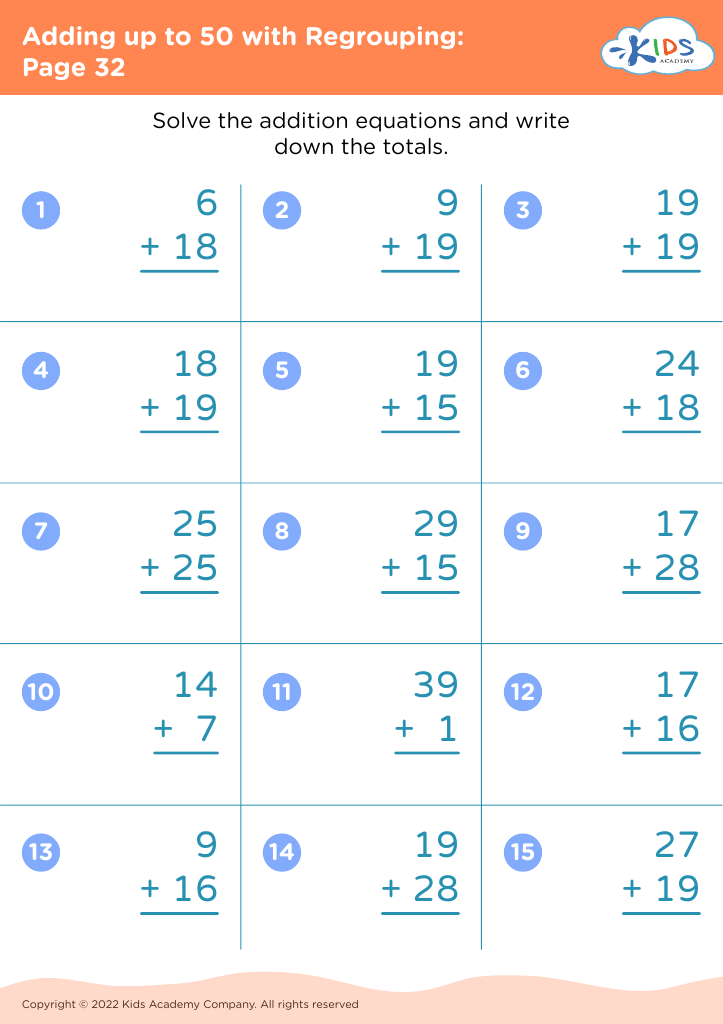
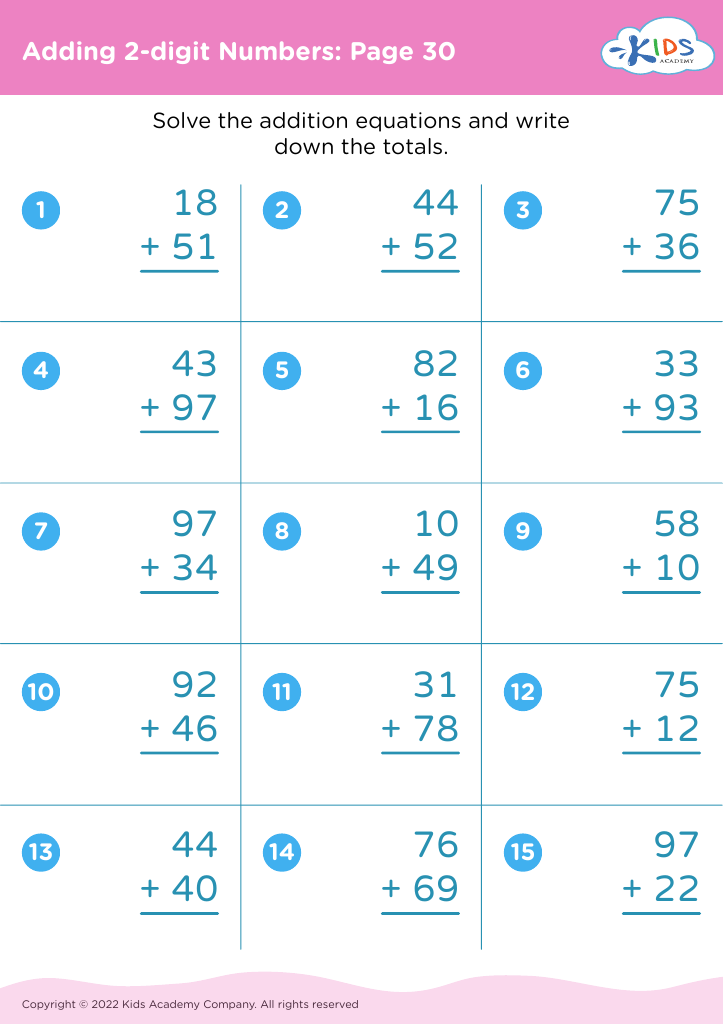
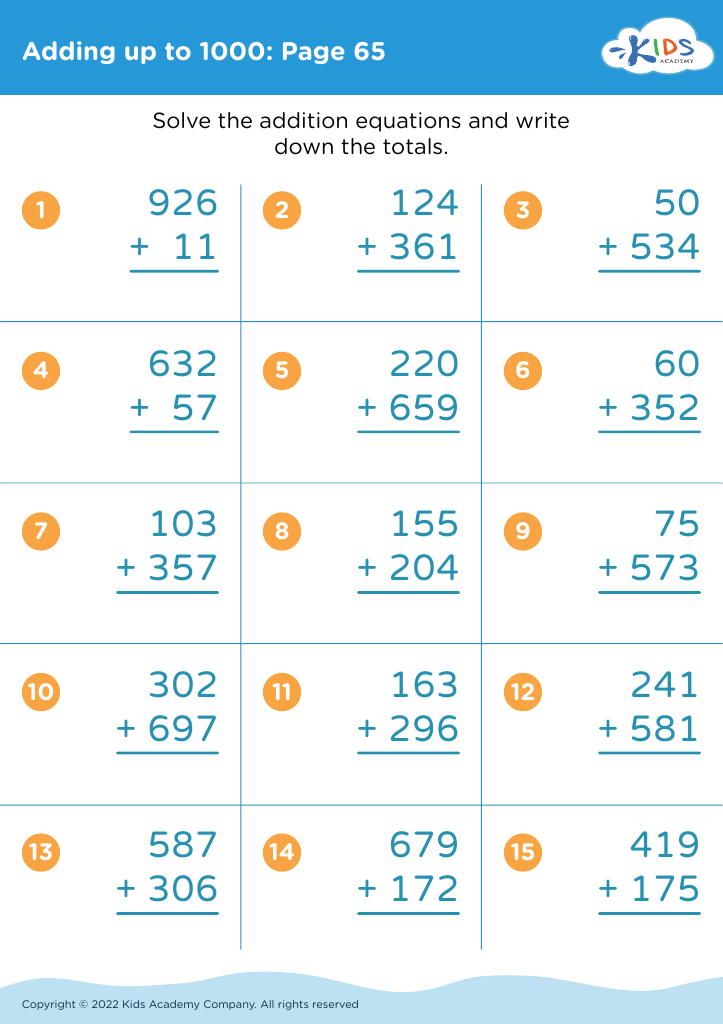
Enhance your child's mathematical skills with our engaging Pattern Recognition Addition Worksheets designed for ages 5-8. These worksheets seamlessly blend fun with learning, helping young learners recognize and analyze patterns while mastering addition concepts. With colorful visuals and interactive exercises, your child will develop critical thinking and problem-solving abilities essential for math proficiency. Our resources cater to different learning styles, making it easy to grasp essential math techniques. Perfect for both classroom settings and at-home practice, these worksheets foster an enjoyable and stress-free learning environment. Prepare your child for success in math with our innovative pattern recognition activities!
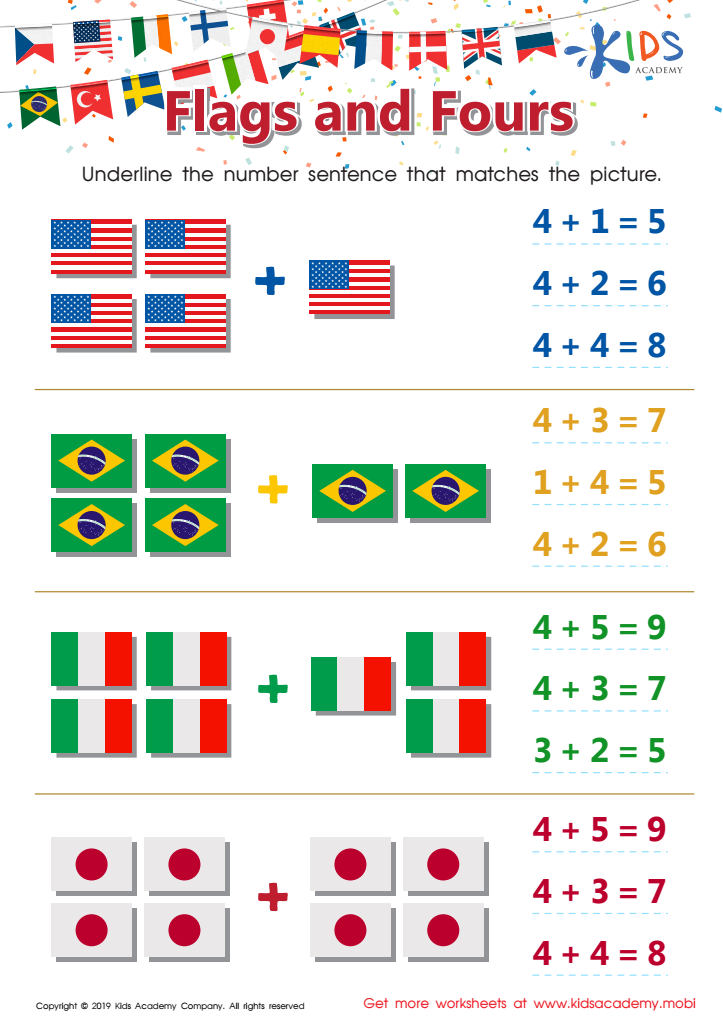
Flags and Fours Worksheet
 Assign to My Students
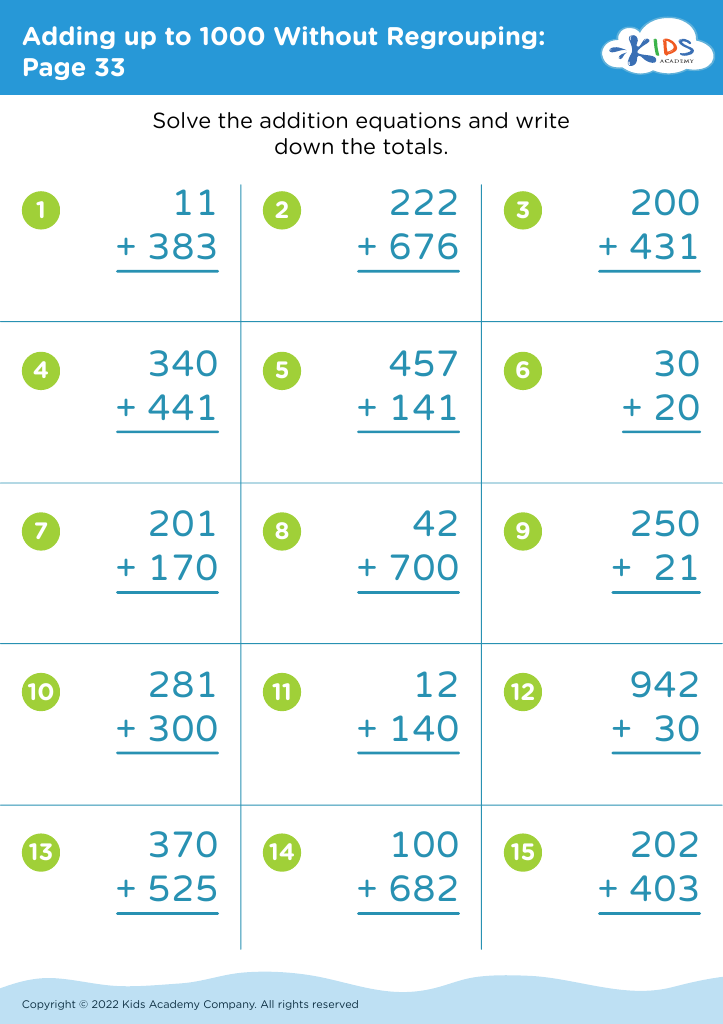








Pattern recognition in addition is crucial for students aged 5-8 as it lays the foundation for effective mathematical understanding. At this developmental stage, children are naturally curious, and engaging them in recognizing patterns helps foster critical thinking, problem-solving skills, and cognitive abilities. When students learn to identify patterns in numbers, such as recognizing sequences and relationships, they build a framework for grasping more complex math concepts later on.
Parents and teachers should be mindful that pattern recognition not only enhances arithmetic skills but also boosts children's confidence in their mathematical abilities. As they discover patterns, children develop a sense of order and predictability in mathematics, making computations less intimidating. This can translate to improved performance as they transition to more complex addition problems, help solidify their understanding of numbers, and create a strong base for future mathematical operations.
Furthermore, understanding patterns can enhance children's problem-solving strategies, allowing them to tackle new mathematical challenges effectively. Engaging with pattern recognition in addition promotes collaboration and communication skills when done in group activities, making math both enjoyable and socially interactive. Parents and teachers nurture a positive attitude towards learning, which is essential for lifelong learning, by emphasizing this fundamental skill.








