Practice division Addition Worksheets for Ages 5-8
3 filtered results
-
From - To
Enhance your child's math skills with our engaging division practice worksheets designed for ages 5-8. These fun and interactive resources help strengthen foundational math concepts, making learning enjoyable and effective. Each worksheet focuses on essential division techniques, encouraging children to recognize patterns and develop problem-solving skills. Perfect for both classroom use and at-home practice, our worksheets cater to various learning styles, ensuring every child can grasp division concepts with ease. Explore our diverse collection and watch your child's confidence soar as they master division through practice and play. Start their mathematical journey today with our colorful and captivating worksheets!
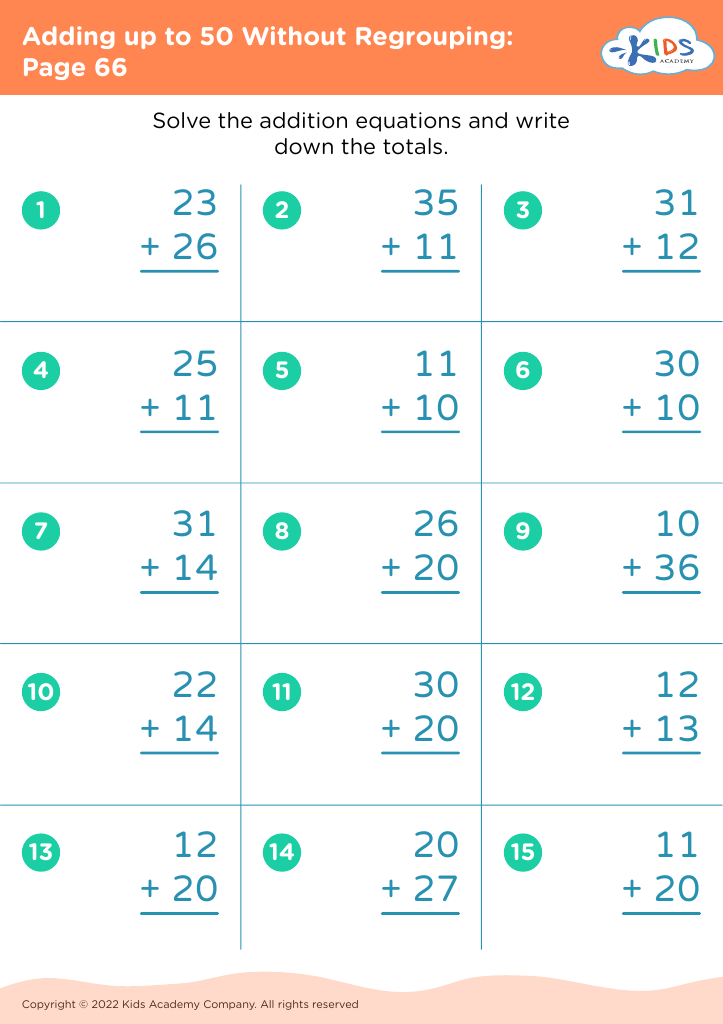
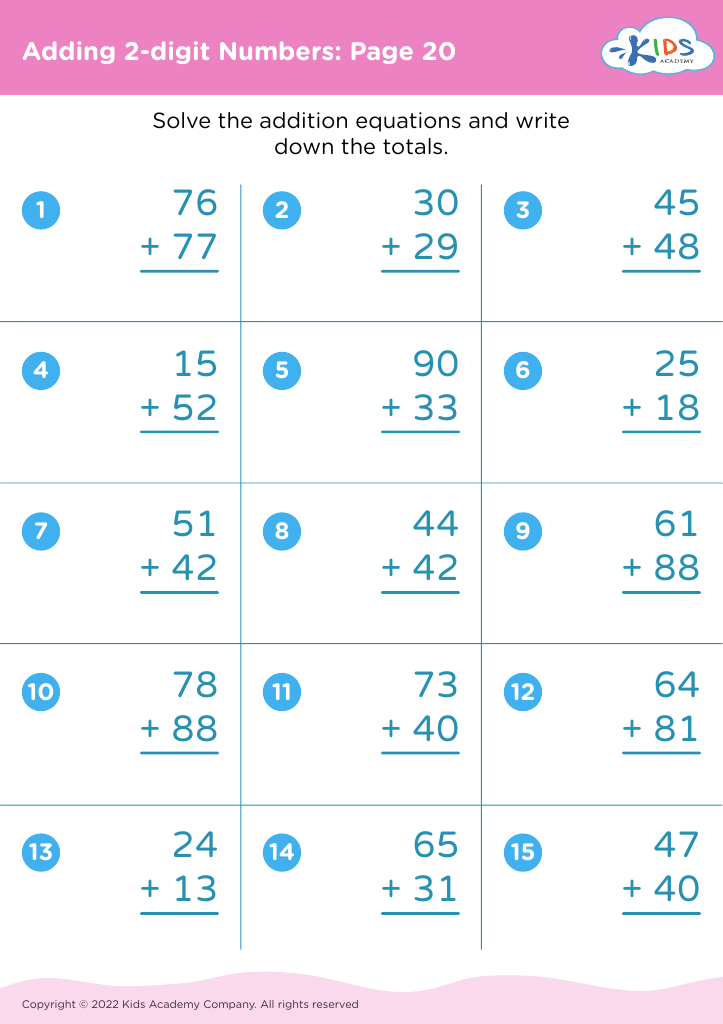
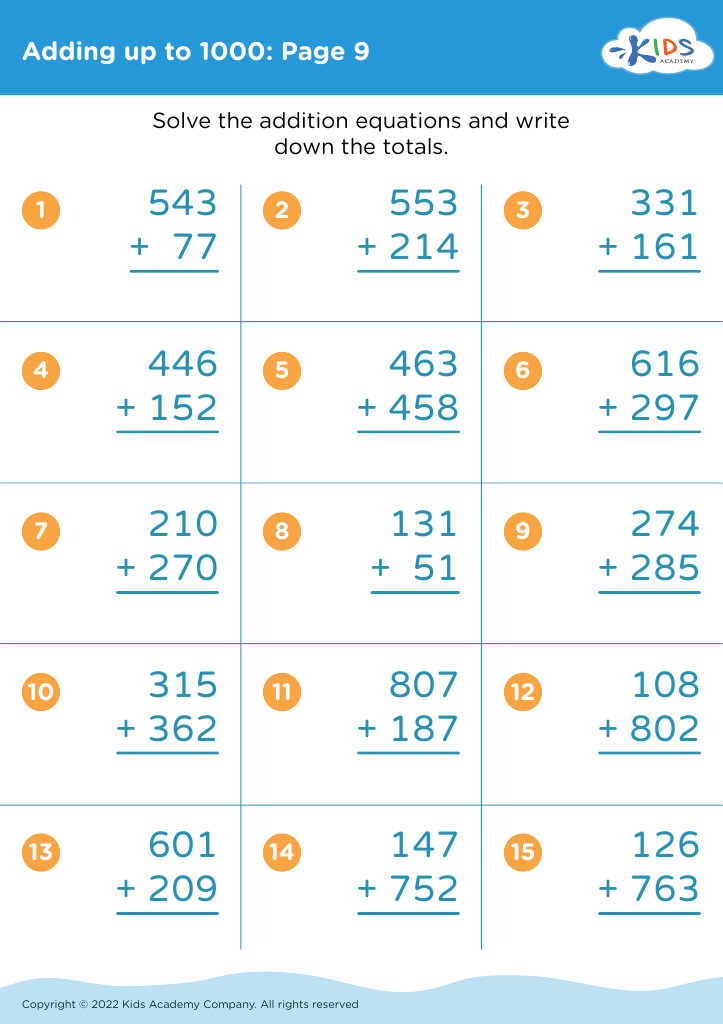








Parents and teachers should prioritize division and addition practice for children aged 5-8 because these foundational skills are crucial for overall mathematical understanding and cognitive development. At this age, children are beginning to develop number sense, which involves recognizing relationships between numbers and understanding basic arithmetic operations. Practice in these areas fosters confidence and proficiency, enabling students to tackle more complex mathematical concepts in the future.
Moreover, strong addition and division skills enhance critical thinking and problem-solving abilities. As children learn to manipulate numbers, they also enhance their logical reasoning, which is beneficial in various academic disciplines beyond mathematics.
Engaging in regular practice helps reinforce concepts and allows children to become fluent in their calculations. This fluency not only aids in standardized tests but also positions students to participate more actively in classroom activities. Additionally, it builds a solid foundation for later learning, where these operations will combine and expand into more advanced topics like multiplication and fractions.
Supporting practice through games, discussions, and hands-on activities at home or in school creates a dynamic learning environment. In turn, it empowers children and helps establish a lifelong positive attitude towards mathematics. Ultimately, developing these skills early sets the stage for ongoing academic success.








