Filters

40 filtered results

Clear all filters
Favorites
With answer key
Interactive

40 filtered results

Difficulty Level

Grade


Subject

    Check out this FREE Trial Lesson on Addition for age 5-8!

    2 Step Word Problems Writing Equations to Match

    Favorites
    With answer key
    Interactive
    • 5-8
    • Reading comprehension
    • Addition
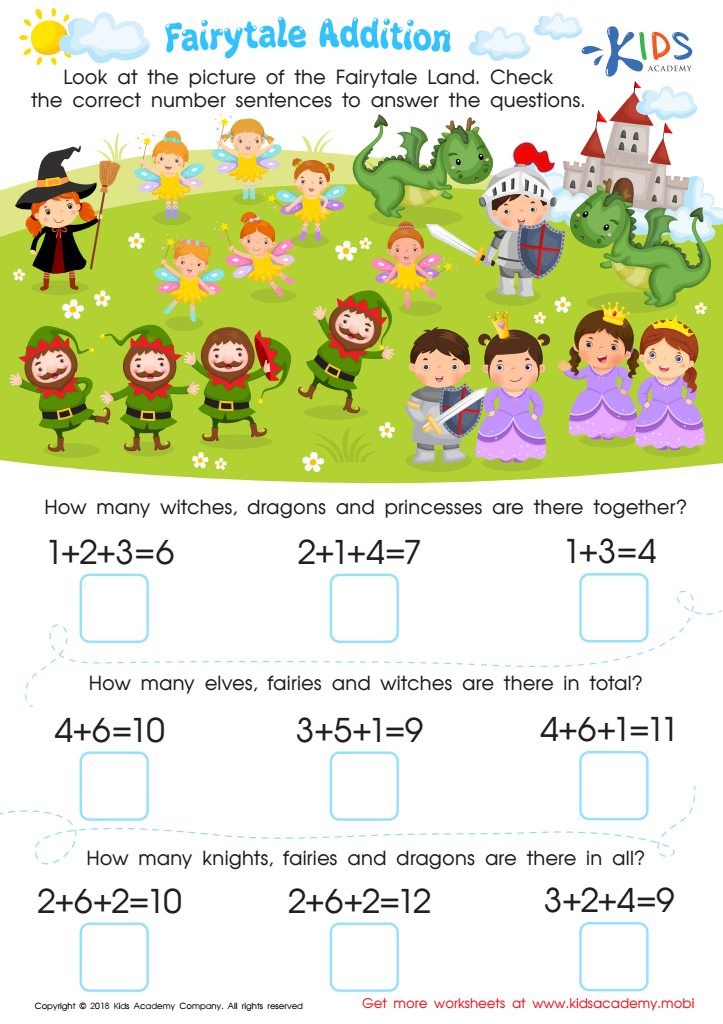
    Fairytale Addition Worksheet
    Fairytale Addition Worksheet

    Fairytale Addition Worksheet

    Take your kids to Fairytale Land! They'll meet witches, dragons, fairies, elves, knights, and princesses. This free worksheet adds up the fun, letting kids use three addends to solve addition equations and find the right answers. With friends like these, math won't even seem like math!
    Fairytale Addition Worksheet
    Worksheet
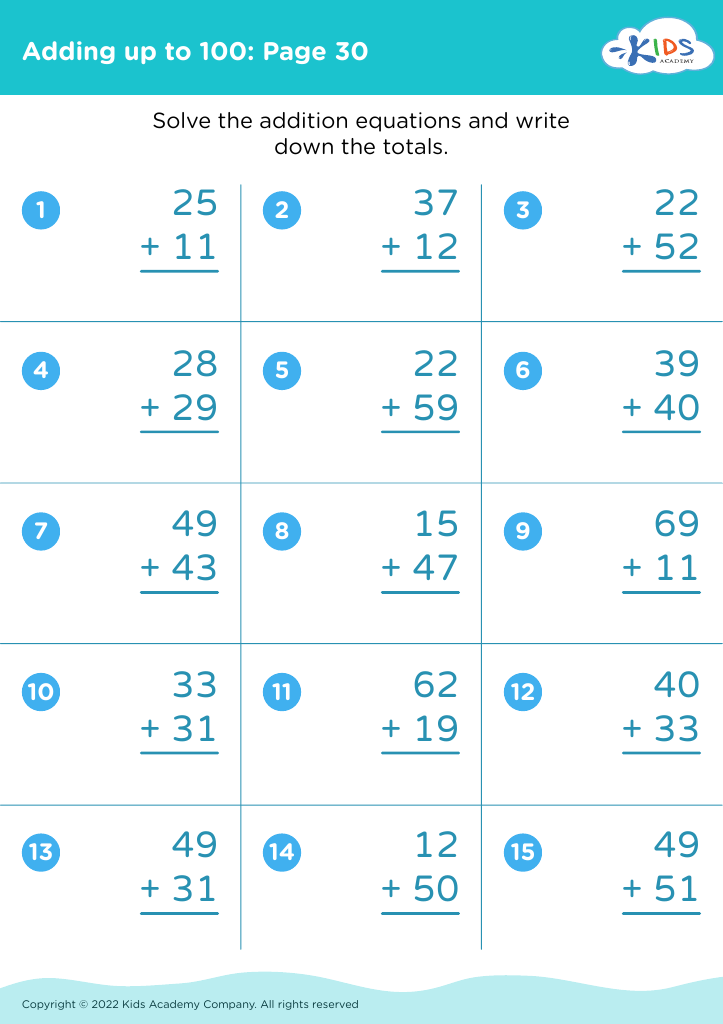
    Adding up to 100: Page 30
    Adding up to 100: Page 30

    Adding up to 100: Page 30

    Adding up to 100: Page 30
    Worksheet
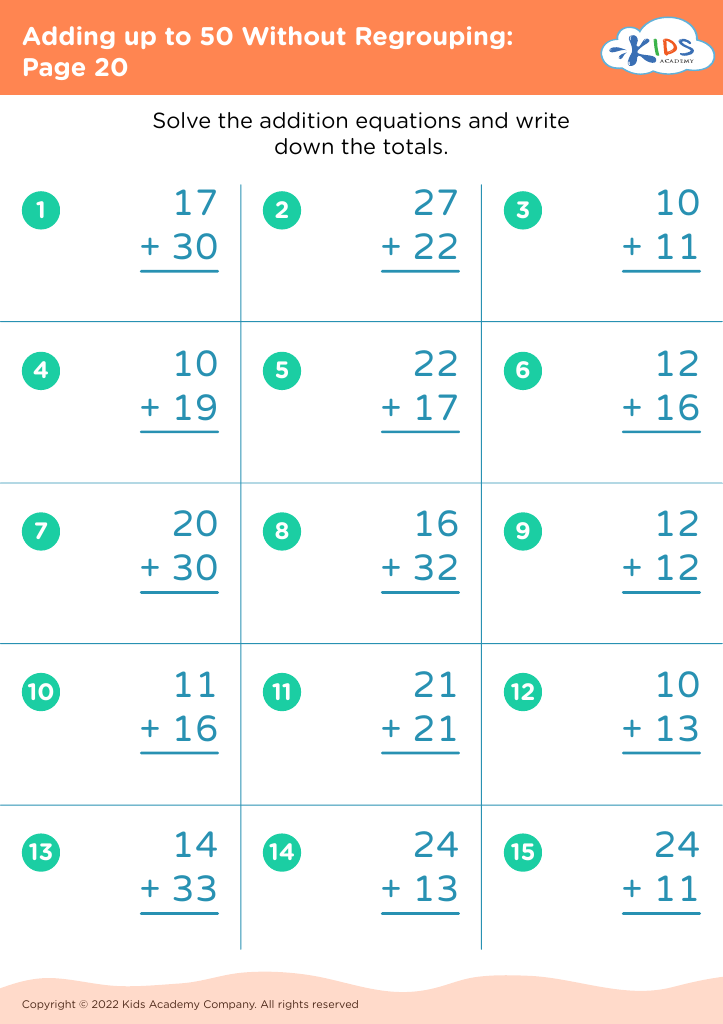
    Adding up to 50 Without Regrouping: Page 20
    Adding up to 50 Without Regrouping: Page 20
    Adding up to 50 Without Regrouping: Page 20
    Worksheet
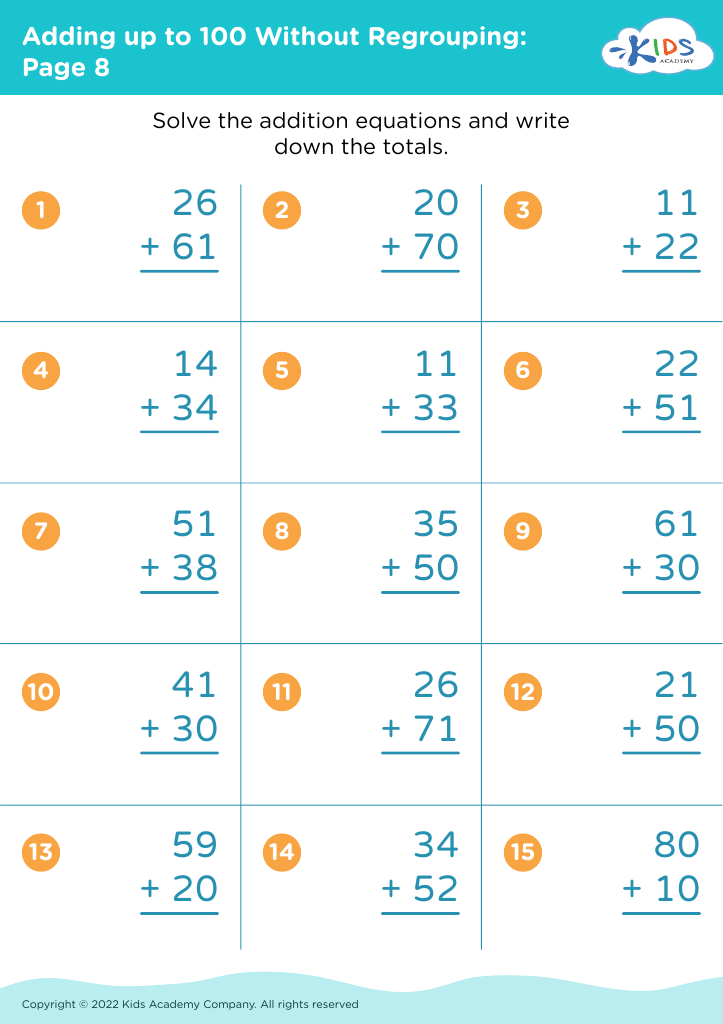
    Adding up to 100 Without Regrouping: Page 8
    Adding up to 100 Without Regrouping: Page 8
    Adding up to 100 Without Regrouping: Page 8
    Worksheet
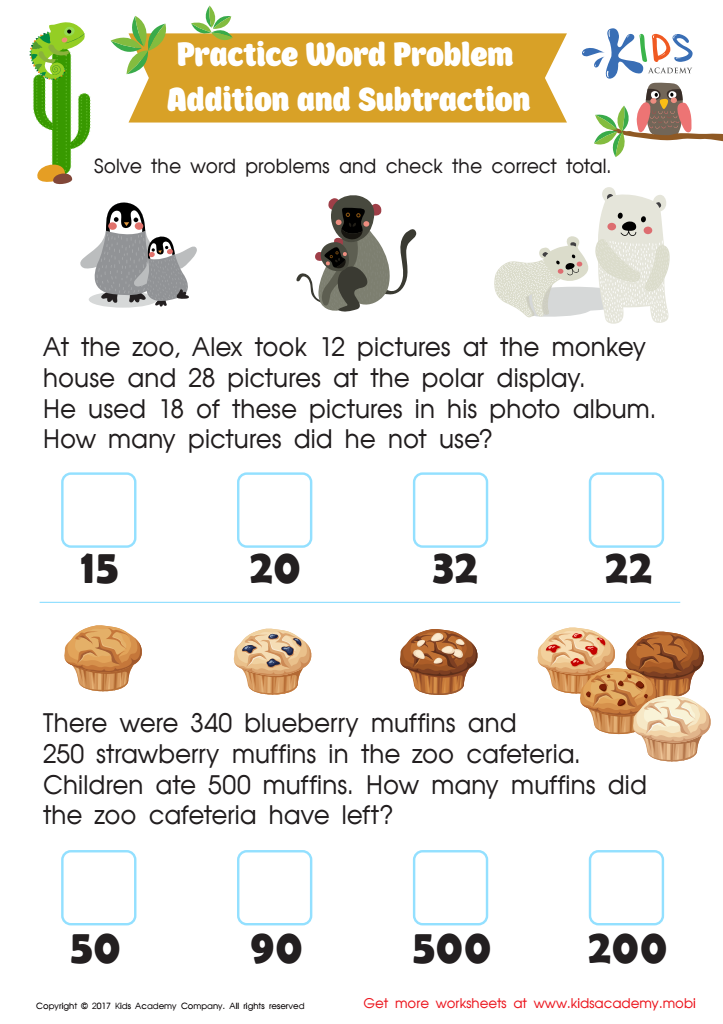
    Addition and subtraction word problem worksheet for 3rd grade
    Addition and subtraction word problem worksheet for 3rd grade

    Addition and Subtraction: Word Problems Worksheet
    Word problems can be difficult, but they offer another way to understand math. Our 3rd grade worksheet takes your child to the zoo; two intriguing word problems will test their thinking skills and help them find the total.
    Addition and Subtraction: Word Problems Worksheet
    Worksheet
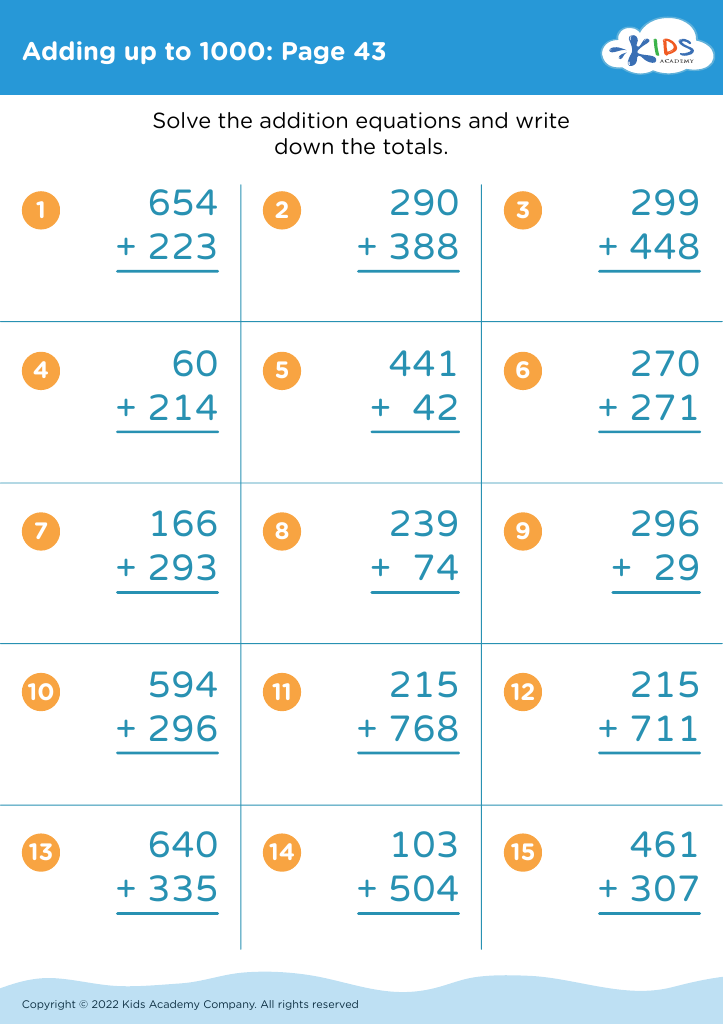
    Adding up to 1000: Page 43
    Adding up to 1000: Page 43

    Adding up to 1000: Page 43

    Adding up to 1000: Page 43
    Worksheet
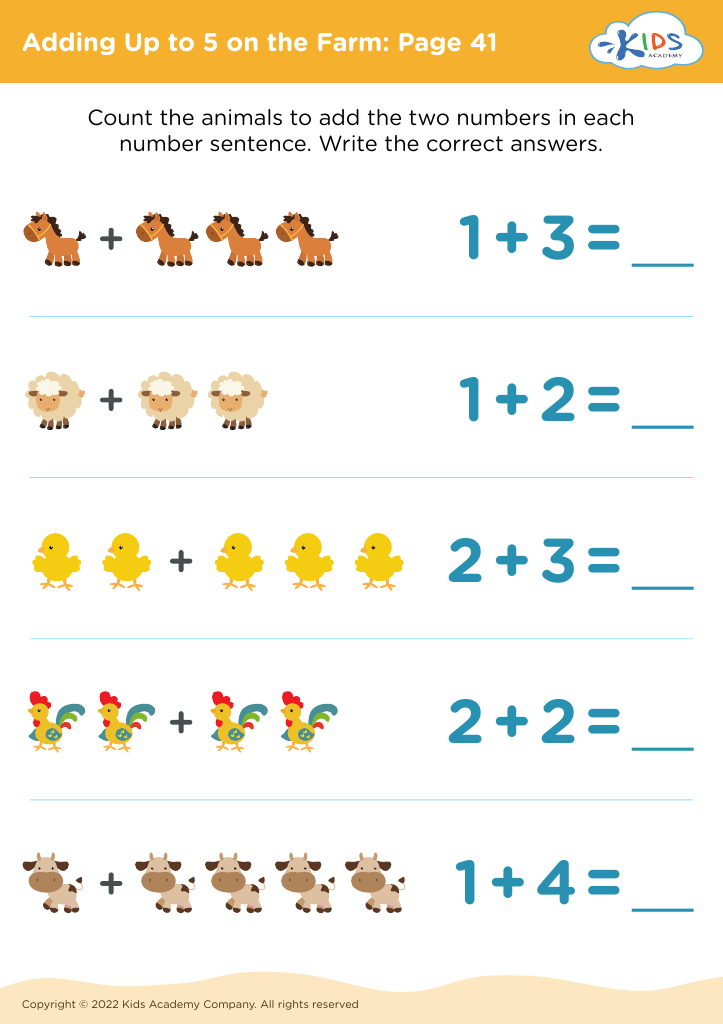
    Adding Up to 5 on the Farm: Page 41
    Adding Up to 5 on the Farm: Page 41
    Adding Up to 5 on the Farm: Page 41
    Worksheet
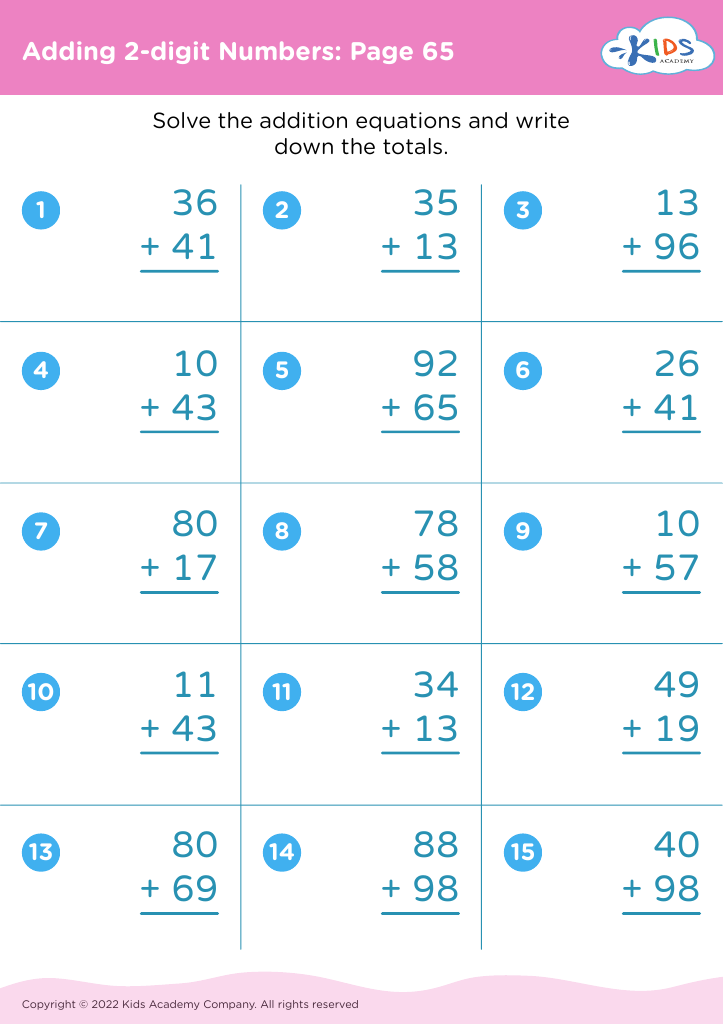
    Adding 2-digit Numbers: Page 65
    Adding 2-digit Numbers: Page 65

    Adding 2-digit Numbers: Page 65

    Adding 2-digit Numbers: Page 65
    Worksheet
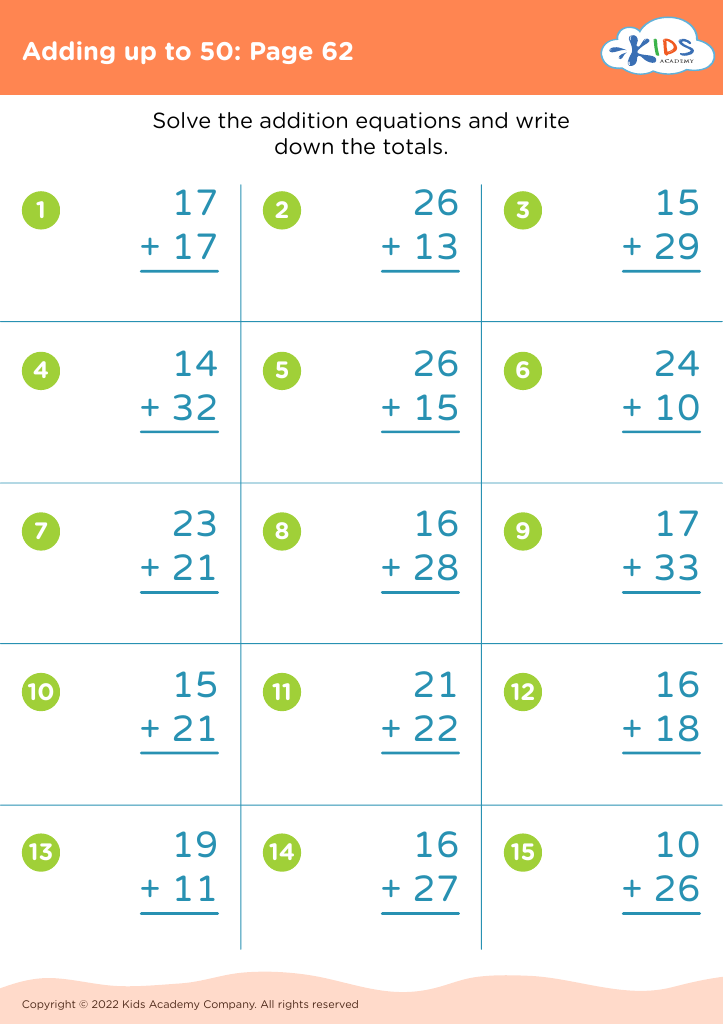
    Adding up to 50: Page 62
    Adding up to 50: Page 62

    Adding up to 50: Page 62

    Adding up to 50: Page 62
    Worksheet
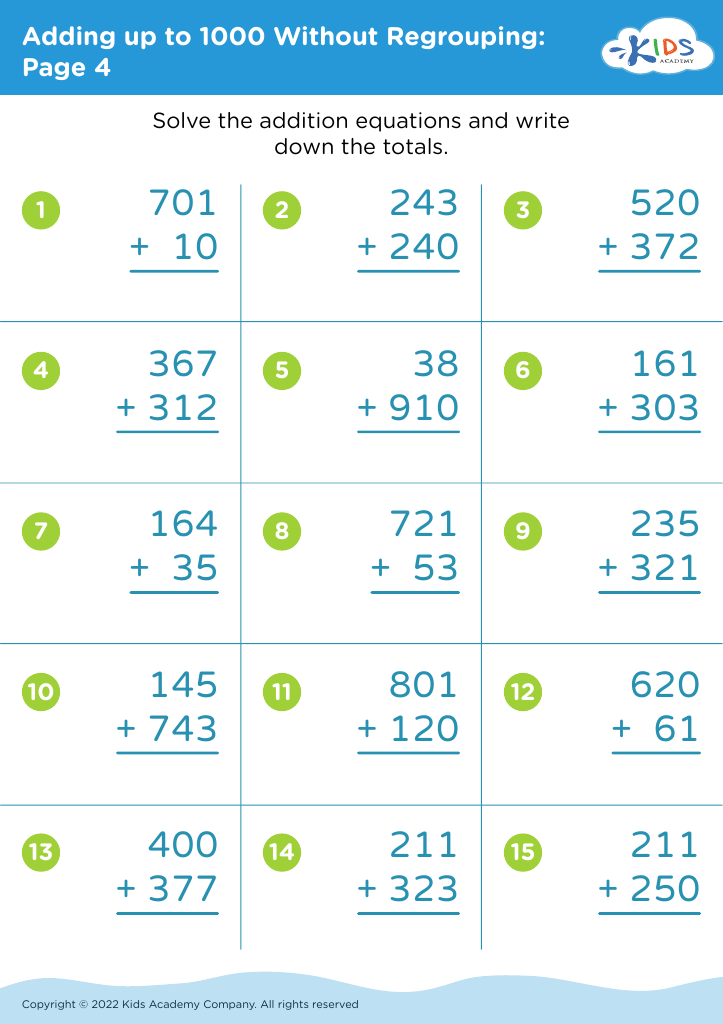
    Adding up to 1000 Without Regrouping: Page 4
    Adding up to 1000 Without Regrouping: Page 4
    Adding up to 1000 Without Regrouping: Page 4
    Worksheet
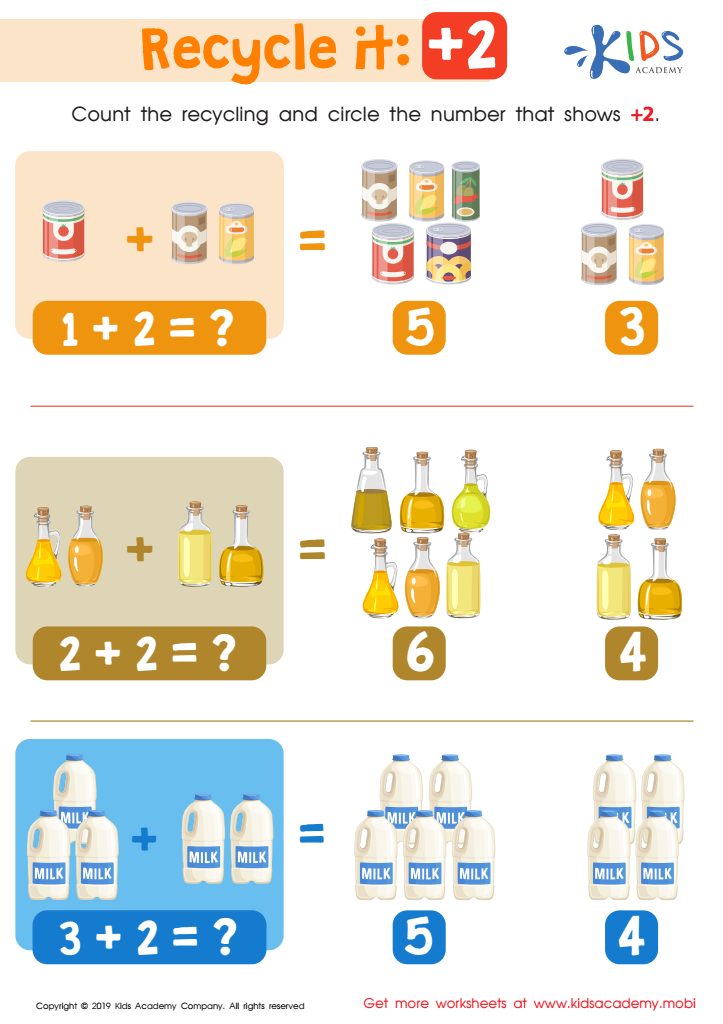
    Recycle It: +2 Worksheet
    Recycle It: +2 Worksheet
    Recycle It: +2 Worksheet
    Your kindergartners likely count everything they see, which is great for practice. Give them simple exercises such as in this worksheet to stimulate their minds. Ask them to count the recycling cans and then circle the number that shows +2.
    Recycle It: +2 Worksheet

    Worksheet
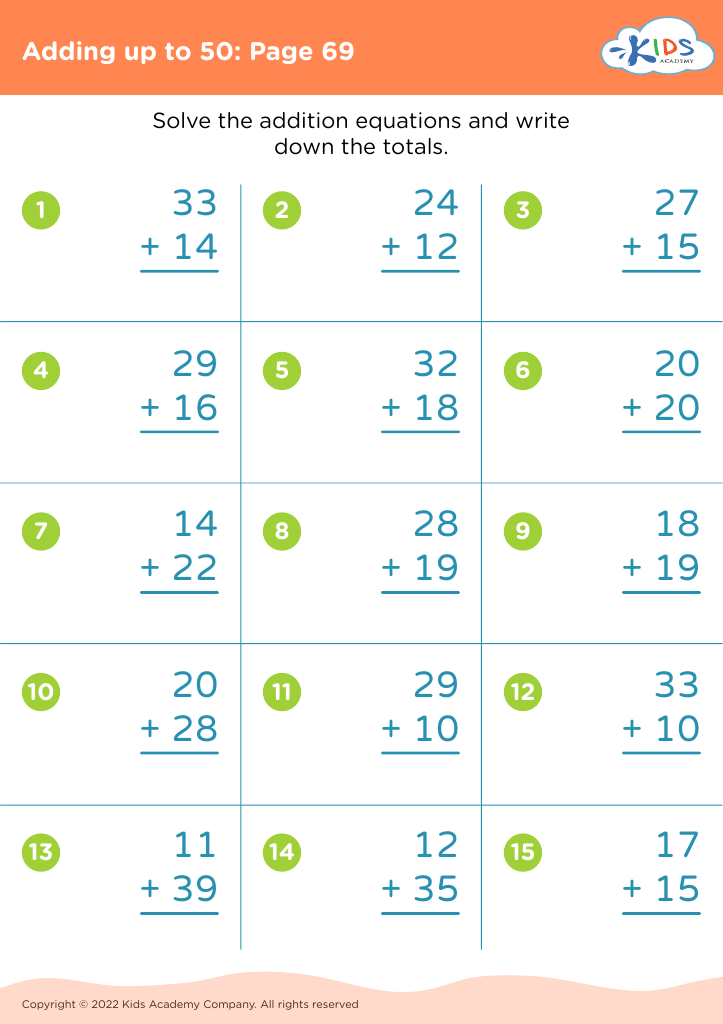
    Adding up to 50: Page 69
    Adding up to 50: Page 69

    Adding up to 50: Page 69

    Adding up to 50: Page 69
    Worksheet
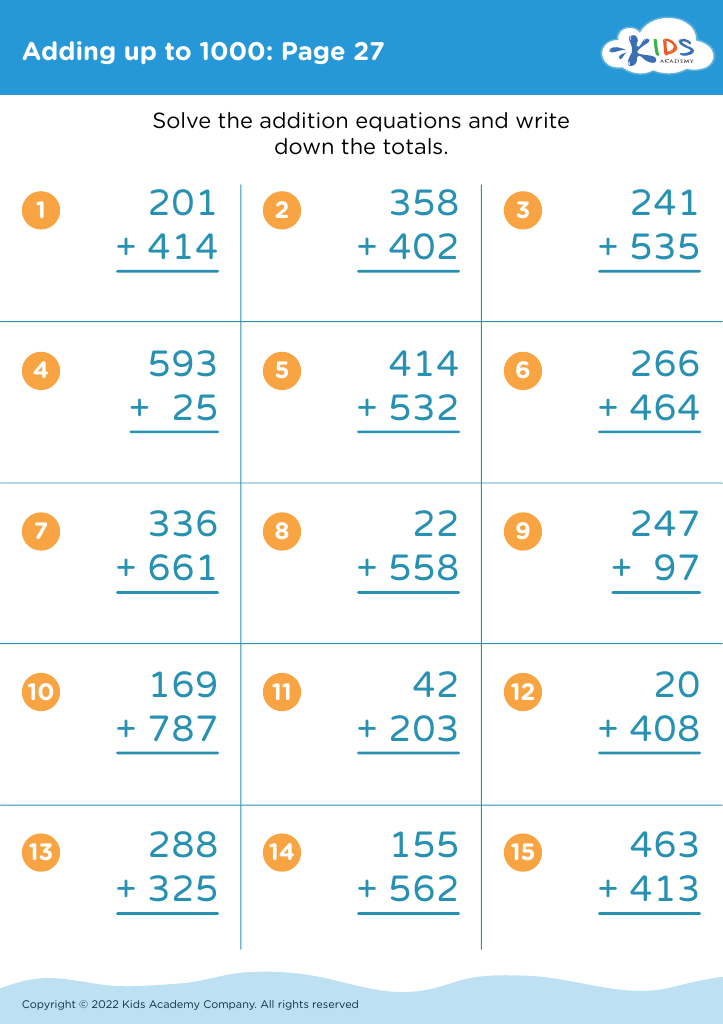
    Adding up to 1000: Page 27
    Adding up to 1000: Page 27

    Adding up to 1000: Page 27

    Adding up to 1000: Page 27
    Worksheet
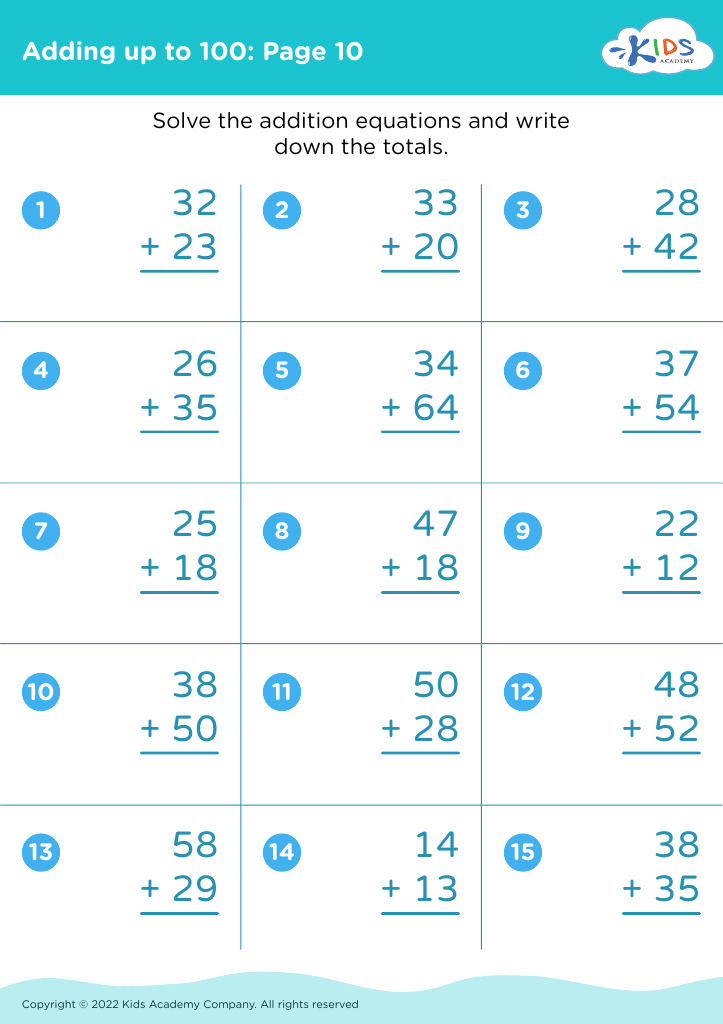
    Adding up to 100: Page 10
    Adding up to 100: Page 10

    Adding up to 100: Page 10

    Adding up to 100: Page 10
    Worksheet
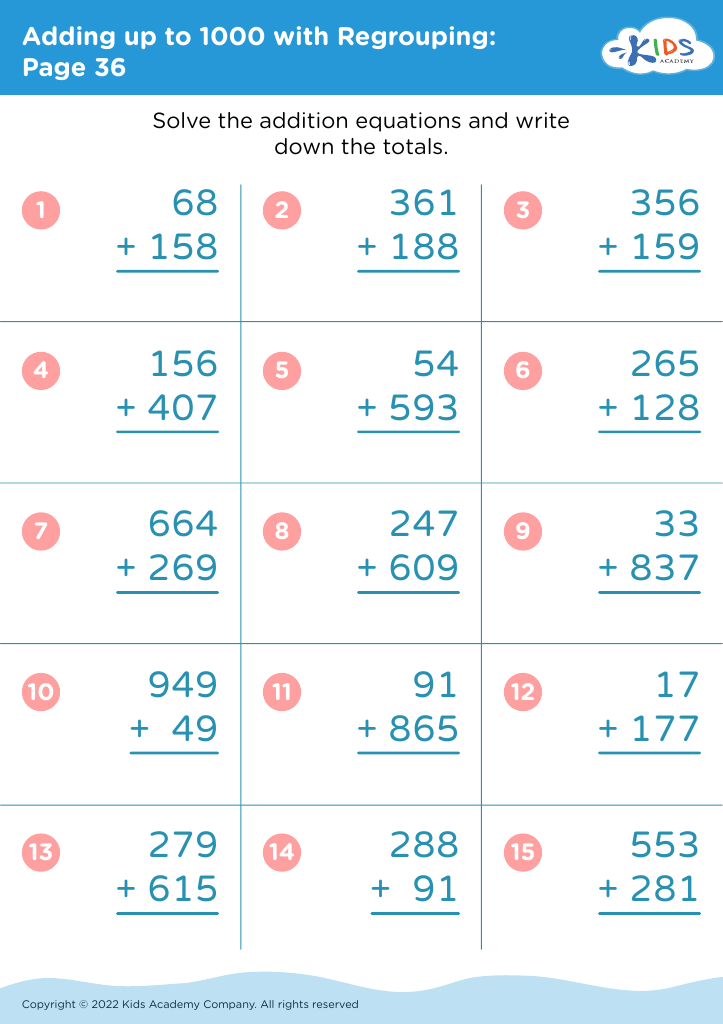
    Adding up to 1000 with Regrouping: Page 36
    Adding up to 1000 with Regrouping: Page 36
    Adding up to 1000 with Regrouping: Page 36
    Worksheet
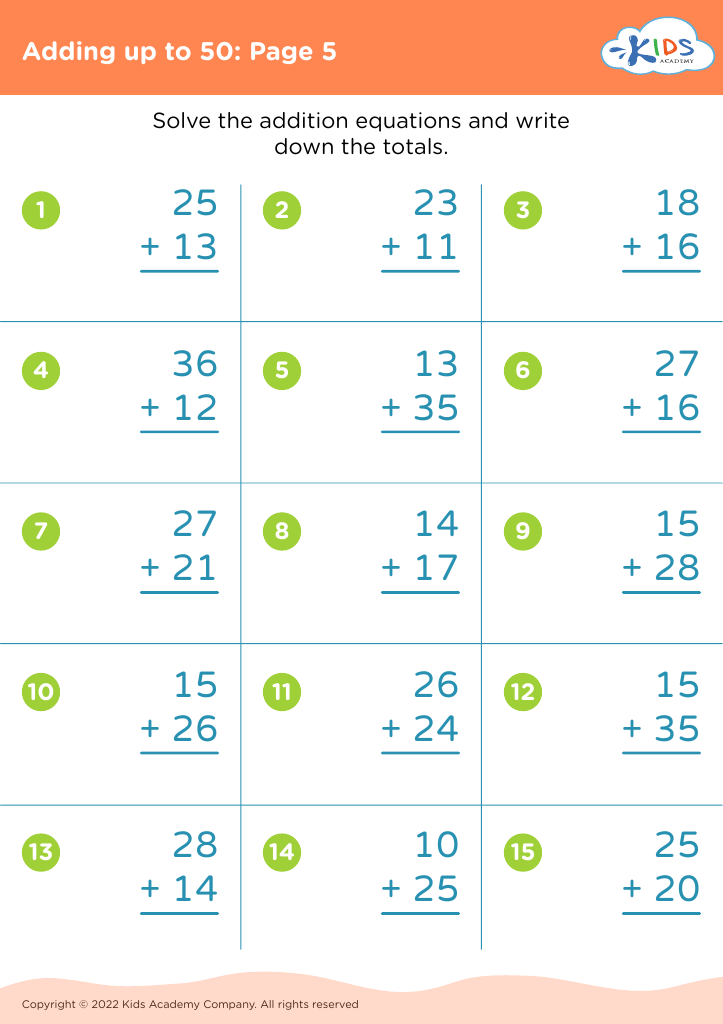
    Adding up to 50: Page 5
    Adding up to 50: Page 5

    Adding up to 50: Page 5

    Adding up to 50: Page 5
    Worksheet


    Reading comprehension is a vital skill that significantly impacts a child's overall academic success, particularly for ages 5-8. At this stage of development, children are transitioning from learning to read to reading to learn. Understanding what they read enables them to engage with various subjects, from science to social studies, fostering a well-rounded education.

    Parents and teachers should prioritize reading comprehension as it builds critical thinking skills, enhances vocabulary, and nurtures a love for reading. Children who grasp texts' meaning more effectively are likely to excel in their studies and gain confidence in their abilities. Furthermore, developing reading comprehension skills helps in forming a strong foundation for future learning. It prepares children to analyze, interpret, and evaluate information, which are essential skills in today's information-rich world.

    Additionally, proficient reading comprehension can significantly reduce feelings of frustration or anxiety related to academic performance, promoting a positive attitude toward school. Encouraging activities such as open discussions about stories, asking questions, and making predictions can enhance a child's understanding and enjoyment of reading. Ultimately, fostering comprehension at a young age contributes to lifelong learning and a more profound appreciation for literature and knowledge.