Filters

21 filtered results

Clear all filters
Favorites
With answer key
Interactive

21 filtered results

Difficulty Level

Grade


Discover our "Recognizing Patterns Addition Worksheets for Ages 5-8," designed to make learning addition fun and engaging. These worksheets focus on recognizing and identifying patterns, helping young learners improve their addition skills while boosting critical thinking. Perfect for early graders, our printable resources are tailored to match their developmental stage, offering visually appealing and interactive problems that simplify complex concepts. Each worksheet incorporates vibrant images and relatable scenarios to keep children captivated and eager to learn. Enhance your child's math abilities today with our expertly crafted worksheets that turn foundational math concepts into enjoyable challenges!
Check out this FREE Trial Lesson on Addition for age 5-8!

T

Favorites
With answer key
Interactive
  • 5-8
  • Recognizing Patterns
  • Addition
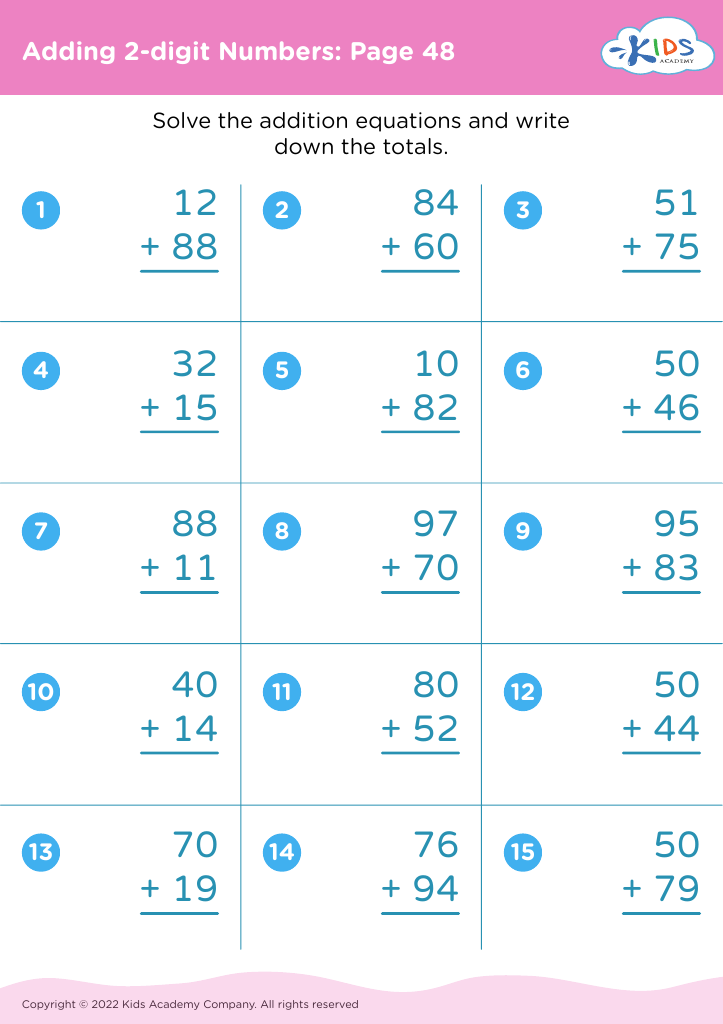
Adding 2-digit Numbers: Page 48

Adding 2-digit Numbers: Page 48

Adding 2-digit Numbers: Page 48
Worksheet
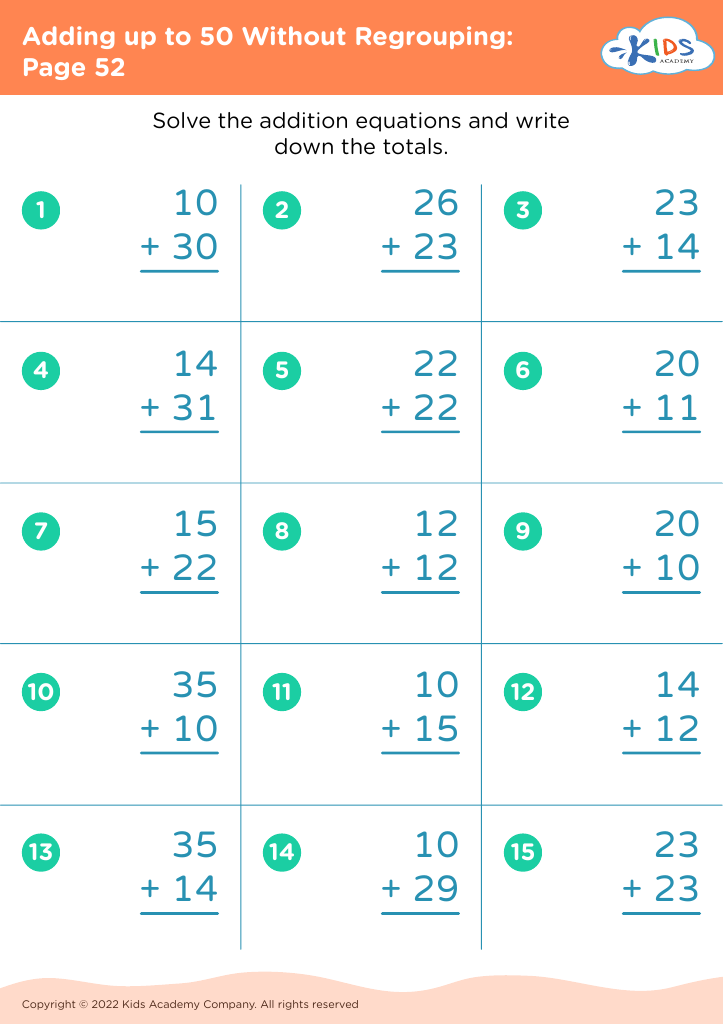
Adding up to 50 Without Regrouping: Page 52
Worksheet
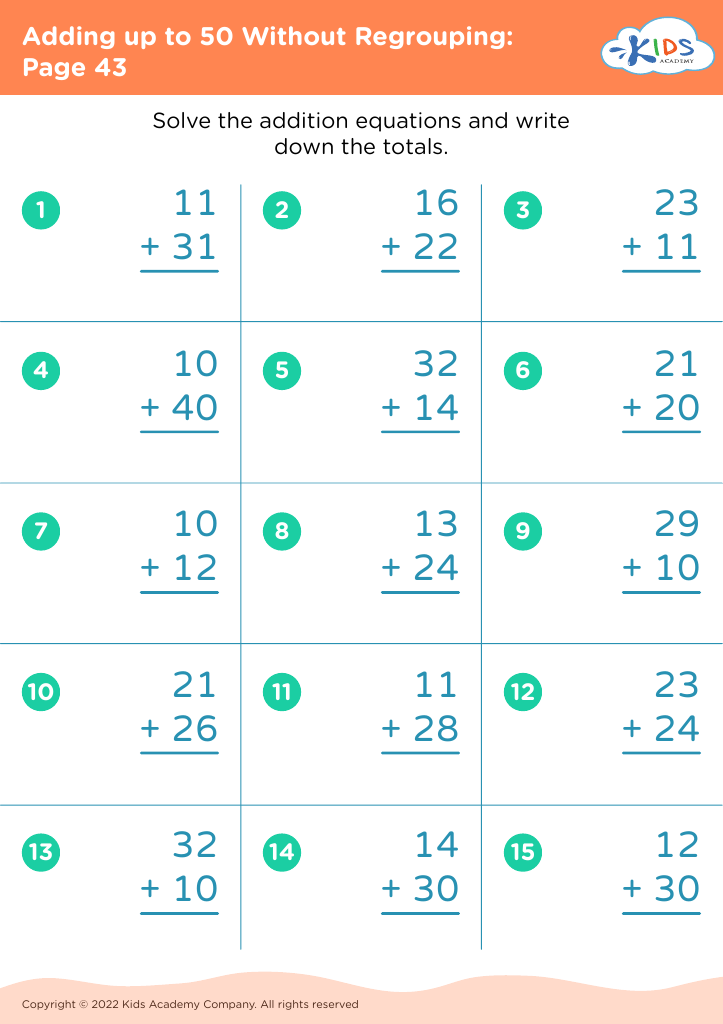
Adding up to 50 Without Regrouping: Page 43
Worksheet
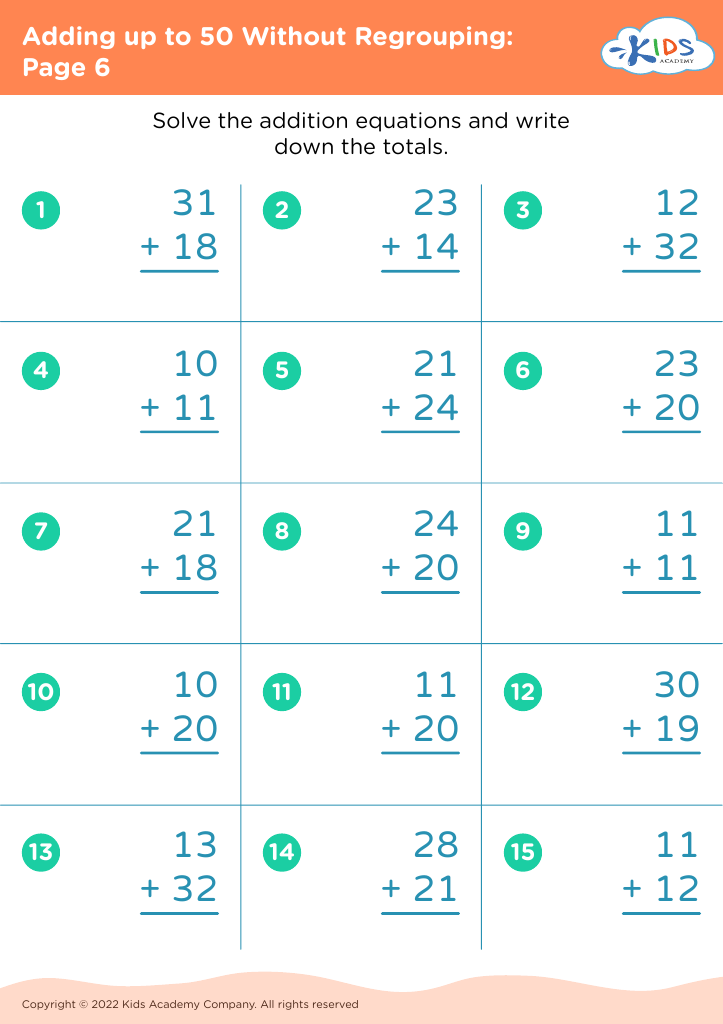
Adding up to 50 Without Regrouping: Page 6
Worksheet
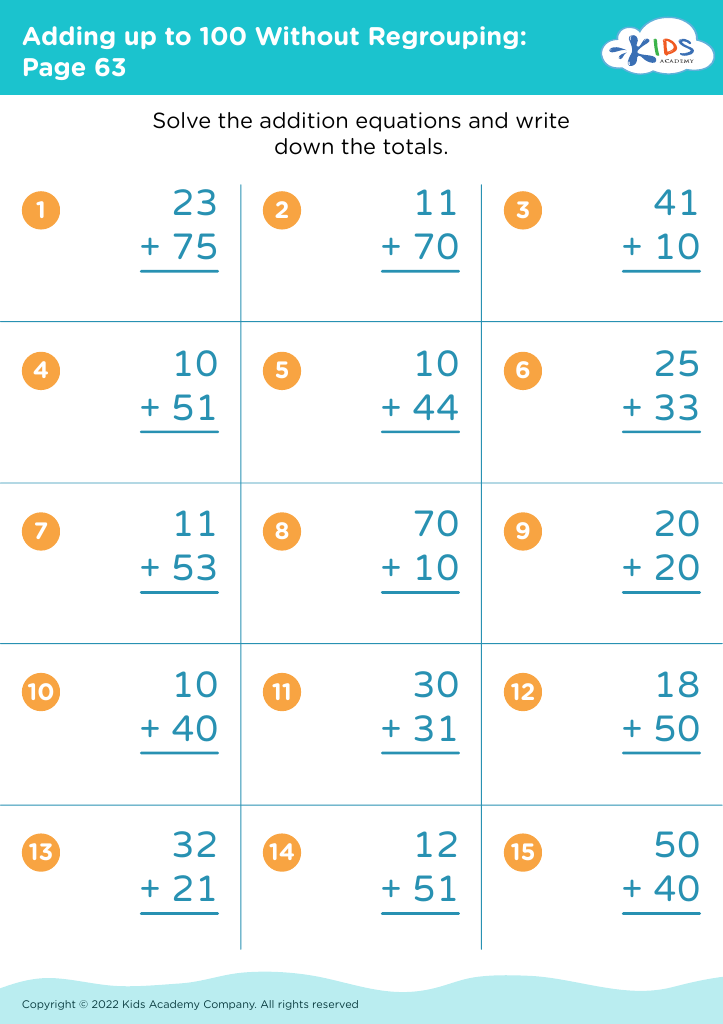
Adding up to 100 Without Regrouping: Page 63
Worksheet
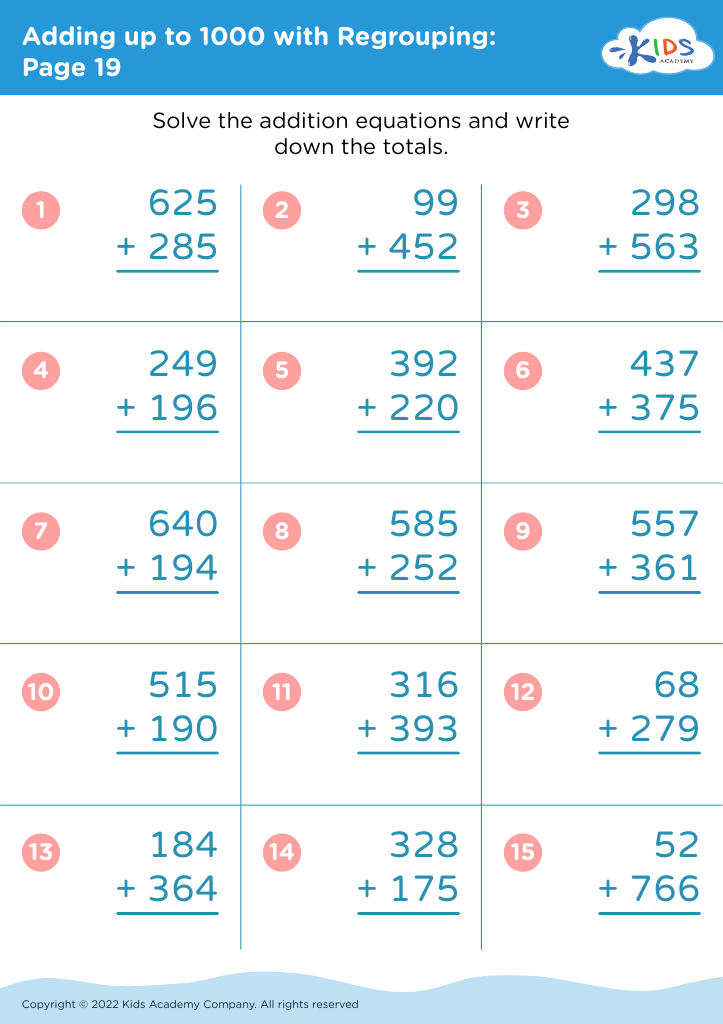
Adding up to 1000 with Regrouping: Page 19
Worksheet
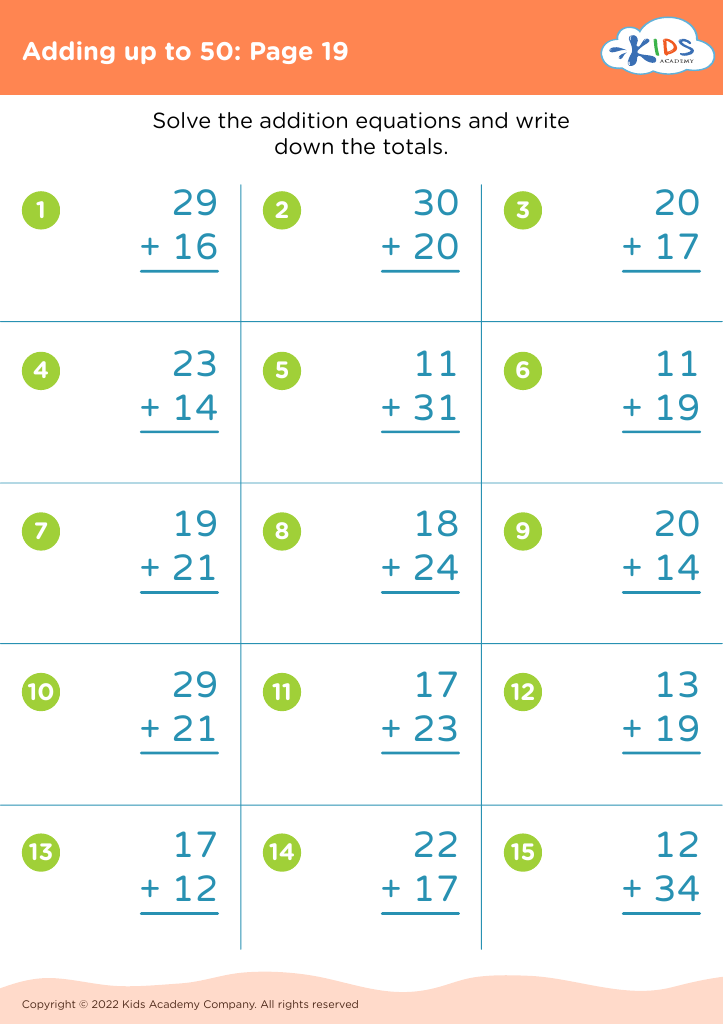
Adding up to 50: Page 19

Adding up to 50: Page 19

Adding up to 50: Page 19
Worksheet
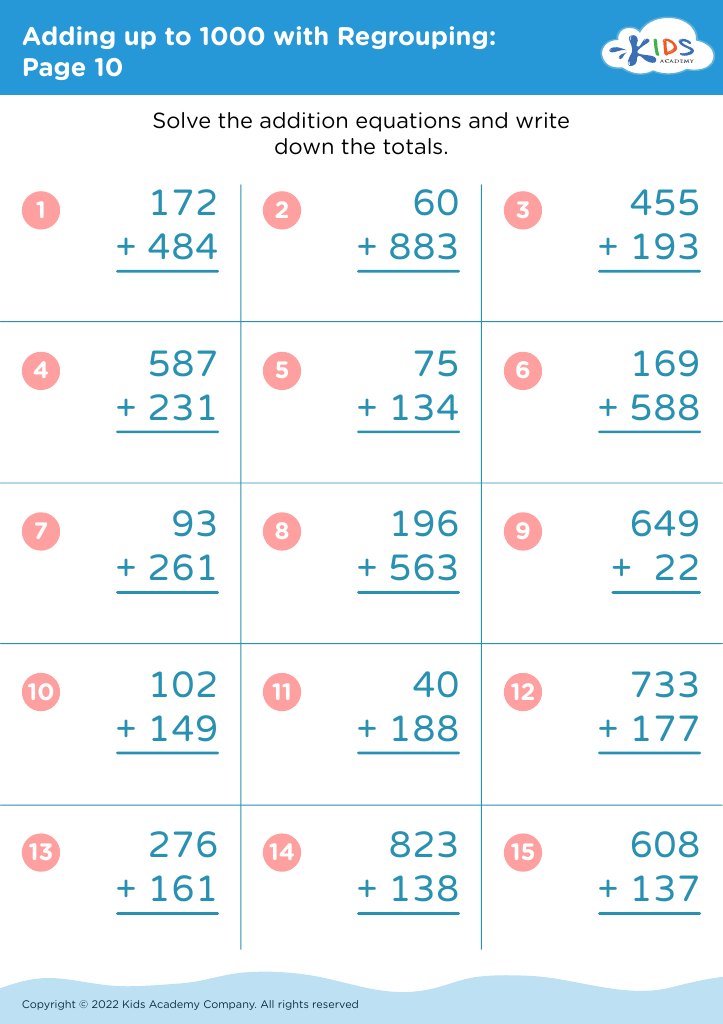
Adding up to 1000 with Regrouping: Page 10
Worksheet
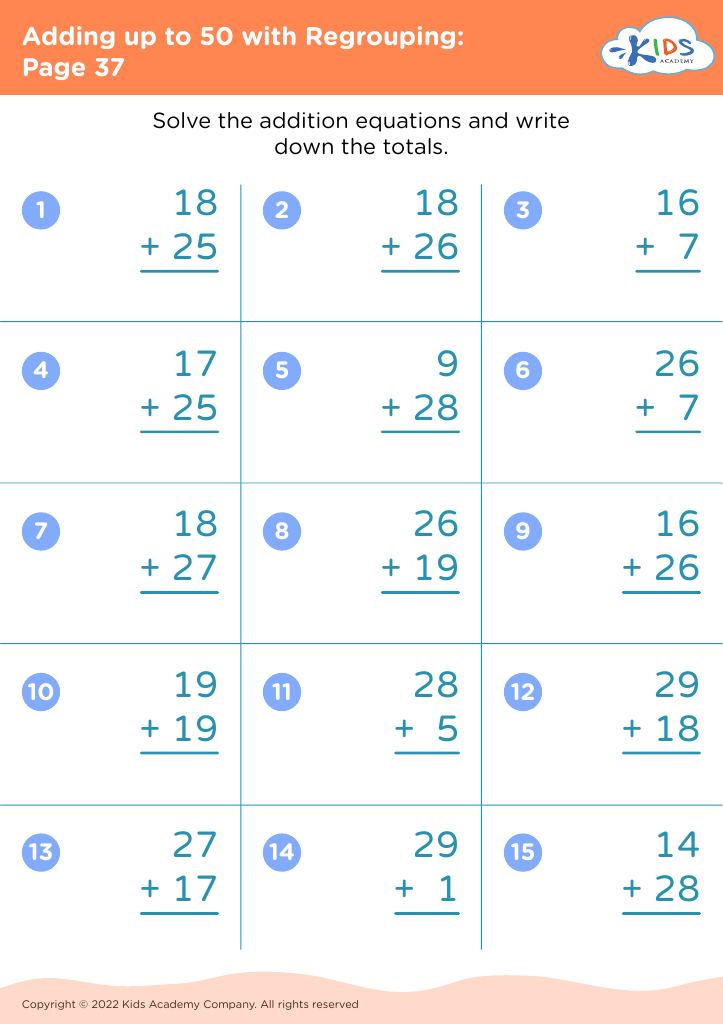
Adding up to 50 with Regrouping: Page 37
Worksheet
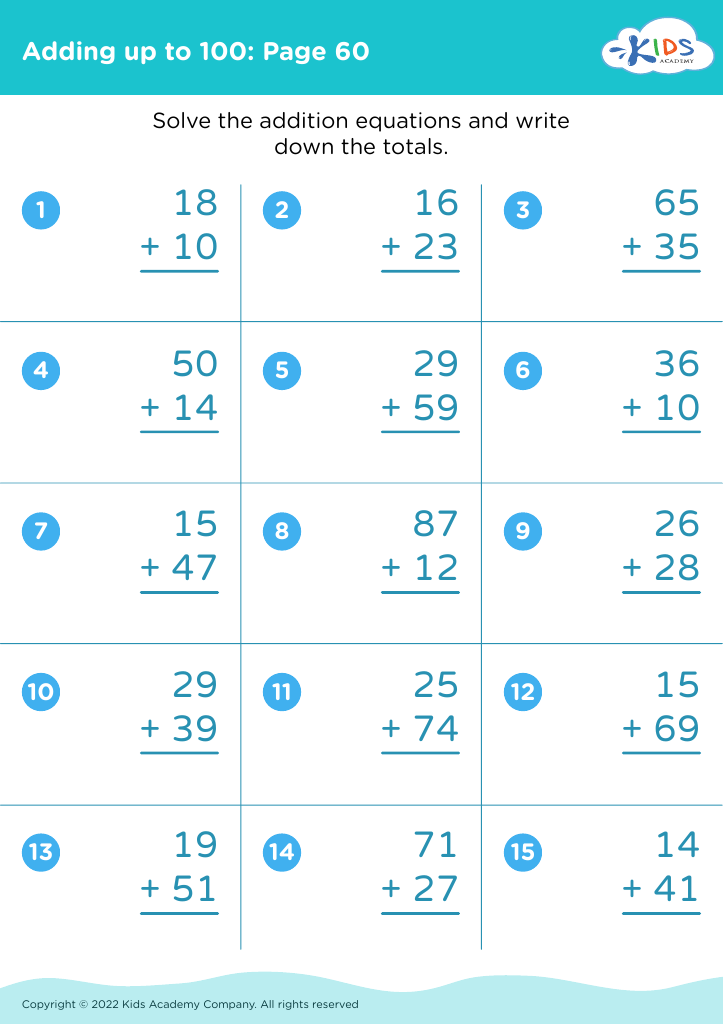
Adding up to 100: Page 60

Adding up to 100: Page 60

Adding up to 100: Page 60
Worksheet
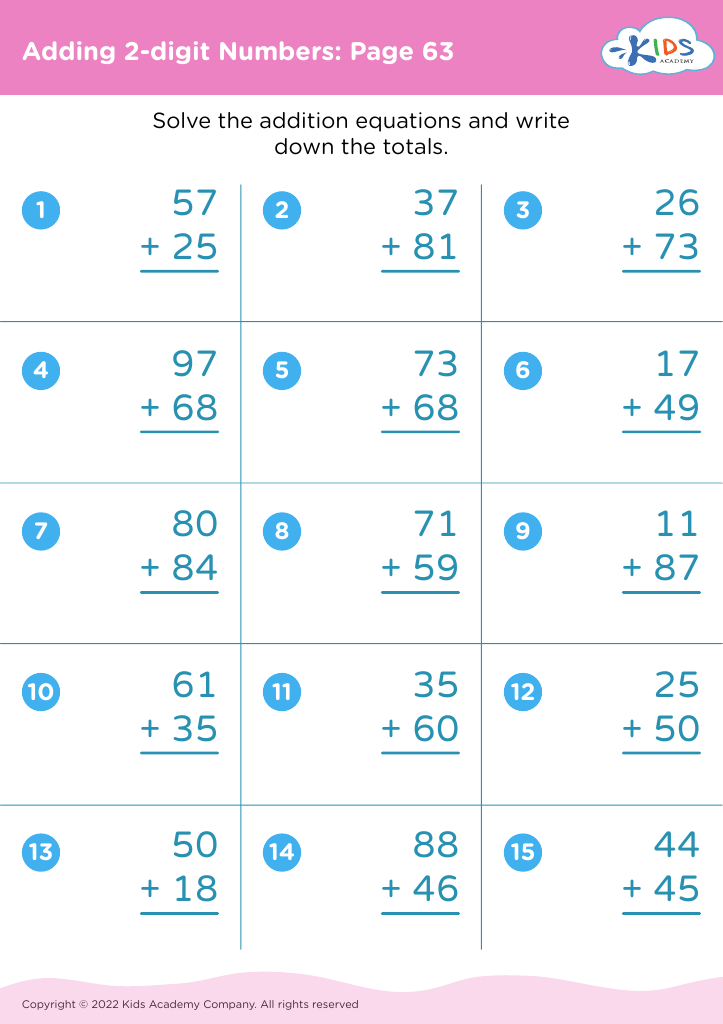
Adding 2-digit Numbers: Page 63

Adding 2-digit Numbers: Page 63

Adding 2-digit Numbers: Page 63
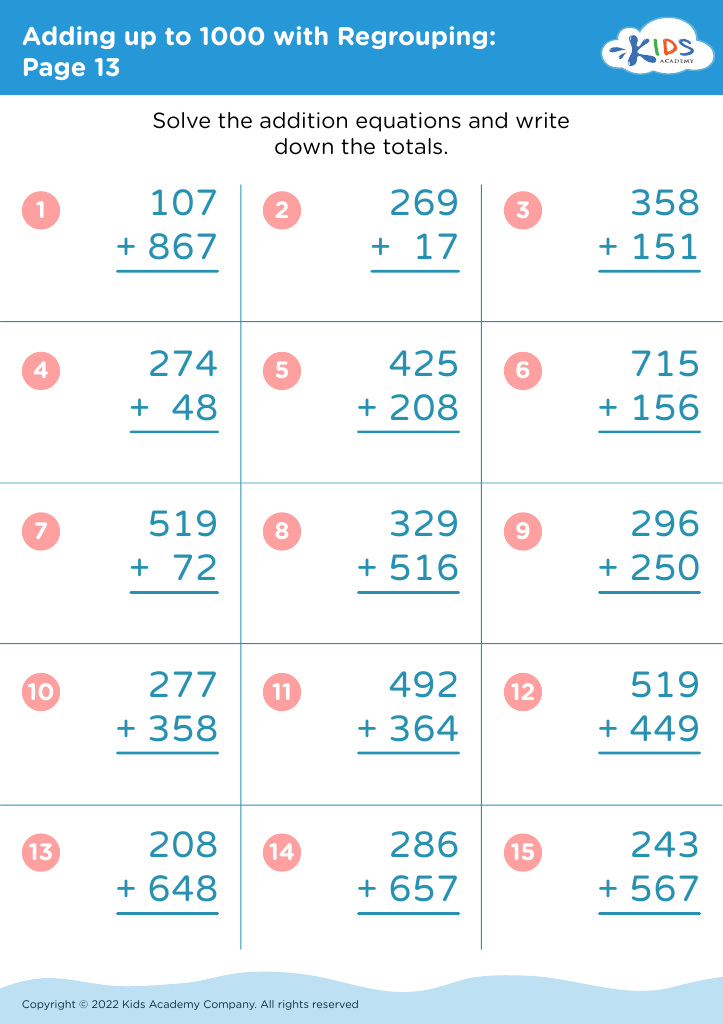
Worksheet
Adding up to 1000 with Regrouping: Page 13
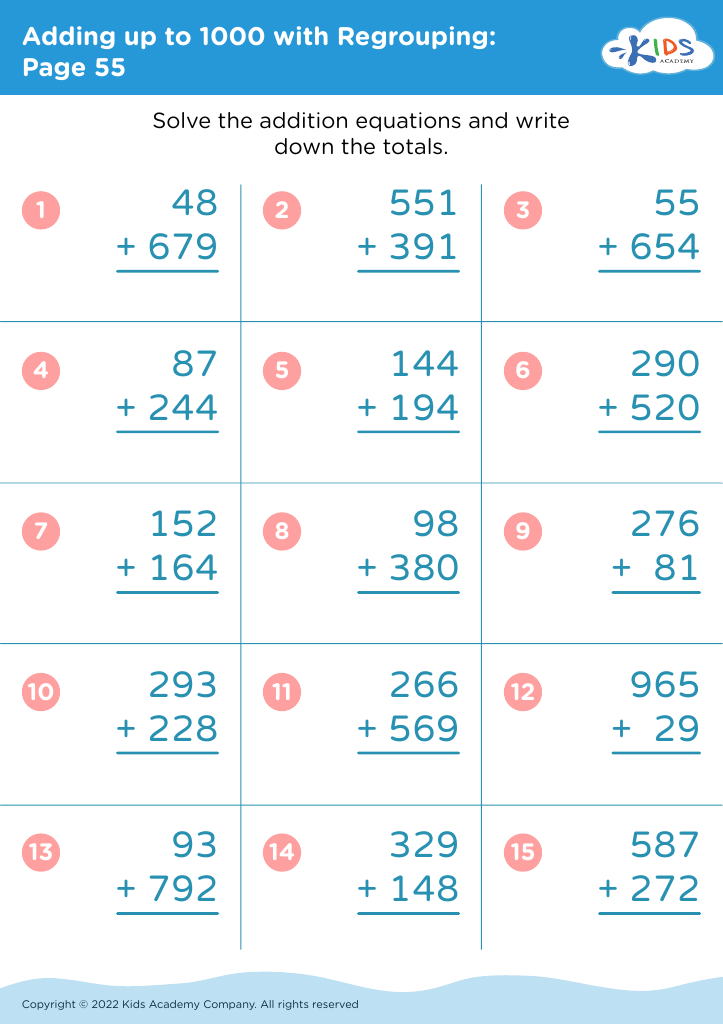
Worksheet
Adding up to 1000 with Regrouping: Page 55
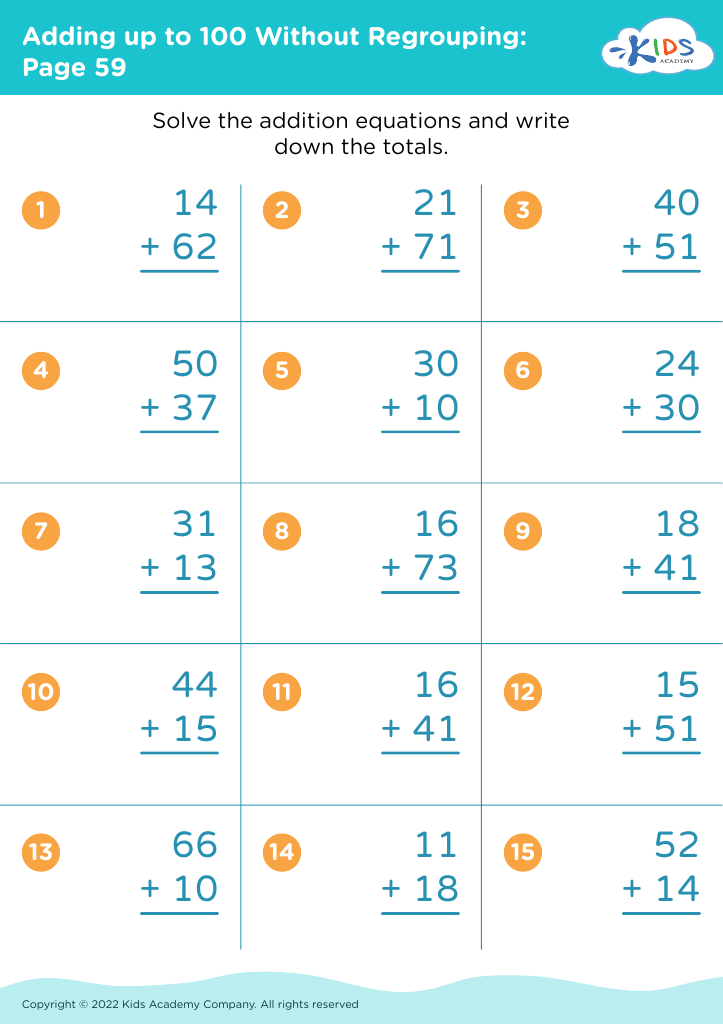
Worksheet
Adding up to 100 Without Regrouping: Page 59
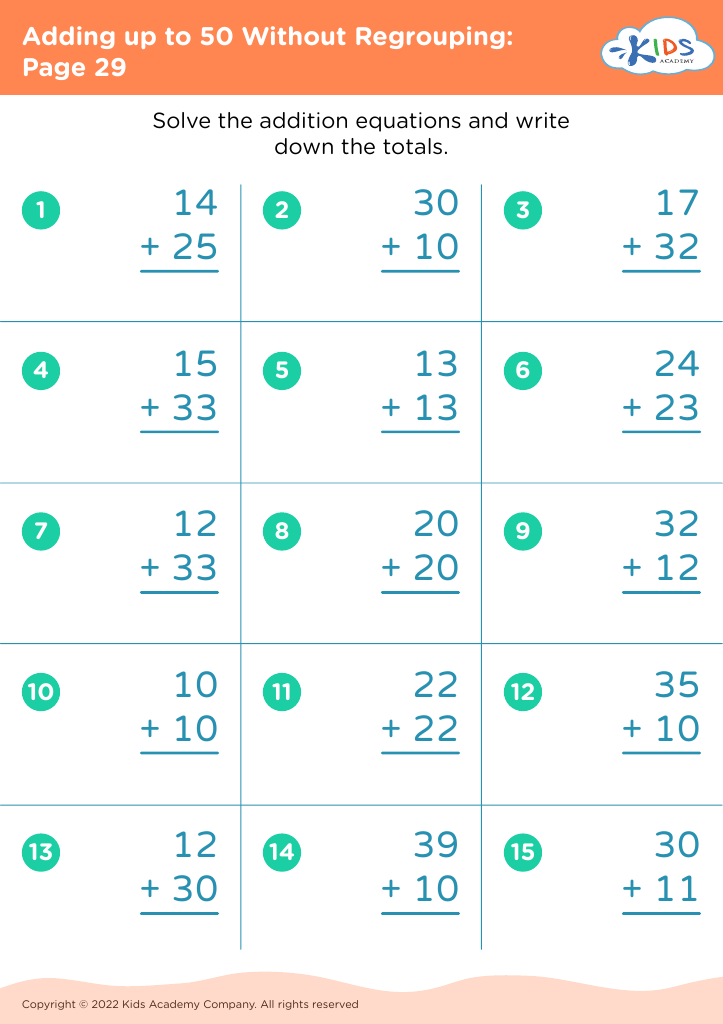
Worksheet
Adding up to 50 Without Regrouping: Page 29
Worksheet
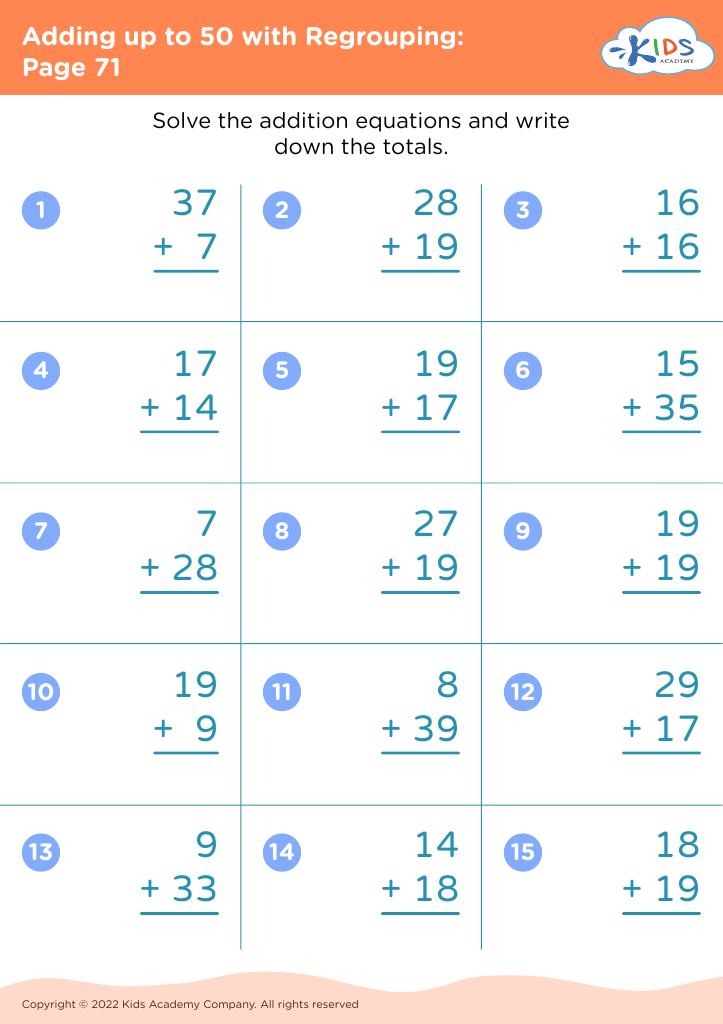
Adding up to 50 with Regrouping: Page 71
Worksheet
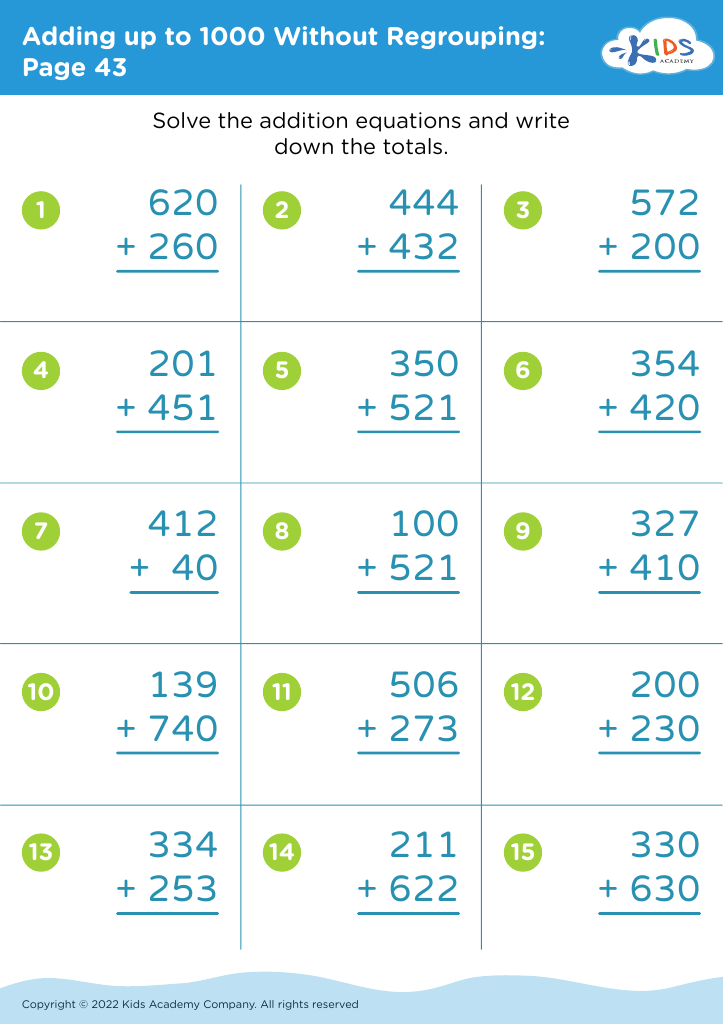
Adding up to 1000 Without Regrouping: Page 43
Worksheet
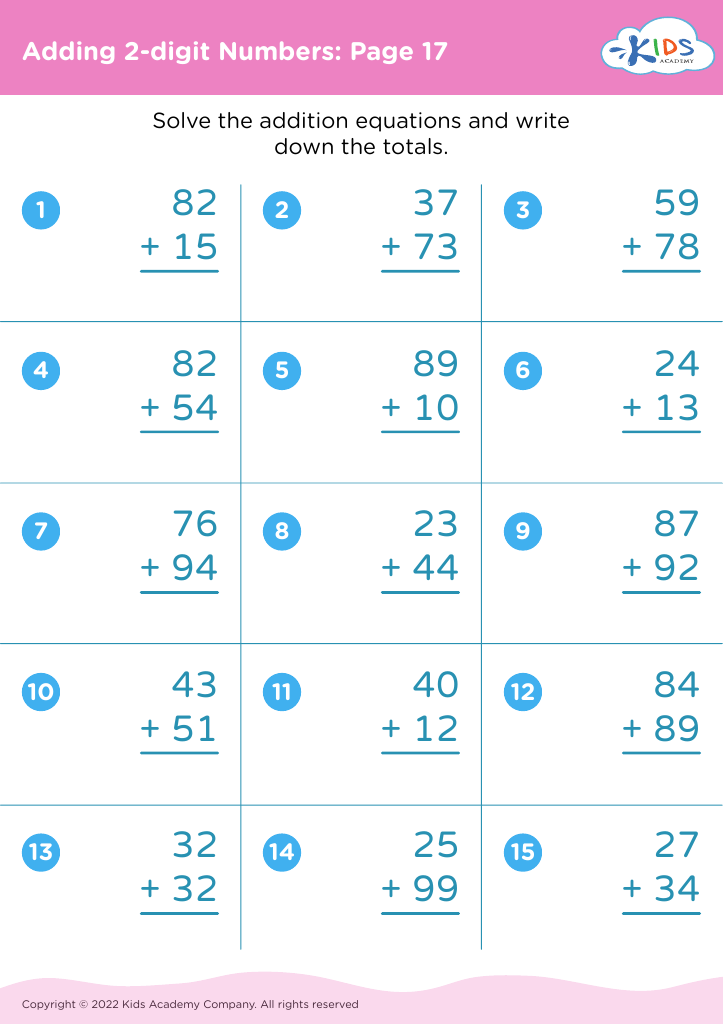
Adding 2-digit Numbers: Page 17

Adding 2-digit Numbers: Page 17

Adding 2-digit Numbers: Page 17
Worksheet
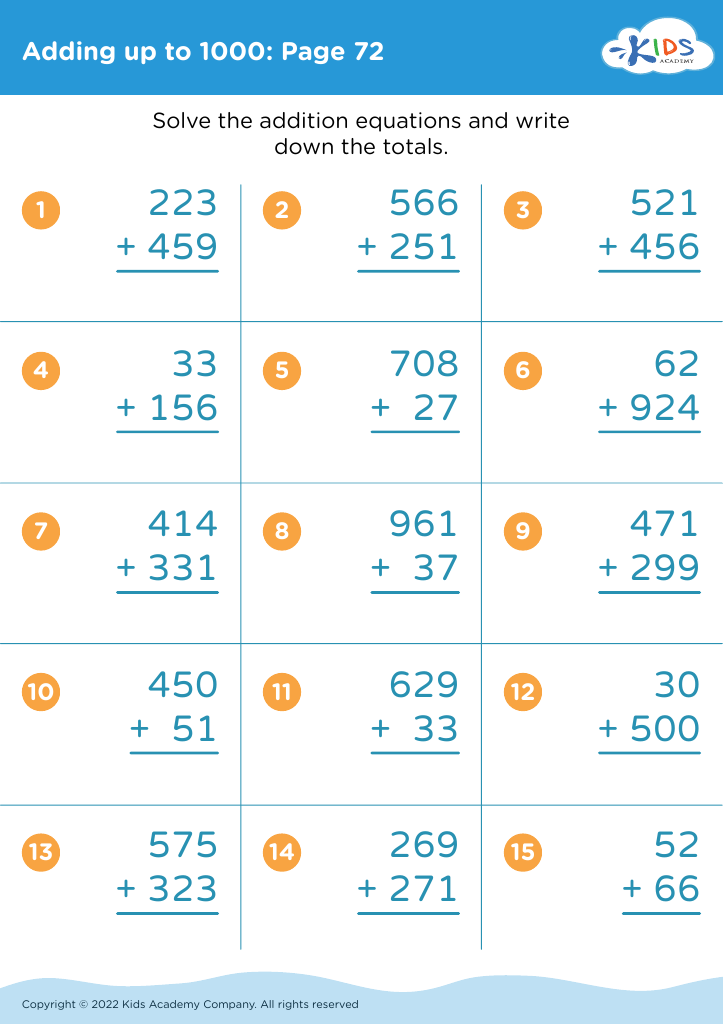
Adding up to 1000: Page 72

Adding up to 1000: Page 72

Adding up to 1000: Page 72
Worksheet
Adding up to 100: Page 41

Adding up to 100: Page 41

Adding up to 100: Page 41
Worksheet
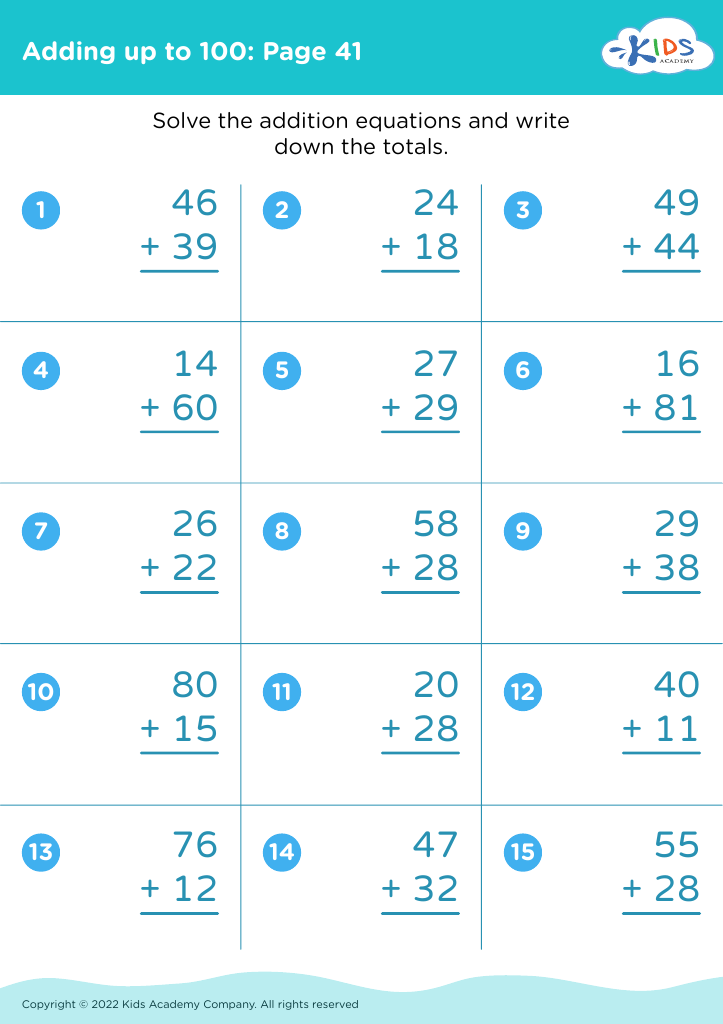
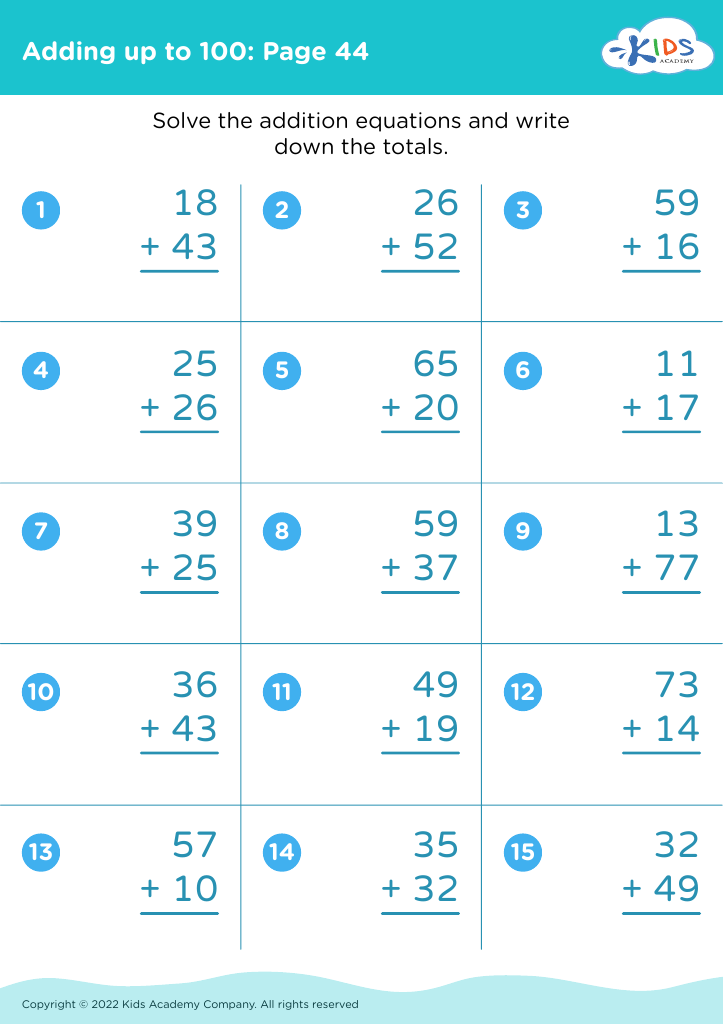
Adding up to 100: Page 44

Adding up to 100: Page 44

Adding up to 100: Page 44
Worksheet


Recognizing patterns in addition for children aged 5-8 is essential because it builds a strong mathematical foundation, helping them develop critical thinking and problem-solving skills. When children identify and understand patterns, they can predict outcomes, identify relationships, and simplify complex problems, which are key competencies in mathematics and everyday life.

For parents and teachers, fostering this skill early on helps children transition smoother through different math concepts. For example, recognizing that adding 1 to a number always increases it by 1 helps children understand the incremental nature of numbers. Additionally, seeing patterns in addition, such as pairs of numbers that sum to 10, reinforces number sense and mental arithmetic, making future math learning more intuitive and less intimidating.

Moreover, learning to see patterns nurtures a child's ability to think logically and identify sequences, which are useful skills beyond math, applicable in reading, science, and problem-solving tasks. This holistic development encourages a brighter academic journey and enhances self-confidence in a child's ability to tackle various subjects.

Support from parents and teachers in recognizing these patterns ensures that children avoid math anxiety and instead view math as an engaging and manageable subject. This support involves creating a rich learning environment with plenty of hands-on activities and encouraging curiosity and exploration in the world of numbers and patterns.