Understanding instructions Addition Worksheets for Ages 5-8
3 filtered results
-
From - To
Welcome to our "Understanding Instructions Addition Worksheets" tailored for children ages 5-8! These engaging worksheets are designed to help young learners develop essential math skills while enhancing their ability to comprehend and follow instructions. Each activity encourages children to understand and apply addition concepts in a fun, structured way. As they explore various problems, they'll strengthen their critical thinking and guide skills for interpreting directions effectively. Perfect for classrooms or home learning, these worksheets help children build a solid foundation in math while fostering independence and confidence. Start your child's journey to mastery in addition today!
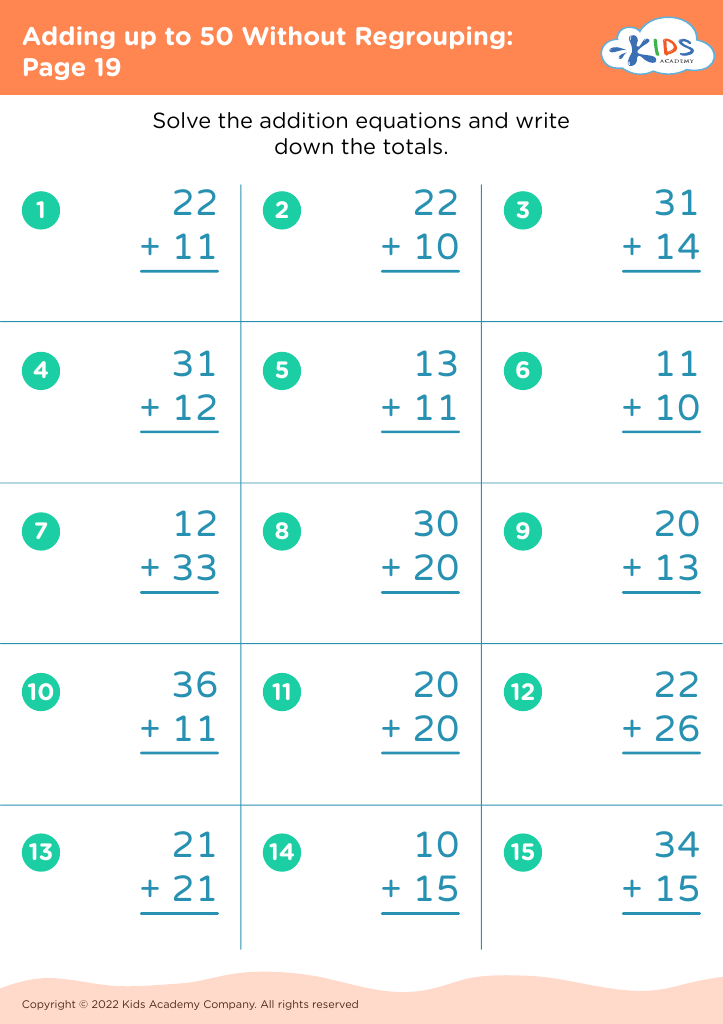
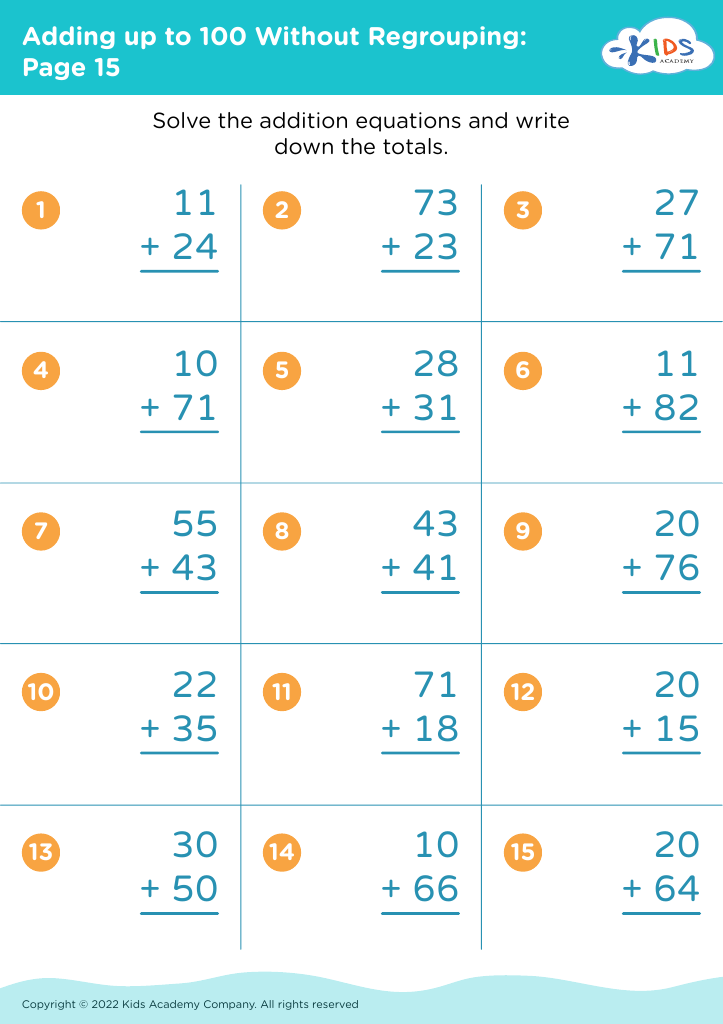
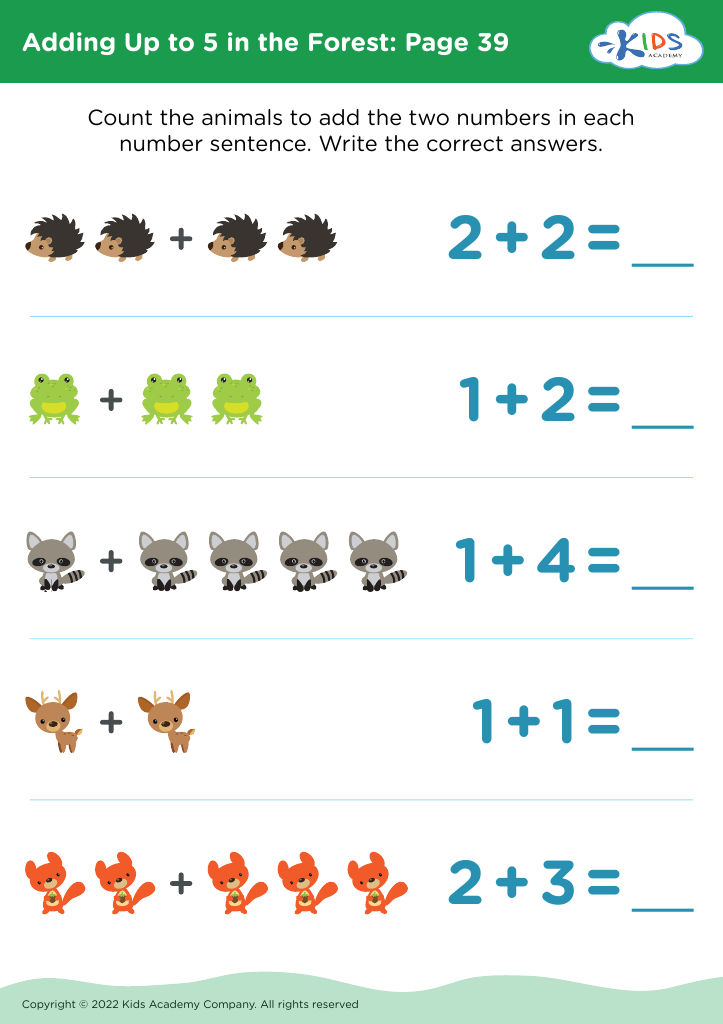








Understanding instructions for addition is crucial for children aged 5-8, as it lays the foundation for their mathematical journey. At this developmental stage, children transition from counting tangible objects to grasping abstract numerical concepts. By comprehending instructions in addition, children develop essential problem-solving skills and learn to follow multi-step processes that are vital throughout their education.
Parents and teachers play an instrumental role in fostering these skills. Engaging with children in activities that involve verbal or written instructions promotes not merely mathematical proficiency but also critical thinking and attention to detail. Encouraging kids to repeat back instructions ensures they understand the task at hand, fostering self-confidence and independence in their learning.
Furthermore, when children can effectively follow addition instructions, they feel a sense of achievement, which positively influences their attitude towards mathematics and learning in general. This foundational comprehension builds resilience, as they learn to tackle challenging problems and errors as part of the learning process.
Ultimately, clear instructional understanding in addition enables meaningful engagement with mathematics, encourages collaborative learning, and prepares children for more complex concepts in the future. Strong foundational skills in this area can secure lifelong learning, fostering both academic success and a love for knowledge.








