Understanding number sequences Addition Worksheets for Ages 5-8
3 filtered results
-
From - To
Unlock the world of numbers for young learners with our "Understanding Number Sequences: Addition Worksheets for Ages 5-8". Designed to make learning fun and interactive, these worksheets help children develop essential addition skills through engaging number sequences. Ideal for kindergarten to 2nd grade, each worksheet encourages mathematical thinking by guiding children to spot patterns, predict sequences, and master basic addition. Perfect for both classroom and at-home practice, these materials lay a strong foundation in numeracy, ensuring a smooth transition to more advanced math concepts as children grow. Spark a love for math in your young learner today!
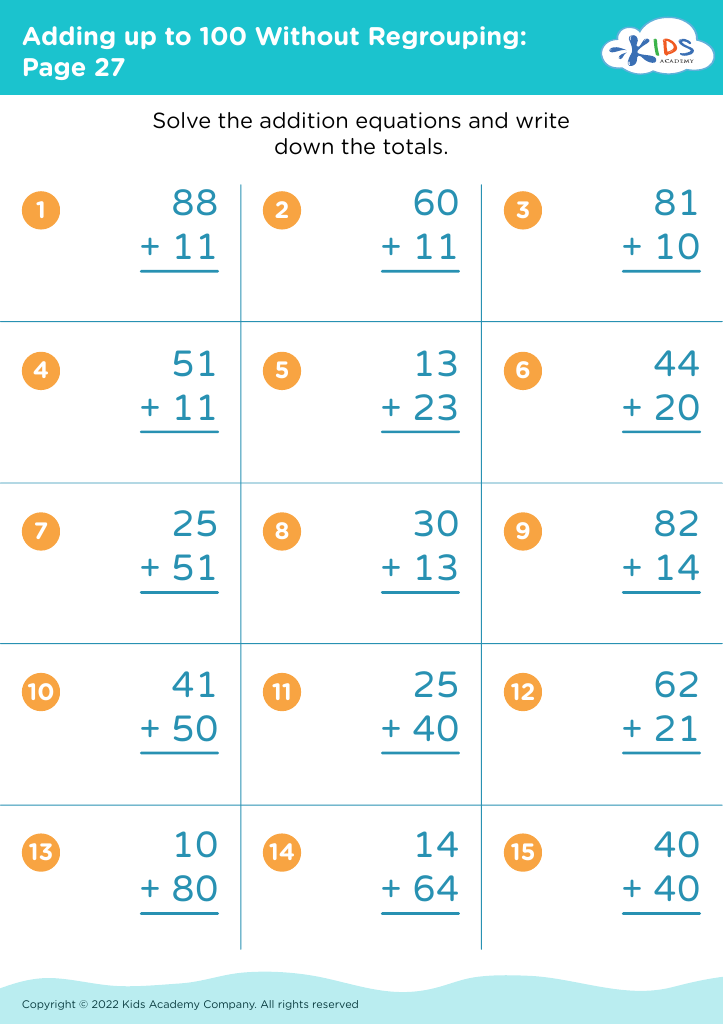
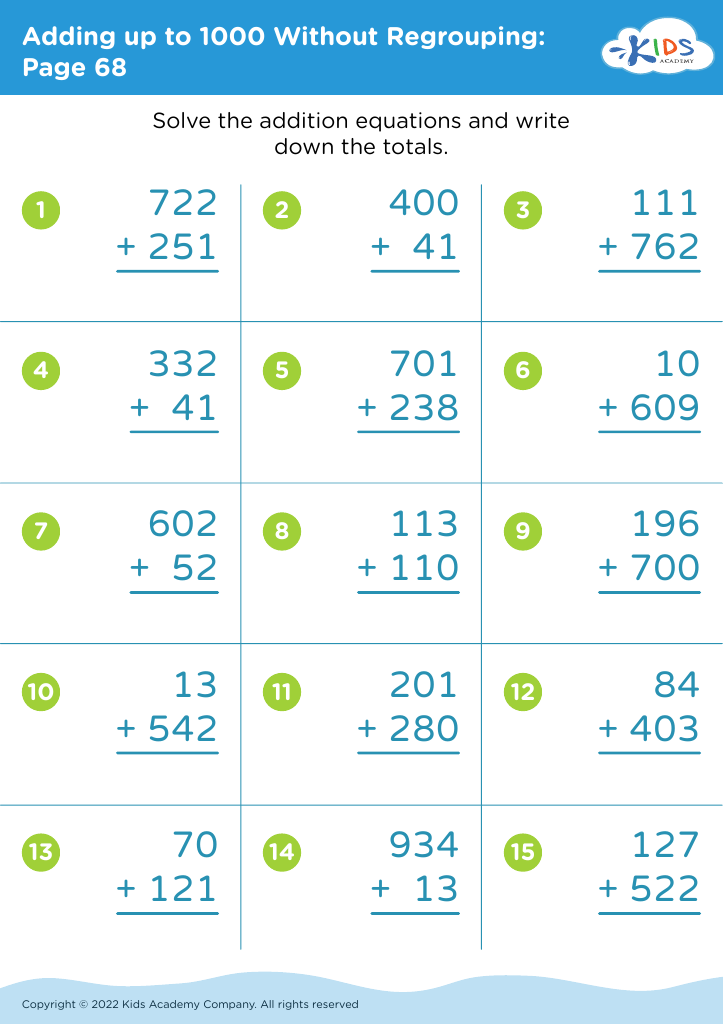
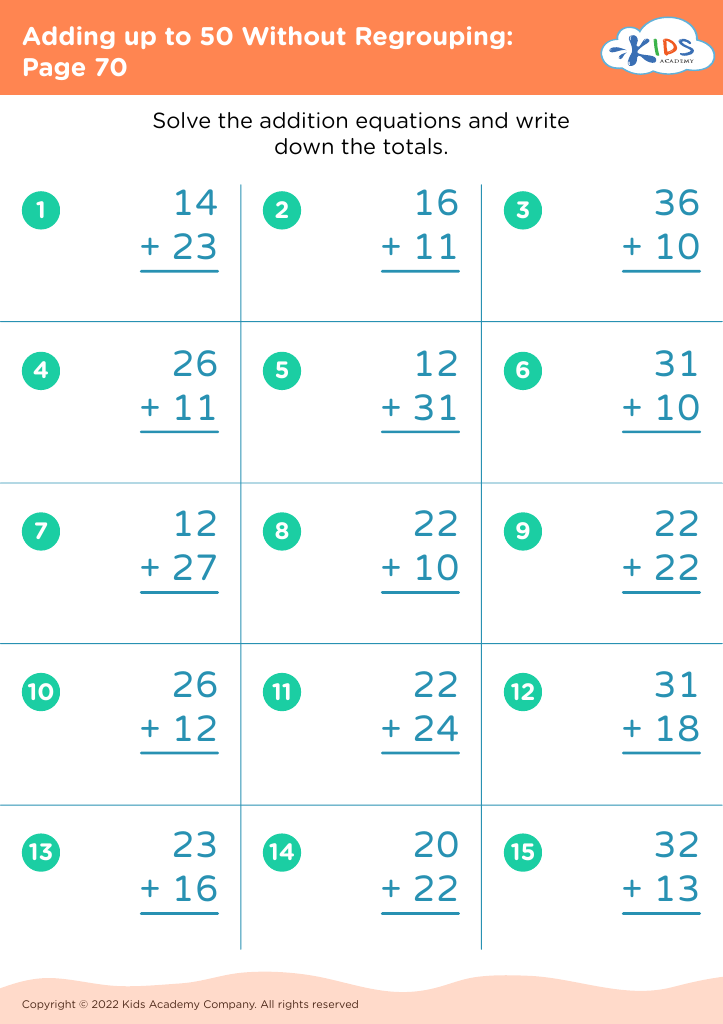








Understanding number sequences and addition for children aged 5-8 is crucial because it forms the foundation of their mathematical thinking. Number sequences help children recognize patterns, which is a fundamental skill not just in math, but in everyday problem-solving and logical reasoning. By identifying and creating number sequences, kids begin to understand the concept of order, which is fundamental in learning more advanced math skills.
Addition, on the other hand, introduces children to the concept of putting together and counting quantities. This basic arithmetic operation is essential for their academic progress, as it is necessary for tackling more complex math problems in later years. Mastering addition boosts their confidence in mathematics and encourages a positive attitude towards learning.
Moreover, understanding number sequences and addition enhances cognitive development. It helps improve memory, attention to detail, and the ability to think critically. It also aids in developing fine motor skills when children write out sequences or use objects to physically add numbers.
Engaging children in these mathematical concepts at an early age prepares them for future education. It promotes a hands-on and visual way of learning that can make math enjoyable and interesting, laying a solid groundwork for their scholastic success and everyday life skills.








