Understanding patterns Addition Worksheets for Ages 5-8 - Page 2
29 filtered results
-
From - To
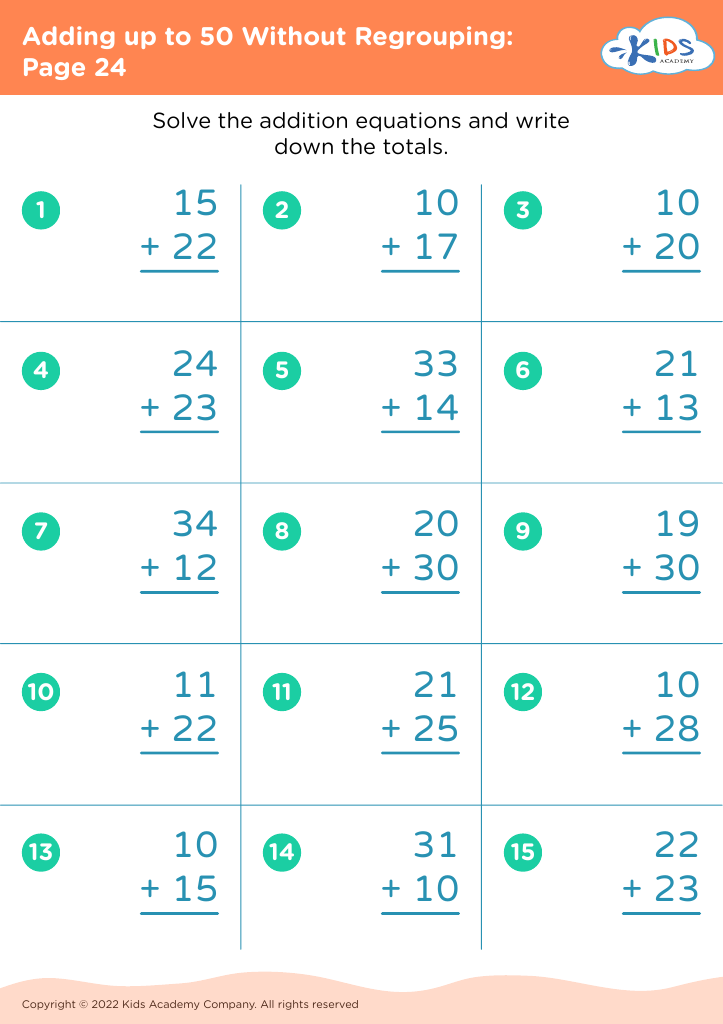
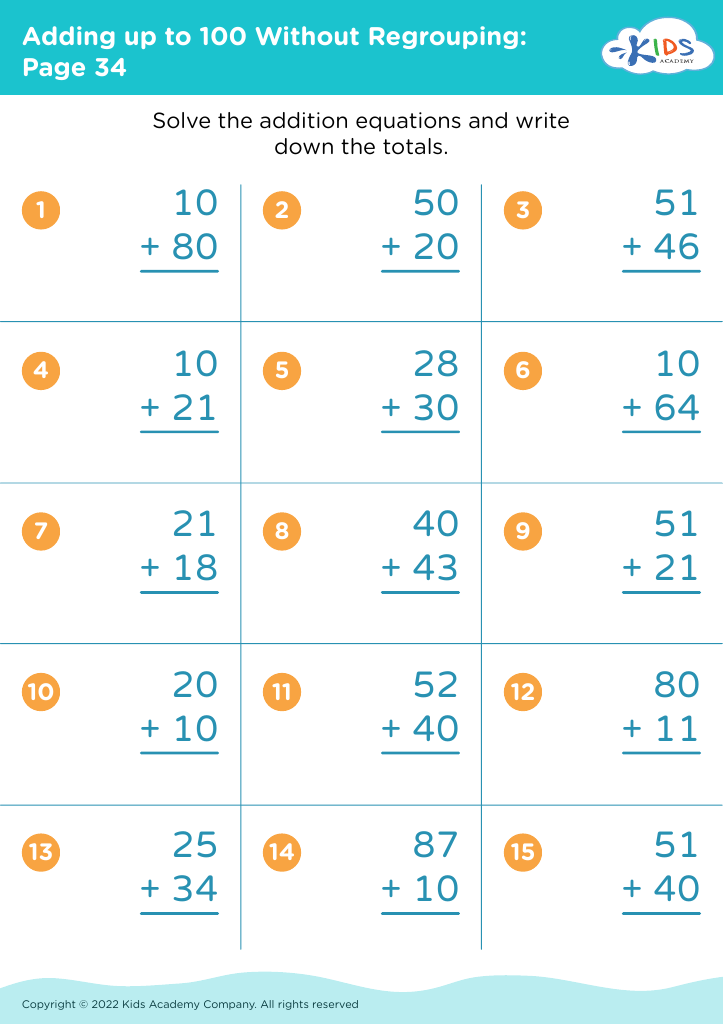
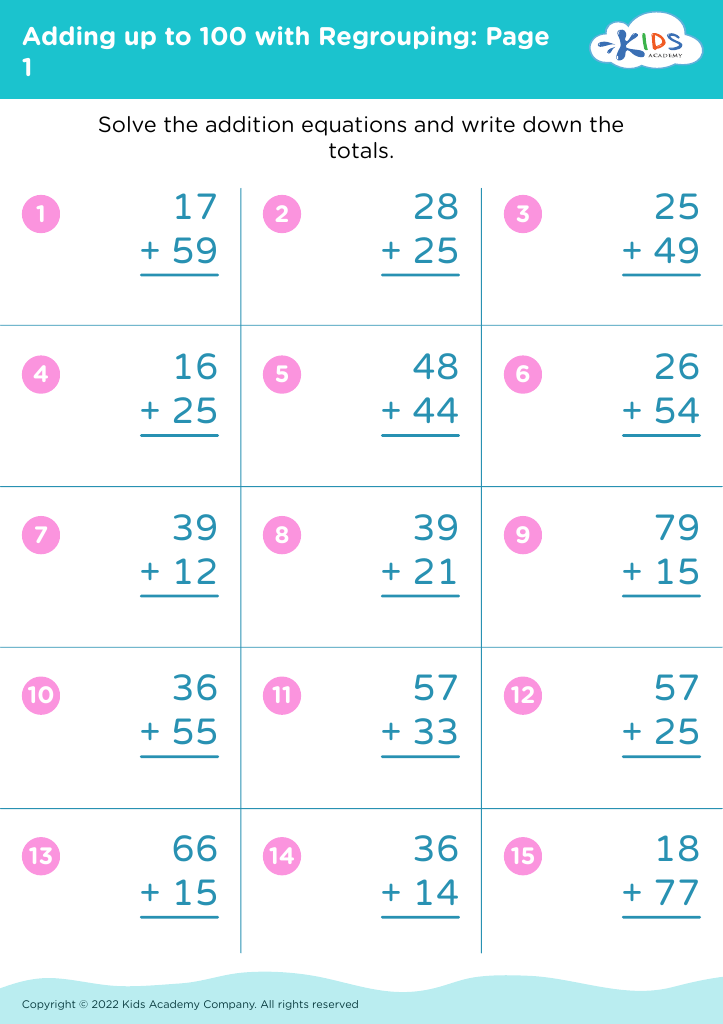
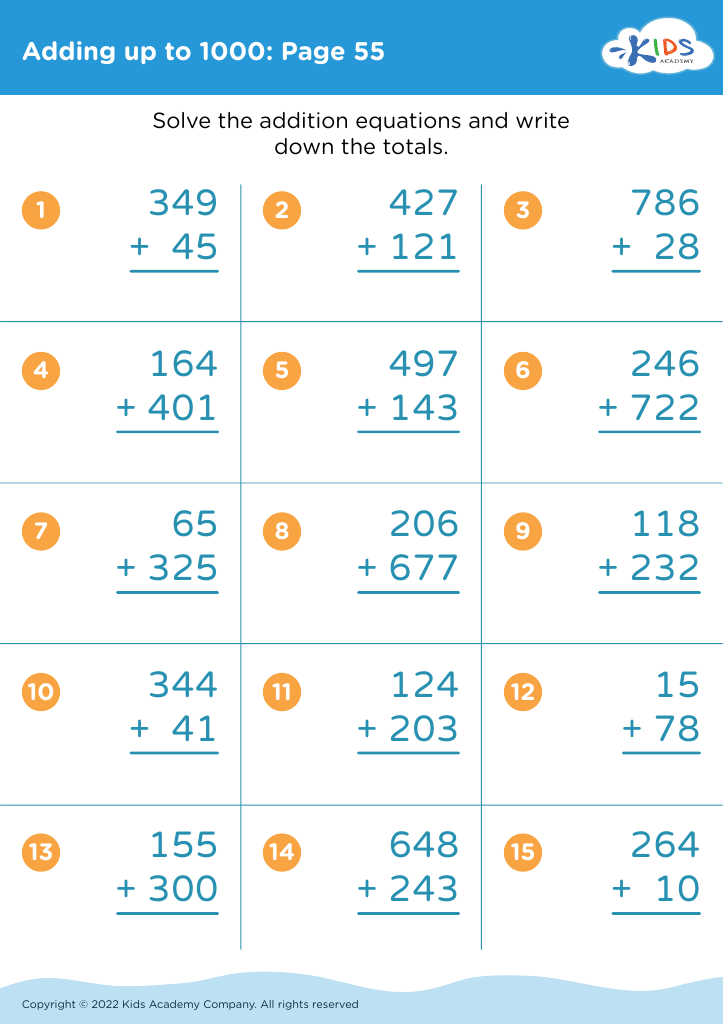
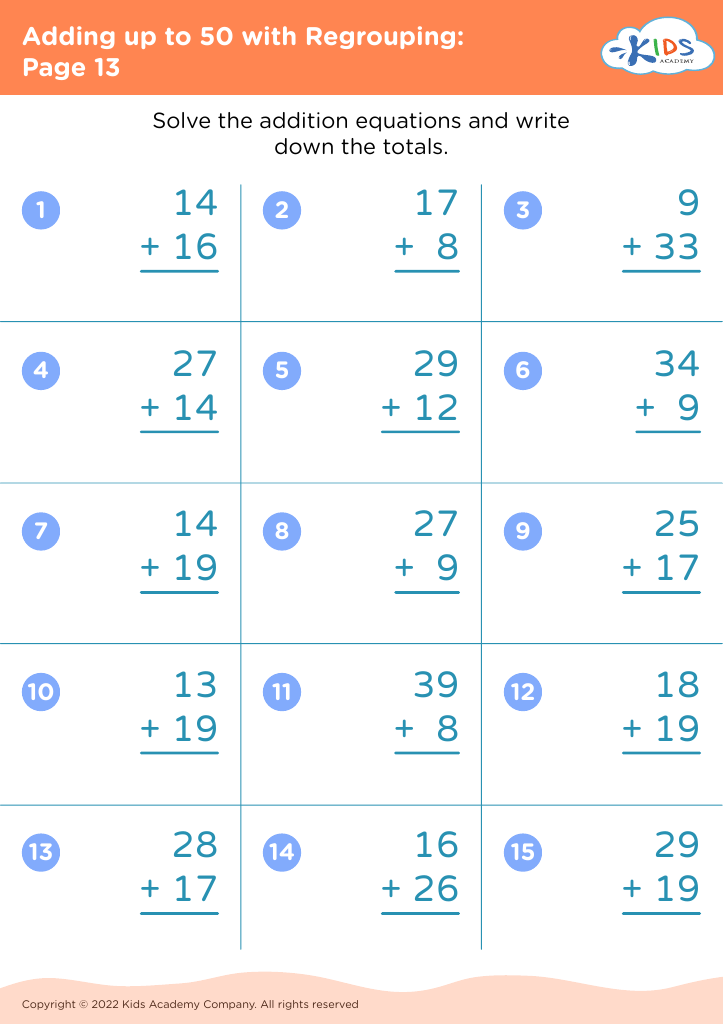








Understanding patterns in addition is crucial for children aged 5-8 as it lays a solid mathematical foundation. Recognizing patterns helps young learners identify relationships between numbers, promoting a deeper understanding of addition rather than mere rote memorization. By exploring patterns, children can develop critical thinking skills, enhancing their ability to solve problems creatively.
Parents and teachers should prioritize pattern recognition in addition because it supports basic math skills essential for later learning. For example, recognizing that adding two even numbers always yields an even sum encourages students to predict outcomes and reinforces their comprehension of number properties. This knowledge can lead to greater confidence in math, reducing anxiety and fostering enthusiasm for learning.
Furthermore, incorporating patterns into lessons engages children more actively, making math enjoyable and relatable. Games and interactive activities centered around pattern recognition can boost motivation and retention, making the learning process more dynamic.
Ultimately, a strong grasp of patterns in addition not only helps establish a foundation for complex mathematical concepts but also nurtures a love for learning and exploration in young children, making it essential for parents and educators to support.








