Underwater animal identification Addition Worksheets for Ages 5-8
3 filtered results
-
From - To
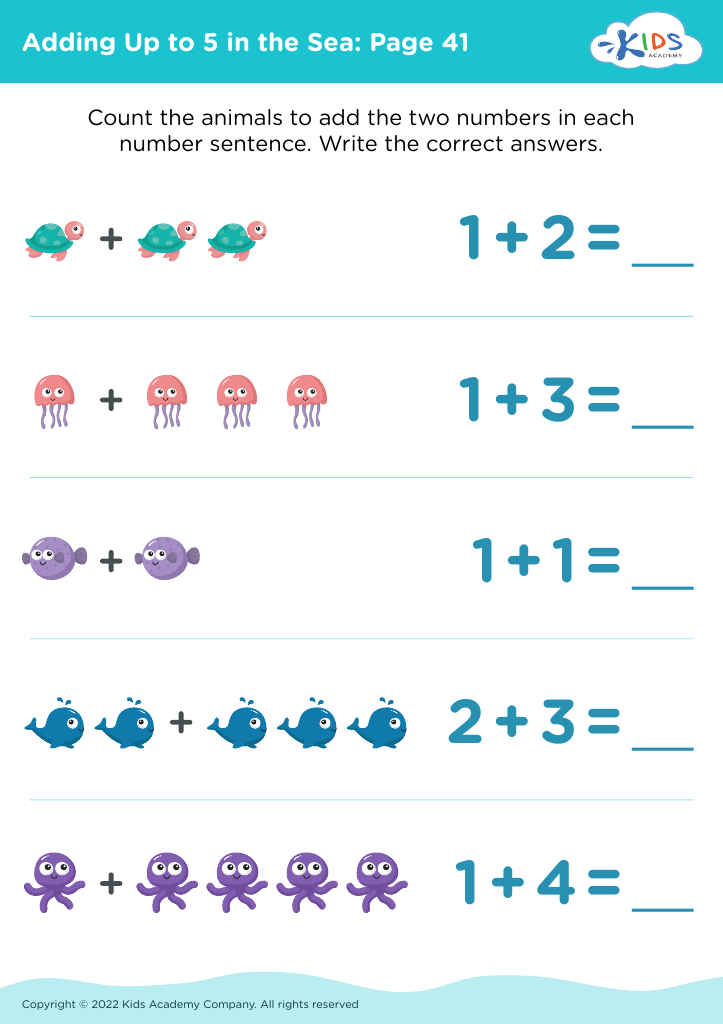
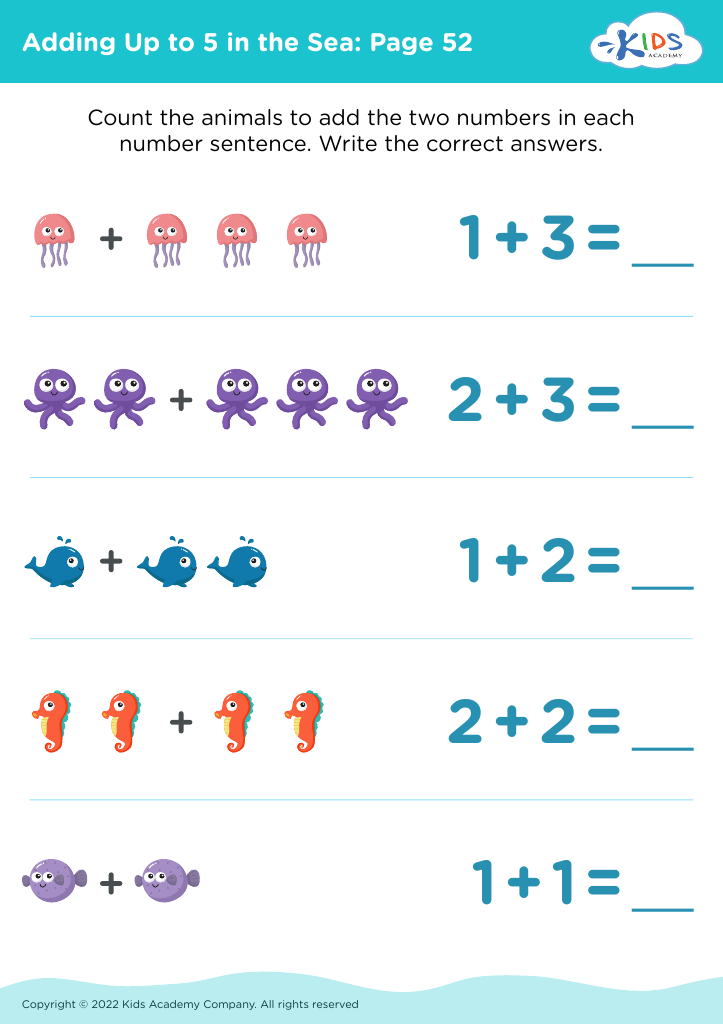
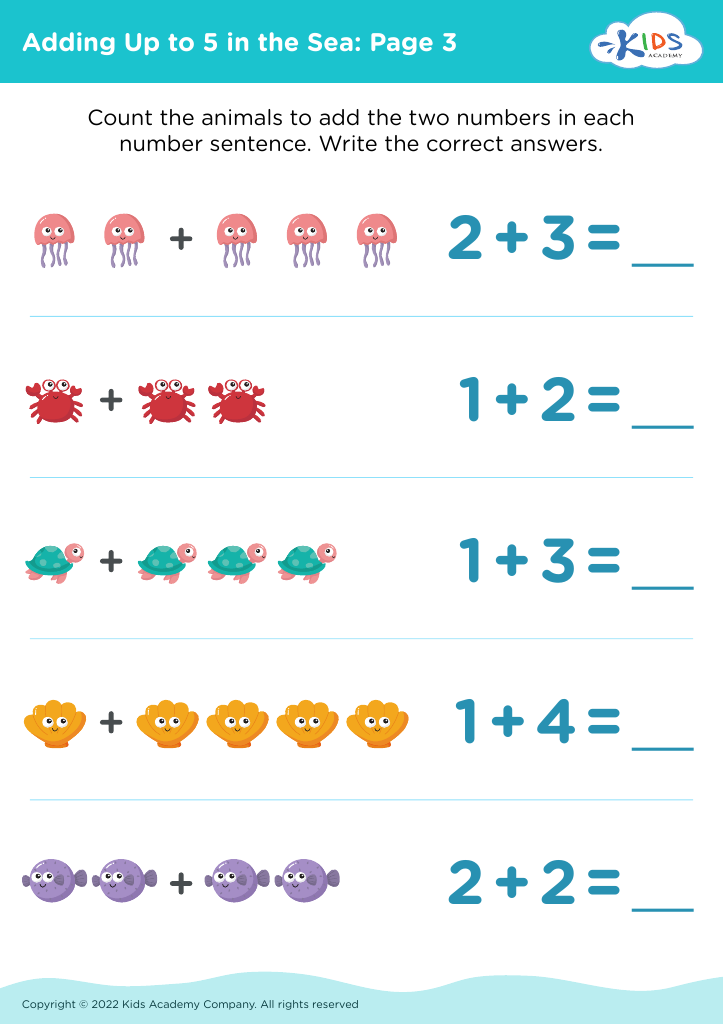
Dive into learning with our "Underwater Animal Identification Addition Worksheets for Ages 5-8"! Combining math and marine life, these worksheets make addition practice exciting and educational. Young learners will add numbers while identifying fascinating underwater creatures, enhancing both their math and observation skills. Perfectly designed for kids aged 5-8, these worksheets offer an engaging way to build foundational math skills while exploring the ocean's wonders. Parents and teachers alike will appreciate the fun, interactive approach to learning. Turn addition practice into an underwater adventure and watch your child’s skills grow with each page! Explore today and make learning a splash!








Underwater animal identification is a fascinating and educational activity for children ages 5-8, blending science, environmental awareness, and cognitive development. At this age, children are naturally curious, and learning about underwater animals leverages their intrinsic interest in nature. Identifying sea creatures helps build observation skills and attention to detail, as kids distinguish features of fish, mollusks, and other marine life.
This educational exercise fosters a sense of wonder and respect for the environment, instilling early conservation values. Understanding biodiversity and the roles different animals play in their ecosystems can cultivate a sense of responsibility to protect the planet and its resources from a young age.
Additionally, incorporating underwater animal identification into learning supports cross-disciplinary knowledge. It opens up opportunities to discuss biological concepts, such as ecosystems and food chains, while also touching on geographical concepts by identifying oceans and seas where these animals live. Math skills are subtly reinforced when counting, classifying, or even measuring various creatures, thereby enhancing numerical literacy through applied learning.
Emotionally, exploring underwater animals can be incredibly fulfilling, boosting confidence and independence as children master new skills. For educators and parents, facilitating these activities strengthens bonds with children through shared experiences, all while laying a solid foundation for lifelong learning and environmental stewardship.








