
Visual-motor skills Addition Worksheets for Ages 5-8
4 filtered results
Difficulty Level
Grade
Age
-
From - To
Subject
Activity
Standards
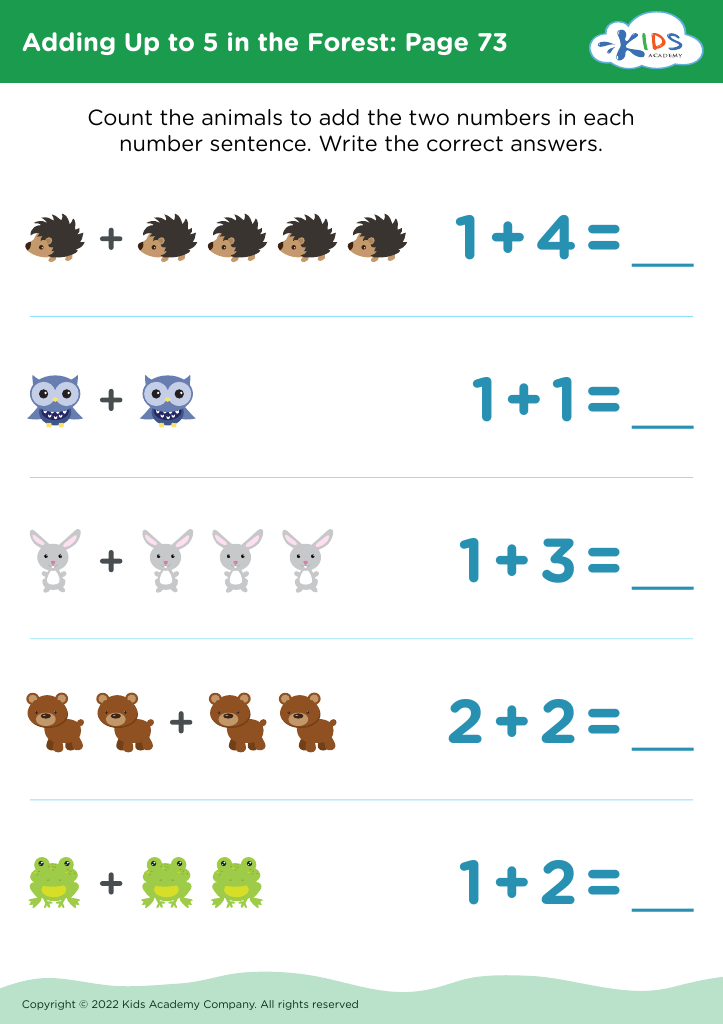
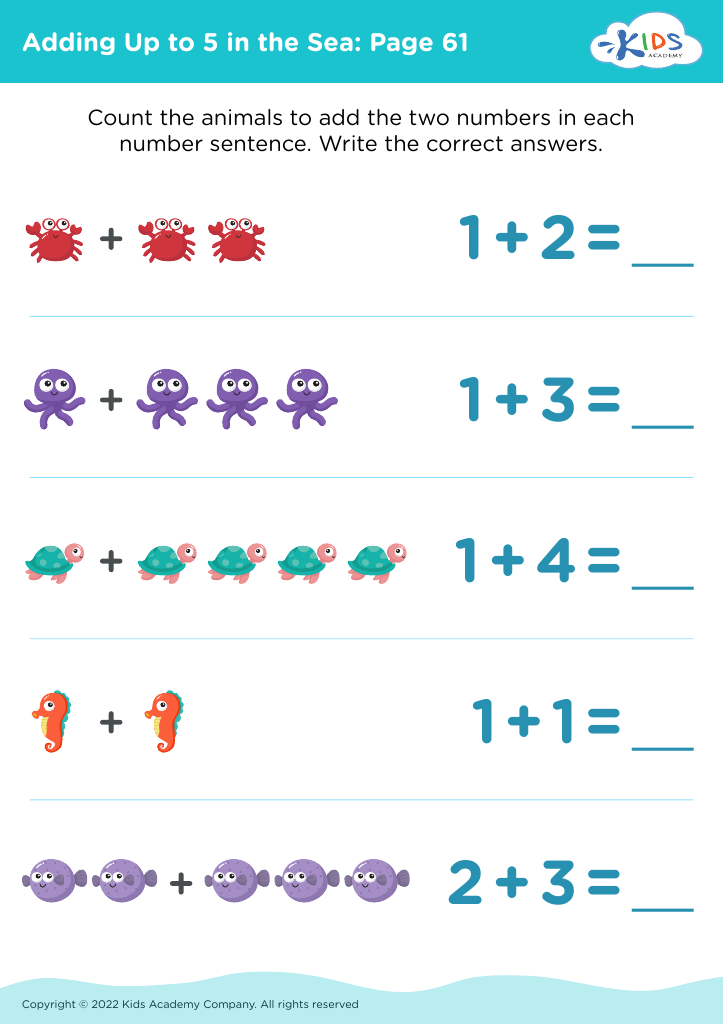
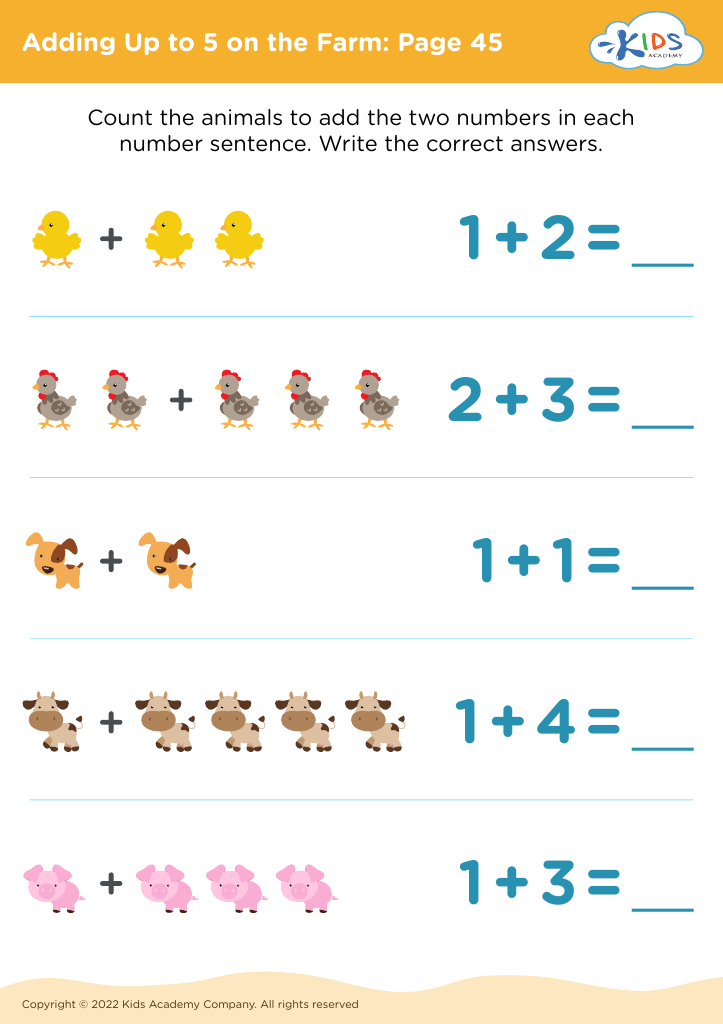
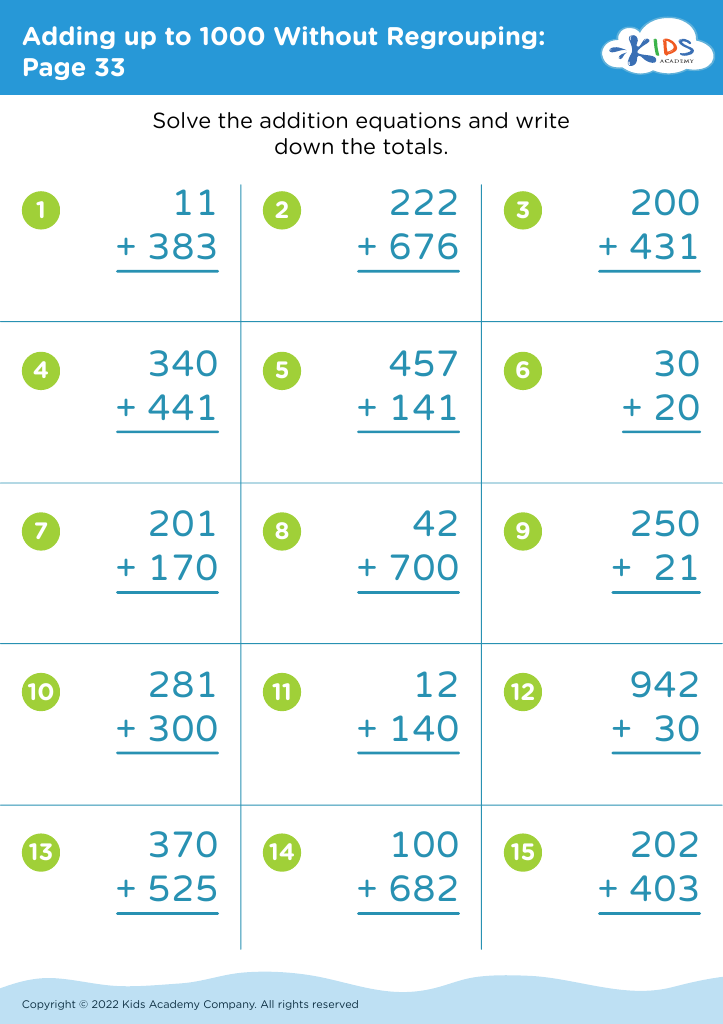
Enhance your child's visual-motor skills while mastering addition with our engaging worksheets designed for ages 5-8! These meticulously crafted activities combine fun visuals and interactive tasks to strengthen hand-eye coordination and fine motor abilities. Each worksheet promotes essential skills such as number recognition and counting, aiding in your child's mathematical development. Perfectly designed for young learners, our resources make learning enjoyable and effective. Watch as your child gains confidence in their addition skills while developing vital visual-motor connections. Download these worksheets today and provide your child with a balanced blend of education and play that will support their early learning journey!
Favorites
With answer key
Interactive
Join Kids Academy for Free
Who is primarily going to use this learning content?








Parents and teachers should prioritize the development of visual-motor skills for children ages 5-8 because these skills are foundational for academic and everyday success. Visual-motor skills involve the coordination of visual input with fine motor actions, which is crucial for tasks such as writing, drawing, and participating in sports. At this developmental stage, children are learning to translate what they see into physical actions, facilitating their ability to perform school tasks effectively.
Good visual-motor skills support literacy by enabling children to match letters and words visually while writing. They are also essential for self-expression through art activities, which enhance creativity and fine motor coordination. As children engage in tasks that require these skills, they build confidence and independence, contributing to their overall emotional and social development.
Furthermore, difficulties in visual-motor coordination can lead to frustration and disengagement from learning. By fostering these skills early on, parents and teachers can help children avoid potential academic challenges, encourage positive school experiences, and promote lifelong learning abilities. Investing in visual-motor skill mastery ultimately sets the stage for children’s success in various aspects of life, from academic performance to physical participation.








