
Visual perception improvement Addition Worksheets for Ages 5-8
7 filtered results
Difficulty Level
Grade
Age
-
From - To
Subject
Activity
Standards
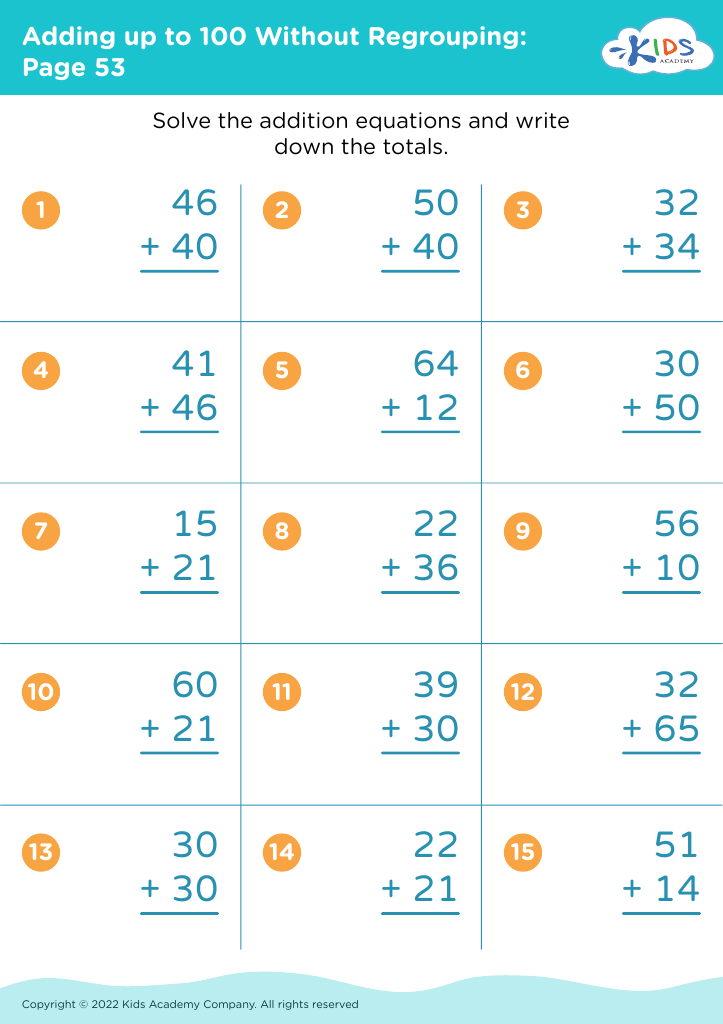
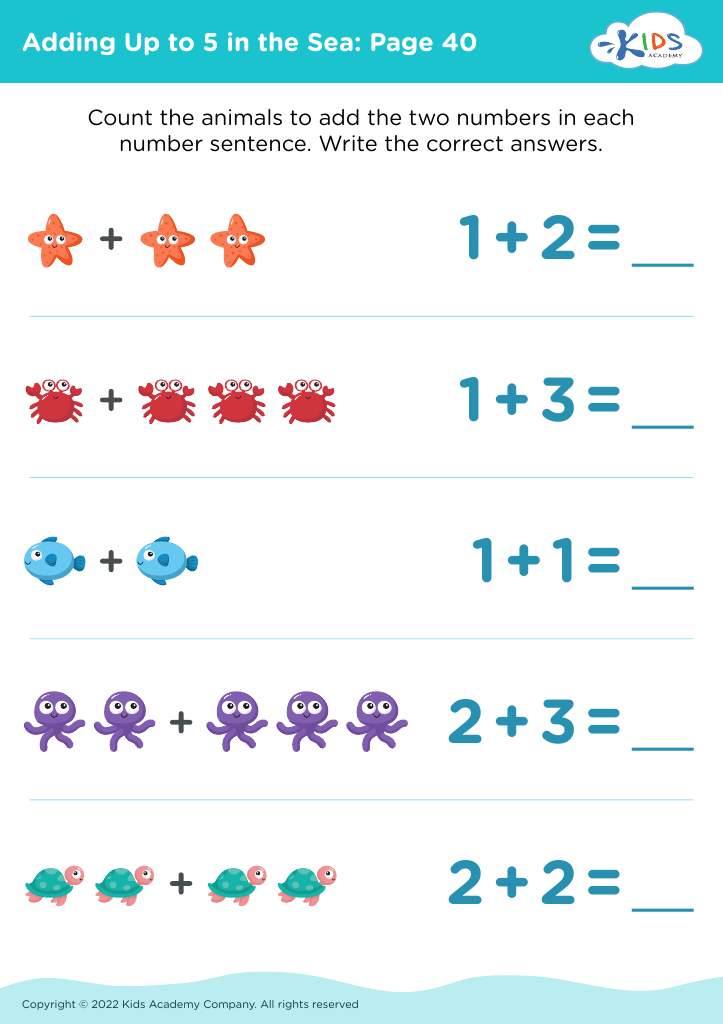
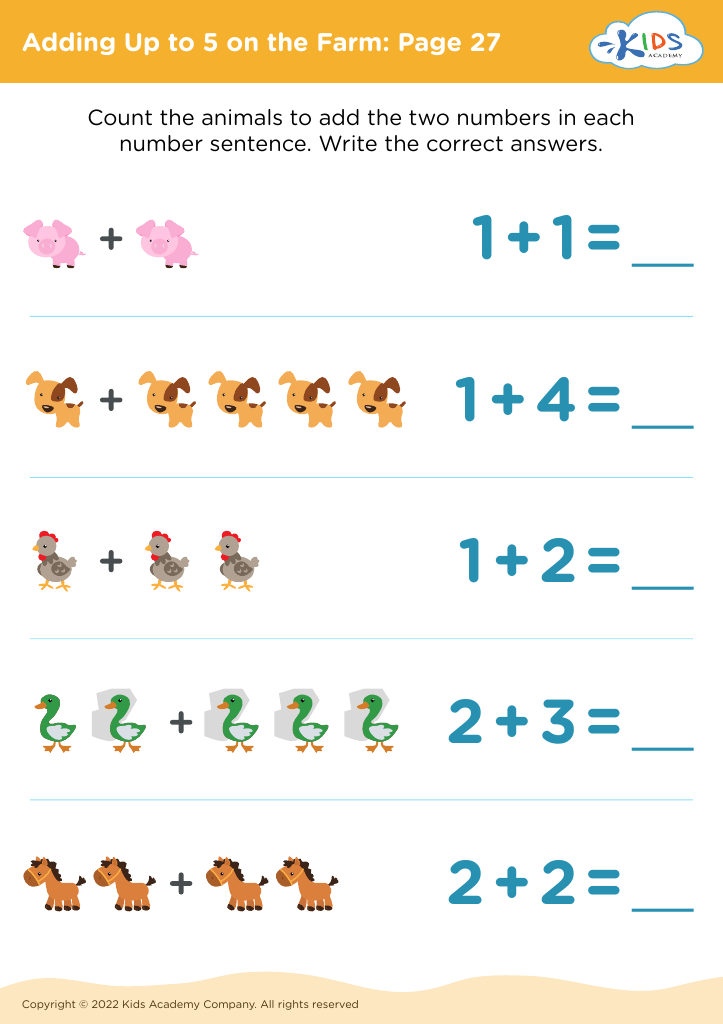
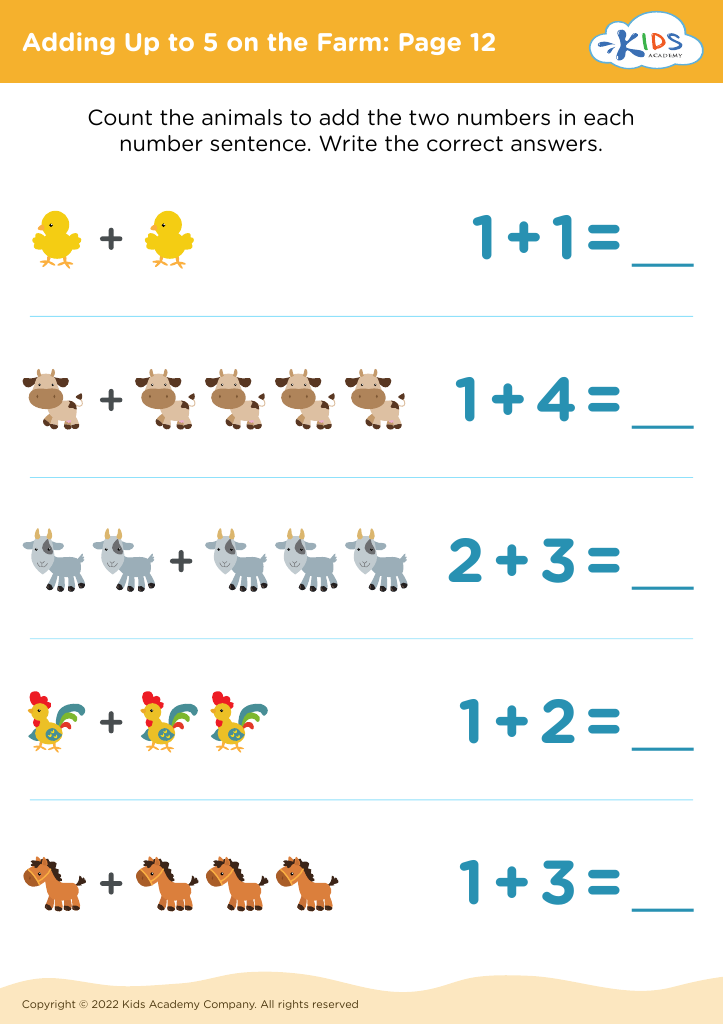
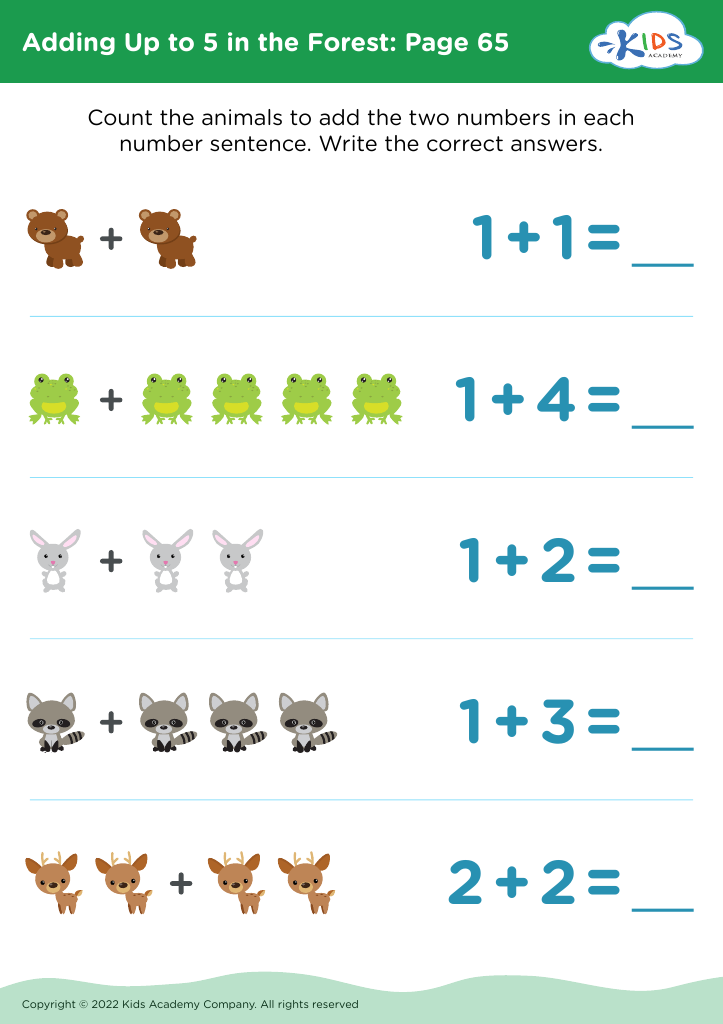
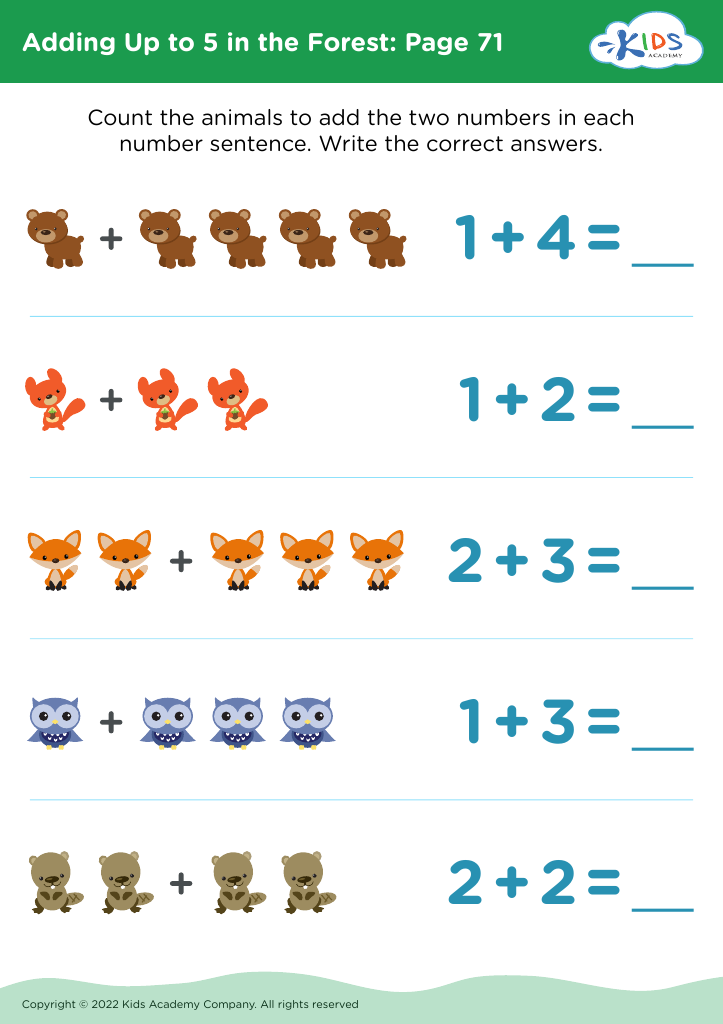
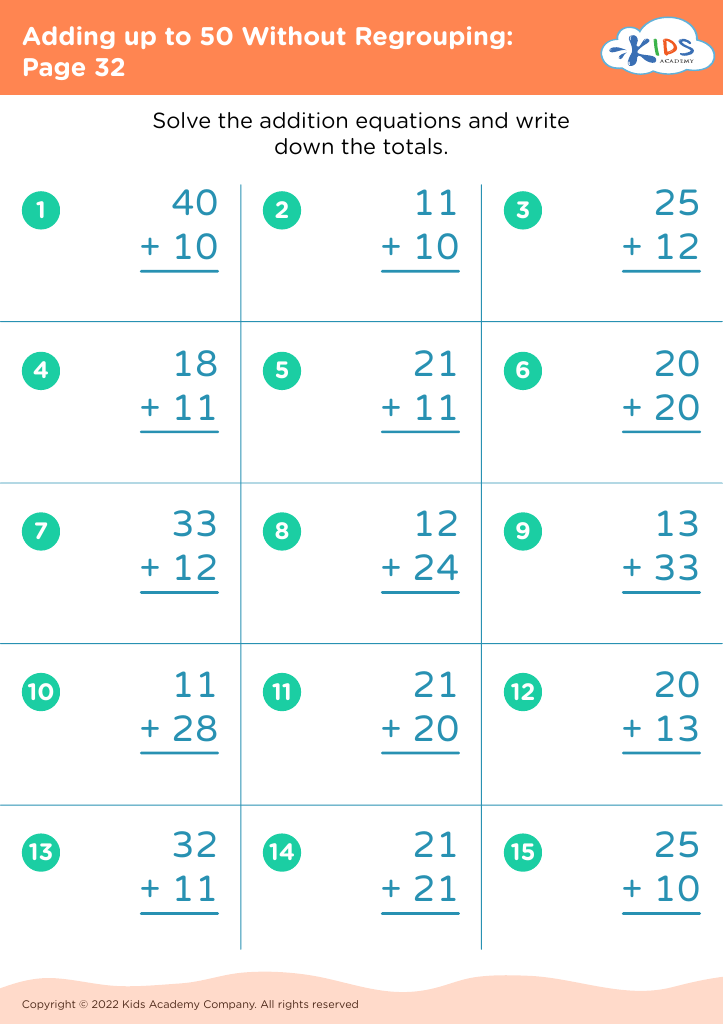
Unlock your child's mathematical potential with our "Visual Perception Improvement Addition Worksheets" designed for ages 5-8. These engaging worksheets help children enhance their visual perception skills while mastering addition concepts. Featuring vibrant illustrations and interactive exercises, each worksheet encourages kids to recognize patterns, differentiate shapes, and develop spatial awareness—all essential skills for mathematical proficiency. Tailored to foster a love for learning, our resources blend fun and education seamlessly. Ideal for both classroom and home use, these worksheets provide children with the confidence they need to excel in addition while honing their visual perception abilities. Explore the world of numbers today!
Favorites
With answer key
Interactive
Join Kids Academy for Free
Who is primarily going to use this learning content?








Visual perception is a vital skill for children aged 5-8, significantly impacting their learning and everyday activities. For parents and teachers, nurturing this skill is crucial for several reasons. Firstly, visual perception encompasses the ability to interpret and make sense of visual information, which is foundational for tasks such as reading, writing, and mathematical problem-solving. As children become proficient in recognizing shapes, sizes, and patterns, they develop stronger literacy and numeracy skills, setting the stage for academic success.
Moreover, improved visual perception can lead to enhanced attention and focus. Children who can organize visual information more efficiently are likelier to stay engaged in classroom activities and improve their overall learning experience. This skill also aids in social interactions, as children learn to read non-verbal cues better, fostering stronger communication with peers.
Additionally, developing visual perception can help address potential learning difficulties early on. By identifying and supporting children who may struggle in this area, parents and teachers can create a more inclusive learning environment. Overall, by caring for and actively supporting visual perception improvement, caregivers can lay a strong foundation for children's confidence, independence, and success in both academic and social realms.








