Vocabulary development Addition Worksheets for Ages 5-8
5 filtered results
-
From - To
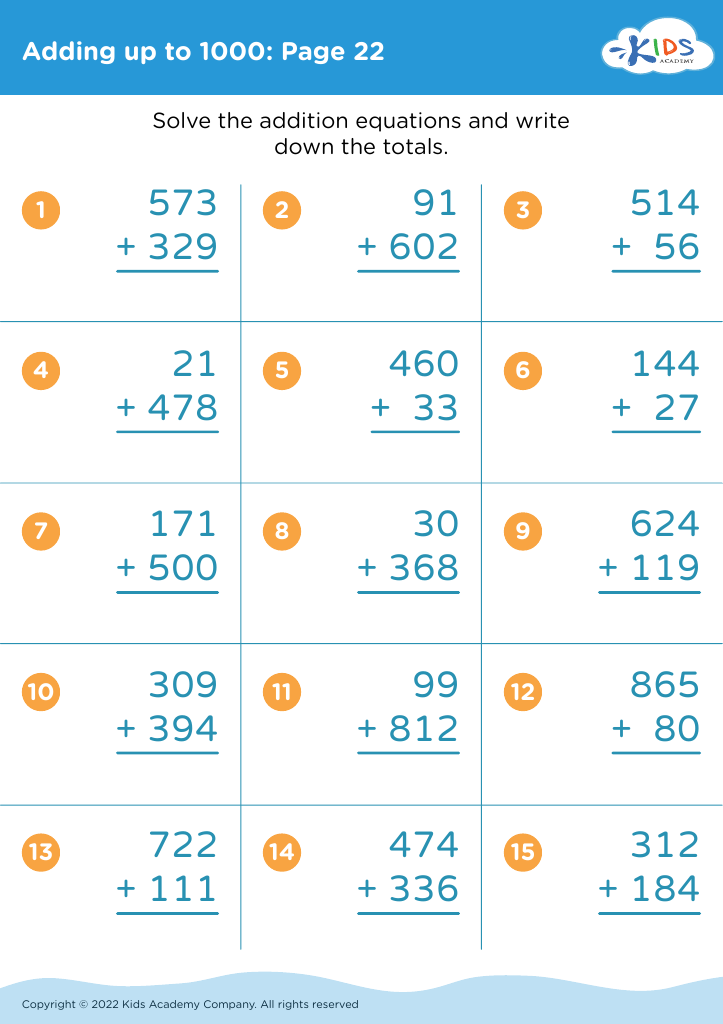
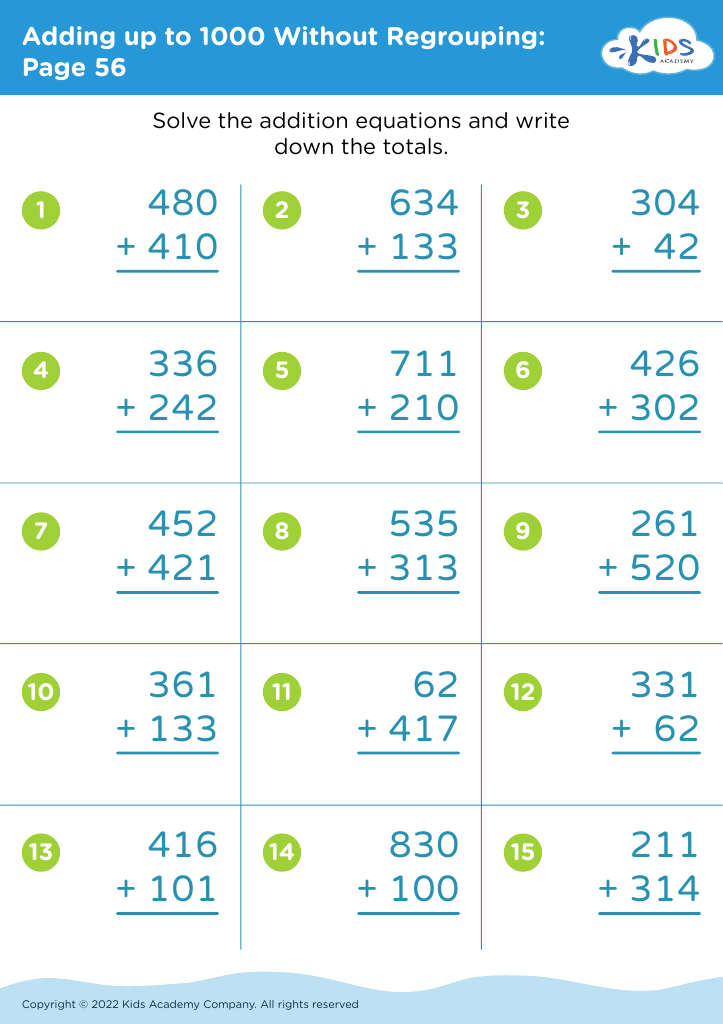
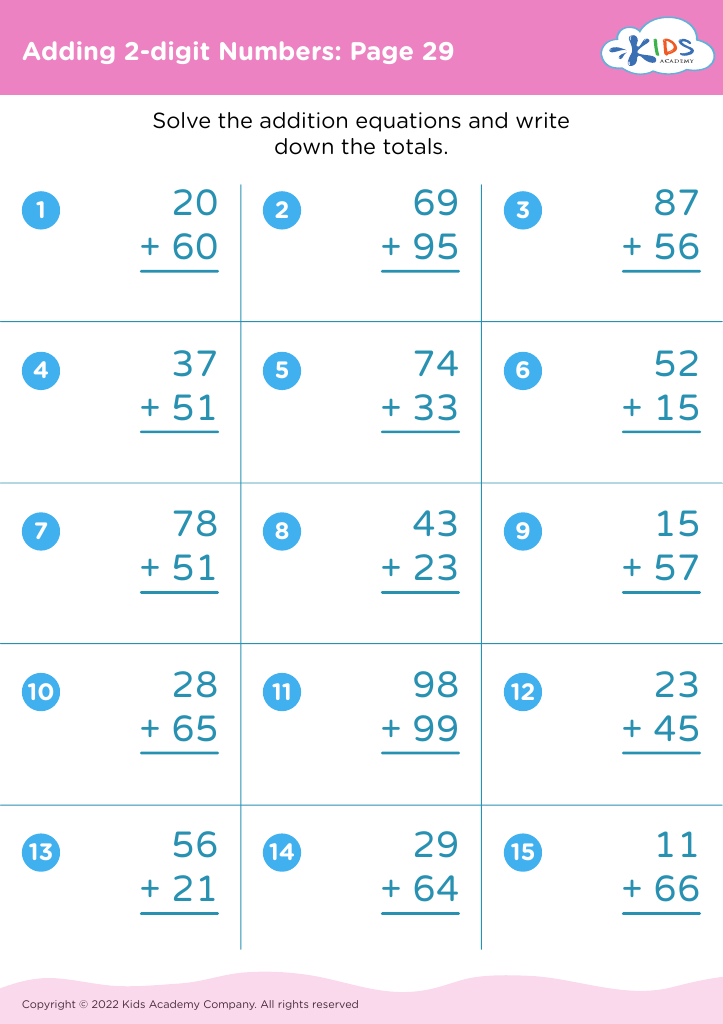
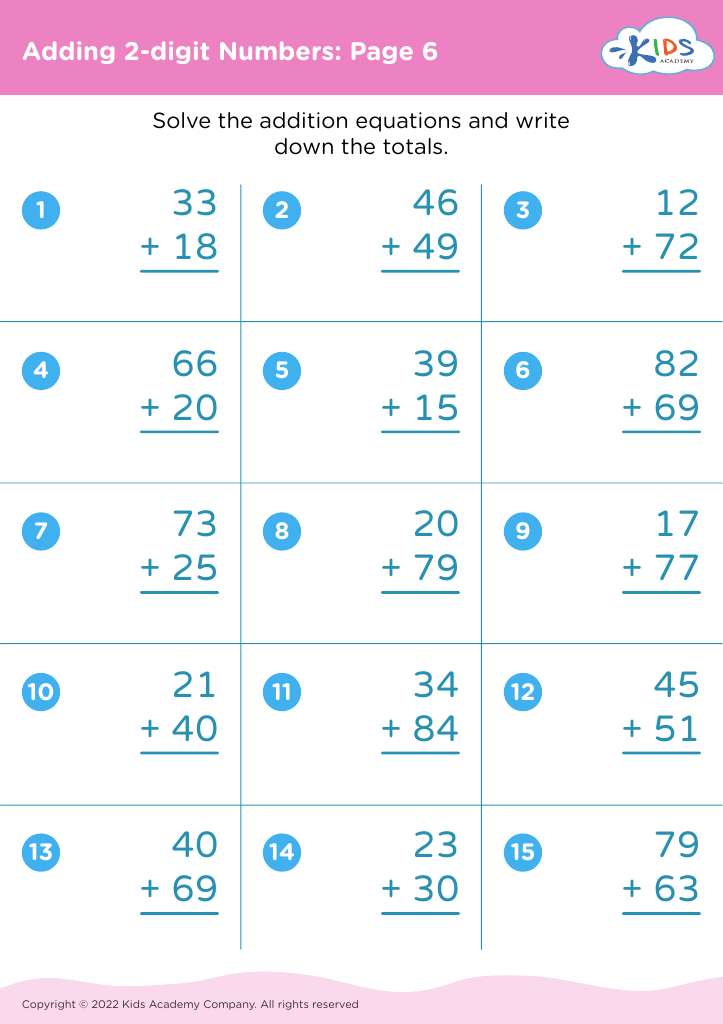
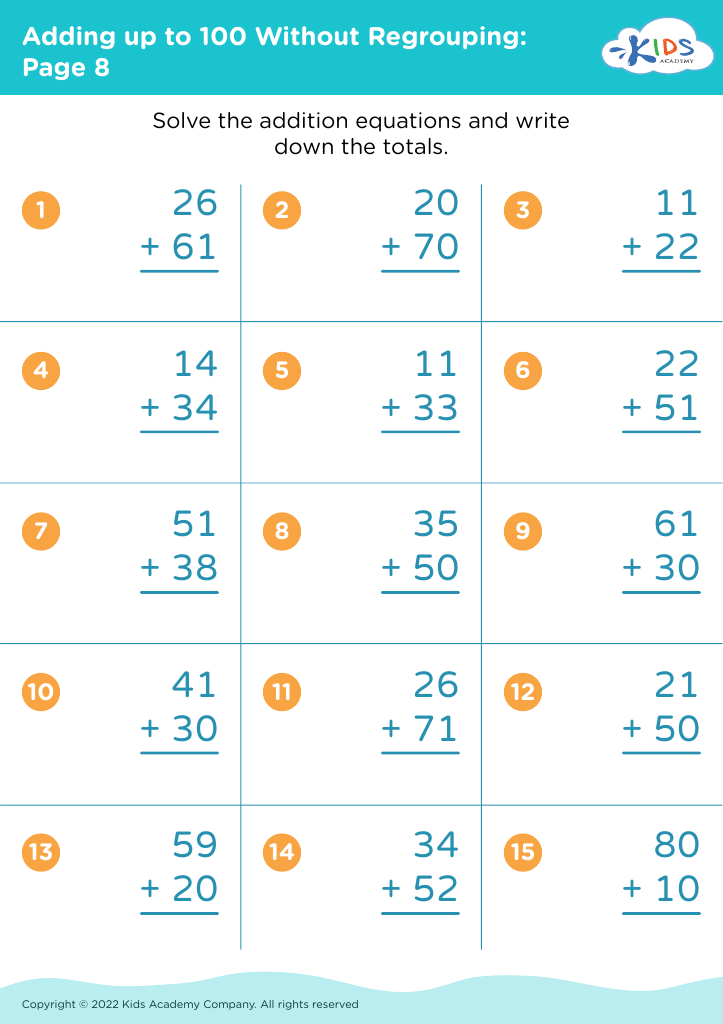
Enhance your child's math skills with our engaging vocabulary development addition worksheets, tailored for ages 5-8! These printable resources combine essential math practice with vocabulary enrichment, helping children master addition while expanding their language skills. Each worksheet is designed to reinforce concepts through fun exercises, encouraging kids to explore mathematical terms and expressions in context. Ideal for classroom use or at-home learning, our worksheets promote a deeper understanding of numbers and words, laying a strong foundation for future success. Watch your child thrive as they navigate the exciting world of addition and vocabulary development with our thoughtfully crafted materials!


.jpg)



.jpg)

Vocabulary development is crucial for children aged 5-8, as it lays the foundation for their reading, writing, and overall communication skills. At this stage, children are rapidly acquiring language and making sense of the world around them. A strong vocabulary enhances their ability to understand and engage with new concepts, fostering critical thinking and comprehension.
When parents and teachers prioritize vocabulary development, they unlock opportunities for academic success. A rich vocabulary allows children to articulate their thoughts, participate in discussions, and express emotions, leading to improved self-confidence. Understanding diverse words helps them decode texts more effectively, facilitating a love for reading which is essential for lifelong learning.
Moreover, engaging in vocabulary-building activities, such as storytelling, interactive games, and conversations, promotes a strong bond between parents, teachers, and children. It transforms learning into an enjoyable experience and cultivates curiosity.
In a world increasingly reliant on communication, equipping children with a robust vocabulary is a gift that can significantly influence their academic trajectory and social interactions. Therefore, investing in vocabulary development is an invaluable effort toward nurturing well-rounded, capable, and confident individuals who can navigate the complexities of their environment successfully.








