
Word Recognition Addition Worksheets for Ages 5-8
5 filtered results
Difficulty Level
Grade
Age
-
From - To
Subject
Activity
Standards
Our Word Recognition Addition Worksheets for ages 5-8 are specially designed to blend fun and learning for young minds. These worksheets help children master basic math skills while developing essential word recognition abilities. Each activity engages kids in solving simple addition problems paired with identifying and reading relevant words. Perfect for early learners, these interactive exercises boost confidence in math and literacy, paving the way for academic success. With engaging visuals and age-appropriate challenges, children will eagerly practice their skills. Discover a delightful way to enhance your child's educational journey with our expertly crafted worksheets.
Favorites
With answer key
Interactive
Rainy Day 17 Worksheet
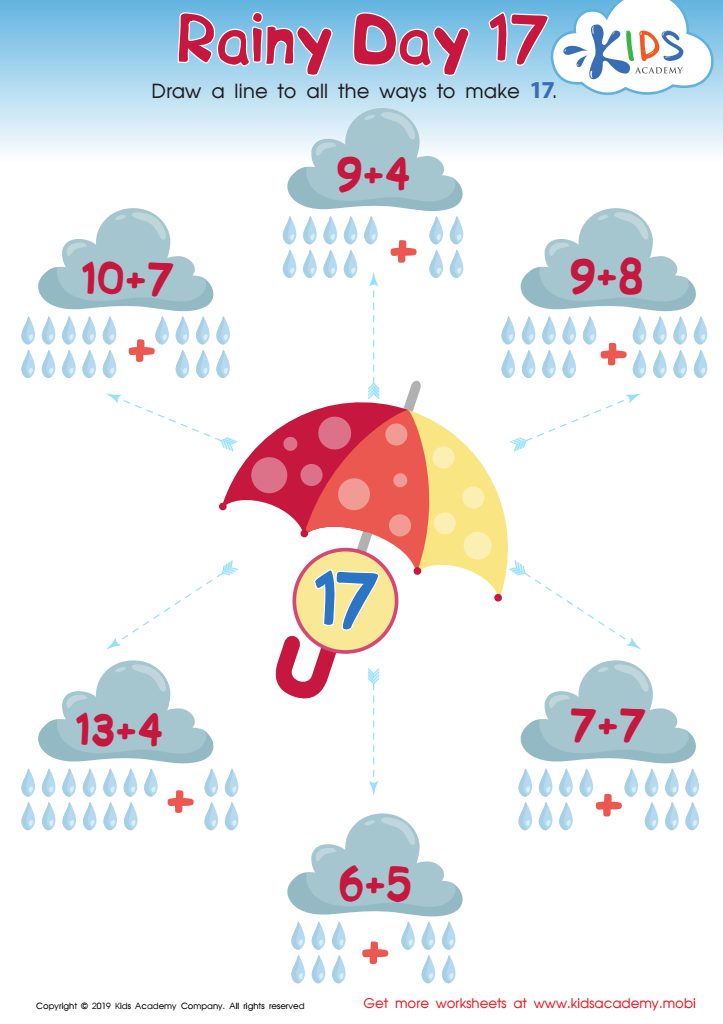
Assist your kids with the 6 equations given. Each cloud displays the sum of two numbers, some of which make 17. Guide them to figure out the total of both numbers when added and draw a line to the umbrella in the center to illustrate the different ways to make 17. This activity will sharpen their addition skills.
 Assign to My Students
Rainy Day 17 Worksheet
Worksheet
Join Kids Academy for Free
Who is primarily going to use this learning content?








Word recognition is a fundamental skill for children aged 5-8, laying the groundwork for proficient reading and overall literacy. This age range is crucial because it is when most children transition from being emergent readers to becoming independent readers, making word recognition addition a critical focus for both parents and teachers.
Children who swiftly recognize words can read more fluently and understand text with greater ease. Fluency involves accurate reading, appropriate pacing, and proper expression, all of which contribute to stronger comprehension skills. Around ages 5-8, children are expanding their vocabularies rapidly; recognizing words by sight expedites this developmental leap and encourages an enthusiasm for reading.
Furthermore, strong word recognition skills aid in decoding unfamiliar words, a vital strategy for early readers. For both parents and teachers, incorporating engaging and varied reading opportunities—such as books, games, and interactive activities—can strengthen word recognition in an enjoyable manner.
Importantly, early word recognition is not solely about language arts. It gives children the confidence to tackle written instructions and worded problems across all other subjects, fostering greater academic independence and curiosity. In a nutshell, strong word recognition skills in early childhood set the stage for lifelong learning and academic success. Attending to this area judiciously can provide children with invaluable tools that benefit them far beyond the classroom.








