Understanding Perimeter Area and Perimeter Worksheets for Ages 5-8
3 filtered results
-
From - To
Introducing our "Understanding Perimeter Area and Perimeter Worksheets for Ages 5-8"! Dive into engaging and interactive worksheets specially designed to help young learners grasp the basic concepts of area and perimeter. Perfect for kids aged 5-8, these worksheets combine fun activities with educational content to build foundational math skills. Children will explore shapes and their boundaries, learn to calculate perimeter, and understand how to measure area through innovative exercises. Ideal for classroom use or at-home practice, these resources make learning math enjoyable and effective. Boost your child’s confidence and proficiency in math with our expertly crafted worksheets!
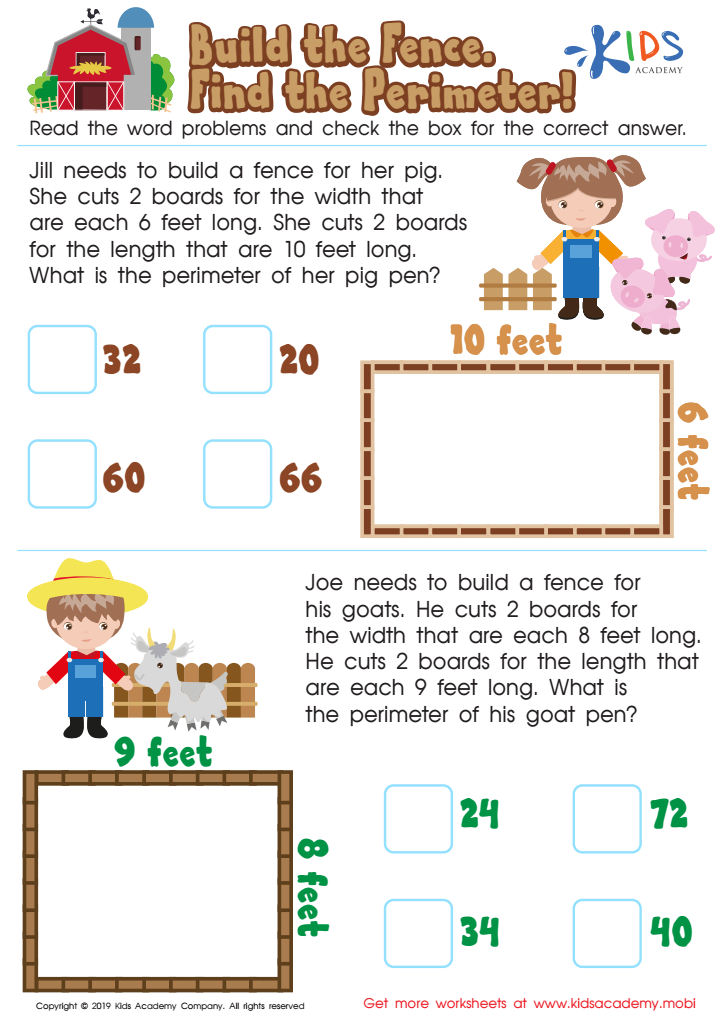
Build the Fence, Find the Perimeter Worksheet
 Assign to My Students
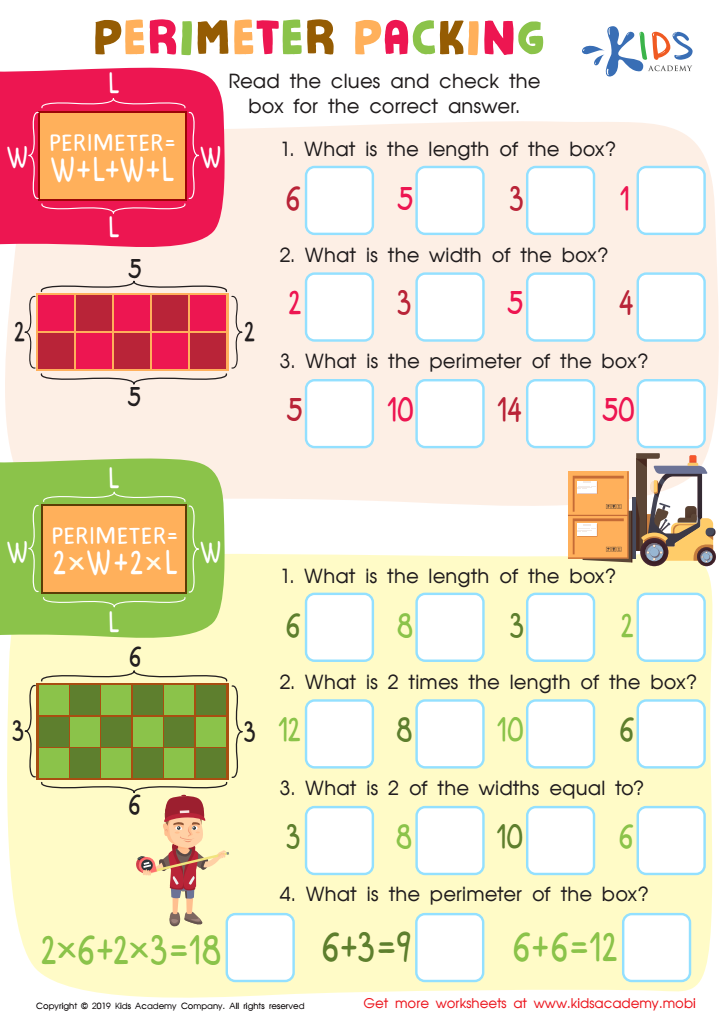
Perimeter Parking Worksheet
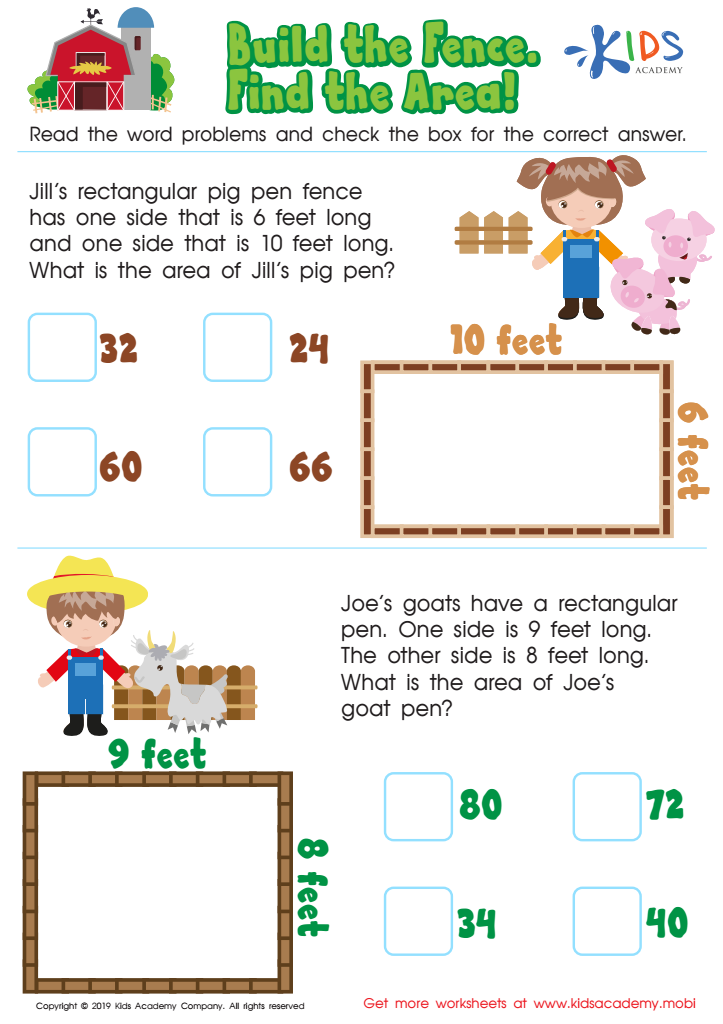
Build the Fence, Find the Area Worksheet








Understanding perimeter and area for children aged 5-8 is crucial as it lays the foundation for essential mathematical concepts and everyday problem-solving skills. For parents and teachers, investing time in helping children grasp these ideas early can lead to significant academic and cognitive benefits.
Perimeter and area are fundamental aspects of geometry and spatial awareness. Understanding these concepts helps children develop visualization skills, which are important for approaches from packing a suitcase efficiently to navigating spaces. By learning to measure and calculate these properties, children enhance their reasoning and analytical skills, which are applicable in science, technology, engineering, and mathematics (STEM) fields.
In early education, hands-on activities such as measuring the perimeter of the playground or determining the area of a tabletop make learning tangible and relevant. This practical engagement not only solidifies mathematical concepts but also piques children’s curiosity and fosters a love for learning.
Moreover, understanding perimeter and area improves cognitive skills such as critical thinking, logic, and attention to detail. These skills are vital both in academic settings and in everyday life. For instance, distinguishing between the area to wrap a present and the length of ribbon needed develops a child’s ability to apply mathematical thinking contextually.
Thus, grasping these concepts during early years not only aids in future academic success but also builds a well-rounded problem-solving mindset that benefits children throughout their lives.