Money recognition Coins Worksheets for Ages 5-8
5 filtered results
-
From - To
Boost essential math skills with our Money Recognition Coins Worksheets for Ages 5-8! Perfectly designed for young learners, these engaging worksheets help children familiarize themselves with different coins, learning their values through fun activities and hands-on exercises. Each worksheet encourages kids to recognize, count, and sort coins, reinforcing financial literacy from an early age. Ideal for both classroom settings and at-home practice, our colorful worksheets make learning about money interactive and enjoyable. Equip your child with the knowledge they need for real-world math skills and start your financial education journey today!
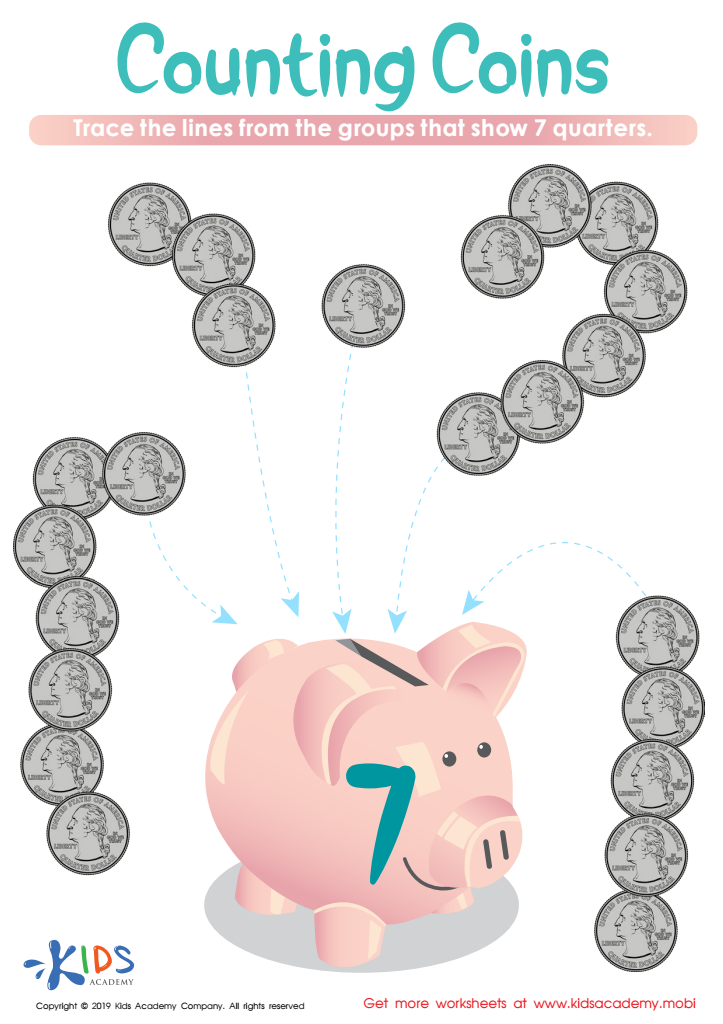
Counting Coins Worksheet
 Assign to My Students
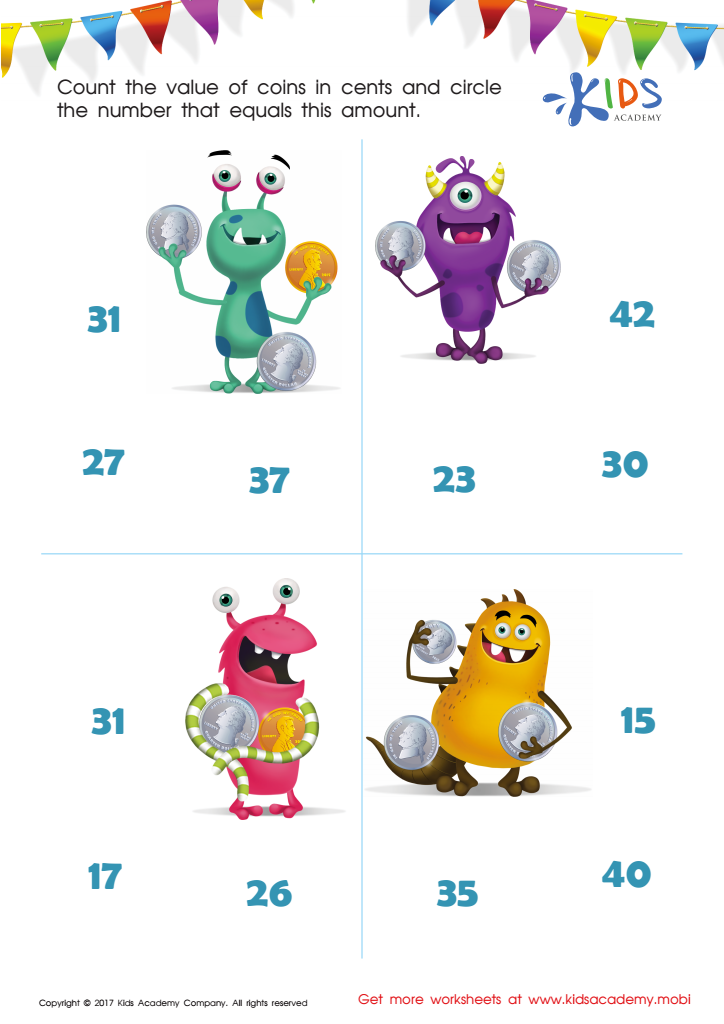
How Many Coins Money Worksheet
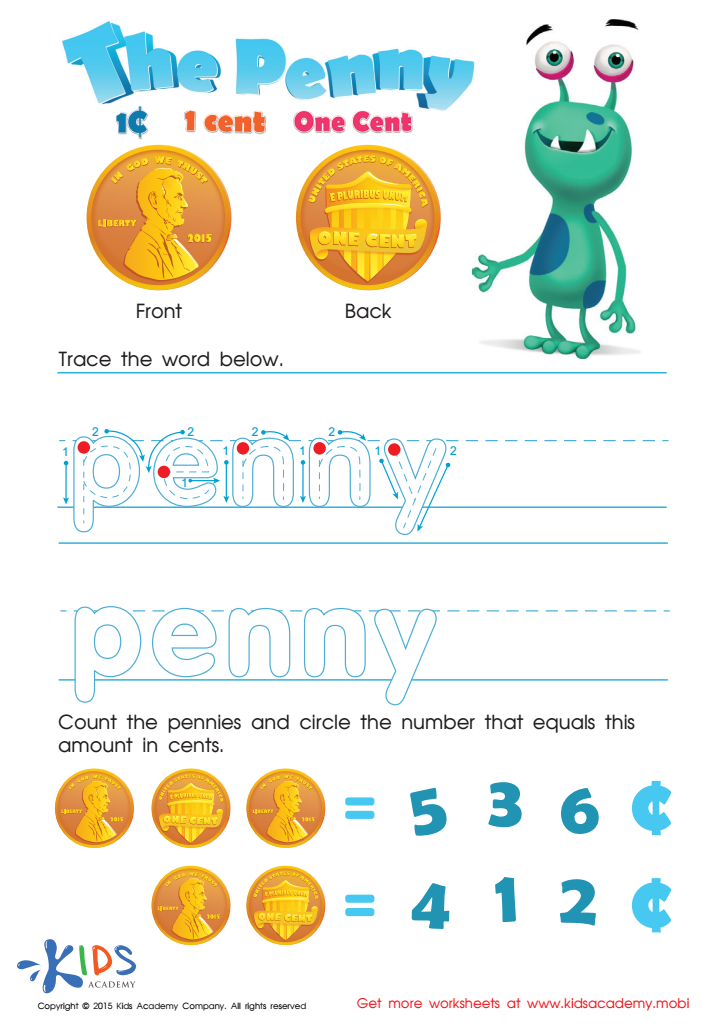
One Cent or the Penny Money Worksheet
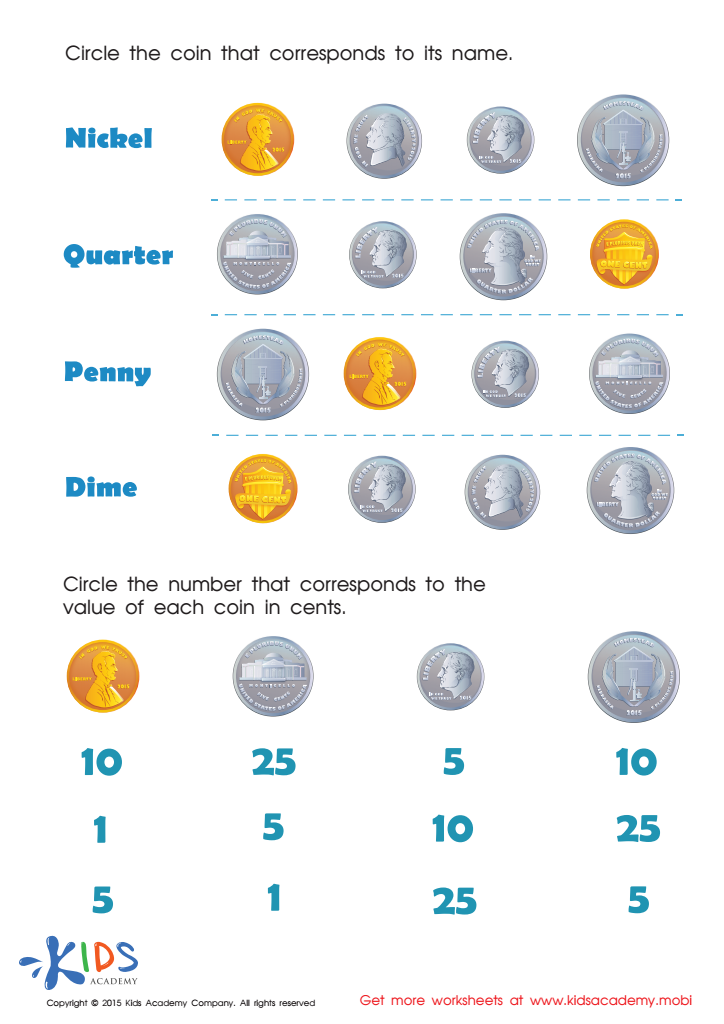
Coin Names and Values Money Worksheet
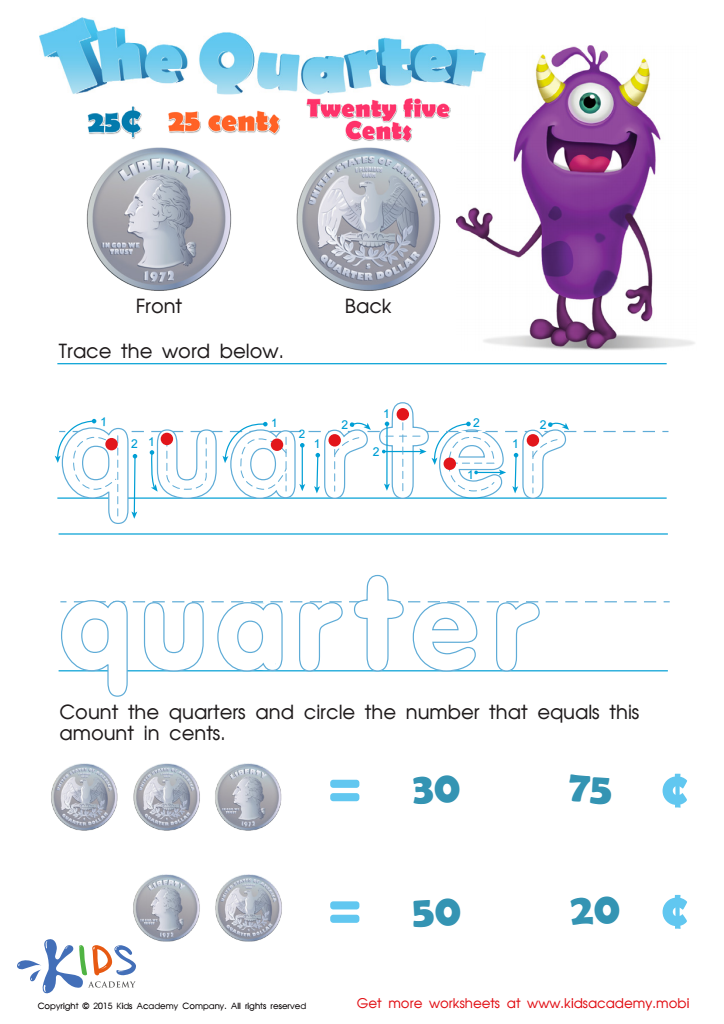
Twenty Five Cents or the Quarter Money Worksheet








Parents and teachers should place importance on money recognition skills for children aged 5-8 for several crucial reasons. At this age, children are developing fundamental cognitive abilities that lay the foundation for future learning, and money recognition offers an excellent practical application of these skills. Understanding coins and their values enhances mathematical skills such as counting, addition, and subtraction, which are vital components of early math education.
Learning to recognize coins also supports the development of fine motor skills. Handling coins helps children improve their dexterity and hand-eye coordination. Moreover, the concept of money introduces children to the basics of financial literacy, a crucial life skill. Understanding the value of different coins teaches children about saving, spending, and the cost of goods, fostering responsible financial habits from an early age.
Additionally, money recognition plays a role in social development. When kids understand money, they can better participate in activities that involve buying and selling, thus boosting their confidence and independence. Engaging in real-world money transactions encourages social interaction and helps children learn to communicate effectively.
Overall, emphasizing money recognition helps young children build critical academic skills, practical life skills, and social competence, preparing them for future challenges both in and out of the classroom.








